Meta Abandons Advanced AI Chip Development
Written by Emily J. Thompson, Senior Investment Analyst
Updated: Feb 27 2026
0mins
Source: seekingalpha
- Chip Development Challenges: Meta has recently scrapped its most advanced AI training chip, Iris, shifting focus to a simpler version, highlighting the design difficulties faced in competing with Nvidia, which may impact its long-term AI infrastructure development.
- Collaborations and Rentals: Meta has secured multiple partnerships with AMD, Nvidia, and Google, including a multi-billion-dollar deal to rent AI chips from Google, aiming to leverage external resources to compensate for internal development shortcomings and ensure the continuity of its AI projects.
- Design Complexity: The new Olympus chip design is based on the complex SIMT computing approach, which, while aiding software engineers, increases hardware design challenges that could lead to development delays, potentially undermining Meta's competitiveness in the AI sector.
- Market Competition Pressure: Meta aims to complete the Olympus design by Q4 2026, but the typical lengthy mass production timeline for new chips may place it at a disadvantage against OpenAI and Google, forcing it to continue relying on external chip suppliers.
Trade with 70% Backtested Accuracy
Stop guessing "Should I Buy META?" and start using high-conviction signals backed by rigorous historical data.
Sign up today to access powerful investing tools and make smarter, data-driven decisions.
Analyst Views on META
Wall Street analysts forecast META stock price to rise
44 Analyst Rating
37 Buy
6 Hold
1 Sell
Strong Buy
Current: 568.430

Low
655.15
Averages
824.71
High
1117
Current: 568.430
Low
655.15
Averages
824.71
High
1117
About META
Meta Platforms, Inc. is building human connections, powered by artificial intelligence and immersive technologies. The Company's products enable people to connect and share with friends and family through mobile devices, personal computers, virtual reality (VR) and mixed reality (MR) headsets, augmented reality (AR), and wearables. It also helps people discover and learn about what is going on in the world around them, enabling people to share their experiences, ideas, photos, videos, and other content with audiences ranging from their closest family members and friends to the public at large. The Company's segments include Family of Apps (FoA) and Reality Labs (RL). FoA segment includes Facebook, Instagram, Messenger, WhatsApp and Threads. RL segment includes its virtual, augmented, and mixed reality related consumer hardware, software and content. Its product offerings in VR include its Meta Quest devices, as well as software and content available through the Meta Horizon Store.
About the author

Emily J. Thompson
Emily J. Thompson, a Chartered Financial Analyst (CFA) with 12 years in investment research, graduated with honors from the Wharton School. Specializing in industrial and technology stocks, she provides in-depth analysis for Intellectia’s earnings and market brief reports.

Meta Stock Valuation Low Despite Rapid Growth

- Valuation Advantage: Meta's stock appears cheap across multiple valuation metrics, particularly with a forward price-to-earnings ratio significantly lower than the S&P 500's 22.2 times, indicating strong investment appeal despite rapid growth.
- Advertising Revenue Growth: Meta's core social media platforms like Facebook and Instagram have integrated AI tools that enhance ad conversion rates, leading to robust revenue growth, although the market remains cautious about groundbreaking results from its AI investments.
- Market Position: Among the 'Magnificent Seven' tech stocks, Meta ranks as the second-fastest growing company after Nvidia, underscoring its dominant position in social media and laying a solid foundation for future growth.
- Investment Opportunity: Although Meta was not included in The Motley Fool Stock Advisor's list of top investment stocks, its current low valuation and strong advertising business make it a focal point for investors, especially as the potential of AI technology remains largely untapped.
See More

Meta Completes Operational Split from Manus Amid Data Sharing Halt
- Operational Split Completed: Meta Platforms has finalized its operational split from Manus and ceased data sharing between the two entities, marking a significant step towards unwinding the $2 billion acquisition opposed by China.
- Data Access Restrictions: Since the beginning of the month, Meta has restricted Manus and its staff from accessing its internal data systems, while Meta employees can no longer utilize Manus tools for internal projects, further solidifying the separation.
- Project Migration Directive: An internal memo indicated that Meta employees are instructed to migrate existing Manus projects onto Meta's systems and to refrain from initiating new work on the AI platform, signaling a gradual divestment of Manus's operations.
- Acquisition Review Context: The acquisition faced scrutiny for potentially transferring key technology to a geopolitical rival, leading to an April order from China's National Development and Reform Commission mandating Meta to unwind the deal, highlighting the complexities of the regulatory landscape.
See More

Bloom Energy Reports 130% Revenue Growth in Q1

- Significant Revenue Growth: Bloom Energy's Q1 revenue surged 130% year-over-year to $751.1 million, driven by a 208% increase in product revenue, indicating strong demand in the data center market, with 2026 revenue projected to reach $3.4 to $3.8 billion, reflecting an approximately 80% growth.
- Surge in Power Equipment Orders: GE Vernova's Q1 orders increased 71% year-over-year to $18.3 billion, with gas turbine orders and slot reservations rising from 83 gigawatts to 100 gigawatts, showcasing robust demand for grid equipment, with expectations to reach at least 110 gigawatts by the end of 2026.
- Long-term Nuclear Agreements: Vistra has signed long-term nuclear power agreements with Amazon and Meta, providing up to 1,200 megawatts and 2,609 megawatts of nuclear energy, respectively, further solidifying its position in the competitive U.S. power market, with 2023 EBITDA expected to reach $6.8 to $7.6 billion.
- Market Risks and Opportunities: Despite facing risks related to project timing and demand fluctuations, ongoing demand signals suggest that the electricity bottleneck presents investors with a more grounded investment opportunity in the AI boom, particularly in the power infrastructure sector.
See More
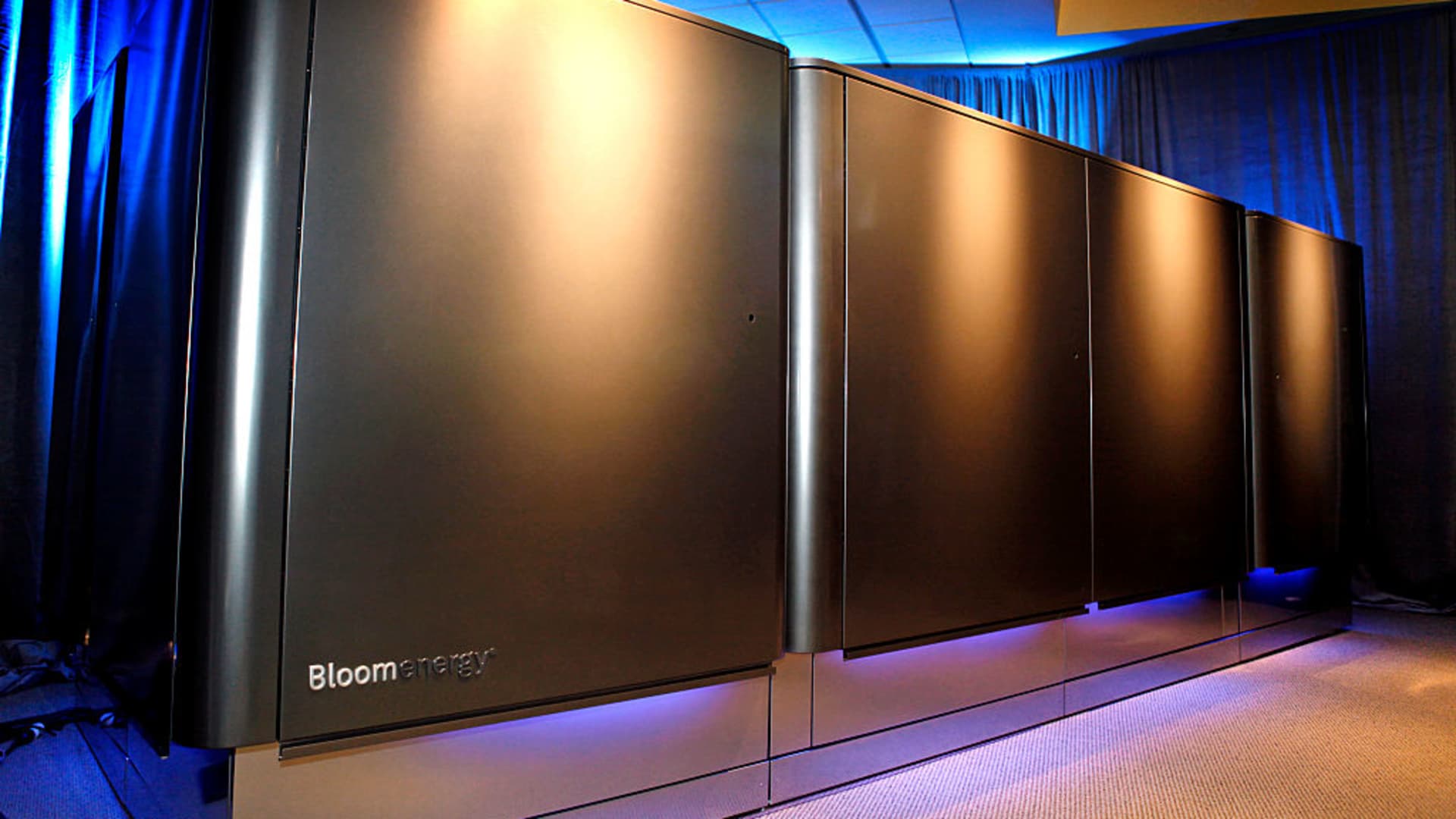
Surge in AI Infrastructure Investments
- Financing Platform Launch: Broadcom, in collaboration with Apollo Global Management and Blackstone, has initiated a financing platform aimed at achieving over 20 gigawatts of AI compute capacity by 2028, starting with a $35 billion tranche, indicating strong market demand for AI infrastructure.
- Bloom Energy Revenue Surge: Bloom Energy reported a 130% year-over-year revenue increase in Q1, reaching $751.1 million, with product revenue soaring 208%, and it now expects 2026 revenue to hit between $3.4 billion and $3.8 billion, highlighting its market leadership in data center power solutions.
- GE Vernova Order Surge: GE Vernova's Q1 orders surged 71% year-over-year to $18.3 billion, pushing total backlog to $163 billion, reflecting robust demand in the grid equipment market, with expectations to reach at least 110 gigawatts of generation capacity by the end of 2026.
- Vistra Long-term Agreements: Vistra has signed 20-year power purchase agreements with Amazon and Meta to supply up to 2,609 megawatts of nuclear power, further solidifying its position among competitive power producers in the U.S., while also planning to acquire 5,500 megawatts of natural gas generation capacity to enhance market competitiveness.
See More

Data Center CPUs Set for Explosive Growth in AI Market


- Market Growth Potential: Analysts at Bank of America project that the global server CPU market will grow nearly fivefold to over $170 billion by 2030, driven by the booming demand for agentic AI applications, indicating substantial investment opportunities.
- Industry Leaders' Advantage: Intel and AMD dominate the server CPU market, and their technological prowess and market share position them to effectively capitalize on this global megatrend, thereby enhancing their profitability and competitive edge.
- New Technology Push: Arm's recently unveiled AGI CPU, specifically designed for next-gen AI infrastructure, is expected to further intensify market competition and strengthen its influence in high-growth areas, potentially reshaping the existing market landscape.
- Manufacturing Services Expansion: Intel is not only designing and manufacturing its own chips but is also opening its chip manufacturing services to other tech giants, reportedly in discussions with Apple to potentially produce chips for its popular devices, which will further enhance its market position and revenue streams.
See More

Semiconductor Stocks Surge on AI Infrastructure Growth Potential
- Strong Market Performance: Semiconductor stocks surged on Friday, with AMD up 4.91%, Intel up 6.49%, and Arm Holdings up 11.05%, reflecting strong investor confidence in the AI infrastructure industry's growth potential.
- Market Size Forecast: Analysts at Bank of America predict that the global server CPU market will grow nearly fivefold to over $170 billion by 2030, driven primarily by the upcoming boom in agentic AI applications, indicating significant industry potential.
- Technological Advantages: While AI model training largely relies on GPUs designed by Nvidia, CPUs excel in specific segments of AI agent workflows such as control logic and scheduling, positioning Intel and AMD to benefit from this global megatrend due to their dominance in the server CPU market.
- Increased Investment Opportunities: Intel is not only designing and manufacturing its own chips but has also opened its foundry services to other tech giants, reportedly discussing chip production for Apple, while AMD may capture market share from Nvidia in the GPU space through supply agreements with Meta Platforms.
See More
Meta Stock Valuation Low Despite Rapid Growth
- Valuation Advantage: Meta's stock appears cheap across multiple valuation metrics, particularly with a forward price-to-earnings ratio significantly lower than the S&P 500's 22.2 times, indicating strong investment appeal despite rapid growth.
- Advertising Revenue Growth: Meta's core social media platforms like Facebook and Instagram have integrated AI tools that enhance ad conversion rates, leading to robust revenue growth, although the market remains cautious about groundbreaking results from its AI investments.
- Market Position: Among the 'Magnificent Seven' tech stocks, Meta ranks as the second-fastest growing company after Nvidia, underscoring its dominant position in social media and laying a solid foundation for future growth.
- Investment Opportunity: Although Meta was not included in The Motley Fool Stock Advisor's list of top investment stocks, its current low valuation and strong advertising business make it a focal point for investors, especially as the potential of AI technology remains largely untapped.
See More
Meta Completes Operational Split from Manus Amid Data Sharing Halt
- Operational Split Completed: Meta Platforms has finalized its operational split from Manus and ceased data sharing between the two entities, marking a significant step towards unwinding the $2 billion acquisition opposed by China.
- Data Access Restrictions: Since the beginning of the month, Meta has restricted Manus and its staff from accessing its internal data systems, while Meta employees can no longer utilize Manus tools for internal projects, further solidifying the separation.
- Project Migration Directive: An internal memo indicated that Meta employees are instructed to migrate existing Manus projects onto Meta's systems and to refrain from initiating new work on the AI platform, signaling a gradual divestment of Manus's operations.
- Acquisition Review Context: The acquisition faced scrutiny for potentially transferring key technology to a geopolitical rival, leading to an April order from China's National Development and Reform Commission mandating Meta to unwind the deal, highlighting the complexities of the regulatory landscape.
See More
Bloom Energy Reports 130% Revenue Growth in Q1
- Significant Revenue Growth: Bloom Energy's Q1 revenue surged 130% year-over-year to $751.1 million, driven by a 208% increase in product revenue, indicating strong demand in the data center market, with 2026 revenue projected to reach $3.4 to $3.8 billion, reflecting an approximately 80% growth.
- Surge in Power Equipment Orders: GE Vernova's Q1 orders increased 71% year-over-year to $18.3 billion, with gas turbine orders and slot reservations rising from 83 gigawatts to 100 gigawatts, showcasing robust demand for grid equipment, with expectations to reach at least 110 gigawatts by the end of 2026.
- Long-term Nuclear Agreements: Vistra has signed long-term nuclear power agreements with Amazon and Meta, providing up to 1,200 megawatts and 2,609 megawatts of nuclear energy, respectively, further solidifying its position in the competitive U.S. power market, with 2023 EBITDA expected to reach $6.8 to $7.6 billion.
- Market Risks and Opportunities: Despite facing risks related to project timing and demand fluctuations, ongoing demand signals suggest that the electricity bottleneck presents investors with a more grounded investment opportunity in the AI boom, particularly in the power infrastructure sector.
See More
Surge in AI Infrastructure Investments
- Financing Platform Launch: Broadcom, in collaboration with Apollo Global Management and Blackstone, has initiated a financing platform aimed at achieving over 20 gigawatts of AI compute capacity by 2028, starting with a $35 billion tranche, indicating strong market demand for AI infrastructure.
- Bloom Energy Revenue Surge: Bloom Energy reported a 130% year-over-year revenue increase in Q1, reaching $751.1 million, with product revenue soaring 208%, and it now expects 2026 revenue to hit between $3.4 billion and $3.8 billion, highlighting its market leadership in data center power solutions.
- GE Vernova Order Surge: GE Vernova's Q1 orders surged 71% year-over-year to $18.3 billion, pushing total backlog to $163 billion, reflecting robust demand in the grid equipment market, with expectations to reach at least 110 gigawatts of generation capacity by the end of 2026.
- Vistra Long-term Agreements: Vistra has signed 20-year power purchase agreements with Amazon and Meta to supply up to 2,609 megawatts of nuclear power, further solidifying its position among competitive power producers in the U.S., while also planning to acquire 5,500 megawatts of natural gas generation capacity to enhance market competitiveness.
See More
Data Center CPUs Set for Explosive Growth in AI Market
- Market Growth Potential: Analysts at Bank of America project that the global server CPU market will grow nearly fivefold to over $170 billion by 2030, driven by the booming demand for agentic AI applications, indicating substantial investment opportunities.
- Industry Leaders' Advantage: Intel and AMD dominate the server CPU market, and their technological prowess and market share position them to effectively capitalize on this global megatrend, thereby enhancing their profitability and competitive edge.
- New Technology Push: Arm's recently unveiled AGI CPU, specifically designed for next-gen AI infrastructure, is expected to further intensify market competition and strengthen its influence in high-growth areas, potentially reshaping the existing market landscape.
- Manufacturing Services Expansion: Intel is not only designing and manufacturing its own chips but is also opening its chip manufacturing services to other tech giants, reportedly in discussions with Apple to potentially produce chips for its popular devices, which will further enhance its market position and revenue streams.
See More
Semiconductor Stocks Surge on AI Infrastructure Growth Potential
- Strong Market Performance: Semiconductor stocks surged on Friday, with AMD up 4.91%, Intel up 6.49%, and Arm Holdings up 11.05%, reflecting strong investor confidence in the AI infrastructure industry's growth potential.
- Market Size Forecast: Analysts at Bank of America predict that the global server CPU market will grow nearly fivefold to over $170 billion by 2030, driven primarily by the upcoming boom in agentic AI applications, indicating significant industry potential.
- Technological Advantages: While AI model training largely relies on GPUs designed by Nvidia, CPUs excel in specific segments of AI agent workflows such as control logic and scheduling, positioning Intel and AMD to benefit from this global megatrend due to their dominance in the server CPU market.
- Increased Investment Opportunities: Intel is not only designing and manufacturing its own chips but has also opened its foundry services to other tech giants, reportedly discussing chip production for Apple, while AMD may capture market share from Nvidia in the GPU space through supply agreements with Meta Platforms.
See More