Key Dates and Disclosure Events for Snowflake Shareholders
Written by Emily J. Thompson, Senior Investment Analyst
Updated: Mar 19 2026
0mins
Source: Newsfilter
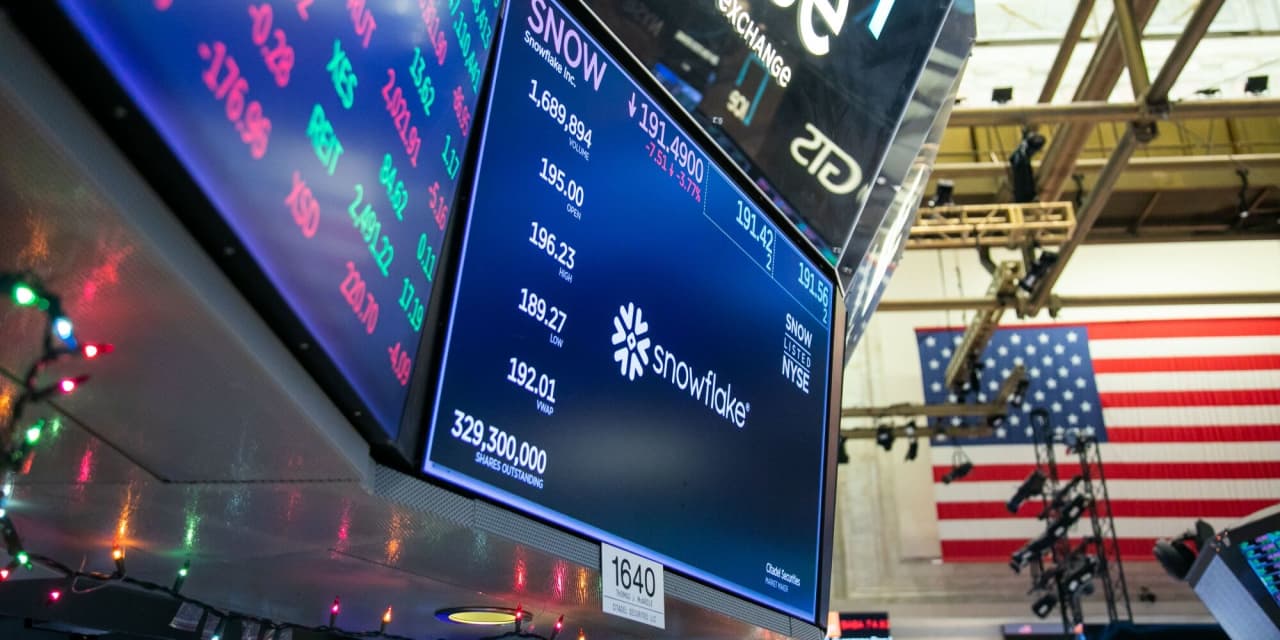
- Significant Stock Drop: Snowflake's shares fell by $41.72, an 18.14% decline, after the company disclosed consumption headwinds and withdrew its $10 billion product revenue target, severely impacting investor confidence and potentially leading to further stock price declines.
- Investor Day Optimism: On June 27, 2023, Snowflake reaffirmed its confidence in reaching $10 billion in product revenue by 2029 during its Investor Day, stating that consumption was back to expected levels; however, the omission of risks related to efficiency gains potentially misleading investors about future prospects.
- Dismal Earnings Outlook: During the November 29, 2023 earnings call, management reported strong consumption from large customers but failed to disclose that tiered storage pricing had begun affecting revenue, which could lead investors to misjudge the company's financial health.
- Corrective Disclosure Impact: On February 28, 2024, Snowflake disclosed Q4 and full fiscal year 2024 results, acknowledging increased revenue headwinds from efficiency gains and tiered storage pricing, lowering FY 2025 product revenue guidance to 22% growth, significantly below the market expectation of 30%.
Trade with 70% Backtested Accuracy
Stop guessing "Should I Buy SNOW?" and start using high-conviction signals backed by rigorous historical data.
Sign up today to access powerful investing tools and make smarter, data-driven decisions.
Analyst Views on SNOW
Wall Street analysts forecast SNOW stock price to rise
33 Analyst Rating
30 Buy
3 Hold
0 Sell
Strong Buy
Current: 239.660

Low
237.00
Averages
278.19
High
312.00
Current: 239.660
Low
237.00
Averages
278.19
High
312.00
About SNOW
Snowflake Inc. is an artificial intelligence (AI) data cloud company. The Company provides a platform which powers the AI data cloud, enabling customers to consolidate data into a single source of truth to drive insights, apply AI to solve business problems, build data applications, and share data and data products. Its cloud-native architecture includes three independently scalable but logically integrated layers across storage, compute, and cloud services. The storage layer ingests massive amounts and varieties of structured, semi-structured, and unstructured data. The compute layer provides dedicated resources to enable users to simultaneously access common data sets for many use cases with minimal latency. The cloud services layer enables users to securely use AI within applications, tools, and processes. Its platform supports a wide range of product categories for customers’ business objectives, including analytics, data engineering, AI, applications and collaboration.
About the author

Emily J. Thompson
Emily J. Thompson, a Chartered Financial Analyst (CFA) with 12 years in investment research, graduated with honors from the Wharton School. Specializing in industrial and technology stocks, she provides in-depth analysis for Intellectia’s earnings and market brief reports.
Databricks in Talks to Raise Funding Above $165B Valuation

- Funding Negotiations: Databricks, a data analytics and AI software company, is in talks to raise funding at a valuation exceeding $165 billion, indicating strong market confidence in its growth potential.
- Historical Funding Review: In December, Databricks successfully completed over $4 billion in its Series L funding round, raising its valuation to $134 billion, reflecting robust performance in the AI sector and sustained investor interest.
- AI Business Collaborations: Databricks has partnered with AI giants OpenAI and Anthropic to enhance the sales of AI services, which not only boosts its market position but also solidifies its competitive edge in the rapidly evolving AI industry.
- IPO Outlook: Although CEO Ali Ghodsi stated that Databricks will eventually go public, he believes that 2026 is not an ideal year for an IPO, indicating a more cautious strategic approach aimed at maximizing market value at the right time.
See More

SpaceX IPO Approaches: Investors Should Exercise Caution

- Record IPO Size: SpaceX plans to offer approximately 555.6 million shares at a fixed price of $135 each, aiming to raise $75 billion and achieve a valuation of around $1.8 trillion, marking it as one of the largest IPOs in history and reflecting high market expectations for its future potential.
- Revenue vs. Loss: While SpaceX's revenue is projected to grow 33% year-over-year to $18.7 billion by 2025, the company shifted from a modest profit in 2024 to nearly a $5 billion loss last year, highlighting the challenges of its capital-intensive business model, which may impact investor confidence.
- Oversubscription Phenomenon: With IPO orders reportedly around $250 billion, nearly triple the amount the company hopes to raise, this oversubscription could lead investors to overpay on opening day due to feelings of scarcity and speculation, increasing short-term risks.
- Historical Lessons Caution: Analyzing recent tech IPOs reveals that many companies experience significant volatility after their opening day; investors should approach the SpaceX IPO with caution to avoid chasing short-term gains at inflated valuations, and consider waiting for market stabilization before making decisions.
See More
SpaceX Aims for Historic $1.8 Trillion IPO

- Record-Setting IPO: SpaceX plans to issue approximately 555.6 million shares at $135 each, aiming to raise $75 billion and achieve a valuation of nearly $1.8 trillion, highlighting its immense market potential in the aerospace sector.
- Investor Enthusiasm: With IPO orders reportedly around $250 billion, nearly three times the amount the company hopes to raise, this oversubscription could drive opening prices far beyond fundamentals, reflecting strong market demand and speculative sentiment towards SpaceX.
- Profitability Fluctuations: Despite a 33% year-over-year revenue growth to $18.7 billion in 2025, SpaceX shifted from a modest profit in 2024 to a nearly $5 billion loss in 2025, underscoring the challenges of its capital-intensive business model.
- Historical Lessons Caution: Analysis indicates that many tech IPOs experience significant price volatility post-opening, suggesting that investors should approach the SpaceX IPO with caution to avoid potential price declines following an initial surge.
See More

SpaceX IPO Set to Become Largest in History

- Lowered IPO Threshold: Fidelity has reduced the minimum account balance for the SpaceX IPO to $2,000, significantly below the traditional six-figure requirement, potentially allowing more retail investors to participate and increasing their share allocation.
- Opportunities for Retail Investors: SpaceX plans to allocate up to 30% of shares to retail investors, far exceeding the typical 5% to 10%, which may provide ordinary investors with better access to purchase at the $135 offering price.
- Market Risk Warning: While the lowered threshold appears to offer opportunities for retail investors, it raises questions about SpaceX's motivations, particularly regarding whether it is creating smoother exit liquidity for early investors ahead of the IPO.
- Cautious Investment Advice: Investors should remain vigilant; although the lowered threshold may seem inclusive, it could also serve as a strategy for institutions planning to sell shares, prompting retail investors to carefully assess their investment size based on personal risk profiles.
See More

SpaceX IPO Opens Doors for Retail Investors
- Lowered IPO Threshold: SpaceX has reduced the retail investor eligibility requirement for its IPO to $2,000, significantly below the six-figure minimums set by traditional brokerages, which is expected to enhance market participation among everyday investors.
- Increased Retail Allocation: The company plans to allocate up to 30% of its IPO shares to retail investors, a substantial increase compared to the typical 5% to 10% offered in most IPOs, potentially improving the actual shares available to retail clients and their investment opportunities.
- Cautious Market Reaction: While this change appears to provide ordinary investors with a fair chance, analysts express skepticism about the motivation behind it, suggesting it may be aimed at providing better exit liquidity for early investors, especially in light of SpaceX's planned $1.8 trillion valuation.
- Investor Caution Advised: With the lowered financial eligibility, a surge of inexperienced investors may enter the market, prompting analysts to recommend thorough financial due diligence before participating to avoid losses from chasing momentum.
See More

SpaceX Plans Record IPO, Aiming to Raise $75 Billion


- IPO Fundraising Scale: SpaceX plans to issue 555,555,555 shares at $135 each, aiming to raise $75 billion and achieve a valuation of $1.77 trillion, setting a historic record that reflects strong market confidence in its growth potential.
- Business Diversification: The company operates in three segments: rocket launches, satellite internet, and artificial intelligence, with the rocket launch segment having successfully launched approximately 650 times at a 99% success rate, solidifying its leadership in the aerospace market.
- Strategic Partnership Agreement: SpaceX has reached a deal with Alphabet to receive $920 million per month for computing capacity from 2026 to 2029, valued at $30 billion, which will significantly enhance the company's financial position and market competitiveness.
- Investment Risk Warning: Despite the optimistic IPO outlook, historical data shows that over half of the 30 largest IPOs in the past 15 years saw stock prices decline within the first week and at 12 months, indicating that investors should approach newly listed stocks with caution due to their volatility.
See More
Databricks in Talks to Raise Funding Above $165B Valuation
- Funding Negotiations: Databricks, a data analytics and AI software company, is in talks to raise funding at a valuation exceeding $165 billion, indicating strong market confidence in its growth potential.
- Historical Funding Review: In December, Databricks successfully completed over $4 billion in its Series L funding round, raising its valuation to $134 billion, reflecting robust performance in the AI sector and sustained investor interest.
- AI Business Collaborations: Databricks has partnered with AI giants OpenAI and Anthropic to enhance the sales of AI services, which not only boosts its market position but also solidifies its competitive edge in the rapidly evolving AI industry.
- IPO Outlook: Although CEO Ali Ghodsi stated that Databricks will eventually go public, he believes that 2026 is not an ideal year for an IPO, indicating a more cautious strategic approach aimed at maximizing market value at the right time.
See More
SpaceX IPO Approaches: Investors Should Exercise Caution
- Record IPO Size: SpaceX plans to offer approximately 555.6 million shares at a fixed price of $135 each, aiming to raise $75 billion and achieve a valuation of around $1.8 trillion, marking it as one of the largest IPOs in history and reflecting high market expectations for its future potential.
- Revenue vs. Loss: While SpaceX's revenue is projected to grow 33% year-over-year to $18.7 billion by 2025, the company shifted from a modest profit in 2024 to nearly a $5 billion loss last year, highlighting the challenges of its capital-intensive business model, which may impact investor confidence.
- Oversubscription Phenomenon: With IPO orders reportedly around $250 billion, nearly triple the amount the company hopes to raise, this oversubscription could lead investors to overpay on opening day due to feelings of scarcity and speculation, increasing short-term risks.
- Historical Lessons Caution: Analyzing recent tech IPOs reveals that many companies experience significant volatility after their opening day; investors should approach the SpaceX IPO with caution to avoid chasing short-term gains at inflated valuations, and consider waiting for market stabilization before making decisions.
See More
SpaceX Aims for Historic $1.8 Trillion IPO
- Record-Setting IPO: SpaceX plans to issue approximately 555.6 million shares at $135 each, aiming to raise $75 billion and achieve a valuation of nearly $1.8 trillion, highlighting its immense market potential in the aerospace sector.
- Investor Enthusiasm: With IPO orders reportedly around $250 billion, nearly three times the amount the company hopes to raise, this oversubscription could drive opening prices far beyond fundamentals, reflecting strong market demand and speculative sentiment towards SpaceX.
- Profitability Fluctuations: Despite a 33% year-over-year revenue growth to $18.7 billion in 2025, SpaceX shifted from a modest profit in 2024 to a nearly $5 billion loss in 2025, underscoring the challenges of its capital-intensive business model.
- Historical Lessons Caution: Analysis indicates that many tech IPOs experience significant price volatility post-opening, suggesting that investors should approach the SpaceX IPO with caution to avoid potential price declines following an initial surge.
See More
SpaceX IPO Set to Become Largest in History
- Lowered IPO Threshold: Fidelity has reduced the minimum account balance for the SpaceX IPO to $2,000, significantly below the traditional six-figure requirement, potentially allowing more retail investors to participate and increasing their share allocation.
- Opportunities for Retail Investors: SpaceX plans to allocate up to 30% of shares to retail investors, far exceeding the typical 5% to 10%, which may provide ordinary investors with better access to purchase at the $135 offering price.
- Market Risk Warning: While the lowered threshold appears to offer opportunities for retail investors, it raises questions about SpaceX's motivations, particularly regarding whether it is creating smoother exit liquidity for early investors ahead of the IPO.
- Cautious Investment Advice: Investors should remain vigilant; although the lowered threshold may seem inclusive, it could also serve as a strategy for institutions planning to sell shares, prompting retail investors to carefully assess their investment size based on personal risk profiles.
See More
SpaceX IPO Opens Doors for Retail Investors
- Lowered IPO Threshold: SpaceX has reduced the retail investor eligibility requirement for its IPO to $2,000, significantly below the six-figure minimums set by traditional brokerages, which is expected to enhance market participation among everyday investors.
- Increased Retail Allocation: The company plans to allocate up to 30% of its IPO shares to retail investors, a substantial increase compared to the typical 5% to 10% offered in most IPOs, potentially improving the actual shares available to retail clients and their investment opportunities.
- Cautious Market Reaction: While this change appears to provide ordinary investors with a fair chance, analysts express skepticism about the motivation behind it, suggesting it may be aimed at providing better exit liquidity for early investors, especially in light of SpaceX's planned $1.8 trillion valuation.
- Investor Caution Advised: With the lowered financial eligibility, a surge of inexperienced investors may enter the market, prompting analysts to recommend thorough financial due diligence before participating to avoid losses from chasing momentum.
See More
SpaceX Plans Record IPO, Aiming to Raise $75 Billion
- IPO Fundraising Scale: SpaceX plans to issue 555,555,555 shares at $135 each, aiming to raise $75 billion and achieve a valuation of $1.77 trillion, setting a historic record that reflects strong market confidence in its growth potential.
- Business Diversification: The company operates in three segments: rocket launches, satellite internet, and artificial intelligence, with the rocket launch segment having successfully launched approximately 650 times at a 99% success rate, solidifying its leadership in the aerospace market.
- Strategic Partnership Agreement: SpaceX has reached a deal with Alphabet to receive $920 million per month for computing capacity from 2026 to 2029, valued at $30 billion, which will significantly enhance the company's financial position and market competitiveness.
- Investment Risk Warning: Despite the optimistic IPO outlook, historical data shows that over half of the 30 largest IPOs in the past 15 years saw stock prices decline within the first week and at 12 months, indicating that investors should approach newly listed stocks with caution due to their volatility.
See More