

HPE's Financial Surge Led By AI Demand Despite Margin Pressures, Analysts Optimistic About Future Growth
Written by Emily J. Thompson, Senior Investment Analyst
Updated: Jun 05 2024
0mins
Source: Business Insider
- Hewlett Packard Enterprise Q2 Financial Results: Shares trading higher after beating analyst estimates with quarterly earnings of 42 cents per share.
- Outlook and Projections: Company expects third-quarter EPS of $0.43-$0.48 and full-year EPS of $1.85-$1.95, with anticipated improvements in storage margins.
- Analyst Insights - Goldman Sachs: Storage margins showed weakness due to transition to as-a-service model, but improvements expected; Intelligent Edge revenue growth expected in the second half of the fiscal year.
- Analyst Insights - JP Morgan: Results reflect AI demand driving revenue growth, but margins affected by AI servers and pricing pressures; increased revenue forecast and EPS estimates for FY24 and FY25.
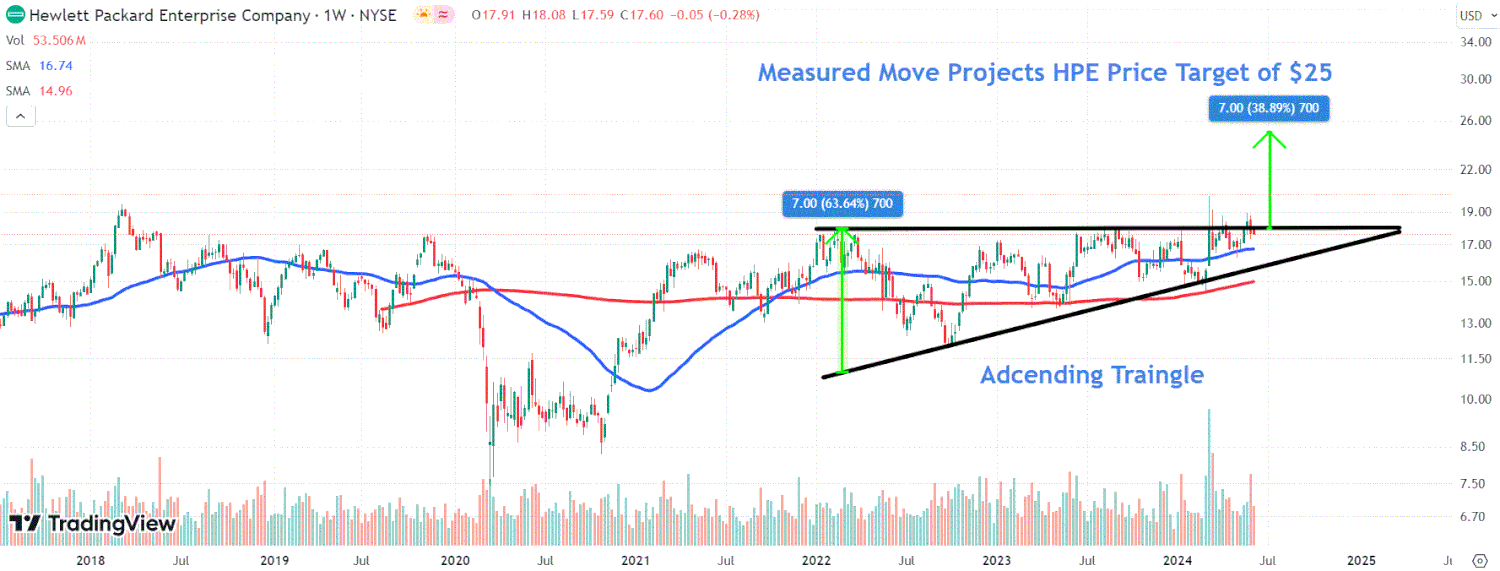
- Investor Opportunities: Analysts revise forecasts on Hewlett Packard Enterprise, suggesting exposure through specific ETFs; HPE shares up 11.91% at $19.71.
Trade with 70% Backtested Accuracy
Stop guessing "Should I Buy HPE?" and start using high-conviction signals backed by rigorous historical data.
Sign up today to access powerful investing tools and make smarter, data-driven decisions.
Analyst Views on HPE
Wall Street analysts forecast HPE stock price to fall
16 Analyst Rating
8 Buy
8 Hold
0 Sell
Moderate Buy
Current: 47.410

Low
21.00
Averages
27.13
High
31.00
Current: 47.410
Low
21.00
Averages
27.13
High
31.00
About HPE
Hewlett Packard Enterprise Company is a global technology company focused on developing intelligent solutions that allow customers to capture, analyze and act upon data from edge-to-cloud. The Cloud & AI segment includes server and storage offerings. The Cloud & AI server portfolio includes general-purpose servers for multi-workload computing and workload-optimized servers for applications, and integrated systems designed to address high-performance computing and supercomputing (including exascale applications), AI, data analytics, and transaction processing workloads for government and commercial customers. The Networking segment develops and sells high-performance network and security products and services. The Corporate Investments and Other segments include the advisory and professional services business, which primarily offers consultative-led services, HPE and partner technology expertise and advice, implementation services as well as complex solution engagement capabilities.
About the author

Emily J. Thompson
Emily J. Thompson, a Chartered Financial Analyst (CFA) with 12 years in investment research, graduated with honors from the Wharton School. Specializing in industrial and technology stocks, she provides in-depth analysis for Intellectia’s earnings and market brief reports.

ePlus Recognized as HPE North America Networking Partner of the Year

- Award Recognition: ePlus has been honored with the HPE 2026 North America Networking Solutions Provider of the Year award, highlighting its exceptional performance in delivering customer value and significant business outcomes, thereby reinforcing its leadership position in the industry.
- Long-term Partnership: With over 20 years of collaboration with HPE, ePlus effectively leverages HPE's extensive solutions portfolio to assist clients in modernizing their operations in areas such as AI, hybrid cloud, and networking.
- Technological Innovation: By partnering with HPE Juniper Networking, ePlus delivers modern cloud-based network architectures powered by Mist AI, designed to optimize user experiences, automate operations, and reduce IT complexity, thus enhancing customer satisfaction and competitive edge.
- Service Support: As a Triple Platinum Plus and Global Elite Plus partner, ePlus offers comprehensive advisory, professional, and managed services, ensuring successful implementation of networking solutions for clients and further amplifying its market impact.
See More

ePlus Recognized as HPE North America Networking Partner of the Year

- Partner Recognition: ePlus has been awarded the HPE 2026 North America Networking Solutions Provider of the Year, highlighting its exceptional performance in delivering customer value and significant business outcomes, thereby reinforcing its leadership position in the industry.
- Long-term Partnership: With over 20 years of collaboration with HPE across compute, storage, networking, and AI, ePlus assists customers in effectively leveraging HPE's extensive solutions portfolio to drive business modernization initiatives.
- Innovative Solutions: ePlus and HPE Juniper Networking deliver modern cloud-based network architectures powered by Mist AI, designed to optimize user experiences, automate operations, and reduce IT complexity, enhancing customer satisfaction and competitive edge in the market.
- Support Services Framework: As a Triple Platinum Plus and Global Elite Plus partner, ePlus offers advisory, professional, and managed services, including first-call support and consumption models, ensuring customers achieve optimal outcomes during their technology transformation.
See More

Four Stocks Near 52-Week Highs with Growth Potential


- Murphy USA Growth Momentum: Murphy USA's first-quarter fuel contribution strengthened to $0.35 per gallon, with merchandise contribution rising by 7.3%, and management plans to open 45 to 55 new stores in 2026, indicating strong market expansion intentions.
- DaVita Performance Boost: DaVita raised its full-year adjusted operating income guidance to $2.15 to $2.25 billion, with first-quarter revenues reaching $3.42 billion, showcasing robust growth across its 3,262 centers worldwide.
- Hewlett Packard Business Expansion: Hewlett Packard expanded its ProLiant edge portfolio for AI and mission-critical workloads, achieving record revenues in the second quarter, prompting management to raise full-year revenue and EPS guidance, reflecting strong market demand.
- Vishay Operational Momentum: Vishay's first-quarter revenues reached $839.2 million with gross margin expanding to 21%, and management guided second-quarter revenues to $875 to $905 million, indicating sustained market demand and product innovation.
See More
Three Companies Exceed Earnings Expectations

- HPE Revenue Surge: Hewlett Packard Enterprise reported a 40% year-over-year revenue increase to $2.4 billion in its latest quarter, exceeding analyst expectations, with adjusted earnings per share reaching $0.79, prompting management to anticipate achieving its 2028 earnings target two years ahead of schedule.
- Micron's Market Performance: Micron Technology's revenue nearly tripled year-over-year to $24 billion, driven by a severe memory bottleneck for AI workloads, with strong demand pushing earnings per share to $12.20, significantly surpassing analyst estimates of $9, indicating sustained market share growth in data center storage.
- Palantir Customer Growth: Palantir Technologies achieved an 85% year-over-year revenue growth to $1.63 billion in Q1, with customer count rising to 1,007, reflecting strong demand for its enterprise and government AI software platforms, while maintaining a profit margin of 44%.
- AI Investment Trends: As investment in AI-optimized data centers continues to rise, HPE, Micron, and Palantir are all benefiting from the rapidly growing market, with HPE's acquisition of Juniper Networks further enhancing its competitive position, showcasing the company's growth potential in the coming years.
See More

AI Demand Fuels Strong Earnings Growth for Key Tech Firms
- HPE Earnings Surge: Hewlett Packard Enterprise (HPE) reported a 40% year-over-year revenue increase, achieving an adjusted earnings per share of $0.79, surpassing analyst expectations of $0.53, driven by strong demand for AI-optimized data centers, with management now forecasting to hit its 2028 earnings target two years early.
- Micron Market Share Growth: Micron Technology's revenue nearly tripled year-over-year to $24 billion, exceeding analyst estimates of $9 per share, fueled by a surge in demand for memory products, indicating its sustained market share growth in the data center storage sector.
- Palantir Customer Growth: Palantir Technologies saw an 85% year-over-year revenue increase to $1.63 billion in Q1, beating estimates of $1.54 billion, with a 31% rise in customer count to 1,007, showcasing the increasing integration of its AI platform in enterprises.
- Positive Industry Outlook: All three companies demonstrate strong growth potential, with HPE and Palantir exceeding earnings expectations, indicating that the investment boom in the AI sector is likely to continue, potentially yielding significant returns for long-term investors.
See More
Super Micro Computer Shares Surge 10.4% Amid AI Demand


- Stock Surge: Super Micro Computer (SMCI) shares rose 10.4% on Thursday, closing around $31, despite a 31% decline over the past year, indicating strong market response to AI hardware.
- Revenue Doubling: In fiscal Q3 2026, Super Micro's revenue more than doubled to $10.2 billion year-over-year, driven by surging demand for AI servers built on Nvidia chips, highlighting robust market demand.
- Order Boom: The company recently secured approximately $39 billion in AI server orders and lined up $7 billion in new equity financing to fulfill these orders, showcasing its competitive position in the rapidly growing AI market.
- Margin Recovery: Although still thin, gross margin rebounded from 6.3% to 9.9%, with management attributing this improvement to selling more complete systems rather than bare servers, reflecting positive changes in cost control and product mix.
See More
ePlus Recognized as HPE North America Networking Partner of the Year
- Award Recognition: ePlus has been honored with the HPE 2026 North America Networking Solutions Provider of the Year award, highlighting its exceptional performance in delivering customer value and significant business outcomes, thereby reinforcing its leadership position in the industry.
- Long-term Partnership: With over 20 years of collaboration with HPE, ePlus effectively leverages HPE's extensive solutions portfolio to assist clients in modernizing their operations in areas such as AI, hybrid cloud, and networking.
- Technological Innovation: By partnering with HPE Juniper Networking, ePlus delivers modern cloud-based network architectures powered by Mist AI, designed to optimize user experiences, automate operations, and reduce IT complexity, thus enhancing customer satisfaction and competitive edge.
- Service Support: As a Triple Platinum Plus and Global Elite Plus partner, ePlus offers comprehensive advisory, professional, and managed services, ensuring successful implementation of networking solutions for clients and further amplifying its market impact.
See More
ePlus Recognized as HPE North America Networking Partner of the Year
- Partner Recognition: ePlus has been awarded the HPE 2026 North America Networking Solutions Provider of the Year, highlighting its exceptional performance in delivering customer value and significant business outcomes, thereby reinforcing its leadership position in the industry.
- Long-term Partnership: With over 20 years of collaboration with HPE across compute, storage, networking, and AI, ePlus assists customers in effectively leveraging HPE's extensive solutions portfolio to drive business modernization initiatives.
- Innovative Solutions: ePlus and HPE Juniper Networking deliver modern cloud-based network architectures powered by Mist AI, designed to optimize user experiences, automate operations, and reduce IT complexity, enhancing customer satisfaction and competitive edge in the market.
- Support Services Framework: As a Triple Platinum Plus and Global Elite Plus partner, ePlus offers advisory, professional, and managed services, including first-call support and consumption models, ensuring customers achieve optimal outcomes during their technology transformation.
See More
Four Stocks Near 52-Week Highs with Growth Potential
- Murphy USA Growth Momentum: Murphy USA's first-quarter fuel contribution strengthened to $0.35 per gallon, with merchandise contribution rising by 7.3%, and management plans to open 45 to 55 new stores in 2026, indicating strong market expansion intentions.
- DaVita Performance Boost: DaVita raised its full-year adjusted operating income guidance to $2.15 to $2.25 billion, with first-quarter revenues reaching $3.42 billion, showcasing robust growth across its 3,262 centers worldwide.
- Hewlett Packard Business Expansion: Hewlett Packard expanded its ProLiant edge portfolio for AI and mission-critical workloads, achieving record revenues in the second quarter, prompting management to raise full-year revenue and EPS guidance, reflecting strong market demand.
- Vishay Operational Momentum: Vishay's first-quarter revenues reached $839.2 million with gross margin expanding to 21%, and management guided second-quarter revenues to $875 to $905 million, indicating sustained market demand and product innovation.
See More
Three Companies Exceed Earnings Expectations
- HPE Revenue Surge: Hewlett Packard Enterprise reported a 40% year-over-year revenue increase to $2.4 billion in its latest quarter, exceeding analyst expectations, with adjusted earnings per share reaching $0.79, prompting management to anticipate achieving its 2028 earnings target two years ahead of schedule.
- Micron's Market Performance: Micron Technology's revenue nearly tripled year-over-year to $24 billion, driven by a severe memory bottleneck for AI workloads, with strong demand pushing earnings per share to $12.20, significantly surpassing analyst estimates of $9, indicating sustained market share growth in data center storage.
- Palantir Customer Growth: Palantir Technologies achieved an 85% year-over-year revenue growth to $1.63 billion in Q1, with customer count rising to 1,007, reflecting strong demand for its enterprise and government AI software platforms, while maintaining a profit margin of 44%.
- AI Investment Trends: As investment in AI-optimized data centers continues to rise, HPE, Micron, and Palantir are all benefiting from the rapidly growing market, with HPE's acquisition of Juniper Networks further enhancing its competitive position, showcasing the company's growth potential in the coming years.
See More
AI Demand Fuels Strong Earnings Growth for Key Tech Firms
- HPE Earnings Surge: Hewlett Packard Enterprise (HPE) reported a 40% year-over-year revenue increase, achieving an adjusted earnings per share of $0.79, surpassing analyst expectations of $0.53, driven by strong demand for AI-optimized data centers, with management now forecasting to hit its 2028 earnings target two years early.
- Micron Market Share Growth: Micron Technology's revenue nearly tripled year-over-year to $24 billion, exceeding analyst estimates of $9 per share, fueled by a surge in demand for memory products, indicating its sustained market share growth in the data center storage sector.
- Palantir Customer Growth: Palantir Technologies saw an 85% year-over-year revenue increase to $1.63 billion in Q1, beating estimates of $1.54 billion, with a 31% rise in customer count to 1,007, showcasing the increasing integration of its AI platform in enterprises.
- Positive Industry Outlook: All three companies demonstrate strong growth potential, with HPE and Palantir exceeding earnings expectations, indicating that the investment boom in the AI sector is likely to continue, potentially yielding significant returns for long-term investors.
See More
Super Micro Computer Shares Surge 10.4% Amid AI Demand
- Stock Surge: Super Micro Computer (SMCI) shares rose 10.4% on Thursday, closing around $31, despite a 31% decline over the past year, indicating strong market response to AI hardware.
- Revenue Doubling: In fiscal Q3 2026, Super Micro's revenue more than doubled to $10.2 billion year-over-year, driven by surging demand for AI servers built on Nvidia chips, highlighting robust market demand.
- Order Boom: The company recently secured approximately $39 billion in AI server orders and lined up $7 billion in new equity financing to fulfill these orders, showcasing its competitive position in the rapidly growing AI market.
- Margin Recovery: Although still thin, gross margin rebounded from 6.3% to 9.9%, with management attributing this improvement to selling more complete systems rather than bare servers, reflecting positive changes in cost control and product mix.
See More





