Eve Holding, Inc. (EVEX) Q1 2026 Earnings Call Insights
Written by Emily J. Thompson, Senior Investment Analyst
Updated: May 05 2026
0mins

Source: seekingalpha
- Flight Test Progress: In Q1 2026, Eve Holding completed 59 flight tests, logging nearly 2.5 hours in the air and validating 130 performance metrics, with a peak altitude of 215 feet and forward flight at 30 knots, which not only exceeded expectations but also laid the groundwork for more complex future flights.
- Improved Financial Position: The company ended Q1 with a record cash position of $441 million and total liquidity of $578 million, which will support operations through 2028, reducing reliance on new funding and enhancing market confidence.
- Cost Reduction Initiatives: The CFO indicated that Eve expects to achieve $100 million to $150 million in incremental synergies over the next three years, with actions already underway, which will help reduce future cash burn and further optimize the financial structure.
- Certification Timeline Adjustment: Management has pushed back the timeline for certification and entry into service to 2028, emphasizing the need for 12 months of flight testing for conforming vehicles; while this extends market entry, it provides a clearer schedule and lowers execution risk.
Trade with 70% Backtested Accuracy
Stop guessing "Should I Buy EVEX?" and start using high-conviction signals backed by rigorous historical data.
Sign up today to access powerful investing tools and make smarter, data-driven decisions.
Analyst Views on EVEX
Wall Street analysts forecast EVEX stock price to rise
6 Analyst Rating
4 Buy
2 Hold
0 Sell
Moderate Buy
Current: 2.600

Low
7.00
Averages
7.50
High
8.00
Current: 2.600
Low
7.00
Averages
7.50
High
8.00
About EVEX
Eve Holding, Inc. is an aerospace company with operations in Melbourne, Florida and Sao Paulo, Brazil. The Company is a developer of Urban Air Mobility (UAM) solutions. Its segments include electric vertical takeoff and landing aircraft (eVTOLs), Service and Operations Solutions, and Urban Air Traffic Management (UATM). Its eVTOLs segment is designing and certifying eVTOL purpose-built for UAM missions and plans to market its eVTOLs globally to operators of UAM services, including fixed wing and helicopter operators, as well as lessors that purchase and manage aircraft on behalf of operators. The Service and Operations Solutions segment offers a full suite of eVTOL service and support capabilities, including material services, maintenance, technical support, training, ground handling and data services. The UATM segment is developing next generation UATM software named Vector to help enable eVTOLs to operate safely and efficiently in dense urban airspace.
About the author

Emily J. Thompson
Emily J. Thompson, a Chartered Financial Analyst (CFA) with 12 years in investment research, graduated with honors from the Wharton School. Specializing in industrial and technology stocks, she provides in-depth analysis for Intellectia’s earnings and market brief reports.

Analysis of Electric Vehicle Market Dynamics


- Market Trend Shift: EV stocks soared in 2021 due to low interest rates and a surge in post-pandemic vehicle purchases, but many fizzled in 2022 and 2023 as inflation and rising rates dampened interest, leading investors to chase hotter AI stocks instead.
- Rivian Production Challenges: Rivian produced 57,232 vehicles in 2023, but expects a drop to 49,476 in 2024 and 42,284 in 2025, primarily due to supply chain constraints and intense competition, although its new R2 SUV is projected to boost annual deliveries to 62,000-67,000.
- BYD Market Expansion: BYD surpassed Tesla to become the world's largest EV maker in 2025 with annual sales of 4.6 million vehicles, indicating strong growth in the EV market, with revenue and EPS expected to grow at CAGRs of 13% and 23% from 2025 to 2028.
- Joby Aviation Prospects: Joby's S4 eVTOL aircraft has backing from major investors like Toyota and Delta, and while it awaits full FAA certification, its revenue is projected to increase nearly ninefold from 2025 to 2028, highlighting significant potential in the future air mobility market.
See More

Rivian, BYD, and Joby's Market Prospects
- Rivian Production Challenges: Rivian produced 57,232 vehicles in 2023 but expects a drop to 49,476 in 2024 due to supply chain constraints and increased competition, which could impact its market share and profitability.
- R2 Model Launch: Rivian plans to launch the R2 SUV starting at $57,990, expecting to boost annual deliveries to 62,000-67,000 vehicles, thereby enhancing its market appeal and gross margins.
- BYD Global Expansion: BYD sold 4.6 million electric vehicles in 2025, surpassing Tesla, and improved production efficiency and market competitiveness through in-house lithium iron phosphate batteries and a vertically integrated supply chain.
- Joby Commercial Flight Plans: Joby aims to launch its first commercial eVTOL flights in the U.S., and although FAA certification is pending, analysts expect revenue to grow nearly ninefold from 2025 to 2028, indicating significant market potential.
See More

Analysis of Competition in the eVTOL Market

- Market Outlook: According to Eve Air Mobility's Global Market Outlook, by 2045, there could be 30,000 eVTOLs in operation carrying three billion passengers, despite Joby and Archer lacking FAA approval for commercial flights, which has led to depressed stock prices for both companies.
- Technical Comparison: Joby's S4 and Archer's Midnight exhibit significant design differences, with the S4 achieving a maximum range of 150 miles and a speed of 200 mph, while the Midnight has a range of 100 miles and a speed of 150 mph, highlighting Joby's technological advantage.
- Financial Projections: Analysts expect Joby's revenue to grow from $53 million in 2025 to $458 million in 2028, with a net loss narrowing to $722 million, whereas Archer's revenue is projected to surge from under $1 million in 2025 to $482 million in 2028, but its net loss is expected to widen to $868 million.
- Investment Advantages: Joby's market cap stands at $9.2 billion, trading at 20 times its 2028 sales, reflecting its potential in the
See More
Joby and Archer's eVTOL Aircraft Prospects
- Market Outlook: According to Eve Air Mobility's Global Market Outlook, by 2045, there could be 30,000 eVTOLs operating globally, carrying three billion passengers, presenting potential market opportunities for both Joby and Archer.
- FAA Approval Challenges: Both Joby and Archer must navigate the lengthy multi-stage approval process from the Federal Aviation Administration (FAA), with full commercial flight approvals likely not occurring until late 2026 or 2027, contributing to stock pressure this year.
- Financial Projections Comparison: Analysts expect Joby's revenue to grow from $53 million in 2025 to $458 million in 2028, while Archer's revenue is projected to surge from under $1 million to $482 million, although both companies are expected to widen their net losses, indicating differing market expectations.
- Investment Value Assessment: Joby trades at a market cap of $9.2 billion at 20 times its 2028 sales, while Archer's $4.0 billion market cap trades at just eight times its 2028 sales; despite Archer appearing more attractive, Joby's vertically integrated model and stronger liquidity position it as a more compelling long-term investment.
See More
Joby Aviation: Future of eVTOL Aircraft

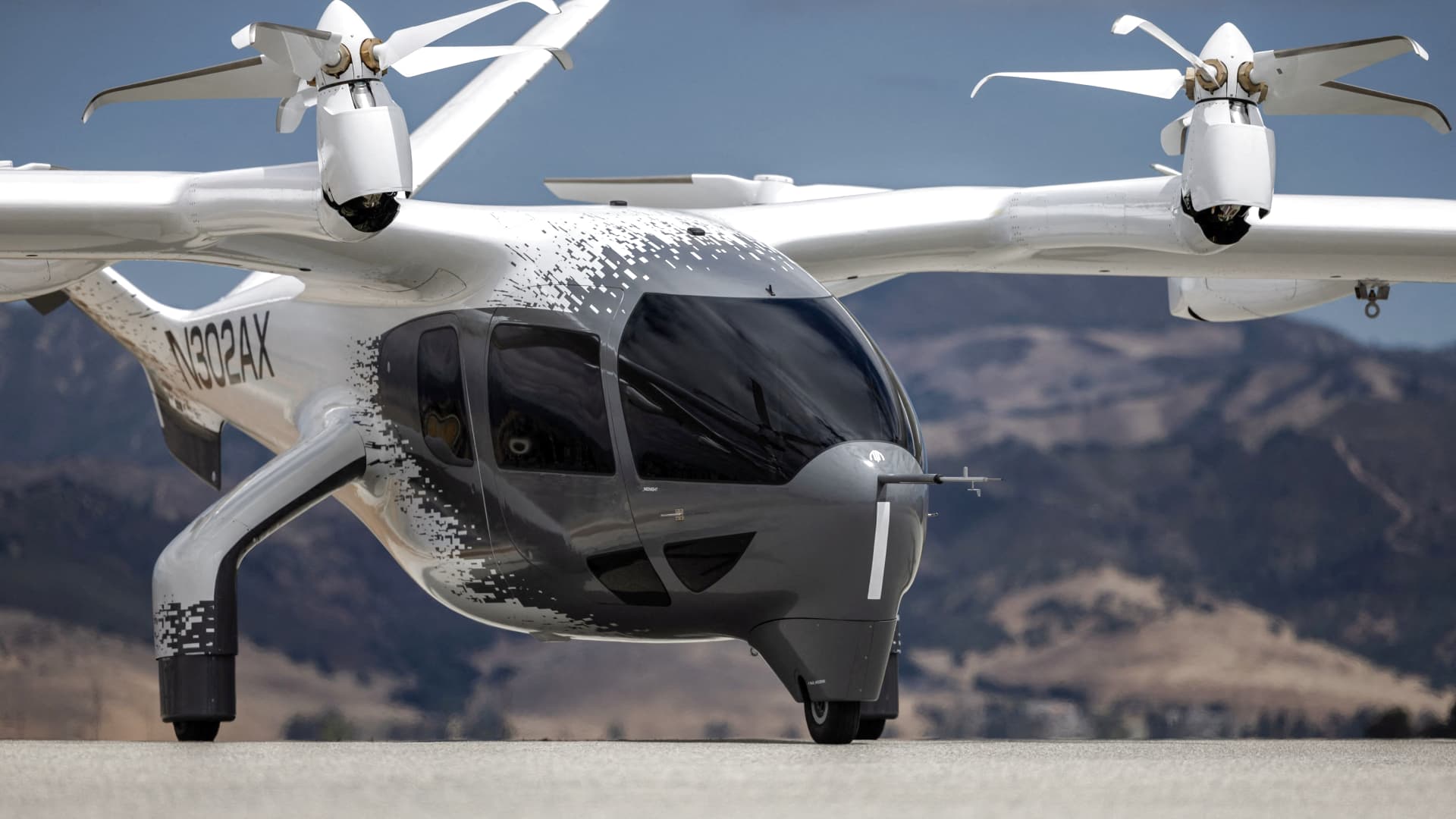
- Market Performance Fluctuations: Joby Aviation went public via SPAC on August 11, 2021, opening at $10.62 per share and reaching a record high of $20.39 on August 4, 2025, but now trades around $9, indicating waning investor confidence in its commercialization progress.
- Significant Technical Advantages: Joby's S4 eVTOL can carry one pilot and four passengers, travel 150 miles on a single charge, and reach speeds of 200 mph, surpassing competitor Archer Aviation's Midnight eVTOL due to its tilt-rotor design.
- Strategic Partnerships: Joby is backed by major investors like Toyota, Delta Air Lines, and Uber, with Toyota assisting in mass production, Delta planning to use the S4 for airport-to-home air taxi services, and Uber integrating these flights into its app.
- Future Growth Potential: Joby's revenue is expected to surge from $53 million in 2025 to $458 million by 2028, and if the FAA approves its commercial flights, its eVTOLs could replace traditional helicopters, potentially tripling its stock price over the next five years.
See More

Joby Aviation Stock Poised for Growth Pending FAA Approval
- Lackluster Market Performance: Since its public debut on August 11, 2021, Joby Aviation's stock has fluctuated from an opening price of $10.62 to a peak of $20.39 on August 4, 2025, but currently trades around $9, indicating waning investor confidence in its commercial progress.
- Significant Technological Edge: Joby's S4 eVTOL can travel 150 miles on a single charge and reach speeds of 200 miles per hour, utilizing tilt-rotor technology that allows it to outperform its closest competitor, Archer Aviation's Midnight eVTOL, thereby enhancing its competitive positioning in the market.
- Key Partnerships: Joby has secured backing from major investors like Toyota, Delta Air Lines, and Uber, with Toyota assisting in mass production of its eVTOLs, Delta planning to use the S4 for airport-to-home air taxi services, and Uber integrating these flights into its app, which strengthens its market presence.
- Future Growth Potential: Analysts project Joby's revenue to surge from $53 million in 2025 to $458 million by 2028, and if the FAA approves its commercial flights, Joby's eVTOLs could replace traditional helicopters, potentially tripling its stock price over the next five years.
See More
Analysis of Electric Vehicle Market Dynamics
- Market Trend Shift: EV stocks soared in 2021 due to low interest rates and a surge in post-pandemic vehicle purchases, but many fizzled in 2022 and 2023 as inflation and rising rates dampened interest, leading investors to chase hotter AI stocks instead.
- Rivian Production Challenges: Rivian produced 57,232 vehicles in 2023, but expects a drop to 49,476 in 2024 and 42,284 in 2025, primarily due to supply chain constraints and intense competition, although its new R2 SUV is projected to boost annual deliveries to 62,000-67,000.
- BYD Market Expansion: BYD surpassed Tesla to become the world's largest EV maker in 2025 with annual sales of 4.6 million vehicles, indicating strong growth in the EV market, with revenue and EPS expected to grow at CAGRs of 13% and 23% from 2025 to 2028.
- Joby Aviation Prospects: Joby's S4 eVTOL aircraft has backing from major investors like Toyota and Delta, and while it awaits full FAA certification, its revenue is projected to increase nearly ninefold from 2025 to 2028, highlighting significant potential in the future air mobility market.
See More
Rivian, BYD, and Joby's Market Prospects
- Rivian Production Challenges: Rivian produced 57,232 vehicles in 2023 but expects a drop to 49,476 in 2024 due to supply chain constraints and increased competition, which could impact its market share and profitability.
- R2 Model Launch: Rivian plans to launch the R2 SUV starting at $57,990, expecting to boost annual deliveries to 62,000-67,000 vehicles, thereby enhancing its market appeal and gross margins.
- BYD Global Expansion: BYD sold 4.6 million electric vehicles in 2025, surpassing Tesla, and improved production efficiency and market competitiveness through in-house lithium iron phosphate batteries and a vertically integrated supply chain.
- Joby Commercial Flight Plans: Joby aims to launch its first commercial eVTOL flights in the U.S., and although FAA certification is pending, analysts expect revenue to grow nearly ninefold from 2025 to 2028, indicating significant market potential.
See More
Analysis of Competition in the eVTOL Market
- Market Outlook: According to Eve Air Mobility's Global Market Outlook, by 2045, there could be 30,000 eVTOLs in operation carrying three billion passengers, despite Joby and Archer lacking FAA approval for commercial flights, which has led to depressed stock prices for both companies.
- Technical Comparison: Joby's S4 and Archer's Midnight exhibit significant design differences, with the S4 achieving a maximum range of 150 miles and a speed of 200 mph, while the Midnight has a range of 100 miles and a speed of 150 mph, highlighting Joby's technological advantage.
- Financial Projections: Analysts expect Joby's revenue to grow from $53 million in 2025 to $458 million in 2028, with a net loss narrowing to $722 million, whereas Archer's revenue is projected to surge from under $1 million in 2025 to $482 million in 2028, but its net loss is expected to widen to $868 million.
- Investment Advantages: Joby's market cap stands at $9.2 billion, trading at 20 times its 2028 sales, reflecting its potential in the
See More
Joby and Archer's eVTOL Aircraft Prospects
- Market Outlook: According to Eve Air Mobility's Global Market Outlook, by 2045, there could be 30,000 eVTOLs operating globally, carrying three billion passengers, presenting potential market opportunities for both Joby and Archer.
- FAA Approval Challenges: Both Joby and Archer must navigate the lengthy multi-stage approval process from the Federal Aviation Administration (FAA), with full commercial flight approvals likely not occurring until late 2026 or 2027, contributing to stock pressure this year.
- Financial Projections Comparison: Analysts expect Joby's revenue to grow from $53 million in 2025 to $458 million in 2028, while Archer's revenue is projected to surge from under $1 million to $482 million, although both companies are expected to widen their net losses, indicating differing market expectations.
- Investment Value Assessment: Joby trades at a market cap of $9.2 billion at 20 times its 2028 sales, while Archer's $4.0 billion market cap trades at just eight times its 2028 sales; despite Archer appearing more attractive, Joby's vertically integrated model and stronger liquidity position it as a more compelling long-term investment.
See More
Joby Aviation: Future of eVTOL Aircraft
- Market Performance Fluctuations: Joby Aviation went public via SPAC on August 11, 2021, opening at $10.62 per share and reaching a record high of $20.39 on August 4, 2025, but now trades around $9, indicating waning investor confidence in its commercialization progress.
- Significant Technical Advantages: Joby's S4 eVTOL can carry one pilot and four passengers, travel 150 miles on a single charge, and reach speeds of 200 mph, surpassing competitor Archer Aviation's Midnight eVTOL due to its tilt-rotor design.
- Strategic Partnerships: Joby is backed by major investors like Toyota, Delta Air Lines, and Uber, with Toyota assisting in mass production, Delta planning to use the S4 for airport-to-home air taxi services, and Uber integrating these flights into its app.
- Future Growth Potential: Joby's revenue is expected to surge from $53 million in 2025 to $458 million by 2028, and if the FAA approves its commercial flights, its eVTOLs could replace traditional helicopters, potentially tripling its stock price over the next five years.
See More
Joby Aviation Stock Poised for Growth Pending FAA Approval
- Lackluster Market Performance: Since its public debut on August 11, 2021, Joby Aviation's stock has fluctuated from an opening price of $10.62 to a peak of $20.39 on August 4, 2025, but currently trades around $9, indicating waning investor confidence in its commercial progress.
- Significant Technological Edge: Joby's S4 eVTOL can travel 150 miles on a single charge and reach speeds of 200 miles per hour, utilizing tilt-rotor technology that allows it to outperform its closest competitor, Archer Aviation's Midnight eVTOL, thereby enhancing its competitive positioning in the market.
- Key Partnerships: Joby has secured backing from major investors like Toyota, Delta Air Lines, and Uber, with Toyota assisting in mass production of its eVTOLs, Delta planning to use the S4 for airport-to-home air taxi services, and Uber integrating these flights into its app, which strengthens its market presence.
- Future Growth Potential: Analysts project Joby's revenue to surge from $53 million in 2025 to $458 million by 2028, and if the FAA approves its commercial flights, Joby's eVTOLs could replace traditional helicopters, potentially tripling its stock price over the next five years.
See More