Elliott Builds Major Stake in Synopsys to Enhance Profitability
Written by Emily J. Thompson, Senior Investment Analyst
Updated: Mar 23 2026
0mins


Source: Fool
- Investor Stake Increase: Elliott Investment Management has built a multibillion-dollar stake in chip design software company Synopsys, aiming to enhance its software and services profitability, which is expected to positively impact the company's future financial performance.
- Positive Market Reaction: Following the news of Elliott's stake increase, Synopsys's stock rose by 2.5% in early trading, indicating optimistic market sentiment regarding its growth potential and likely attracting more investor interest.
- Strong Industry Demand: Nvidia CEO Jensen Huang stated at the Synopsys Converge 2026 conference that the number of Synopsys tool users is set to soar, reflecting the ongoing demand for efficient tools in the chip design industry and further solidifying Synopsys's market position.
- AI's Profound Impact: Analysts noted that while AI will change workflows, the demand for subscriptions to Synopsys and Cadence will remain robust, with expectations that user engagement will significantly rise as AI features expand, thereby driving revenue growth for the company.
Trade with 70% Backtested Accuracy
Stop guessing "Should I Buy TSLA?" and start using high-conviction signals backed by rigorous historical data.
Sign up today to access powerful investing tools and make smarter, data-driven decisions.
Analyst Views on TSLA
Wall Street analysts forecast TSLA stock price to fall
30 Analyst Rating
12 Buy
11 Hold
7 Sell
Hold
Current: 442.100

Low
25.28
Averages
401.93
High
600.00
Current: 442.100
Low
25.28
Averages
401.93
High
600.00
About TSLA
Tesla, Inc. designs, develops, manufactures, sells and leases high-performance fully electric vehicles and energy generation and storage systems, and offers services related to its products. Its segments include automotive, and energy generation and storage. The automotive segment includes the design, development, manufacturing, sales and leasing of high-performance fully electric vehicles, and sales of automotive regulatory credits. It also includes sales of used vehicles, non-warranty maintenance services and collisions, part sales, paid supercharging, insurance services revenue and retail merchandise sales. The energy generation and storage segment include the design, manufacture, installation, sales and leasing of solar energy generation and energy storage products and related services and sales of solar energy systems incentives. Its consumer vehicles include the Model 3, Y, S, X and Cybertruck. Its lithium-ion battery energy storage products include Powerwall and Megapack.
About the author

Emily J. Thompson
Emily J. Thompson, a Chartered Financial Analyst (CFA) with 12 years in investment research, graduated with honors from the Wharton School. Specializing in industrial and technology stocks, she provides in-depth analysis for Intellectia’s earnings and market brief reports.
SpaceX Set for June IPO, Targeting $75 Billion Raise

- Record IPO: SpaceX is expected to go public in June, aiming to raise approximately $75 billion, which would make it the largest IPO in history with a valuation nearing $2 trillion, potentially placing it among the top ten most valuable companies globally.
- Space Achievements: Last year, SpaceX launched 650 rockets, establishing itself as the world's largest rocket launcher, and successfully executed 11 out of 12 National Security Space Launch missions, showcasing its leadership in the aerospace sector.
- Starlink Profitability: The Starlink segment is SpaceX's most developed and only profitable area, generating $11.4 billion in revenue and $4.4 billion in operating income last year, with plans to launch a more powerful satellite that will enhance downlink capacity by 20 times, further solidifying its market position.
- AI Investment Outlook: SpaceX invested $13 billion in artificial intelligence, despite a $6.4 billion loss in the AI sector last year, with management identifying a $26.5 trillion total addressable market primarily from enterprise applications, reflecting strong confidence in future growth opportunities.
See More
Analysis of SpaceX IPO Prospects and Investment Recommendations
- Profit Growth Highlight: Starlink, as the only profitable division of SpaceX, generated $11.4 billion in revenue in 2025, accounting for 61% of total company revenue, reflecting strong demand and profitability in the global high-speed internet market with a 50% year-over-year increase.
- Market Potential Assessment: SpaceX estimates that of its $28.5 trillion total addressable market, only $1.6 trillion pertains to connectivity, while the AI market represents a substantial $26.5 trillion, indicating that the primary growth driver for the company lies in the AI sector.
- Investment Risk Warning: Despite the potential IPO valuation of $1.5 trillion, SpaceX's core business remains focused on internet access, and current losses exceed profits, prompting investors to carefully evaluate the associated risks and returns.
- Strategic Recommendation: Given SpaceX's high valuation and insufficient profitability, it is advisable for investors to adopt a wait-and-see approach post-IPO, seeking a more attractive entry point to mitigate investment risks.
See More
Tesla Lays Foundation for 2026 Growth

- Revenue Forecast Analysis: Tesla's full self-driving, robotaxi, Semi truck, and Optimus robot are projected to contribute only 2% of total revenue by 2026, but their combined revenue growth will significantly increase in 2027 and 2028, accounting for 46% of overall company revenue growth.
- Full Self-Driving Transition: Tesla's full self-driving software has shifted to a subscription model with excellent uptake, and as more global approvals, particularly in Europe, are anticipated, revenue growth is expected to accelerate in 2026, despite a slow initial production ramp-up.
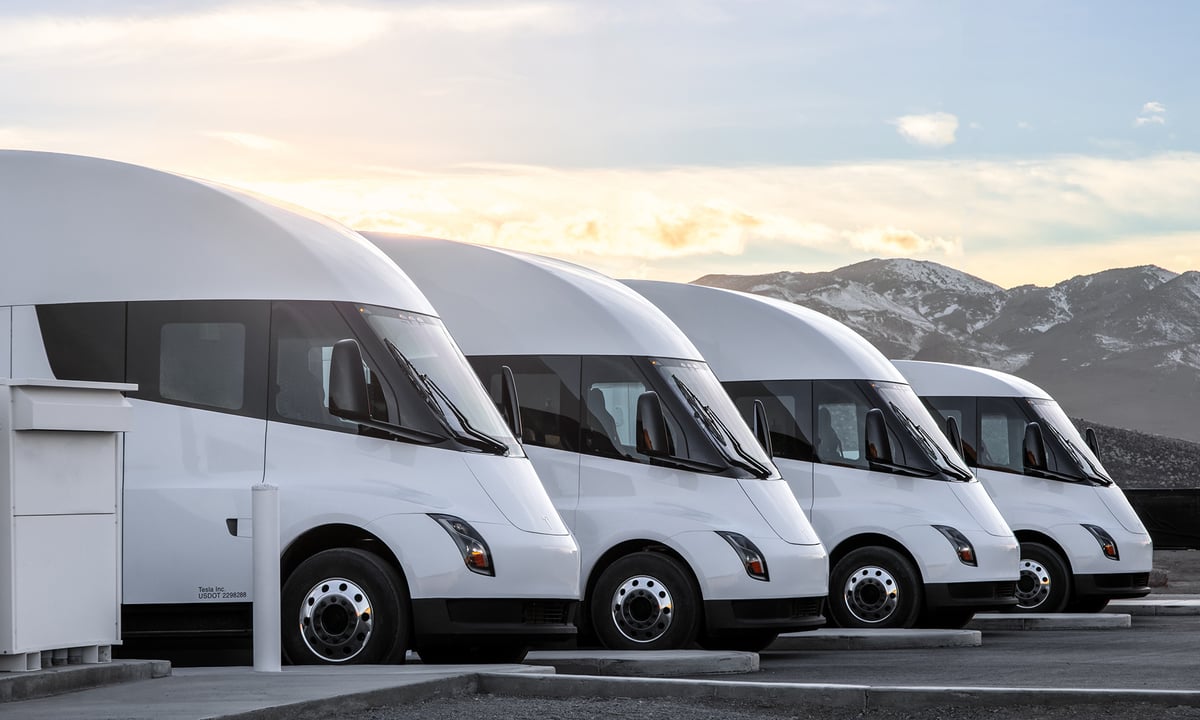
- Semi Truck Production: The Semi truck has been successfully deployed with clients like PepsiCo and has entered commercial production, although the initial production ramp-up will be very slow, laying the groundwork for future market expansion.
- Key Catalyst for Robotaxi: The rollout of Tesla's robotaxi relies on the validation and release of the v15 full self-driving software, expected by year-end; while the number of unsupervised robotaxis is increasing, widespread deployment still hinges on the successful launch of this software.
See More
Broadcom Emerges as a New Giant in AI Chip Market


- Market Capitalization Milestone: Broadcom's market cap has reached approximately $2.1 trillion, surpassing Tesla by nearly $500 billion, marking it as one of the few companies to achieve this milestone, highlighting its strong position in the AI chip market.
- Significant Revenue Growth: In the fiscal first quarter of 2026, Broadcom's revenue rose 29% year-over-year to $19.3 billion, with the semiconductor solutions segment seeing a 52% increase to $12.5 billion, indicating robust demand in the AI sector.
- Cash Flow and Shareholder Returns: Broadcom generated $8.0 billion in free cash flow, representing 41% of revenue, and returned $10.9 billion to shareholders through buybacks and dividends, demonstrating its strong profitability and commitment to shareholders.
- Optimistic Future Outlook: Broadcom anticipates AI chip revenue will exceed $100 billion by 2027 and has secured manufacturing capacity, with management expressing optimism about revenue growth in the coming quarters, projecting a 47% year-over-year increase to $22 billion next quarter.
See More

Tesla's 2026 Growth Foundations Set
- Growth Expectations: Wall Street forecasts Tesla's total revenue to reach $103.406 billion in 2026, with the four new initiatives (FSD, robotaxi, Semi truck, and Optimus) contributing only 2% of revenue, yet expected to account for 46% of growth by 2028, indicating long-term potential.
- Product Progress: The Semi truck has successfully entered production and partnered with PepsiCo, and while initial production ramp-up is slow, this progress lays the groundwork for future market expansion, enhancing Tesla's competitiveness in the commercial EV sector.
- FSD Transition: Tesla's full self-driving software has shifted to a subscription model with good user uptake, and global approvals expected in 2026 will further drive revenue growth, although execution risks remain in the short term.
- Robotaxi Outlook: While the number of Tesla's robotaxis is increasing, the key catalyst for widespread deployment remains the validation and release of the FSD software, anticipated by the end of 2026, which will be crucial for achieving broader market acceptance.
See More

Broadcom Surpasses Tesla in Market Value, AI Revenue Soars
- Market Value Milestone: Broadcom's market capitalization has surpassed $2 trillion, reaching approximately $2.1 trillion, nearly $500 billion more than Tesla, marking it as one of the few companies to achieve this milestone and highlighting its strong position in the semiconductor industry.
- AI Revenue Surge: Broadcom's AI revenue more than doubled, soaring 106% to $8.4 billion last quarter, contributing to a 29% year-over-year revenue increase to $19.3 billion, indicating rapid expansion and strong demand in the AI chip market.
- Strong Cash Flow: The company reported free cash flow of $8.0 billion, representing 41% of total revenue, while returning $10.9 billion to shareholders through buybacks and dividends, showcasing its robust financial health and commitment to shareholder returns.
- Customer Concentration Risk: Despite establishing custom chip partnerships with six major clients, including Google, Meta, and OpenAI, the high customer concentration poses risks; if clients shift to in-house chip designs or reduce spending, it could adversely affect the company's growth and valuation.
See More
SpaceX Set for June IPO, Targeting $75 Billion Raise
- Record IPO: SpaceX is expected to go public in June, aiming to raise approximately $75 billion, which would make it the largest IPO in history with a valuation nearing $2 trillion, potentially placing it among the top ten most valuable companies globally.
- Space Achievements: Last year, SpaceX launched 650 rockets, establishing itself as the world's largest rocket launcher, and successfully executed 11 out of 12 National Security Space Launch missions, showcasing its leadership in the aerospace sector.
- Starlink Profitability: The Starlink segment is SpaceX's most developed and only profitable area, generating $11.4 billion in revenue and $4.4 billion in operating income last year, with plans to launch a more powerful satellite that will enhance downlink capacity by 20 times, further solidifying its market position.
- AI Investment Outlook: SpaceX invested $13 billion in artificial intelligence, despite a $6.4 billion loss in the AI sector last year, with management identifying a $26.5 trillion total addressable market primarily from enterprise applications, reflecting strong confidence in future growth opportunities.
See More
Analysis of SpaceX IPO Prospects and Investment Recommendations
- Profit Growth Highlight: Starlink, as the only profitable division of SpaceX, generated $11.4 billion in revenue in 2025, accounting for 61% of total company revenue, reflecting strong demand and profitability in the global high-speed internet market with a 50% year-over-year increase.
- Market Potential Assessment: SpaceX estimates that of its $28.5 trillion total addressable market, only $1.6 trillion pertains to connectivity, while the AI market represents a substantial $26.5 trillion, indicating that the primary growth driver for the company lies in the AI sector.
- Investment Risk Warning: Despite the potential IPO valuation of $1.5 trillion, SpaceX's core business remains focused on internet access, and current losses exceed profits, prompting investors to carefully evaluate the associated risks and returns.
- Strategic Recommendation: Given SpaceX's high valuation and insufficient profitability, it is advisable for investors to adopt a wait-and-see approach post-IPO, seeking a more attractive entry point to mitigate investment risks.
See More
Tesla Lays Foundation for 2026 Growth
- Revenue Forecast Analysis: Tesla's full self-driving, robotaxi, Semi truck, and Optimus robot are projected to contribute only 2% of total revenue by 2026, but their combined revenue growth will significantly increase in 2027 and 2028, accounting for 46% of overall company revenue growth.
- Full Self-Driving Transition: Tesla's full self-driving software has shifted to a subscription model with excellent uptake, and as more global approvals, particularly in Europe, are anticipated, revenue growth is expected to accelerate in 2026, despite a slow initial production ramp-up.
- Semi Truck Production: The Semi truck has been successfully deployed with clients like PepsiCo and has entered commercial production, although the initial production ramp-up will be very slow, laying the groundwork for future market expansion.
- Key Catalyst for Robotaxi: The rollout of Tesla's robotaxi relies on the validation and release of the v15 full self-driving software, expected by year-end; while the number of unsupervised robotaxis is increasing, widespread deployment still hinges on the successful launch of this software.
See More
Broadcom Emerges as a New Giant in AI Chip Market
- Market Capitalization Milestone: Broadcom's market cap has reached approximately $2.1 trillion, surpassing Tesla by nearly $500 billion, marking it as one of the few companies to achieve this milestone, highlighting its strong position in the AI chip market.
- Significant Revenue Growth: In the fiscal first quarter of 2026, Broadcom's revenue rose 29% year-over-year to $19.3 billion, with the semiconductor solutions segment seeing a 52% increase to $12.5 billion, indicating robust demand in the AI sector.
- Cash Flow and Shareholder Returns: Broadcom generated $8.0 billion in free cash flow, representing 41% of revenue, and returned $10.9 billion to shareholders through buybacks and dividends, demonstrating its strong profitability and commitment to shareholders.
- Optimistic Future Outlook: Broadcom anticipates AI chip revenue will exceed $100 billion by 2027 and has secured manufacturing capacity, with management expressing optimism about revenue growth in the coming quarters, projecting a 47% year-over-year increase to $22 billion next quarter.
See More
Tesla's 2026 Growth Foundations Set
- Growth Expectations: Wall Street forecasts Tesla's total revenue to reach $103.406 billion in 2026, with the four new initiatives (FSD, robotaxi, Semi truck, and Optimus) contributing only 2% of revenue, yet expected to account for 46% of growth by 2028, indicating long-term potential.
- Product Progress: The Semi truck has successfully entered production and partnered with PepsiCo, and while initial production ramp-up is slow, this progress lays the groundwork for future market expansion, enhancing Tesla's competitiveness in the commercial EV sector.
- FSD Transition: Tesla's full self-driving software has shifted to a subscription model with good user uptake, and global approvals expected in 2026 will further drive revenue growth, although execution risks remain in the short term.
- Robotaxi Outlook: While the number of Tesla's robotaxis is increasing, the key catalyst for widespread deployment remains the validation and release of the FSD software, anticipated by the end of 2026, which will be crucial for achieving broader market acceptance.
See More
Broadcom Surpasses Tesla in Market Value, AI Revenue Soars
- Market Value Milestone: Broadcom's market capitalization has surpassed $2 trillion, reaching approximately $2.1 trillion, nearly $500 billion more than Tesla, marking it as one of the few companies to achieve this milestone and highlighting its strong position in the semiconductor industry.
- AI Revenue Surge: Broadcom's AI revenue more than doubled, soaring 106% to $8.4 billion last quarter, contributing to a 29% year-over-year revenue increase to $19.3 billion, indicating rapid expansion and strong demand in the AI chip market.
- Strong Cash Flow: The company reported free cash flow of $8.0 billion, representing 41% of total revenue, while returning $10.9 billion to shareholders through buybacks and dividends, showcasing its robust financial health and commitment to shareholder returns.
- Customer Concentration Risk: Despite establishing custom chip partnerships with six major clients, including Google, Meta, and OpenAI, the high customer concentration poses risks; if clients shift to in-house chip designs or reduce spending, it could adversely affect the company's growth and valuation.
See More