Curtiss-Wright Announces $80M Investment to Expand Pennsylvania Facility
Curtiss-Wright Corporation announced an $80M, multi-year investment to expand operations at its Cheswick, Pennsylvania facility, part of the company's Naval & Power segment, through a combination of internal capital investments, state support and maritime industrial base funding via the U.S. Department of War budget. Curtiss-Wright's Cheswick campus, which spans 118 acres, designs, manufactures, and tests advanced solutions for critical naval defense and commercial nuclear markets. As part of these investments, the company will construct two new buildings to expand manufacturing and testing capacity, improve operational efficiency, reduce lead times, and support future growth. The expansion, which began in 2025 and is supported by the Commonwealth of Pennsylvania and Governor Josh Shapiro, is expected to create approximately 150 new jobs over the next three years while retaining more than 860 existing positions. "This expansion strengthens our ability to meet growing customer demand in our naval defense and commercial nuclear end markets, and reinforces our commitment to the workforce and the community to ensure that Curtiss-Wright remains a critical supplier to these industries for the next decade and beyond," said Lynn M. Bamford, Chair and CEO of Curtiss-Wright Corporation. "Additionally, we are pleased to see the administration's continued strong funding for naval shipbuilding, including an acceleration in maritime industrial base funding."
Trade with 70% Backtested Accuracy
Analyst Views on CW

About CW
About the author


Curtiss-Wright Announces $80 Million Expansion Investment
- Significant Investment: Curtiss-Wright has announced an $80 million multi-year investment to expand its operations at the Cheswick, Pennsylvania facility, leveraging internal capital, state support, and maritime industrial base funding, reflecting strong confidence in future growth.
- Job Creation: The expansion is expected to create approximately 150 new jobs over the next three years while retaining over 860 existing positions, further solidifying the company's role as a critical supplier in the naval defense and commercial nuclear markets.
- Facility Upgrades: The company plans to construct two new buildings to enhance manufacturing and testing capacity, improve operational efficiency, and reduce lead times, thereby better meeting growing customer demands and ensuring competitiveness for the next decade.
- State Support: Pennsylvania Governor Josh Shapiro announced a $1.21 million grant through the PA SITES program to support this expansion, highlighting the state's proactive role in driving economic growth and strengthening the manufacturing sector.

SpaceX's IPO Financing and Loss Analysis Post-Launch


- IPO Financing Overview: Space Exploration Technologies raised $86 billion in its IPO and subsequently borrowed an additional $25 billion for refinancing, indicating significant financial pressure following its acquisition of X and xAI.
- Current Losses: In Q1 2026, SpaceX reported a net loss of $4.28 billion, with its xAI division generating $818 million in revenue but incurring $2.47 billion in operating losses, highlighting severe profitability challenges.
- Debt Outlook: Analysts project that SpaceX's net debt could reach $400 billion by 2031, underscoring the immense pressure and potential risks in its future financial management.
- Industry Comparison: In contrast to SpaceX's high-risk, high-debt model, companies like RTX and Heico demonstrate stable revenue growth and profitability, suggesting that robust business models are more attractive in the aerospace sector.

Aerospace Investors Should Focus on Profitable Companies

- Industry Leaders' Performance: RTX achieved $22.1 billion in sales in Q1 2026, a 9% year-over-year increase, with Raytheon's operating profit rising 24%, indicating strong growth potential amid rapidly expanding global defense budgets.
- Profitability Enhancement: Heico reported record net income up 49% year-over-year in Q2 fiscal 2026, with net sales reaching $1.375 billion, successfully integrating four acquisitions, showcasing its robust performance and sustained profitability in the aviation maintenance market.
- Defense Market Opportunity: Curtiss-Wright's sales hit $914 million in Q1 2026, up 13%, with its defense nuclear business supplying critical components for U.S. Navy submarines and aircraft carriers, ensuring long-term revenue stability.
- Material Demand Growth: Hexcel reported net sales of $501.5 million in Q1 2026, a 9.9% year-over-year increase, as Airbus and Boeing ramp up production of the A350 and 787, driving sustained demand for carbon fiber composites and enhancing future performance prospects.

Curtiss-Wright Announces $80M Investment to Expand Pennsylvania Facility
- Significant Investment: Curtiss-Wright announced an $80 million investment to expand its manufacturing facility in Cheswick, Pennsylvania, aimed at supporting growth in its naval defense and commercial nuclear sectors, reflecting the company's confidence in future market demand.
- Facility Expansion Plans: The expansion will involve building two new facilities to enhance production and testing capacity, which will not only improve operational efficiency but also reduce delivery times, thereby strengthening the company's position in the competitive defense and nuclear markets.
- Job Creation: The project is expected to create approximately 150 new jobs over the next three years while retaining more than 860 existing positions, indicating the company's commitment to employee stability and development alongside business expansion.
- Diverse Funding Sources: The investment will be financed through a mix of Curtiss-Wright's internal capital, support from the Commonwealth of Pennsylvania, and maritime industrial base funding, with an additional $1.21 million grant from the PA SITES program enhancing the project's feasibility.
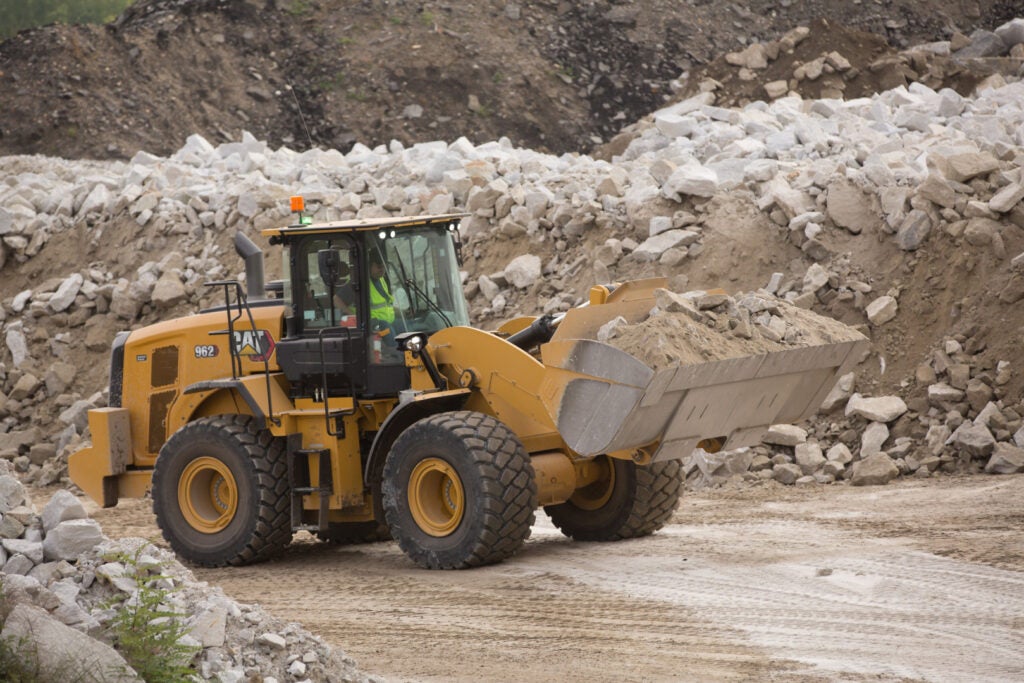
Caterpillar and Industrial Stocks Hit 52-Week Highs Amid Market Optimism
- Market Optimism: Caterpillar (CAT) and other industrial stocks reached new 52-week highs as the Dow Jones Industrial Average hit an all-time high, reflecting growing investor confidence in economic recovery amid a potential peace agreement between the U.S. and Iran.
- Declining Energy Prices: The ongoing decline in oil prices has led to expectations that reopening the Strait of Hormuz could alleviate global energy supply and inflation concerns, thereby improving the outlook for manufacturing, construction, and capital spending, which further fueled the rise in industrial stocks.
- Investor Rotation: Investors are rotating into economically sensitive sectors, particularly industrials, indicating a shift in sentiment towards a more favorable economic backdrop, with many companies like Wabtec and Manitowoc also reaching new highs.
- Broadening Market Leadership: The concentration of new highs among industrial stocks suggests an expansion of market leadership beyond technology, as investors focus on areas like factory automation, infrastructure spending, and aerospace production, signaling improved growth expectations and reduced input costs.
Impact of SpaceX IPO on Four Industrial Companies
- Kratos' Market Position: Kratos Defense & Security Solutions secured a $446.8 million contract to design and operate ground system architecture for emerging medium-Earth-orbit space-sensing constellations, and as SpaceX's IPO progresses, the demand for Kratos' services is expected to accelerate, further solidifying its dominance in commercial satellite infrastructure.
- Moog's Technological Innovations: Moog unveiled a suite of satellite propulsion innovations at the 2026 SATELLITE conference, and as Starship reduces the cost per kilogram to orbit, the demand for Moog's critical components is likely to increase significantly, driving its continued growth in the aerospace sector.
- Curtiss-Wright's Financial Performance: Curtiss-Wright reported $914 million in sales for Q1 2026, a 13% year-over-year increase, and raised its full-year sales guidance to $3.74 billion to $3.80 billion, indicating robust growth potential in defense and commercial space sectors, benefiting from the market expansion driven by SpaceX's IPO.
- Mercury's Contract Growth: Mercury Systems announced contracts totaling over $60 million in early 2026 focused on defense-grade space and missile programs, and as the commercial space economy grows, the demand for Mercury's hardware handling sensitive signals is expected to rise, highlighting its significance in the industry.
Curtiss-Wright Announces $80 Million Expansion Investment
- Significant Investment: Curtiss-Wright has announced an $80 million multi-year investment to expand its operations at the Cheswick, Pennsylvania facility, leveraging internal capital, state support, and maritime industrial base funding, reflecting strong confidence in future growth.
- Job Creation: The expansion is expected to create approximately 150 new jobs over the next three years while retaining over 860 existing positions, further solidifying the company's role as a critical supplier in the naval defense and commercial nuclear markets.
- Facility Upgrades: The company plans to construct two new buildings to enhance manufacturing and testing capacity, improve operational efficiency, and reduce lead times, thereby better meeting growing customer demands and ensuring competitiveness for the next decade.
- State Support: Pennsylvania Governor Josh Shapiro announced a $1.21 million grant through the PA SITES program to support this expansion, highlighting the state's proactive role in driving economic growth and strengthening the manufacturing sector.
SpaceX's IPO Financing and Loss Analysis Post-Launch
- IPO Financing Overview: Space Exploration Technologies raised $86 billion in its IPO and subsequently borrowed an additional $25 billion for refinancing, indicating significant financial pressure following its acquisition of X and xAI.
- Current Losses: In Q1 2026, SpaceX reported a net loss of $4.28 billion, with its xAI division generating $818 million in revenue but incurring $2.47 billion in operating losses, highlighting severe profitability challenges.
- Debt Outlook: Analysts project that SpaceX's net debt could reach $400 billion by 2031, underscoring the immense pressure and potential risks in its future financial management.
- Industry Comparison: In contrast to SpaceX's high-risk, high-debt model, companies like RTX and Heico demonstrate stable revenue growth and profitability, suggesting that robust business models are more attractive in the aerospace sector.
Aerospace Investors Should Focus on Profitable Companies
- Industry Leaders' Performance: RTX achieved $22.1 billion in sales in Q1 2026, a 9% year-over-year increase, with Raytheon's operating profit rising 24%, indicating strong growth potential amid rapidly expanding global defense budgets.
- Profitability Enhancement: Heico reported record net income up 49% year-over-year in Q2 fiscal 2026, with net sales reaching $1.375 billion, successfully integrating four acquisitions, showcasing its robust performance and sustained profitability in the aviation maintenance market.
- Defense Market Opportunity: Curtiss-Wright's sales hit $914 million in Q1 2026, up 13%, with its defense nuclear business supplying critical components for U.S. Navy submarines and aircraft carriers, ensuring long-term revenue stability.
- Material Demand Growth: Hexcel reported net sales of $501.5 million in Q1 2026, a 9.9% year-over-year increase, as Airbus and Boeing ramp up production of the A350 and 787, driving sustained demand for carbon fiber composites and enhancing future performance prospects.
Curtiss-Wright Announces $80M Investment to Expand Pennsylvania Facility
- Significant Investment: Curtiss-Wright announced an $80 million investment to expand its manufacturing facility in Cheswick, Pennsylvania, aimed at supporting growth in its naval defense and commercial nuclear sectors, reflecting the company's confidence in future market demand.
- Facility Expansion Plans: The expansion will involve building two new facilities to enhance production and testing capacity, which will not only improve operational efficiency but also reduce delivery times, thereby strengthening the company's position in the competitive defense and nuclear markets.
- Job Creation: The project is expected to create approximately 150 new jobs over the next three years while retaining more than 860 existing positions, indicating the company's commitment to employee stability and development alongside business expansion.
- Diverse Funding Sources: The investment will be financed through a mix of Curtiss-Wright's internal capital, support from the Commonwealth of Pennsylvania, and maritime industrial base funding, with an additional $1.21 million grant from the PA SITES program enhancing the project's feasibility.
Caterpillar and Industrial Stocks Hit 52-Week Highs Amid Market Optimism
- Market Optimism: Caterpillar (CAT) and other industrial stocks reached new 52-week highs as the Dow Jones Industrial Average hit an all-time high, reflecting growing investor confidence in economic recovery amid a potential peace agreement between the U.S. and Iran.
- Declining Energy Prices: The ongoing decline in oil prices has led to expectations that reopening the Strait of Hormuz could alleviate global energy supply and inflation concerns, thereby improving the outlook for manufacturing, construction, and capital spending, which further fueled the rise in industrial stocks.
- Investor Rotation: Investors are rotating into economically sensitive sectors, particularly industrials, indicating a shift in sentiment towards a more favorable economic backdrop, with many companies like Wabtec and Manitowoc also reaching new highs.
- Broadening Market Leadership: The concentration of new highs among industrial stocks suggests an expansion of market leadership beyond technology, as investors focus on areas like factory automation, infrastructure spending, and aerospace production, signaling improved growth expectations and reduced input costs.
Impact of SpaceX IPO on Four Industrial Companies
- Kratos' Market Position: Kratos Defense & Security Solutions secured a $446.8 million contract to design and operate ground system architecture for emerging medium-Earth-orbit space-sensing constellations, and as SpaceX's IPO progresses, the demand for Kratos' services is expected to accelerate, further solidifying its dominance in commercial satellite infrastructure.
- Moog's Technological Innovations: Moog unveiled a suite of satellite propulsion innovations at the 2026 SATELLITE conference, and as Starship reduces the cost per kilogram to orbit, the demand for Moog's critical components is likely to increase significantly, driving its continued growth in the aerospace sector.
- Curtiss-Wright's Financial Performance: Curtiss-Wright reported $914 million in sales for Q1 2026, a 13% year-over-year increase, and raised its full-year sales guidance to $3.74 billion to $3.80 billion, indicating robust growth potential in defense and commercial space sectors, benefiting from the market expansion driven by SpaceX's IPO.
- Mercury's Contract Growth: Mercury Systems announced contracts totaling over $60 million in early 2026 focused on defense-grade space and missile programs, and as the commercial space economy grows, the demand for Mercury's hardware handling sensitive signals is expected to rise, highlighting its significance in the industry.