Cursor AI Startup Valued at $50 Billion in Funding Talks
Written by Emily J. Thompson, Senior Investment Analyst
Updated: Mar 12 2026
0mins
Should l Buy NVDA?
Source: seekingalpha
- Funding Negotiations: Cursor is in discussions with investors for a funding round that could value the startup at approximately $50 billion, nearly doubling its valuation from last fall, indicating strong market confidence in its potential.
- Rapid Product Growth: Since its launch in 2023, Cursor's AI assistant has enabled programmers to write and debug code more efficiently, becoming a central player in the tech's 'vibe coding' era, reflecting a surge in demand for AI coding tools among software developers.
- Significant Revenue Growth: According to earlier reports, Cursor's revenue run rate has doubled in three months, with over 30,000 developers now using its tools, indicating rapid expansion in market acceptance and user base.
- Competitive Market Dynamics: Cursor aims to dominate the AI coding assistant market while facing competition from companies like OpenAI, Anthropic, and Google, highlighting its strategic significance in the fast-evolving tech landscape.
Trade with 70% Backtested Accuracy
Stop guessing "Should I Buy NVDA?" and start using high-conviction signals backed by rigorous historical data.
Sign up today to access powerful investing tools and make smarter, data-driven decisions.
Analyst Views on NVDA
Wall Street analysts forecast NVDA stock price to rise
41 Analyst Rating
39 Buy
1 Hold
1 Sell
Strong Buy
Current: 220.780

Low
200.00
Averages
264.97
High
352.00
Current: 220.780
Low
200.00
Averages
264.97
High
352.00
About NVDA
NVIDIA Corporation is an artificial intelligence (AI) infrastructure company. The Company is engaged in accelerated computing to help solve the challenging computational problems. Its segments include Compute & Networking and Graphics. The Compute & Networking segment includes its Data Center accelerated computing and networking platforms and AI solutions and software, and automotive platforms and autonomous and electric vehicle solutions, including software. The Graphics segment includes GeForce GPUs for gaming and personal computers (PCs), and Quadro/NVIDIA RTX GPUs for enterprise workstation graphics. Its technology stack includes the foundational NVIDIA CUDA development platform that runs on all NVIDIA GPUs, as well as hundreds of domain-specific software libraries, frameworks, algorithms, software development kits (SDKs), and application programming interfaces (APIs). Its platforms address four markets, which include Data Center, Gaming, Professional Visualization, and Automotive.
About the author

Emily J. Thompson
Emily J. Thompson, a Chartered Financial Analyst (CFA) with 12 years in investment research, graduated with honors from the Wharton School. Specializing in industrial and technology stocks, she provides in-depth analysis for Intellectia’s earnings and market brief reports.

Nvidia's Q1 Revenue Expected to Exceed Estimates by $1.4B

- Revenue Surge Expected: According to Citi, Nvidia's Q1 FY2027 revenue is projected to reach $80B, exceeding the consensus estimate of $78.6B by $1.4B, driven by a robust ramp of the B300 product line.
- Continued Growth Trend: The company anticipates an 11% quarter-over-quarter sales increase in Q2 FY2027, reaching $89B, primarily due to the ongoing ramp of B300 and faster-than-expected shipments of 1.6 trillion transceivers, solidifying its market position.
- Strong GPU Demand: Nvidia has only missed consensus estimates by more than $1B three times in the past 12 quarters, with CEO Jensen Huang describing the demand for their GPUs as “insane,” highlighting the company's strong appeal in high-performance computing.
- Sales Forecast Revision: Citi has raised Nvidia's FY2027 sales forecast to $284B, reflecting a 79% year-over-year increase, with AI GPUs expected to account for 70% to 80% of total data center sales, showcasing the company's strategic advantage in AI and data processing.
See More
Nvidia's Dominance in AI Market Continues to Strengthen
- Market Share Advantage: Nvidia holds a 92% share of the GPU data center market, and with global AI infrastructure spending projected to reach $7 trillion by 2030, this will further solidify its market leadership and drive sustained growth for the company.
- Future Revenue Expectations: Nvidia anticipates first-quarter revenue of $78 billion for fiscal Q4 2026, with total revenue expected to reach $922 billion over the next seven quarters, indicating strong growth potential and market confidence.
- Stock Price Forecast: Should Nvidia achieve $621 billion in revenue by 2027, its stock price could surge by 252% to $640, resulting in a market cap of approximately $15.5 trillion, reflecting optimistic market expectations for its future performance.
- Accelerated Innovation Cycle: By shortening its GPU update cycle to 12-18 months compared to competitors' 3-5 years, Nvidia's rapid innovation capability will help maintain its lead in the AI sector, further boosting investor confidence.
See More

Nvidia CEO Jensen Huang Joins Trump on China Visit

- Executive Visit: Nvidia CEO Jensen Huang accompanies President Trump to Beijing for talks with Chinese President Xi Jinping, highlighting his close ties with both Trump and the Chinese market, which could positively influence Nvidia's future business in China.
- Market Relationship Maintenance: Huang emphasizes the importance of keeping the Chinese market open for Nvidia, arguing that technology flow benefits both sides, a stance that may affect U.S. government attitudes towards China’s tech policies and subsequently Nvidia's market strategy.
- Upcoming Earnings Report: Nvidia is set to report its first-quarter earnings on May 20, with the market closely watching its performance in China and future outlook, which could impact investor confidence in the company's stock.
- Historical Context Comparison: Reflecting on Trump's 2017 visit, which promised $250 billion in investments that largely failed to materialize, expectations for current talks are low, prompting investors to remain cautious about potential outcomes.
See More
Key Market Insights: Semiconductor and AI Stocks


- Semiconductor and AI Stock Rebound: After a day of selling, stocks like Micron and Corning are rebounding this morning, indicating ongoing market interest in semiconductor and AI stocks, despite S&P futures declining due to hotter-than-expected April wholesale inflation data.
- Nvidia Price Target Increase: Bank of America raised Nvidia's price target from $300 to $320, reflecting optimism ahead of its upcoming earnings report, while CEO Jensen Huang's attendance at the summit with Trump in China may further boost the stock.
- Qnity Electronics Strong Performance: Following a strong earnings report, Qnity Electronics saw price target increases from Deutsche Bank and BMO Capital to $180 and $200 respectively, showcasing market confidence in AI stocks, particularly amidst a broader market downturn.
- Johnson & Johnson Rating Upgrade: Leerink upgraded Johnson & Johnson to a buy rating with a price target increase from $252 to $265, anticipating sales for its psoriasis drug Icotyde to reach $10.5 billion by 2032, significantly above the consensus estimate of $7.4 billion, highlighting its growth potential.
See More
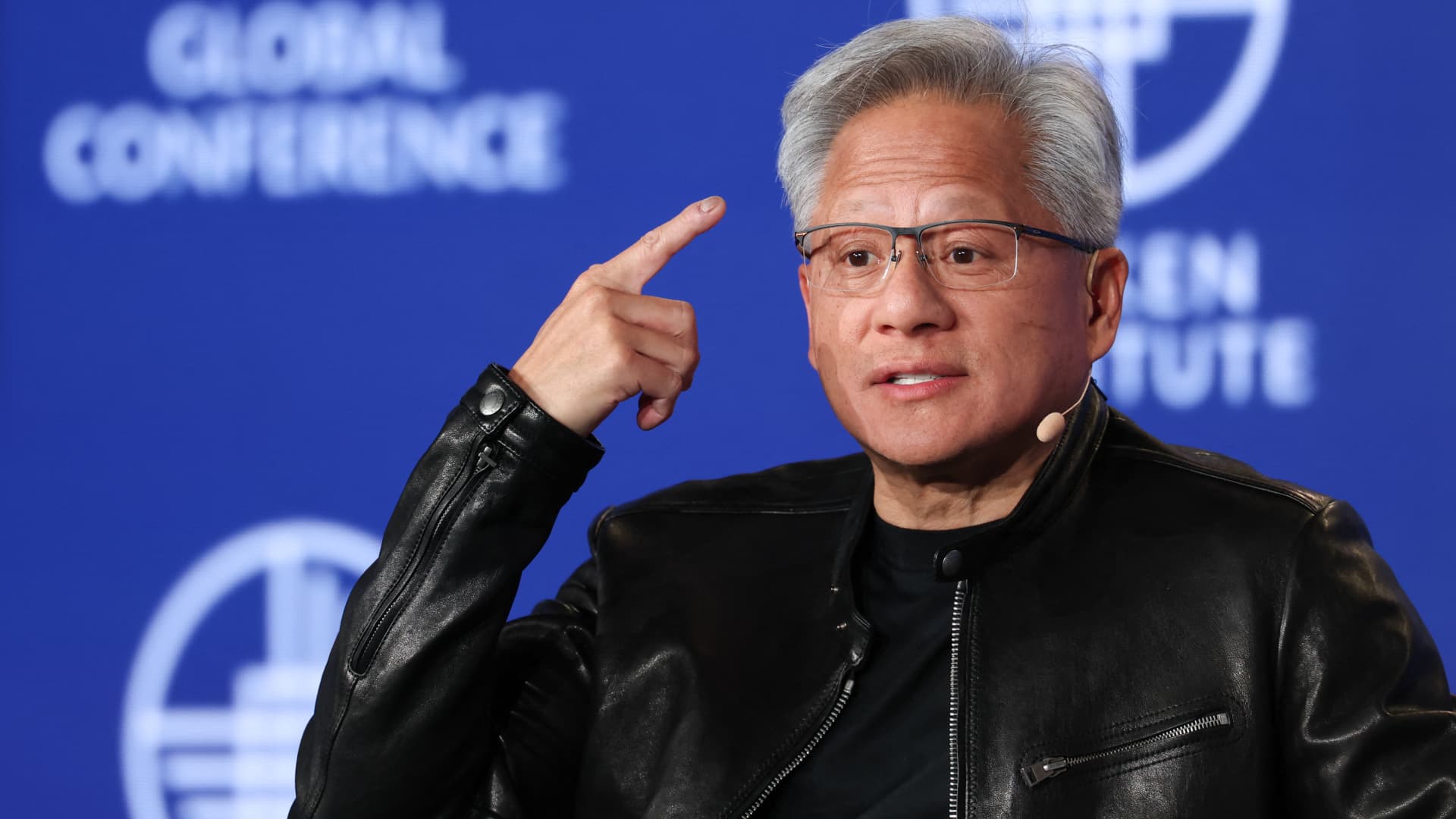
Nvidia Partners with AI Startup Ineffable Intelligence for Superintelligence Development


- Collaboration for Superintelligence: Nvidia has entered into an engineering-level partnership with the newly founded AI startup Ineffable Intelligence to co-develop AI systems that learn through trial and error, pushing the boundaries of AI technology.
- Strong Funding Background: Founded in late 2025, Ineffable Intelligence secured a record $1.1 billion in seed funding in April, co-led by Sequoia and Lightspeed, with participation from Nvidia and other notable investors, highlighting the market's confidence in its technological potential.
- Innovative Technical Focus: Unlike traditional AI models, Ineffable will concentrate on reinforcement learning, training on rich forms of experience that may require novel model architectures and algorithms, thereby enhancing AI systems' ability to discover new knowledge independently.
- Emerging Industry Trend: Ineffable is among several new AI labs established by former top researchers from major tech companies, attracting billions in investment, indicating a strong market demand and confidence in the next generation of intelligent systems.
See More
Nvidia Partners with Startup to Develop AI Systems
- Collaborative AI Development: Nvidia has partnered with British startup Ineffable Intelligence to focus on reinforcement learning, aiming to develop AI systems that learn from experience, thus pushing the next frontier of AI.
- Funding Background: Founded in 2025, Ineffable Intelligence secured a record $1.1 billion in seed funding in April, with participation from notable investors like Nvidia, Sequoia, and Lightspeed, indicating strong market confidence in its technology.
- Innovative Technical Direction: Unlike traditional AI models, Ineffable will emphasize training through rich experiences, potentially requiring novel model architectures and training algorithms to tackle the more complex challenge of AI discovering new knowledge independently.
- Engineering Collaboration: Engineers from both companies will collaborate to build infrastructure for large-scale reinforcement learning, utilizing Nvidia's Grace Blackwell chips and Vera Rubin platform to enhance the continuous learning capabilities of AI systems.
See More
Nvidia's Q1 Revenue Expected to Exceed Estimates by $1.4B
- Revenue Surge Expected: According to Citi, Nvidia's Q1 FY2027 revenue is projected to reach $80B, exceeding the consensus estimate of $78.6B by $1.4B, driven by a robust ramp of the B300 product line.
- Continued Growth Trend: The company anticipates an 11% quarter-over-quarter sales increase in Q2 FY2027, reaching $89B, primarily due to the ongoing ramp of B300 and faster-than-expected shipments of 1.6 trillion transceivers, solidifying its market position.
- Strong GPU Demand: Nvidia has only missed consensus estimates by more than $1B three times in the past 12 quarters, with CEO Jensen Huang describing the demand for their GPUs as “insane,” highlighting the company's strong appeal in high-performance computing.
- Sales Forecast Revision: Citi has raised Nvidia's FY2027 sales forecast to $284B, reflecting a 79% year-over-year increase, with AI GPUs expected to account for 70% to 80% of total data center sales, showcasing the company's strategic advantage in AI and data processing.
See More
Nvidia's Dominance in AI Market Continues to Strengthen
- Market Share Advantage: Nvidia holds a 92% share of the GPU data center market, and with global AI infrastructure spending projected to reach $7 trillion by 2030, this will further solidify its market leadership and drive sustained growth for the company.
- Future Revenue Expectations: Nvidia anticipates first-quarter revenue of $78 billion for fiscal Q4 2026, with total revenue expected to reach $922 billion over the next seven quarters, indicating strong growth potential and market confidence.
- Stock Price Forecast: Should Nvidia achieve $621 billion in revenue by 2027, its stock price could surge by 252% to $640, resulting in a market cap of approximately $15.5 trillion, reflecting optimistic market expectations for its future performance.
- Accelerated Innovation Cycle: By shortening its GPU update cycle to 12-18 months compared to competitors' 3-5 years, Nvidia's rapid innovation capability will help maintain its lead in the AI sector, further boosting investor confidence.
See More
Nvidia CEO Jensen Huang Joins Trump on China Visit
- Executive Visit: Nvidia CEO Jensen Huang accompanies President Trump to Beijing for talks with Chinese President Xi Jinping, highlighting his close ties with both Trump and the Chinese market, which could positively influence Nvidia's future business in China.
- Market Relationship Maintenance: Huang emphasizes the importance of keeping the Chinese market open for Nvidia, arguing that technology flow benefits both sides, a stance that may affect U.S. government attitudes towards China’s tech policies and subsequently Nvidia's market strategy.
- Upcoming Earnings Report: Nvidia is set to report its first-quarter earnings on May 20, with the market closely watching its performance in China and future outlook, which could impact investor confidence in the company's stock.
- Historical Context Comparison: Reflecting on Trump's 2017 visit, which promised $250 billion in investments that largely failed to materialize, expectations for current talks are low, prompting investors to remain cautious about potential outcomes.
See More
Key Market Insights: Semiconductor and AI Stocks
- Semiconductor and AI Stock Rebound: After a day of selling, stocks like Micron and Corning are rebounding this morning, indicating ongoing market interest in semiconductor and AI stocks, despite S&P futures declining due to hotter-than-expected April wholesale inflation data.
- Nvidia Price Target Increase: Bank of America raised Nvidia's price target from $300 to $320, reflecting optimism ahead of its upcoming earnings report, while CEO Jensen Huang's attendance at the summit with Trump in China may further boost the stock.
- Qnity Electronics Strong Performance: Following a strong earnings report, Qnity Electronics saw price target increases from Deutsche Bank and BMO Capital to $180 and $200 respectively, showcasing market confidence in AI stocks, particularly amidst a broader market downturn.
- Johnson & Johnson Rating Upgrade: Leerink upgraded Johnson & Johnson to a buy rating with a price target increase from $252 to $265, anticipating sales for its psoriasis drug Icotyde to reach $10.5 billion by 2032, significantly above the consensus estimate of $7.4 billion, highlighting its growth potential.
See More
Nvidia Partners with AI Startup Ineffable Intelligence for Superintelligence Development
- Collaboration for Superintelligence: Nvidia has entered into an engineering-level partnership with the newly founded AI startup Ineffable Intelligence to co-develop AI systems that learn through trial and error, pushing the boundaries of AI technology.
- Strong Funding Background: Founded in late 2025, Ineffable Intelligence secured a record $1.1 billion in seed funding in April, co-led by Sequoia and Lightspeed, with participation from Nvidia and other notable investors, highlighting the market's confidence in its technological potential.
- Innovative Technical Focus: Unlike traditional AI models, Ineffable will concentrate on reinforcement learning, training on rich forms of experience that may require novel model architectures and algorithms, thereby enhancing AI systems' ability to discover new knowledge independently.
- Emerging Industry Trend: Ineffable is among several new AI labs established by former top researchers from major tech companies, attracting billions in investment, indicating a strong market demand and confidence in the next generation of intelligent systems.
See More
Nvidia Partners with Startup to Develop AI Systems
- Collaborative AI Development: Nvidia has partnered with British startup Ineffable Intelligence to focus on reinforcement learning, aiming to develop AI systems that learn from experience, thus pushing the next frontier of AI.
- Funding Background: Founded in 2025, Ineffable Intelligence secured a record $1.1 billion in seed funding in April, with participation from notable investors like Nvidia, Sequoia, and Lightspeed, indicating strong market confidence in its technology.
- Innovative Technical Direction: Unlike traditional AI models, Ineffable will emphasize training through rich experiences, potentially requiring novel model architectures and training algorithms to tackle the more complex challenge of AI discovering new knowledge independently.
- Engineering Collaboration: Engineers from both companies will collaborate to build infrastructure for large-scale reinforcement learning, utilizing Nvidia's Grace Blackwell chips and Vera Rubin platform to enhance the continuous learning capabilities of AI systems.
See More