Creative Ways to Invest in Anthropic Pre-IPO
Written by Emily J. Thompson, Senior Investment Analyst
Updated: May 09 2026
0mins


Source: Yahoo Finance
- Diverse Investment Options: Investors can indirectly invest in Anthropic through the KraneShares Artificial Intelligence and Technology ETF (AGIX), which holds a 2.6% stake in Anthropic, making it the 10th largest holding, thus providing broad exposure to multiple tech companies and reducing the risk of single investments.
- High Fee Structure: AGIX has a management fee of 0.99%, meaning investors pay $99 for every $10,000 invested; despite the high fees, its stock price has risen 17% in 2026, indicating strong investment return potential.
- Closed-End Fund Investment: The ARK Venture Fund (ARKVX), focusing on AI and next-gen internet, has a 3.0% allocation to Anthropic, and while its management fee is 2.75%, it has delivered a 9% return, showcasing robust growth potential.
- Emerging Investment Opportunity: Destiny Tech100 (DXYZ) recently announced a $100 million investment in Anthropic as part of a $127 million portfolio expansion; despite a 2.5% management fee, its stock has surged 30% in 2026, reflecting strong performance in the emerging tech sector.
Trade with 70% Backtested Accuracy
Stop guessing "Should I Buy NVDA?" and start using high-conviction signals backed by rigorous historical data.
Sign up today to access powerful investing tools and make smarter, data-driven decisions.
Analyst Views on NVDA
Wall Street analysts forecast NVDA stock price to rise
41 Analyst Rating
39 Buy
1 Hold
1 Sell
Strong Buy
Current: 224.360

Low
200.00
Averages
264.97
High
352.00
Current: 224.360
Low
200.00
Averages
264.97
High
352.00
About NVDA
NVIDIA Corporation is an artificial intelligence (AI) infrastructure company. The Company is engaged in accelerated computing to help solve the challenging computational problems. Its segments include Compute & Networking and Graphics. The Compute & Networking segment includes its Data Center accelerated computing and networking platforms and AI solutions and software, and automotive platforms and autonomous and electric vehicle solutions, including software. The Graphics segment includes GeForce GPUs for gaming and personal computers (PCs), and Quadro/NVIDIA RTX GPUs for enterprise workstation graphics. Its technology stack includes the foundational NVIDIA CUDA development platform that runs on all NVIDIA GPUs, as well as hundreds of domain-specific software libraries, frameworks, algorithms, software development kits (SDKs), and application programming interfaces (APIs). Its platforms address four markets, which include Data Center, Gaming, Professional Visualization, and Automotive.
About the author

Emily J. Thompson
Emily J. Thompson, a Chartered Financial Analyst (CFA) with 12 years in investment research, graduated with honors from the Wharton School. Specializing in industrial and technology stocks, she provides in-depth analysis for Intellectia’s earnings and market brief reports.
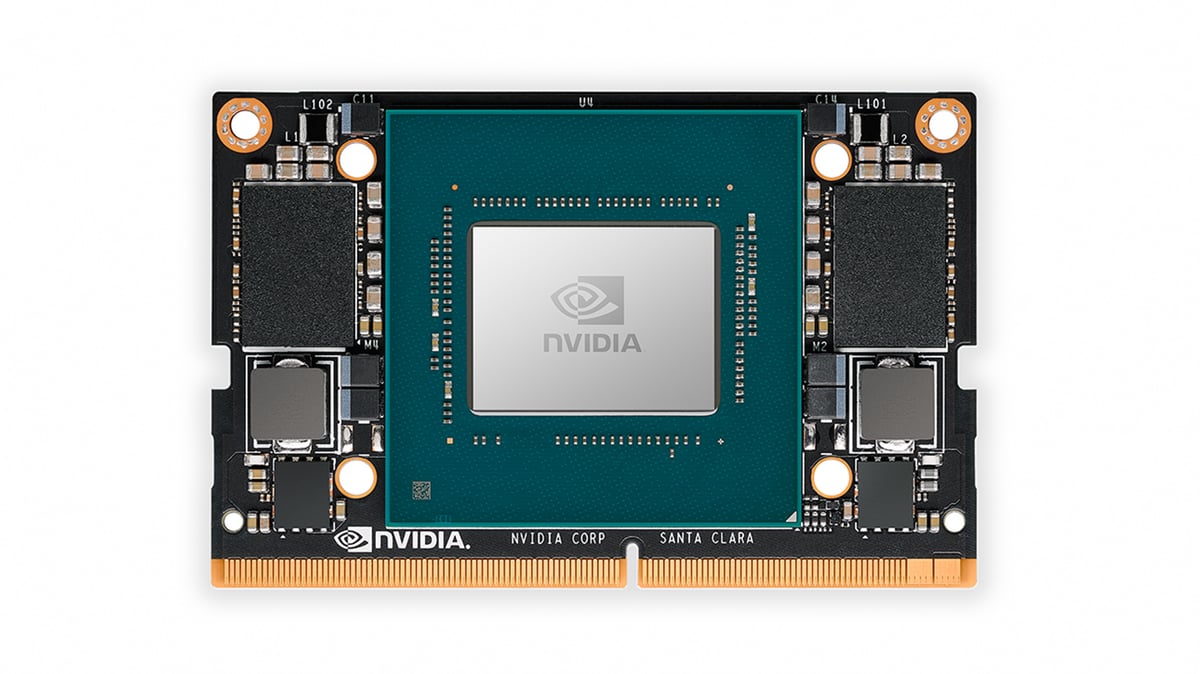
Nvidia Surpasses $5 Trillion Market Valuation

- Massive Market Opportunity: Nvidia's CFO Collette Kress highlighted a $4 trillion market opportunity, with hyperscaler annual spending projected to exceed $1 trillion next year and reach $3 to $4 trillion by the decade's end, positioning Nvidia to capture a significant share.
- Significant Revenue Growth: In the first quarter of fiscal 2027, Nvidia reported a 95% year-over-year revenue increase, marking its 14th consecutive quarter of growth, with a sequential revenue boost of $13.5 billion, underscoring its robust performance in AI and data centers.
- Gross Margin Fluctuations: Nvidia's gross margin rose from 60% last year to 75% this year; however, the previous year's figures were impacted by a charge for not shipping specialized chips to China, indicating limited actual improvement, with expectations for the second quarter to maintain at 75%.
- Stock Price Expectation Pressure: Despite Nvidia's first-quarter results exceeding expectations, the stock price has stagnated, partly due to overly high market expectations for future growth, necessitating shareholders to prepare for serious market evaluations and perfection expectations.
See More

Sanders Proposes Public Ownership in AI Companies
- Public Ownership Proposal: Sanders proposed a one-time 50% tax on stock to give the public a direct stake in the largest AI companies in the U.S., aiming to ensure that the economic gains from AI benefit a broader society rather than a small group of corporate leaders, thereby promoting social equity.
- Surge in AI Investment: Major tech companies are expected to spend over $750 billion on AI infrastructure this year, and Sanders' proposal comes amid intensifying AI competition, highlighting the technology's profound impact on the economy, education, and society, which could reshape future wealth distribution.
- IPO Focus: AI companies like Anthropic, OpenAI, and SpaceX are planning public listings, with Anthropic's valuation reaching $965 billion and OpenAI targeting an IPO valuation between $852 billion and $1.1 trillion, reflecting strong market interest and bullish investor sentiment towards AI firms.
- Technological Impact and Risks: Sanders noted that AI's effects are already felt across various sectors, including economy, education, and environmental policy, while expressing concerns about the independence of advanced AI systems and potential risks, emphasizing the need for legislation to ensure technological advancements benefit society as a whole.
See More

Nvidia's Financial Reporting Change Signals Growth Potential
- Reporting Structure Change: Nvidia has restructured its data center revenue reporting to highlight hyperscale and ACIE, revealing that $37.9 billion from hyperscale accounts for nearly half of the $75.2 billion total, indicating potential vulnerability due to reliance on a few tech giants.
- Hyperscale Revenue Growth: In the latest quarter, hyperscale revenue surged by 115% while ACIE sales rose by 74%, demonstrating that Nvidia's chips remain the preferred choice for AI investments across various industries, solidifying its market position.
- Diversification Outlook: Investors are keenly watching for growth outside of hyperscale; if future reports show increased revenue from other segments, it could bolster confidence in Nvidia's diversification strategy and positively impact stock performance.
- Ongoing AI Opportunities: Nvidia's robust and diversified business model, coupled with continuous opportunities in AI, positions its stock favorably for the foreseeable future, leading investors to view it as a strong buy.
See More

Investors Worry About Market Overheating Risks


- Rapid Market Recovery: The S&P 500 surged over 16% in April and May, a magnitude only seen four times since WWII, typically following major economic shocks, raising concerns about the sustainability of the current rally.
- Tech Stocks Driving Gains: The latest earnings season has highlighted strong performances from tech stocks, with Micron Technology recently joining the $1 trillion club, indicating a growing dominance of large-cap tech companies, yet this euphoria raises fears of market overheating.
- Increasing Potential Risks: While oil prices remain steady, the prolonged closure of the Strait of Hormuz could impact markets, and Deutsche Bank Research notes that consumer savings rates have dropped to levels only seen briefly in 2022 and before the 2008 crisis, indicating rising economic pressures.
- Shift in Market Sentiment: Morgan Stanley's Serena Tang has observed a negative shift in market sentiment indicators, while Barclays' Stefano Pascale warns that positioning is becoming stretched, suggesting that the risks of a market pullback are increasing, necessitating caution among investors.
See More

Alphabet Announces $80 Billion Equity Offering for AI Expansion


- Equity Financing Plan: Alphabet announced an $80 billion equity offering aimed at funding its AI infrastructure buildout, which could lead to a 2% stock dilution; however, analysts describe this impact as 'very modest.'
- Declining Cash Flow Expectations: Free cash flow for Alphabet is projected to drop from $73 billion in 2025 to about $20 billion by 2026, raising concerns about future capital expenditures and potentially forcing investors to reassess their return-on-investment calculations.
- Rising Capital Expenditures: Analysts predict AI capital spending could exceed $1 trillion by 2027, with Nvidia forecasting annual expenditures to reach between $3 trillion and $4 trillion by 2030, indicating a growing demand for infrastructure investment in the sector.
- Shift in Financing Methods: Alphabet's move towards equity financing raises concerns among analysts, suggesting that traditional debt financing methods may be losing appeal, which could impact the overall financing strategies within the industry.
See More

Vanguard Information Technology ETF Continues to Outperform
- Tech Sector Recovery: Since the beginning of 2023, the Vanguard Information Technology ETF (VGT) has achieved a total return of 28.6%, surpassing the energy sector's 26.8% and the S&P 500's 11.3%, indicating a robust recovery in tech stocks and a resurgence of investor confidence.
- Semiconductor Industry Surge: Semiconductor and related equipment companies now constitute 43.6% of the Vanguard ETF, with their market value exceeding that of the healthcare and industrial sectors combined, highlighting the growing significance of this industry as a core driver of ETF performance.
- Market Cap Growth of Giants: Nvidia's market cap skyrocketed from several hundred billion dollars at the end of 2022 to over $5 trillion today, while Broadcom and Micron Technology have joined the $2 trillion and $1 trillion clubs respectively, showcasing the strong growth potential of the semiconductor sector.
- Significant Investment Value: The Vanguard Information Technology ETF boasts an expense ratio of just 0.09%, compared to 0.03% for the Vanguard S&P 500 ETF, meaning investors incur only an additional 60 cents in fees annually for every $1,000 invested, making it an ideal choice for risk-tolerant investors.
See More
Nvidia Surpasses $5 Trillion Market Valuation
- Massive Market Opportunity: Nvidia's CFO Collette Kress highlighted a $4 trillion market opportunity, with hyperscaler annual spending projected to exceed $1 trillion next year and reach $3 to $4 trillion by the decade's end, positioning Nvidia to capture a significant share.
- Significant Revenue Growth: In the first quarter of fiscal 2027, Nvidia reported a 95% year-over-year revenue increase, marking its 14th consecutive quarter of growth, with a sequential revenue boost of $13.5 billion, underscoring its robust performance in AI and data centers.
- Gross Margin Fluctuations: Nvidia's gross margin rose from 60% last year to 75% this year; however, the previous year's figures were impacted by a charge for not shipping specialized chips to China, indicating limited actual improvement, with expectations for the second quarter to maintain at 75%.
- Stock Price Expectation Pressure: Despite Nvidia's first-quarter results exceeding expectations, the stock price has stagnated, partly due to overly high market expectations for future growth, necessitating shareholders to prepare for serious market evaluations and perfection expectations.
See More
Sanders Proposes Public Ownership in AI Companies
- Public Ownership Proposal: Sanders proposed a one-time 50% tax on stock to give the public a direct stake in the largest AI companies in the U.S., aiming to ensure that the economic gains from AI benefit a broader society rather than a small group of corporate leaders, thereby promoting social equity.
- Surge in AI Investment: Major tech companies are expected to spend over $750 billion on AI infrastructure this year, and Sanders' proposal comes amid intensifying AI competition, highlighting the technology's profound impact on the economy, education, and society, which could reshape future wealth distribution.
- IPO Focus: AI companies like Anthropic, OpenAI, and SpaceX are planning public listings, with Anthropic's valuation reaching $965 billion and OpenAI targeting an IPO valuation between $852 billion and $1.1 trillion, reflecting strong market interest and bullish investor sentiment towards AI firms.
- Technological Impact and Risks: Sanders noted that AI's effects are already felt across various sectors, including economy, education, and environmental policy, while expressing concerns about the independence of advanced AI systems and potential risks, emphasizing the need for legislation to ensure technological advancements benefit society as a whole.
See More
Nvidia's Financial Reporting Change Signals Growth Potential
- Reporting Structure Change: Nvidia has restructured its data center revenue reporting to highlight hyperscale and ACIE, revealing that $37.9 billion from hyperscale accounts for nearly half of the $75.2 billion total, indicating potential vulnerability due to reliance on a few tech giants.
- Hyperscale Revenue Growth: In the latest quarter, hyperscale revenue surged by 115% while ACIE sales rose by 74%, demonstrating that Nvidia's chips remain the preferred choice for AI investments across various industries, solidifying its market position.
- Diversification Outlook: Investors are keenly watching for growth outside of hyperscale; if future reports show increased revenue from other segments, it could bolster confidence in Nvidia's diversification strategy and positively impact stock performance.
- Ongoing AI Opportunities: Nvidia's robust and diversified business model, coupled with continuous opportunities in AI, positions its stock favorably for the foreseeable future, leading investors to view it as a strong buy.
See More
Investors Worry About Market Overheating Risks
- Rapid Market Recovery: The S&P 500 surged over 16% in April and May, a magnitude only seen four times since WWII, typically following major economic shocks, raising concerns about the sustainability of the current rally.
- Tech Stocks Driving Gains: The latest earnings season has highlighted strong performances from tech stocks, with Micron Technology recently joining the $1 trillion club, indicating a growing dominance of large-cap tech companies, yet this euphoria raises fears of market overheating.
- Increasing Potential Risks: While oil prices remain steady, the prolonged closure of the Strait of Hormuz could impact markets, and Deutsche Bank Research notes that consumer savings rates have dropped to levels only seen briefly in 2022 and before the 2008 crisis, indicating rising economic pressures.
- Shift in Market Sentiment: Morgan Stanley's Serena Tang has observed a negative shift in market sentiment indicators, while Barclays' Stefano Pascale warns that positioning is becoming stretched, suggesting that the risks of a market pullback are increasing, necessitating caution among investors.
See More
Alphabet Announces $80 Billion Equity Offering for AI Expansion
- Equity Financing Plan: Alphabet announced an $80 billion equity offering aimed at funding its AI infrastructure buildout, which could lead to a 2% stock dilution; however, analysts describe this impact as 'very modest.'
- Declining Cash Flow Expectations: Free cash flow for Alphabet is projected to drop from $73 billion in 2025 to about $20 billion by 2026, raising concerns about future capital expenditures and potentially forcing investors to reassess their return-on-investment calculations.
- Rising Capital Expenditures: Analysts predict AI capital spending could exceed $1 trillion by 2027, with Nvidia forecasting annual expenditures to reach between $3 trillion and $4 trillion by 2030, indicating a growing demand for infrastructure investment in the sector.
- Shift in Financing Methods: Alphabet's move towards equity financing raises concerns among analysts, suggesting that traditional debt financing methods may be losing appeal, which could impact the overall financing strategies within the industry.
See More
Vanguard Information Technology ETF Continues to Outperform
- Tech Sector Recovery: Since the beginning of 2023, the Vanguard Information Technology ETF (VGT) has achieved a total return of 28.6%, surpassing the energy sector's 26.8% and the S&P 500's 11.3%, indicating a robust recovery in tech stocks and a resurgence of investor confidence.
- Semiconductor Industry Surge: Semiconductor and related equipment companies now constitute 43.6% of the Vanguard ETF, with their market value exceeding that of the healthcare and industrial sectors combined, highlighting the growing significance of this industry as a core driver of ETF performance.
- Market Cap Growth of Giants: Nvidia's market cap skyrocketed from several hundred billion dollars at the end of 2022 to over $5 trillion today, while Broadcom and Micron Technology have joined the $2 trillion and $1 trillion clubs respectively, showcasing the strong growth potential of the semiconductor sector.
- Significant Investment Value: The Vanguard Information Technology ETF boasts an expense ratio of just 0.09%, compared to 0.03% for the Vanguard S&P 500 ETF, meaning investors incur only an additional 60 cents in fees annually for every $1,000 invested, making it an ideal choice for risk-tolerant investors.
See More