Analysis of AI Competition Between Intel and Nvidia
Written by Emily J. Thompson, Senior Investment Analyst
Updated: Apr 26 2026
0mins

Source: NASDAQ.COM
- Intel's Strong Earnings: Intel's first-quarter revenue rose 7% year-over-year to $13.6 billion, with adjusted earnings per share at $0.29, exceeding management's expectations and indicating potential in the AI sector.
- Significant Data Center Growth: Intel's data center and AI segment revenue increased 22% year-over-year to $5.1 billion, highlighting the CPU's importance in the AI era, despite reporting a GAAP loss of $3.7 billion overall.
- Nvidia's Impressive Performance: Nvidia's fiscal fourth quarter of 2026 saw revenue soar 73% year-over-year to $68.1 billion, with data center revenue climbing 75%, solidifying its leadership in the AI market, and management projecting first-quarter 2027 revenue of $78 billion.
- Investment Risk Comparison: While Intel's role in AI infrastructure is becoming more significant, it still faces execution risks, whereas Nvidia's valuation appears more attractive, despite both companies facing cyclical risks in the semiconductor industry.
Trade with 70% Backtested Accuracy
Stop guessing "Should I Buy NVDA?" and start using high-conviction signals backed by rigorous historical data.
Sign up today to access powerful investing tools and make smarter, data-driven decisions.
Analyst Views on NVDA
Wall Street analysts forecast NVDA stock price to rise
41 Analyst Rating
39 Buy
1 Hold
1 Sell
Strong Buy
Current: 223.470

Low
200.00
Averages
264.97
High
352.00
Current: 223.470
Low
200.00
Averages
264.97
High
352.00
About NVDA
NVIDIA Corporation is an artificial intelligence (AI) infrastructure company. The Company is engaged in accelerated computing to help solve the challenging computational problems. Its segments include Compute & Networking and Graphics. The Compute & Networking segment includes its Data Center accelerated computing and networking platforms and AI solutions and software, and automotive platforms and autonomous and electric vehicle solutions, including software. The Graphics segment includes GeForce GPUs for gaming and personal computers (PCs), and Quadro/NVIDIA RTX GPUs for enterprise workstation graphics. Its technology stack includes the foundational NVIDIA CUDA development platform that runs on all NVIDIA GPUs, as well as hundreds of domain-specific software libraries, frameworks, algorithms, software development kits (SDKs), and application programming interfaces (APIs). Its platforms address four markets, which include Data Center, Gaming, Professional Visualization, and Automotive.
About the author

Emily J. Thompson
Emily J. Thompson, a Chartered Financial Analyst (CFA) with 12 years in investment research, graduated with honors from the Wharton School. Specializing in industrial and technology stocks, she provides in-depth analysis for Intellectia’s earnings and market brief reports.

NVIDIA Reports Strong Q1 Earnings Driven by AI Demand

- Significant Revenue Growth: NVIDIA's Q1 revenues surged 85% year-over-year to $81.6 billion, exceeding market expectations of $78.4 billion, demonstrating the company's robust performance amid soaring AI demand and solidifying its market leadership.
- Strong Data Center Performance: Data Center revenues rose 92% year-over-year to $75.2 billion, primarily driven by Blackwell adoption, indicating rapid expansion of demand for NVIDIA's AI infrastructure, particularly in edge computing and enterprise deployments.
- New Market Platform Strategy: NVIDIA is restructuring its market into Data Center and Edge Computing, with further segmentation of Data Center revenues into Hyperscale and ACIE, reflecting a deeper understanding of AI applications across diverse environments and strategic adjustments that are expected to drive future growth.
- Cash Flow and Shareholder Returns: Free cash flow reached a record $48.6 billion, with NVIDIA returning approximately $20 billion to shareholders in the quarter and raising its quarterly dividend from $0.01 to $0.25, showcasing the company's strong cash generation capabilities and commitment to shareholders.
See More

Microsoft's Maia Chips Enhance AI Infrastructure Amid Nvidia Dependency Reduction


- Chip Development Strategy: Microsoft is collaborating with Google and Amazon to develop Maia chips aimed at reducing dependence on Nvidia semiconductors, although discussions are still in early stages and may not lead to a final agreement.
- Maia 200 Chip Performance: Launched in January 2026, the Maia 200 chip utilizes TSMC's 3-nanometer process, with Microsoft claiming a 30% improvement in performance per dollar compared to existing systems, and higher memory bandwidth than Amazon and Google's counterparts.
- Collaboration with Anthropic: Anthropic is reportedly in talks with Microsoft to rent custom AI server chips to expand its computing capacity to meet rising demand for AI services, although discussions are still in preliminary stages.
- Market Sentiment Analysis: According to Stocktwits, retail sentiment for Microsoft has shifted from neutral to bullish, despite MSFT stock falling about 14% year-to-date, currently trading at $417, indicating potential market confidence in the Maia chips.
See More

Arm Holdings Shares Rise on Nvidia Earnings Report

- Stock Surge: Arm Holdings shares rose 8.6% following Nvidia's earnings report, reflecting investor optimism about Nvidia's forecast of $20 billion in CPU revenue this year, which is expected to directly boost Arm's royalty revenue.
- Surging Market Demand: Nvidia's Vera CPU, combined with the new Rubin GPU platform, is projected to open a $200 billion market, indicating a rapid increase in demand for high-performance CPUs, thus providing strong momentum for Arm's future growth.
- Data Center Revenue Doubling: Arm's data center revenue more than doubled in the most recent quarter, with expectations that this segment will soon surpass smartphones as the company's largest revenue source, demonstrating the success of its strategic shift towards high-performance computing.
- Increased Royalty Rates: The Vera CPU utilizes the latest Arm v9 architecture, which has double the royalty rate of v8; although Arm does not disclose specific rates, this change is expected to significantly enhance its revenue potential and further solidify its position in the CPU market.
See More
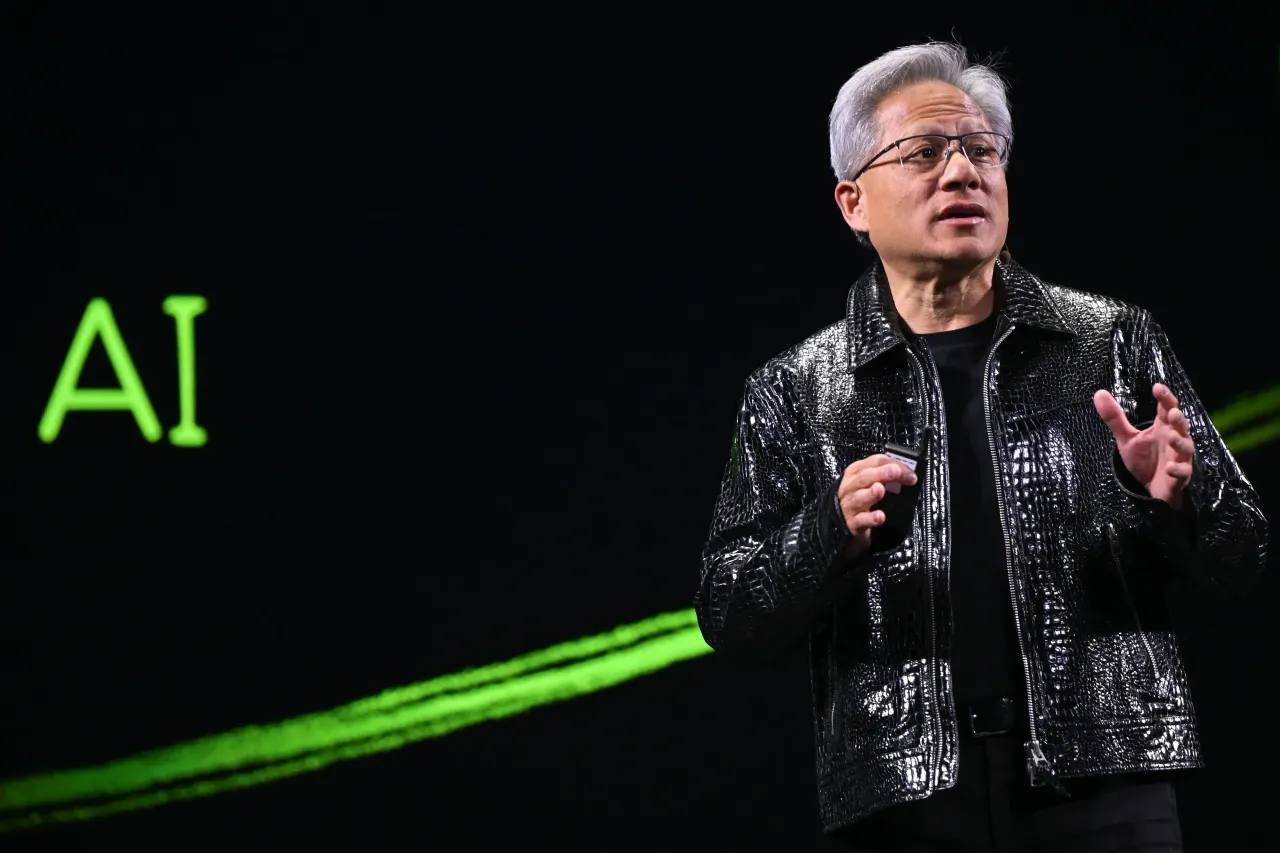
Nvidia CEO: Big Plans for Anthropic Partnership
- Market Share Growth: Nvidia CEO Jensen Huang stated that the company is gaining market share in the hyperscaler segment, particularly through collaborations with OpenAI, xAI, Meta, and Microsoft, showcasing strong competitive positioning.
- Collaboration with Anthropic: Nvidia is assisting AI competitor Anthropic in scaling up and increasing its capacity to generate revenue, indicating a strategic focus on the AI infrastructure sector.
- Rapid Expansion Plans: Huang mentioned that the partnership with Anthropic will enable Nvidia to scale very quickly, reflecting the company's confidence in future growth and its commitment to the AI market.
- Market Reaction: Despite a 2% drop in Nvidia's stock price during Thursday's opening trade, analysts believe the stock appears 'remarkably cheap' and predict a market cap exceeding $10 trillion, highlighting market recognition of its long-term potential.
See More

Sandisk Stock Rises on Nvidia's Strong Earnings Report

- Nvidia Earnings Boost: Nvidia reported a record quarterly revenue of $81.6 billion, an 85% year-over-year increase, with 92% of this revenue coming from AI data center chip sales, indicating strong demand for Sandisk's NAND flash memory and reinforcing its market position.
- Margin Advantage: Sandisk's gross margin last quarter was 78.4%, surpassing Nvidia's 74.9%, which not only highlights Sandisk's profitability but may also attract more investor interest in its future growth potential.
- Samsung Strike Resolution: Samsung Electronics workers have ended their 18-day strike after reaching an agreement to share AI chip profits more equitably, which, while increasing competitive pressure on Sandisk, may also prompt Sandisk to enhance its market strategies in response.
- Positive Market Reaction: Sandisk's stock rose 6.2% in early trading to $74.94, reflecting investor optimism about its future prospects and confidence in its potential within the rapidly growing AI market.
See More

Nvidia Reports Strong Earnings, NAND Demand Rises
- Nvidia Earnings Surge: Nvidia reported an 85% year-over-year sales increase in Q1, reaching $81.6 billion, with 92% of revenue derived from AI data center chip sales, indicating the ongoing vitality of the AI revolution and boosting demand for Sandisk's NAND flash memory.
- Exceptional Profit Margins: Nvidia's gross profit margin stood at 74.9%, tripling its quarterly net profit to $58.3 billion ($2.39 per share), reflecting strong performance in the AI sector and supporting Sandisk's market position.
- Samsung Strike Resolution: Workers at Samsung Electronics ended an 18-day strike after reaching an agreement with management to fairly share AI chip profits, which is expected to restore full production capacity and increase competitive pressure on Sandisk.
- Cautious Investor Sentiment: Despite Sandisk's gross margin of 78.4%, higher than Nvidia's, analysts noted that Sandisk was not included in the current list of top investment stocks, urging investors to exercise caution and monitor market developments.
See More
NVIDIA Reports Strong Q1 Earnings Driven by AI Demand
- Significant Revenue Growth: NVIDIA's Q1 revenues surged 85% year-over-year to $81.6 billion, exceeding market expectations of $78.4 billion, demonstrating the company's robust performance amid soaring AI demand and solidifying its market leadership.
- Strong Data Center Performance: Data Center revenues rose 92% year-over-year to $75.2 billion, primarily driven by Blackwell adoption, indicating rapid expansion of demand for NVIDIA's AI infrastructure, particularly in edge computing and enterprise deployments.
- New Market Platform Strategy: NVIDIA is restructuring its market into Data Center and Edge Computing, with further segmentation of Data Center revenues into Hyperscale and ACIE, reflecting a deeper understanding of AI applications across diverse environments and strategic adjustments that are expected to drive future growth.
- Cash Flow and Shareholder Returns: Free cash flow reached a record $48.6 billion, with NVIDIA returning approximately $20 billion to shareholders in the quarter and raising its quarterly dividend from $0.01 to $0.25, showcasing the company's strong cash generation capabilities and commitment to shareholders.
See More
Microsoft's Maia Chips Enhance AI Infrastructure Amid Nvidia Dependency Reduction
- Chip Development Strategy: Microsoft is collaborating with Google and Amazon to develop Maia chips aimed at reducing dependence on Nvidia semiconductors, although discussions are still in early stages and may not lead to a final agreement.
- Maia 200 Chip Performance: Launched in January 2026, the Maia 200 chip utilizes TSMC's 3-nanometer process, with Microsoft claiming a 30% improvement in performance per dollar compared to existing systems, and higher memory bandwidth than Amazon and Google's counterparts.
- Collaboration with Anthropic: Anthropic is reportedly in talks with Microsoft to rent custom AI server chips to expand its computing capacity to meet rising demand for AI services, although discussions are still in preliminary stages.
- Market Sentiment Analysis: According to Stocktwits, retail sentiment for Microsoft has shifted from neutral to bullish, despite MSFT stock falling about 14% year-to-date, currently trading at $417, indicating potential market confidence in the Maia chips.
See More
Arm Holdings Shares Rise on Nvidia Earnings Report
- Stock Surge: Arm Holdings shares rose 8.6% following Nvidia's earnings report, reflecting investor optimism about Nvidia's forecast of $20 billion in CPU revenue this year, which is expected to directly boost Arm's royalty revenue.
- Surging Market Demand: Nvidia's Vera CPU, combined with the new Rubin GPU platform, is projected to open a $200 billion market, indicating a rapid increase in demand for high-performance CPUs, thus providing strong momentum for Arm's future growth.
- Data Center Revenue Doubling: Arm's data center revenue more than doubled in the most recent quarter, with expectations that this segment will soon surpass smartphones as the company's largest revenue source, demonstrating the success of its strategic shift towards high-performance computing.
- Increased Royalty Rates: The Vera CPU utilizes the latest Arm v9 architecture, which has double the royalty rate of v8; although Arm does not disclose specific rates, this change is expected to significantly enhance its revenue potential and further solidify its position in the CPU market.
See More
Nvidia CEO: Big Plans for Anthropic Partnership
- Market Share Growth: Nvidia CEO Jensen Huang stated that the company is gaining market share in the hyperscaler segment, particularly through collaborations with OpenAI, xAI, Meta, and Microsoft, showcasing strong competitive positioning.
- Collaboration with Anthropic: Nvidia is assisting AI competitor Anthropic in scaling up and increasing its capacity to generate revenue, indicating a strategic focus on the AI infrastructure sector.
- Rapid Expansion Plans: Huang mentioned that the partnership with Anthropic will enable Nvidia to scale very quickly, reflecting the company's confidence in future growth and its commitment to the AI market.
- Market Reaction: Despite a 2% drop in Nvidia's stock price during Thursday's opening trade, analysts believe the stock appears 'remarkably cheap' and predict a market cap exceeding $10 trillion, highlighting market recognition of its long-term potential.
See More
Sandisk Stock Rises on Nvidia's Strong Earnings Report
- Nvidia Earnings Boost: Nvidia reported a record quarterly revenue of $81.6 billion, an 85% year-over-year increase, with 92% of this revenue coming from AI data center chip sales, indicating strong demand for Sandisk's NAND flash memory and reinforcing its market position.
- Margin Advantage: Sandisk's gross margin last quarter was 78.4%, surpassing Nvidia's 74.9%, which not only highlights Sandisk's profitability but may also attract more investor interest in its future growth potential.
- Samsung Strike Resolution: Samsung Electronics workers have ended their 18-day strike after reaching an agreement to share AI chip profits more equitably, which, while increasing competitive pressure on Sandisk, may also prompt Sandisk to enhance its market strategies in response.
- Positive Market Reaction: Sandisk's stock rose 6.2% in early trading to $74.94, reflecting investor optimism about its future prospects and confidence in its potential within the rapidly growing AI market.
See More
Nvidia Reports Strong Earnings, NAND Demand Rises
- Nvidia Earnings Surge: Nvidia reported an 85% year-over-year sales increase in Q1, reaching $81.6 billion, with 92% of revenue derived from AI data center chip sales, indicating the ongoing vitality of the AI revolution and boosting demand for Sandisk's NAND flash memory.
- Exceptional Profit Margins: Nvidia's gross profit margin stood at 74.9%, tripling its quarterly net profit to $58.3 billion ($2.39 per share), reflecting strong performance in the AI sector and supporting Sandisk's market position.
- Samsung Strike Resolution: Workers at Samsung Electronics ended an 18-day strike after reaching an agreement with management to fairly share AI chip profits, which is expected to restore full production capacity and increase competitive pressure on Sandisk.
- Cautious Investor Sentiment: Despite Sandisk's gross margin of 78.4%, higher than Nvidia's, analysts noted that Sandisk was not included in the current list of top investment stocks, urging investors to exercise caution and monitor market developments.
See More