

Key Takeaway
The software as a service industry is experiencing its most significant existential threat since the cloud revolution, as artificial intelligence fundamentally challenges the foundational assumptions underlying the SaaS business model. The question "Will AI disrupt SaaS?" is no longer theoretical—it is happening now, with tangible evidence mounting across earnings reports, pricing model experiments, and enterprise adoption patterns. The era of predictable per-seat subscription revenue is giving way to an uncertain future where AI agents can perform the work of entire departments, rendering traditional software licensing models obsolete.
The disruption thesis rests on several converging forces that are reshaping how enterprises think about software procurement and deployment. First, AI agents have reached sufficient capability to automate entire workflows that previously required multiple human operators, each with their own software license. When one user equipped with AI agents can accomplish the work of five traditional employees, the per-seat pricing model that has underpinned SaaS economics for two decades begins to collapse. This is not a distant future scenario—venture capitalists and industry analysts are already documenting cases where companies have built internal AI tools to replace purchased SaaS products.
Financial markets have begun pricing in this disruption risk, with the so-called "SaaSpocalypse" of early 2026 wiping approximately $285 billion from software stock valuations. Multiple SaaS companies reported slowing growth in Q4 2025 earnings, not because AI failed to boost productivity as expected, but precisely because it succeeded too well. Customers are reducing software seats rather than adding them, as AI-enhanced workers accomplish more with fewer licenses. Workday's announcement of 8.5% layoffs attributed to AI efficiency gains provides a concrete example of how automation is eliminating the very roles that SaaS subscriptions depend upon.
However, the disruption narrative requires nuance. Gartner predicts that by 2030, 35% of point-product SaaS tools will be replaced by AI agents or absorbed within larger agent ecosystems—but this implies that 65% will survive in some form. The most likely outcome is not wholesale destruction but selective unbundling, where commoditized software categories face replacement while differentiated platforms with deep data moats and network effects emerge stronger. The winners will be SaaS companies that successfully evolve from selling tools to orchestrating AI agents, fundamentally reimagining their value proposition for an agentic future.
The Breaking Point: Why Per-Seat Pricing Is Collapsing
The Fundamental Disconnect
The per-seat pricing model that has powered the SaaS industry's remarkable growth over the past two decades is facing an existential crisis. This pricing structure assumes a direct correlation between the number of employees using software and the value derived from that software—a relationship that AI agents have fundamentally severed. When one user equipped with AI capabilities can perform the work previously requiring multiple employees, the foundational assumption of per-seat pricing collapses, creating a pricing crisis for both vendors and buyers.
Venture capitalist Tom Tunguz articulated this disconnect in his analysis of AI agent economics: What does a software seat mean when a human is no longer operating the software? The traditional model charges based on user count, but AI agents operate autonomously, executing workflows without human intervention. A customer success manager using AI agents might handle ten times the account volume of a traditional manager, yet under per-seat pricing, the software vendor captures none of this productivity multiplier. This creates a misalignment where the value delivered increases exponentially while revenue remains linear—or worse, declines as customers reduce headcount.
The economic pressure on per-seat pricing is already manifesting in enterprise purchasing behavior. Companies are conducting seat optimization exercises specifically focused on identifying roles where AI can eliminate the need for additional software licenses. When Netflix's finance team can build an internal AI tool to replace a purchased SaaS application, as documented in recent industry reporting, it signals that the moat around traditional software has narrowed. Enterprise buyers are increasingly asking why they should pay for ten seats when AI enables five employees to achieve the same output.
The Pricing Model Evolution
Forward-thinking SaaS companies are experimenting with alternative pricing models that better capture value in an AI-augmented world. The three primary approaches emerging are premium per-seat pricing, usage-based models, and agent-based licensing—each with distinct advantages and challenges. The transition is not merely a pricing adjustment but a fundamental reimagining of how software value is measured and monetized.
Premium per-seat pricing represents the most straightforward adaptation, charging significantly more for AI-enhanced seats that deliver multiples of traditional productivity. If an AI agent makes one user as productive as three humans, the theory goes, vendors can charge three times the per-seat price. This approach preserves the familiarity of seat-based selling while capturing some of the value created by AI augmentation. However, this model still ties revenue to human users, which may prove problematic as agents become capable of fully autonomous operation.
Usage-based pricing aligns software costs with actual consumption, whether measured by API calls, compute resources, or workflows executed. Unlike traditional SaaS where additional users cost almost nothing to serve, AI products face real marginal costs per inference, making usage-based pricing economically rational. This model better reflects the true cost structure of AI-augmented software but introduces revenue unpredictability that public markets typically penalize. Customers may also resist the budgeting complexity of variable software costs.
Agent-based licensing charges per AI "agent" or bot, similar to traditional SaaS charging per user, but with each seat representing a distinct AI worker with specific responsibilities. This model directly addresses the emerging reality where software value is delivered by autonomous agents rather than human operators. While conceptually elegant, agent-based pricing requires customers to think differently about software procurement, potentially creating sales friction during the transition period.
The SaaS Categories Most at Risk
Commoditized Point Solutions
Not all SaaS applications face equal disruption risk. Gartner's prediction that 35% of point-product SaaS tools will be replaced by AI agents by 2030 provides a useful framework for identifying the most vulnerable categories. Point solutions—single-purpose applications that address narrow workflow segments—face the highest replacement risk because AI agents can readily replicate their functionality without the overhead of complex software implementations.
Survey and form-building tools exemplify this vulnerability. Netlify CEO Matt Biilmann has publicly stated that his employees have used AI to build internal replacements for SaaS survey and quoting tools. When AI can generate a functional survey application in minutes, the value proposition of dedicated survey software weakens significantly. Similarly, venture capitalist Martin Casado described building a personal CRM with AI because it was easier than learning a complex off-the-shelf product. These anecdotes signal a broader trend where AI's code generation capabilities commoditize simple application categories.
Business intelligence and data visualization tools face similar disruption as AI agents become capable of directly querying databases, generating insights, and presenting findings without intermediate software layers. StackBlitz CEO Eric Simons reported that his startup has created in-house AI agents for business intelligence and data analysis workflows, eliminating the need for separate BI software subscriptions. The pattern is clear: categories where AI can directly connect data sources to user needs without specialized software interfaces are ripe for unbundling.
The Salesforce Conundrum
The decline of Salesforce, down approximately 40% over the past year, illustrates how even category-leading SaaS platforms face existential questions in the AI era. As the dominant CRM vendor, Salesforce should theoretically benefit from AI enhancements to its extensive platform. Instead, the company faces pressure from multiple directions: customers building AI-native CRM alternatives, AI agents that can interact directly with customer data without CRM intermediaries, and the fundamental question of whether traditional CRM architectures remain relevant in an agentic future.
Salesforce's challenge exemplifies the broader dilemma facing established SaaS leaders. These companies have invested billions in building comprehensive platforms with extensive customization capabilities, integrations, and workflow engines. Yet AI agents threaten to make much of this infrastructure obsolete by enabling direct interaction with underlying data and systems. A sales representative using AI might engage customers through personalized communications generated in real-time, eliminating the need for CRM workflow management and opportunity tracking.
The existential question for platforms like Salesforce is whether they can evolve from selling software tools to orchestrating AI agents that deliver outcomes. The transition requires fundamental architectural changes, pricing model overhauls, and cultural shifts away from feature-based selling toward outcome-based value propositions. Success is possible—Salesforce has the data moats, customer relationships, and resources to make the transition—but the path is fraught with execution risk and competitive threats from AI-native challengers.
How AI Agents Are Replacing SaaS
The New Operating Layer
AI agents represent a fundamentally different approach to enterprise software, one that threatens to displace the traditional SaaS stack by serving as a new operating layer between users and business systems. Rather than navigating multiple specialized applications, users interact with AI agents that orchestrate workflows across systems, generating insights, taking actions, and managing processes without requiring direct software interaction. This architecture inverts the traditional relationship between users and applications.
Deloitte's technology predictions for 2026 capture this evolution: "SaaS applications will likely become more intelligent, personalized, adaptive, and autonomous, evolving towards a federation of real-time workflow services that can learn from their experiences." The key insight is that software is becoming less about discrete applications and more about orchestrated services that combine to deliver outcomes. Users care less about which specific tools are used and more about whether their objectives are accomplished efficiently.
Anthropic's launch of enterprise AI agents targeting specific departments—finance, engineering, and design—signals the seriousness of this threat. These agents come with pre-built workflows designed to handle the grunt work currently performed by specialized SaaS applications. When an AI agent can manage expense reporting, travel booking, and procurement workflows without requiring separate software tools, the value proposition of point solutions weakens significantly. The agent becomes the primary interface, with traditional SaaS relegated to backend data sources.
Enterprise Adoption Patterns
The transition from SaaS to AI agents is not merely theoretical—enterprise adoption is accelerating as organizations recognize the potential for dramatic cost reduction and productivity improvement. OpenAI's Frontier enterprise agentic platform, positioned as a direct rival to SaaS, represents the most credible threat to traditional software vendors. The platform enables enterprises to deploy AI agents that can perform tasks previously requiring multiple software subscriptions, fundamentally altering the software procurement calculus.
The economics driving this transition are compelling. If AI agents can take over the work of entire departments, as consultancy Xpert Digital projected, the foundation of the lucrative subscription model collapses. An enterprise spending millions annually on SaaS subscriptions might achieve equivalent or better outcomes with a fraction of the cost using AI agents. This economic pressure is already manifesting in purchasing decisions, with CFOs increasingly questioning the necessity of software licenses that AI agents could replace.
Resistance to this transition remains significant, particularly around concerns of execution risk, safety, and governance. AI agents introduce risks that deterministic SaaS never had: unsafe actions, misinterpreted instructions, unauthorized data access, and limited traceability. Enterprises must balance the productivity benefits of AI agents against these risks, potentially slowing adoption in regulated industries or mission-critical workflows. However, as AI capabilities improve and governance frameworks mature, these barriers are likely to diminish.
The Winners and Losers of SaaS Unbundling
Platforms That Will Thrive
While the disruption narrative dominates headlines, a more nuanced picture emerges when examining which SaaS categories are likely to thrive versus those facing replacement. The winners share common characteristics: deep data moats, network effects, regulatory compliance requirements, and platforms that serve as systems of record rather than mere workflow tools. These characteristics create defensive barriers that AI agents cannot easily overcome.
Systems of record—applications that serve as the authoritative source of truth for critical business data—face lower disruption risk because AI agents require structured, reliable data to function effectively. An AI agent managing customer relationships still needs a CRM system to store contact information, interaction history, and opportunity data. While the agent might change how users interact with that data, the underlying system of record remains essential. Salesforce, Workday, and ServiceNow derive much of their value from being these authoritative sources, creating stickiness that transcends individual workflow automation.
Network-effect platforms similarly benefit from defensive moats. LinkedIn's professional network, GitHub's developer community, and Slack's communication graphs derive value from the concentration of users rather than specific feature functionality. AI agents cannot easily replicate these network effects, even if they can automate individual workflows within them. A LinkedIn AI agent might help draft connection requests, but it cannot replace the platform's core value of professional networking at scale.
Regulatory and compliance-focused software also face lower disruption risk because AI agents introduce governance complexities that regulated enterprises are hesitant to navigate. Financial reporting, audit trails, and compliance documentation require deterministic, auditable systems that AI agents—with their probabilistic outputs and limited explainability—struggle to provide. While AI can augment compliance workflows, replacing core compliance infrastructure remains challenging.
Categories Facing Extinction
Conversely, certain SaaS categories face near-term extinction as AI agents absorb their functionality. Single-purpose workflow tools, simple automation platforms, and applications addressing narrow use cases without data moats or network effects are most vulnerable. The pattern of disruption follows a predictable path: first, AI agents augment existing workflows; then, they replace the software entirely as capabilities improve.
Document generation and template-based tools exemplify this vulnerability. When AI can generate customized contracts, proposals, and reports from simple prompts, the value of template libraries and document assembly software diminishes. The same logic applies to basic analytics and reporting tools—why subscribe to a BI platform when AI agents can query databases and generate insights directly?
Simple project management and task tracking tools also face replacement risk. While complex project management with resource allocation and dependency tracking retains value, basic task lists and Kanban boards are easily replicated by AI agents. Asana, Monday.com, and similar platforms must evolve beyond simple task management to avoid commoditization.
The unbundling process is already visible in how enterprises are rationalizing their software portfolios. Companies are identifying redundant tools where AI can consolidate functionality, eliminating point solutions that previously served narrow purposes. This consolidation benefits platforms with broad capabilities while threatening vendors of narrow tools.
Adapting to the AI Era: Strategies for SaaS Survival
The Platform Evolution Imperative
For SaaS companies facing disruption, survival requires fundamental evolution from tool providers to outcome orchestrators. This transition is not merely about adding AI features to existing products—though that is necessary—it requires reimagining the entire value proposition and business model. The most successful adaptations will position SaaS platforms as the orchestration layer for AI agents rather than the agents themselves.
Bain & Company's analysis of AI disruption emphasizes that "disruption is mandatory, obsolescence is optional." SaaS leaders must identify where AI can enhance their offerings versus where it might replace them, acting decisively to capture the former while defending against the latter. This requires honest assessment of which product capabilities represent durable competitive advantages versus commoditized functionality ripe for AI replacement.
The platform evolution strategy involves several key elements. First, SaaS companies must become the system of record and orchestration hub for AI agents operating within their domain. Rather than fighting AI agents, platforms should embrace them—providing the data infrastructure, governance frameworks, and integration points that enable agents to operate effectively. This positions the SaaS platform as essential infrastructure for the AI era.
Second, pricing models must evolve to capture value from AI-augmented outcomes rather than human users. This might involve outcome-based pricing, usage-based models tied to business results, or hybrid approaches that blend traditional subscriptions with value-based components. The key is aligning vendor compensation with customer value creation, however that value is delivered.
Building AI-Native Defensibility
Long-term survival requires building AI-native defensibility that goes beyond simply adding AI features to existing products. This involves creating data flywheels where AI usage improves product capabilities, which attracts more users, which generates more data, creating a virtuous cycle that competitors cannot easily replicate. The goal is to make AI enhancement a reinforcing competitive advantage rather than a checkbox feature.
Network effects in the AI era look different than traditional software network effects. While user-to-user network effects remain valuable, AI-native network effects emerge from aggregated learning across customer deployments. A SaaS platform that learns from AI agent interactions across thousands of customers can deliver superior capabilities that single-tenant solutions cannot match. This requires building infrastructure to capture, analyze, and deploy learnings from AI interactions at scale.
Vertical integration represents another defensibility strategy, particularly for SaaS companies serving specific industries. By combining domain expertise, proprietary data, and AI capabilities, vertical SaaS platforms can create integrated solutions that general-purpose AI agents struggle to replicate. A healthcare SaaS platform with HIPAA compliance, clinical workflow optimization, and AI-augmented decision support creates more value than generic AI agents attempting to serve the same use case.
Regulatory moats may also provide protection as AI governance frameworks mature. SaaS platforms that invest early in AI safety, auditability, and compliance certification can differentiate themselves from less sophisticated alternatives. Enterprises in regulated industries will pay premiums for AI-augmented software that meets their governance requirements, creating a market segment protected from low-cost AI disruption.
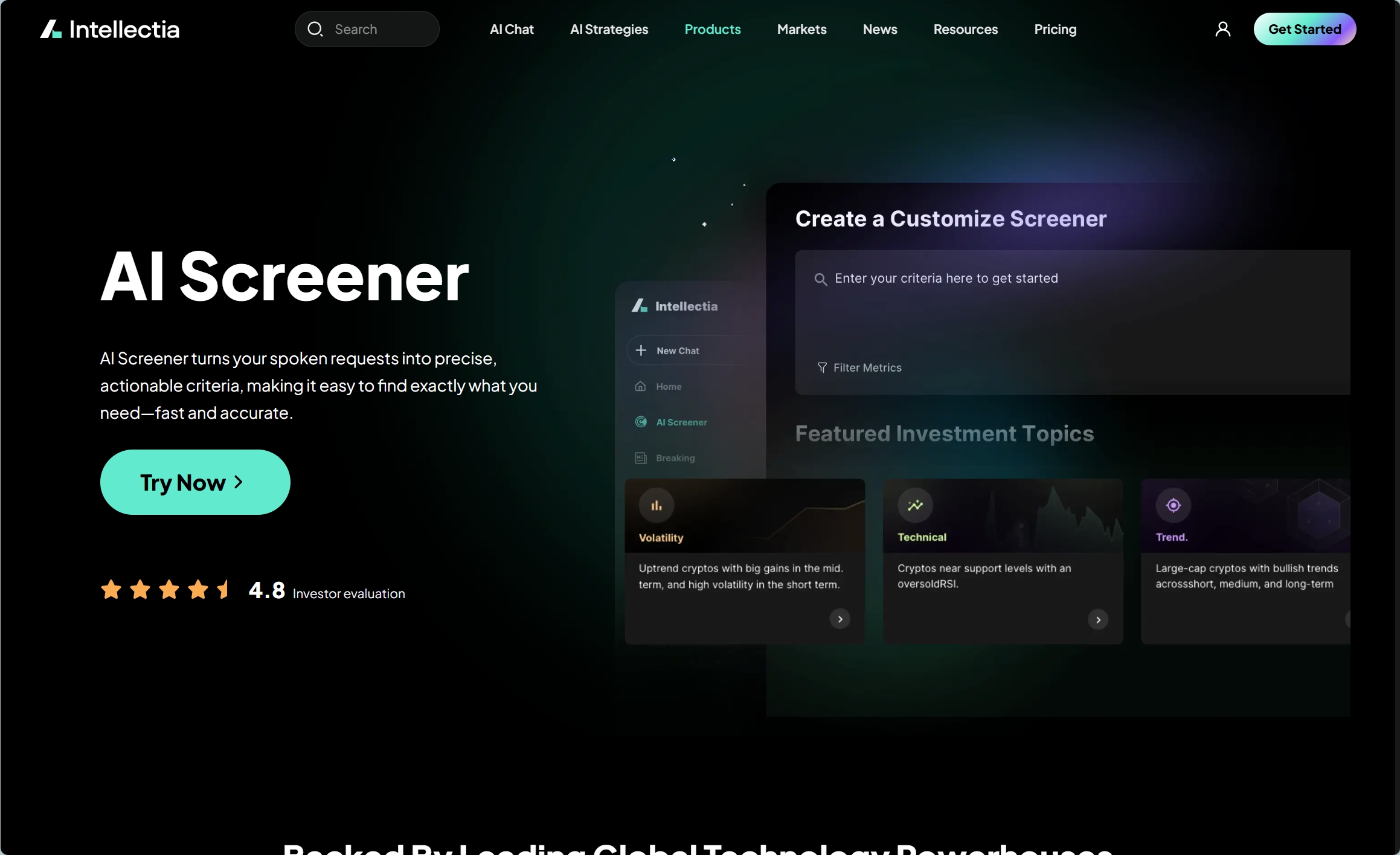
Ready to stay ahead of AI disruption in your industry? Intellectia's AI-powered market intelligence platform provides real-time insights on emerging technology trends, competitive dynamics, and investment opportunities. Our platform aggregates thousands of data sources to help you navigate the rapidly evolving software landscape with confidence.
Conclusion
The question of whether AI will disrupt the SaaS business model has been answered definitively in 2026—it is already happening. The evidence is clear: slowing growth at major SaaS vendors, enterprise customers building internal AI tools to replace purchased software, and a $285 billion market correction reflecting investor recognition that traditional SaaS economics are under threat. The per-seat pricing model that powered the industry's growth is breaking, and the transition to new business models is creating winners and losers across the software landscape.
However, disruption does not mean destruction for the entire industry. The most likely outcome is selective unbundling, where commoditized point solutions face replacement while differentiated platforms with deep data moats, network effects, and regulatory compliance emerge stronger. Gartner's prediction that 35% of point-product SaaS tools will be replaced by AI agents by 2030 implies that 65% will survive—though likely in evolved forms that embrace rather than resist AI augmentation.
The winners will be SaaS companies that successfully navigate the transition from selling tools to orchestrating outcomes. This evolution requires fundamental changes to product architecture, pricing models, and value propositions—but it is achievable for companies with the vision and resources to execute. Systems of record, network-effect platforms, and vertically integrated solutions face lower disruption risk and may actually benefit from AI augmentation that increases their value to customers.
For investors and technology leaders, the AI disruption of SaaS creates both risks and opportunities. Traditional SaaS valuations may never recover as markets price in permanent disruption risk. However, companies successfully making the transition to AI-native business models may emerge more valuable than their predecessors, commanding premium valuations for their role as essential infrastructure in the agentic future. The key is distinguishing between software companies adapting to the new reality and those clinging to business models that AI has rendered obsolete.
The SaaS industry has reinvented itself before—transitioning from on-premise software to cloud delivery, from perpetual licenses to subscriptions. The AI transition represents another evolutionary leap, one that will separate companies capable of fundamental reinvention from those facing obsolescence. As 2026 unfolds, the software landscape is being reshaped in real-time, creating a new generation of winners built for the AI era.
Take your technology analysis to the next level with Intellectia's AI stock picker. Our advanced algorithms analyze thousands of data points to identify high-conviction opportunities in the evolving technology sector, track competitive dynamics, and provide early warning when fundamentals change. Whether you're evaluating software investments or exploring other themes, Intellectia provides the analytical edge you need to invest with confidence.