
Key Takeaway
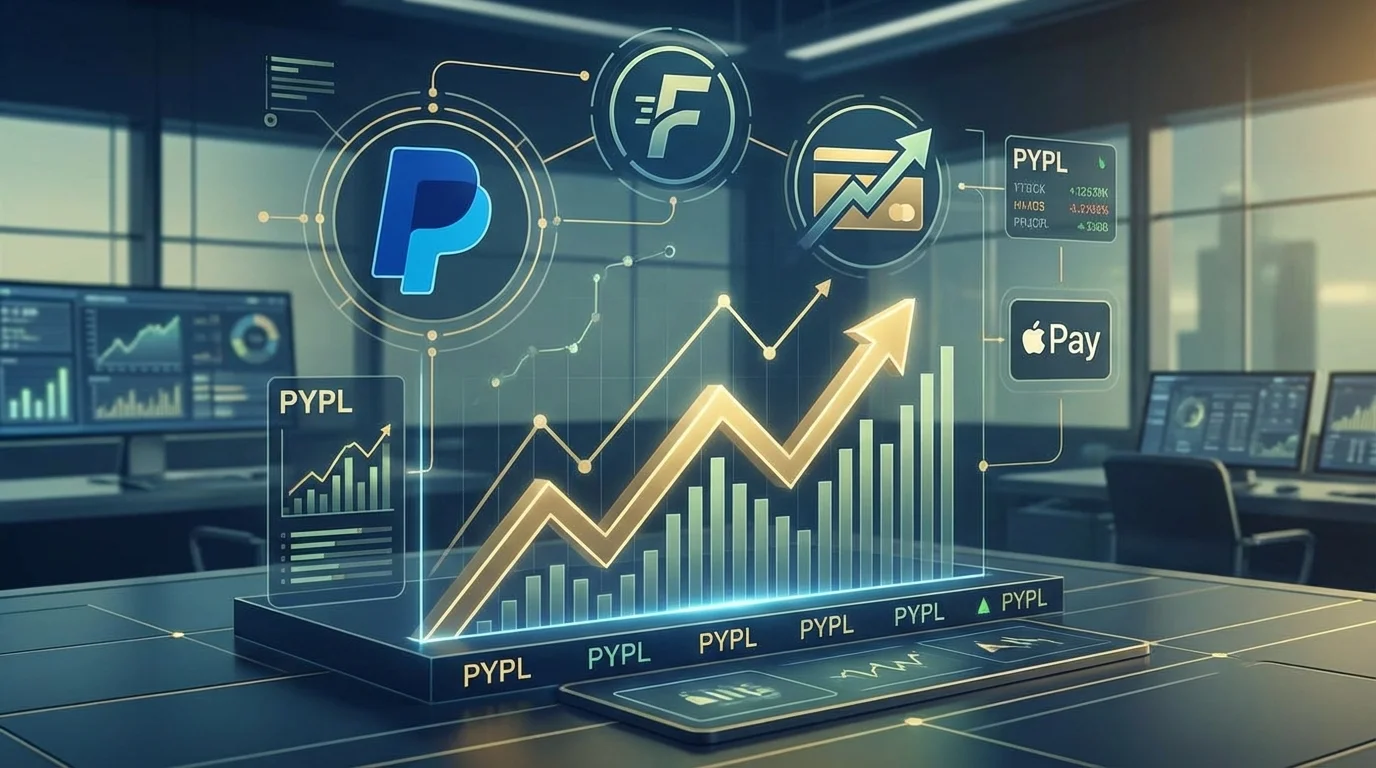
PayPal Holdings finds itself at a pivotal crossroads as investors look toward 2026, with Wall Street analysts offering a decidedly mixed but cautiously optimistic view of the digital payments pioneer's prospects. The consensus among 28 analysts covering PYPL is a Hold rating with an average price target of approximately $64, suggesting meaningful upside potential from current trading levels if the company can successfully execute its turnaround strategy. However, the wide dispersion of price targets—from as low as $47 to as high as $105—reflects genuine uncertainty about whether PayPal can regain its growth momentum in an increasingly competitive payments landscape.
The fundamental case for PayPal rests on several key pillars that could drive a meaningful re-rating of the stock in 2026. Under CEO Alex Chriss's leadership, the company has embarked on an aggressive transformation focused on margin expansion, product innovation through initiatives like Fastlane, and leveraging its massive 434 million active user base. Total Payment Volume growth guidance of 5-6% for fiscal year 2025, with 6-7% growth excluding interest on customer balances, signals that management believes the worst of the growth deceleration is behind the company.
PayPal's financial performance has shown signs of stabilization despite ongoing competitive pressures. The company delivered annual earnings per share of $5.46 in 2025, representing a robust 35.5% increase from $4.03 in 2024. Revenue reached $33.17 billion in 2025, up 4.32% from the previous year's $31.80 billion, while earnings of $5.23 billion increased 26.19% year-over-year. These results suggest that while top-line growth remains muted, operational improvements and cost discipline are driving significant bottom-line improvement that could support a higher valuation multiple.
However, investors must weigh these positive developments against formidable competitive challenges that show no signs of abating. Apple Pay commands a dominant 55% share of U.S. mobile wallet users compared to PayPal and Venmo's combined 30% share, while competitors like Stripe and Adyen continue to gain ground in the unbranded processing space. The question for 2026 is whether PayPal's strategic initiatives can stem market share losses and return the company to sustainable above-market growth, or whether the stock will continue to trade at a discount to its historical valuation multiples.
PayPal's Turnaround Strategy Under CEO Alex Chriss
The New Leadership Vision
When Alex Chriss took the helm at PayPal, he inherited a company that had lost its way—a former high-growth fintech darling that had become bogged down by bureaucracy, failed acquisitions, and strategic drift. Chriss has moved quickly to reshape PayPal's culture and strategic priorities, focusing on profitable growth rather than growth at any cost. This shift represents a fundamental change in how PayPal approaches its business and allocates capital.
Chriss's strategy centers on three core pillars: driving engagement among PayPal's massive user base, expanding merchant services through innovative products, and maintaining competitiveness in an evolving digital payments landscape. The CEO has emphasized a more disciplined approach to investment, exiting non-core businesses and redirecting resources toward high-return opportunities. This focus on operational efficiency has already begun to show results in the form of expanding margins and improved profitability metrics.
One of Chriss's key insights has been recognizing that PayPal possesses assets that competitors cannot easily replicate. The company's 434 million active user accounts represent a massive installed base that provides significant network effects and data advantages. When Chriss meets with merchant CEOs, he emphasizes PayPal's ability to offer comprehensive solutions spanning unbranded processing, buy-now-pay-later options, and branded checkout experiences that address multiple merchant needs simultaneously. This integrated value proposition differentiates PayPal from point solutions offered by competitors.
Product Innovation and Fastlane
A central component of PayPal's turnaround strategy is the development and deployment of Fastlane, a next-generation checkout experience designed to reduce friction and increase conversion rates for merchants. Fastlane represents PayPal's response to the growing threat from Stripe and other modern payment processors that have gained market share by offering superior developer experiences and checkout flows.
The Fastlane integration, which includes multiprocessor support enabling compatibility with providers like Adyen, significantly enhances PayPal's value proposition for merchants. This flexibility allows merchants to use PayPal's consumer-facing branded checkout while maintaining relationships with other payment processors for backend processing. Such interoperability addresses a key objection from larger merchants who have historically viewed PayPal as an either/or proposition rather than a complementary solution.
PayPal has also been investing heavily in its PayPal Open platform, a unified offering that combines payments, financial services, and commerce tools for businesses. This platform approach aims to increase merchant stickiness by providing a comprehensive suite of services that go beyond simple payment processing. By embedding financial services directly into the merchant experience, PayPal hopes to capture a larger share of wallet and generate higher-margin revenue streams.
Competitive Landscape and Market Position
The Apple Pay Challenge
PayPal faces its most formidable competitive threat from Apple Pay, which has established dominant market position in the U.S. mobile wallet space. Apple Pay currently holds approximately 55% of U.S. mobile wallet users, compared to roughly 30% for PayPal and Venmo combined. This gap has widened over recent years as Apple has leveraged its control of the iOS ecosystem to promote its payment solution and create friction for alternatives.
The competitive dynamics between Apple Pay and PayPal reflect fundamentally different strategic approaches. Apple Pay focuses on providing a seamless, integrated experience for iPhone users, using device-level security and biometric authentication to simplify payments. PayPal, by contrast, operates as a cross-platform solution that works across devices and merchants regardless of the underlying hardware. This distinction creates both opportunities and challenges for PayPal as it seeks to defend its market position.
Apple's advantage extends beyond market share to include brand prestige and user trust. Consumers perceive Apple as a premium brand with strong security credentials, which translates into willingness to use Apple Pay for transactions. PayPal has historically suffered from brand perception issues related to customer service quality and account security, though recent improvements in these areas may help narrow the trust gap over time.
Stripe, Adyen, and the Unbranded Threat
While Apple Pay dominates consumer-facing mobile wallets, PayPal faces equally intense competition in the merchant services and unbranded processing space from Stripe and Adyen. These modern payment infrastructure providers have built substantial businesses by offering developer-friendly APIs, transparent pricing, and superior technology platforms that appeal to digital-native merchants.
Stripe and Adyen largely compete on the unbranded processing side, meaning they provide backend payment infrastructure without consumer-facing brands. This positioning is both a strength and a limitation—these competitors do not have consumer apps with hundreds of millions of users and cannot easily offer Fastlane-equivalent solutions without partnerships. However, their focus on technology and developer experience has allowed them to capture significant market share among high-growth digital merchants.
PayPal's response to this competitive threat has been to emphasize its unique ability to offer both branded consumer experiences and unbranded processing solutions. The company's pending Fastlane integration with multiprocessor support directly addresses the historical limitation that forced merchants to choose between PayPal and other processors. By offering compatibility with providers like Adyen while maintaining PayPal's consumer brand advantages, the company hopes to position itself as the best of both worlds.
Financial Performance and 2026 Outlook
Revenue and Earnings Trajectory
PayPal's financial results have shown a company in transition, with strong profitability improvements offsetting modest revenue growth. The company reported revenue of $8.68 billion in Q4 2025, slightly missing analyst estimates of $8.80 billion, while adjusted profit of $1.23 per share also came in below forecasts. These results, while disappointing on the surface, need to be viewed in the context of a company deliberately sacrificing short-term growth to improve long-term profitability.
For the full year 2025, PayPal delivered annual EPS of $5.46, representing an impressive 35.5% increase from $4.03 in 2024. This earnings growth significantly outpaced revenue growth of 4.32%, indicating successful execution on cost optimization initiatives and favorable mix shift toward higher-margin offerings. Analysts forecast PayPal's revenue for 2026 to reach approximately $33 billion, with continued margin expansion driving earnings growth even if top-line growth remains muted.
Looking ahead to 2026, management has provided guidance that suggests continued operational improvements. Total Payment Volume growth is expected to be in the 5-6% range, with 6-7% growth excluding interest on customer balances. While these growth rates remain below the company's historical performance and current market growth rates, they represent stabilization following several years of deceleration. The focus has shifted decisively toward profitable growth rather than growth at any cost.
Cash Flow and Capital Allocation
PayPal generates substantial free cash flow that provides strategic flexibility for the company's turnaround efforts. The company's asset-light business model and strong unit economics enable consistent cash generation even during periods of modest revenue growth. This cash flow supports continued investment in product development, strategic acquisitions, and shareholder returns through stock buybacks.
The company's capital allocation priorities reflect the new management team's focus on value creation. Share repurchases have been a significant use of cash, providing support for the stock price while reducing share count to boost earnings per share. Management has also indicated willingness to pursue strategic acquisitions that complement PayPal's core capabilities and accelerate the company's product roadmap, though discipline around valuation and integration risk remains paramount.
PayPal's balance sheet strength provides additional optionality for value-creating initiatives. The company maintains substantial cash reserves and investment-grade credit ratings that provide access to attractive financing for larger strategic moves if opportunities arise. This financial flexibility is a meaningful competitive advantage relative to smaller fintech competitors who face higher capital costs and more constrained strategic options.
Analyst Consensus and Price Targets
Wall Street Sentiment
Wall Street analysts maintain a cautious but constructive view on PayPal heading into 2026. The current consensus among 28 analysts covering PYPL is a Hold rating, reflecting the uncertainty surrounding the company's turnaround efforts and competitive positioning. However, the average price target of approximately $64 implies meaningful upside from current trading levels if the company can execute its strategic plan.
The range of analyst price targets is notably wide, spanning from $47 to $105, reflecting genuine disagreement about PayPal's long-term prospects. Bullish analysts point to the company's massive user base, improving margins, and potential for product innovation to reignite growth. More bearish analysts worry about continued market share losses to Apple Pay, Stripe, and other competitors, as well as the structural challenges facing the digital payments industry.
For 2026 specifically, Wall Street analysts forecast revenue of approximately $33 billion with continued earnings growth driven by margin expansion. The consensus view appears to be that PayPal will successfully stabilize its business and return to modest growth, though the magnitude of potential upside remains debated. Investors should expect continued volatility in the stock as quarterly results provide incremental evidence either supporting or contradicting the turnaround thesis.
Institutional Ownership Trends
Institutional investors have shown increased interest in PayPal as the turnaround story has gained credibility. Several prominent value-oriented investors have established positions in the stock, attracted by the combination of reasonable valuation, strong cash flow generation, and potential for operational improvements to drive multiple expansion. These institutional flows have provided price support and contributed to the stock's relative strength during periods of market volatility.
Hedge fund activity in PayPal has been mixed, with some funds increasing positions based on the turnaround narrative while others have reduced exposure due to concerns about competitive pressures and growth challenges. The divergence of views among sophisticated investors reflects the genuine uncertainty about PayPal's long-term trajectory and the difficulty of predicting outcomes in rapidly evolving competitive markets.
Retail investor sentiment has been more consistently positive, with many individual investors viewing PayPal as a contrarian opportunity to buy a former high-flyer at a discounted valuation. Online discussion forums show significant interest in the stock, with many investors focusing on the potential for a turnaround to drive meaningful capital appreciation. This retail enthusiasm can drive short-term volatility but also reflects broader awareness of PayPal's improving competitive position.
Risk Factors and Investment Considerations
Competitive and Execution Risks
Investors considering PayPal stock must carefully weigh significant execution risks against the company's improving fundamentals. The competitive landscape in digital payments is intensely dynamic, with well-capitalized competitors investing heavily to capture market share. PayPal's ability to maintain its market position will depend on successful product development, effective marketing execution, and continued relevance of its value proposition in an evolving industry.
Apple Pay represents a particularly formidable competitive threat given its dominant market share and Apple's ability to leverage the iOS ecosystem to promote its payment solution. If Apple continues to gain share in mobile wallets and expands into adjacent payment services, PayPal could face continued pressure on growth and margins. The company's ability to differentiate its offering and provide unique value to both consumers and merchants will be critical to long-term success.
Execution risk around PayPal's strategic initiatives also warrants attention. The Fastlane rollout, product innovation efforts, and margin improvement initiatives must all be executed effectively to drive the earnings growth that would support higher stock prices. Any delays, technical challenges, or competitive responses that diminish the impact of these initiatives could lead to disappointing results and stock price weakness.
Valuation and Market Expectations
PayPal's valuation has compressed significantly from the elevated multiples the stock commanded during its high-growth phase. The current valuation reflects market skepticism about the company's growth prospects and competitive position. While this compression creates opportunity for value investors, it also indicates that the market has reset expectations for PayPal's long-term growth trajectory.
The stock's performance will depend heavily on management's ability to deliver results that exceed the market's muted expectations. Given the current valuation, even modest operational improvements and stabilization of growth could drive meaningful stock price appreciation. However, if competitive pressures intensify or the turnaround efforts stall, the stock could face continued pressure as investors reassess the company's long-term prospects.
Macroeconomic factors also present meaningful risks for PayPal. Consumer spending drives payment volumes, and any economic slowdown or recession could reduce transaction activity and pressure revenue growth. Interest rate changes affect the yield PayPal earns on customer balances, creating additional variability in financial results. These macro factors are largely outside management's control but could significantly impact the stock's performance.
Investment Strategies for PYPL in 2026
Value and Turnaround Investment Approach
Investors attracted to PayPal's turnaround story may find the stock appealing as a value-oriented investment with potential for multiple expansion. The company's strong cash flow generation, reasonable valuation, and potential for operational improvements create a compelling risk-reward profile for patient investors willing to look through near-term volatility. A position sized appropriately within a diversified portfolio can provide exposure to the turnaround thesis while managing concentration risk.
The key to successful investment in PayPal is maintaining realistic expectations about the pace and magnitude of potential improvements. Turnaround stories often take longer to play out than initially expected, and setbacks are common along the way. Investors should focus on the underlying business trends rather than short-term stock price movements, using periods of weakness as opportunities to build positions rather than reasons to sell.
Dividend-focused investors should note that while PayPal does not currently pay a dividend, the company's strong cash flow generation could support dividend initiation in the future if management chooses to return capital through that mechanism. For now, shareholders benefit from capital returns primarily through stock buybacks, which have been a significant use of cash in recent periods.
Trading and Tactical Considerations
More active traders might consider tactical approaches to PayPal based on earnings cycles and news flow. The stock has shown significant volatility around quarterly results as investors react to updates on the turnaround progress, competitive dynamics, and forward guidance. Understanding these catalysts and positioning accordingly can generate trading opportunities for active investors.
Options strategies can also be employed to generate income or manage risk around PayPal positions. The stock's elevated options premiums reflect uncertainty about the turnaround outcome, creating opportunities for income generation through options selling strategies. Covered calls can generate income from existing positions, while cash-secured puts can provide exposure to the stock at attractive entry points.
Technical analysis can inform entry and exit timing for PayPal positions. The stock has established clear support and resistance levels during its prolonged consolidation that traders can monitor. Volume patterns and momentum indicators provide additional context for timing decisions, though fundamental developments around the turnaround remain the primary driver of long-term stock performance.
Ready to enhance your investment research? Intellectia's AI-powered stock analysis platform delivers real-time insights, analyst consensus data, and AI-driven stock ratings to help you evaluate turnaround opportunities like PayPal. Our platform aggregates thousands of data points to identify high-conviction investment ideas and provide early warning when fundamentals change.

Conclusion
PayPal's stock price forecast for 2026 reflects a company at a critical inflection point in its corporate journey. After years of growth deceleration and competitive challenges, the company has embarked on a comprehensive turnaround under new leadership that aims to restore the business to sustainable growth and profitability. Analyst price targets ranging from $47 to $105, with a consensus around $64, suggest that Wall Street sees meaningful upside potential if management can successfully execute its strategic plan.
The investment case for PayPal rests on several key pillars that could drive a meaningful re-rating of the stock. The company's massive 434 million active user base provides a foundation for growth that competitors cannot easily replicate. Improving margins driven by operational efficiency initiatives and product mix shift suggest that even modest revenue growth could drive significant earnings expansion. Strategic initiatives like Fastlane and PayPal Open demonstrate that the company is innovating to address competitive threats and capture new opportunities.
However, investors must approach PayPal with clear eyes about the challenges the company faces. Competition from Apple Pay, Stripe, and other fintech players is intense and shows no signs of abating. Market share losses in key segments have pressured growth and raised questions about PayPal's long-term competitive position. The turnaround effort is still in its early stages, and execution risks remain significant.
For investors with appropriate risk tolerance and investment time horizons, PayPal offers an interesting opportunity to invest in a former high-flyer at a reasonable valuation with potential for meaningful upside if the turnaround succeeds. The company's strong cash flow generation provides downside protection, while operational improvements and product innovation create optionality for significant value creation. As 2026 unfolds, PayPal's quarterly results will provide important evidence about whether the sleeping giant is indeed awakening—or whether it will continue to struggle in an increasingly competitive payments landscape.
Take your investment analysis to the next level with Intellectia's AI stock picker. Our advanced algorithms analyze thousands of data points to identify high-conviction opportunities, track analyst sentiment shifts, and provide actionable insights for stocks like PayPal. Whether you're evaluating turnaround plays or exploring other investment themes, Intellectia provides the analytical edge you need to invest with confidence.