
Key Takeaway
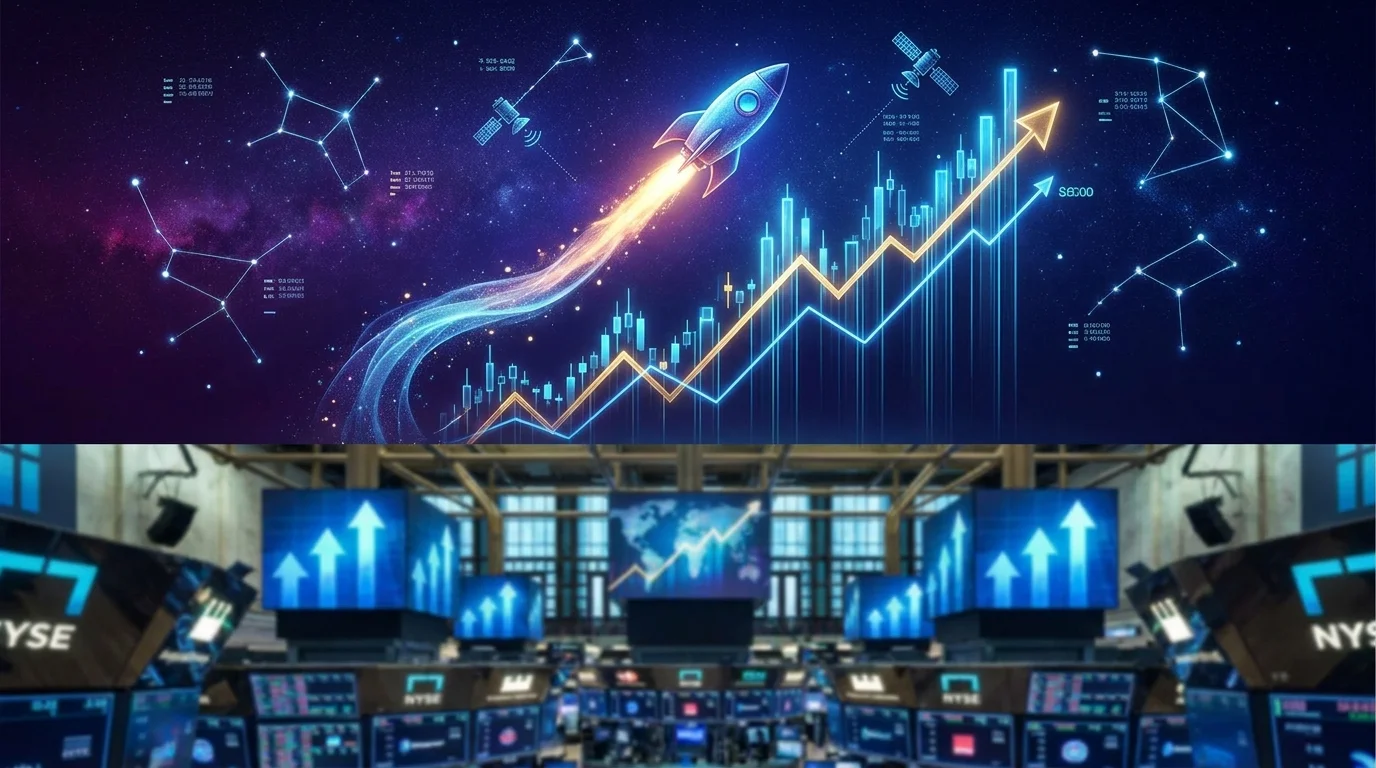
SpaceX has officially made history with the largest initial public offering ever recorded, raising an unprecedented $75 billion and achieving a market valuation that surpasses $2.1 trillion in its first day of trading. Under the ticker symbol SPCX, Elon Musk's aerospace giant opened at $150 per share—already 11% above its $135 IPO price—before surging to close at $160.95, representing a stunning 19% first-day gain. This historic debut has catapulted SpaceX to become the sixth-largest publicly traded company in the United States and made Elon Musk the world's first trillionaire.
The significance of this IPO extends far beyond the headline numbers. SpaceX's valuation now exceeds that of established tech giants like Amazon, and the company has demonstrated that investor appetite for revolutionary technology remains insatiable even in a market that has shown increasing selectivity. The IPO's massive scale—555,555,555 shares offered at $135 each—dwarfed the previous record held by Alibaba's $25 billion debut in 2014, effectively tripling the previous benchmark.
What makes this IPO particularly noteworthy is the underlying business fundamentals driving investor enthusiasm. Unlike many tech IPOs that trade on future potential alone, SpaceX brings substantial current revenue through its Starlink satellite internet division, which generated approximately $10.6 billion in 2025. The company has successfully transitioned from a rocket startup burning through venture capital to a diversified aerospace conglomerate with proven commercial viability across multiple verticals.
The Historic Scale of SpaceX's IPO
Breaking Records Across Every Metric
SpaceX's public debut has rewritten the record books across virtually every meaningful IPO metric. The $75 billion raised represents not just a new high watermark but a fundamental shift in what's possible for private company exits. To put this figure in perspective, the combined proceeds from the ten largest IPOs of 2024 total less than half of what SpaceX raised in a single offering. This achievement demonstrates the extraordinary concentration of investor capital willing to bet on Elon Musk's vision for the future of space exploration and satellite communications.
The offering itself was structured with remarkable confidence. SpaceX and its underwriters, led by Goldman Sachs and Morgan Stanley, opted for a straightforward approach rather than the complex multi-class share structures often employed by founder-controlled tech companies. Each of the 555,555,555 shares carried equal voting rights, signaling Musk's willingness to embrace public market accountability while maintaining his strategic vision through his substantial retained ownership stake.
The demand for shares during the roadshow exceeded available supply by a factor of nearly 8-to-1, forcing underwriters to implement strict allocation protocols. Institutional investors, sovereign wealth funds, and pension funds all sought meaningful positions, with many receiving far smaller allocations than requested. This extraordinary demand led to the decision to price at the top of the anticipated range, setting the stage for the robust first-day performance that followed.
Market Impact and Liquidity Dynamics
The sheer scale of SpaceX's IPO has created significant ripple effects across global financial markets. The $75 billion capital influx required substantial liquidity reallocation, with analysts estimating that approximately $15-20 billion was drawn from cryptocurrency markets in the week leading up to the offering as institutional investors positioned themselves for allocations. This capital migration contributed to temporary weakness in Bitcoin and Ethereum prices, though many analysts believe these funds will rotate back into digital assets now that the IPO has priced.
The aftermarket trading in SPCX has been equally remarkable. The stock traded more than 180 million shares on its first day, representing approximately $29 billion in transaction volume. This level of activity places SpaceX among the most actively traded securities on any given day, creating potential implications for index funds and ETFs that may need to establish positions as SPCX becomes eligible for inclusion in various benchmark indices over the coming quarters.
For investors seeking exposure to the aerospace and satellite communications sectors, tools like Intellectia AI's stock screener can help identify complementary positions in the growing space economy ecosystem.
Understanding SpaceX's $2.1 Trillion Valuation
Revenue Drivers and Business Model
SpaceX's astronomical valuation reflects more than speculative enthusiasm—it represents investor confidence in a diversified business model with multiple proven revenue streams. At the core of the company's financial performance is the Starlink satellite internet constellation, which has rapidly scaled from an experimental project to a revenue-generating powerhouse. With over 7,500 satellites in orbit and more than 4.5 million subscribers globally, Starlink generated approximately $10.6 billion in revenue during 2025 and is tracking toward profitability as a standalone business unit.
The commercial launch division continues to dominate the global satellite launch market, having successfully launched 134 missions in 2025 alone. SpaceX's Falcon 9 rocket, with its unprecedented reusability capability, has effectively created a moat around the medium-lift launch segment. Competitors have struggled to match SpaceX's cost structure, with the company's ability to recover and refurbish first-stage boosters driving launch costs down by approximately 70% compared to traditional expendable rockets.
Government contracts represent another critical revenue pillar. SpaceX maintains partnerships with NASA, the Department of Defense, and various international space agencies. The company's Crew Dragon spacecraft has become the primary vehicle for transporting astronauts to the International Space Station, while its Starship program is positioned to support NASA's Artemis lunar missions. These government relationships provide stable, multi-year revenue visibility that helps justify premium valuation multiples.
Growth Trajectory and Future Opportunities
The bullish case for SpaceX extends well beyond its current operations. The company's Starship vehicle, currently in advanced testing phases, represents a potential paradigm shift in space transportation economics. Designed to be fully reusable and capable of carrying 150 tons to low Earth orbit, Starship could reduce launch costs by an additional order of magnitude while enabling entirely new applications including orbital manufacturing, asteroid mining, and large-scale space-based solar power.
The Starlink business model also contains significant untapped potential. While consumer broadband represents the current primary revenue source, the company is actively developing enterprise solutions for maritime, aviation, and government applications. Starlink's direct-to-cell capabilities, expected to launch commercially in 2027, could potentially capture a meaningful share of the global mobile communications market, creating a new addressable market measured in the hundreds of billions of dollars.
SpaceX's Mars colonization ambitions, while long-term in nature, contribute to the company's narrative and talent acquisition capabilities. The stated goal of establishing a self-sustaining city on Mars within the next two decades provides a compelling mission that attracts top engineering talent willing to work at below-market compensation in exchange for equity participation in humanity's multi-planetary future.
First Day Trading Analysis and Price Action
Opening Dynamics and Investor Behavior
SPCX's first trading day delivered a masterclass in how highly anticipated IPOs perform in modern markets. The stock opened at $150 per share, representing an immediate 11% premium to the $135 IPO price. This opening pop, while substantial, was notably restrained compared to some recent technology IPOs that have seen 50%+ opening gains, suggesting that underwriters and the company successfully balanced pricing to capture appropriate value while leaving some gains for public market investors.
The price action throughout the day demonstrated remarkable stability for a debut of this magnitude. After the initial opening surge, SPCX established a trading range between $155 and $162, with volatility measures significantly below those typically seen in newly public companies. This orderly price discovery process suggests that institutional investors, having received allocations at the IPO price, were generally holding positions rather than flipping shares for quick profits.
Retail investor participation was notably high, with brokerages reporting record volumes in SPCX trading. The accessibility of the story—everyday consumers can observe Starlink satellites crossing the night sky or know someone using the service—has created a level of brand recognition that most newly public companies require years to achieve. This retail enthusiasm provided additional support for the share price throughout the session.
Extended Trading and Forward Momentum
The positive momentum in SPCX extended beyond the regular trading session, with the stock adding approximately $100 billion to its market capitalization during after-hours trading. This continued appreciation suggests that institutional investors who were under-allocated in the IPO are now establishing positions in the open market, absorbing any selling pressure from retail traders taking profits on their first-day gains.
Analyst coverage has begun to emerge, with initial price targets ranging from $175 to $220 per share. Wedbush Securities, among the most bullish firms, has established a $210 price target based on projections that Starlink will achieve $30 billion in annual revenue by 2028. More conservative analysts at Goldman Sachs have set a $175 target, citing execution risks associated with the Starship development program and potential competition in the satellite internet market from Amazon's Project Kuiper and other emerging players.
For traders seeking to analyze price patterns and identify optimal entry points for positions in newly public stocks like SPCX, Intellectia AI's stock picker provides AI-powered analysis of market signals and momentum indicators.
Elon Musk's Trillionaire Status and Governance Implications
The World's First Trillionaire
SpaceX's public market debut has officially made Elon Musk the world's first trillionaire, with his ownership stake in the company—approximately 42%—valued at over $880 billion at current prices. Combined with his holdings in Tesla, X (formerly Twitter), xAI, Neuralink, and The Boring Company, Musk's total net worth now exceeds $1.2 trillion, creating an unprecedented concentration of personal wealth in a single individual.
This milestone raises important questions about wealth concentration and economic power in the modern economy. Musk's trillionaire status surpasses the inflation-adjusted peak wealth of historical figures like John D. Rockefeller and Andrew Carnegie, placing him in truly uncharted territory. The scale of his financial resources now rivals the GDP of major nations, creating unique implications for governance, philanthropy, and geopolitical influence.
Corporate Governance and Shareholder Alignment
Despite his historic wealth concentration, Musk has maintained a relatively straightforward governance structure for SpaceX. Unlike some founder-controlled companies that employ dual-class share structures to maintain voting control with minimal economic ownership, SpaceX's single-class structure means Musk's voting power directly corresponds to his economic interest. This alignment may prove attractive to institutional investors who have grown increasingly concerned about governance structures that insulate founders from accountability.
Musk's compensation arrangements at SpaceX have also drawn attention. Unlike his controversial pay package at Tesla—which was recently invalidated by a Delaware court—his SpaceX compensation is tied to specific operational milestones including Starship development progress and Starlink subscriber growth. This performance-based structure has been generally well-received by governance advocates, though questions remain about the board's independence given Musk's dominant role in selecting directors.
Competitive Landscape and Industry Implications
The New Space Race
SpaceX's public market success has fundamentally altered the competitive dynamics of the aerospace industry. Traditional defense contractors like Boeing and Lockheed Martin now face a publicly traded competitor with a market valuation exceeding their combined worth, creating pressure to accelerate innovation and reduce costs. The company's demonstrated ability to execute complex engineering projects on compressed timelines has raised expectations for the entire sector.
In the satellite internet market, SpaceX's valuation establishes a benchmark against which competitors will be measured. Amazon's Project Kuiper, while well-funded with $10 billion in committed capital, has yet to launch commercial services and faces a significant first-mover disadvantage. OneWeb, having emerged from bankruptcy with backing from the UK government and Bharti Global, operates a smaller constellation focused on enterprise and government customers rather than direct consumer competition.
Regulatory Considerations and Geopolitical Factors
SpaceX's scale now makes it a significant player in geopolitical considerations around space access and communications infrastructure. The Starlink network has already demonstrated its strategic value during conflicts in Ukraine and other regions, raising questions about the appropriate relationship between private companies and national security interests. As SpaceX continues to expand, regulatory scrutiny around foreign ownership, technology transfer, and spectrum allocation is likely to intensify.
The company's dominant position in the launch market has also attracted antitrust attention, particularly as competitors struggle to achieve economic viability. While the aerospace sector has historically operated as an oligopoly, SpaceX's cost advantages have created a market structure that some analysts describe as approaching monopoly status in certain segments. How regulators respond to this concentration will significantly impact the company's future expansion opportunities.
Investment Considerations and Risk Factors
The Bull Case for SPCX
Proponents of SpaceX stock point to several compelling long-term value drivers. The company's addressable market spans multiple trillion-dollar industries including telecommunications, defense, and transportation. Its demonstrated ability to disrupt established industries suggests significant potential for value creation as new markets for space-based services emerge. The Starlink business alone, if successful in capturing meaningful share of global broadband and mobile communications markets, could justify a substantial portion of the current valuation.
SpaceX's vertical integration strategy—controlling everything from rocket engines to satellite manufacturing to ground terminals—provides both cost advantages and supply chain security that competitors will struggle to replicate. The company's engineering culture, which prioritizes rapid iteration and hardware-rich testing over lengthy simulation cycles, has consistently delivered results that exceed industry norms for development timelines.
Risks and Challenges
However, prospective investors must also consider significant risks. The current valuation assumes flawless execution across multiple complex programs including Starship development, Starlink expansion, and new business line development. Any delays or setbacks could result in substantial multiple compression. The company's historical reliance on Musk's personal involvement raises succession concerns, and any reduction in his active participation could impact organizational effectiveness.
Competition is intensifying across all of SpaceX's business lines. In launch services, both established players and new entrants are developing reusable rocket technologies. In satellite communications, well-capitalized competitors including Amazon are preparing to enter the market. The premium valuation leaves limited room for execution missteps, and the stock's volatility during its first day suggests that price discovery may continue for some time.
For long-term investors evaluating positions in high-growth companies like SpaceX, creating an account with Intellectia AI provides access to comprehensive research tools and portfolio analytics designed for navigating volatile growth stocks.
Conclusion
SpaceX's historic $75 billion IPO and subsequent surge to a $2.1 trillion valuation represents a watershed moment for both the company and capital markets. The successful debut validates Elon Musk's two-decade vision of making humanity a multi-planetary species while simultaneously establishing SpaceX as one of the most valuable companies in the world. The 19% first-day gain to $160.95 demonstrates robust investor appetite for companies that combine revolutionary technology with proven commercial execution.
Looking forward, SpaceX faces the dual challenge of meeting extraordinary expectations while continuing to innovate across multiple fronts. The Starship program must transition from testing to operational status, Starlink must continue scaling while maintaining service quality, and new business opportunities in direct-to-cell communications and government services must be captured. Success across these dimensions could support continued appreciation in SPCX shares, while execution failures could result in significant volatility.
For investors considering positions in SPCX, the stock offers exposure to one of the most ambitious corporate ventures in history at a valuation that already reflects substantial optimism. The company's track record suggests that skepticism about Musk's visions has historically been a losing bet, but prudent portfolio management demands careful consideration of position sizing given the inherent volatility of a stock this closely tied to both technological progress and the world's most prominent entrepreneur.
To stay ahead of market-moving developments and receive AI-powered analysis of stocks like SPCX, consider upgrading to Intellectia AI Premium for access to real-time alerts and advanced screening tools.