
Key Takeaway
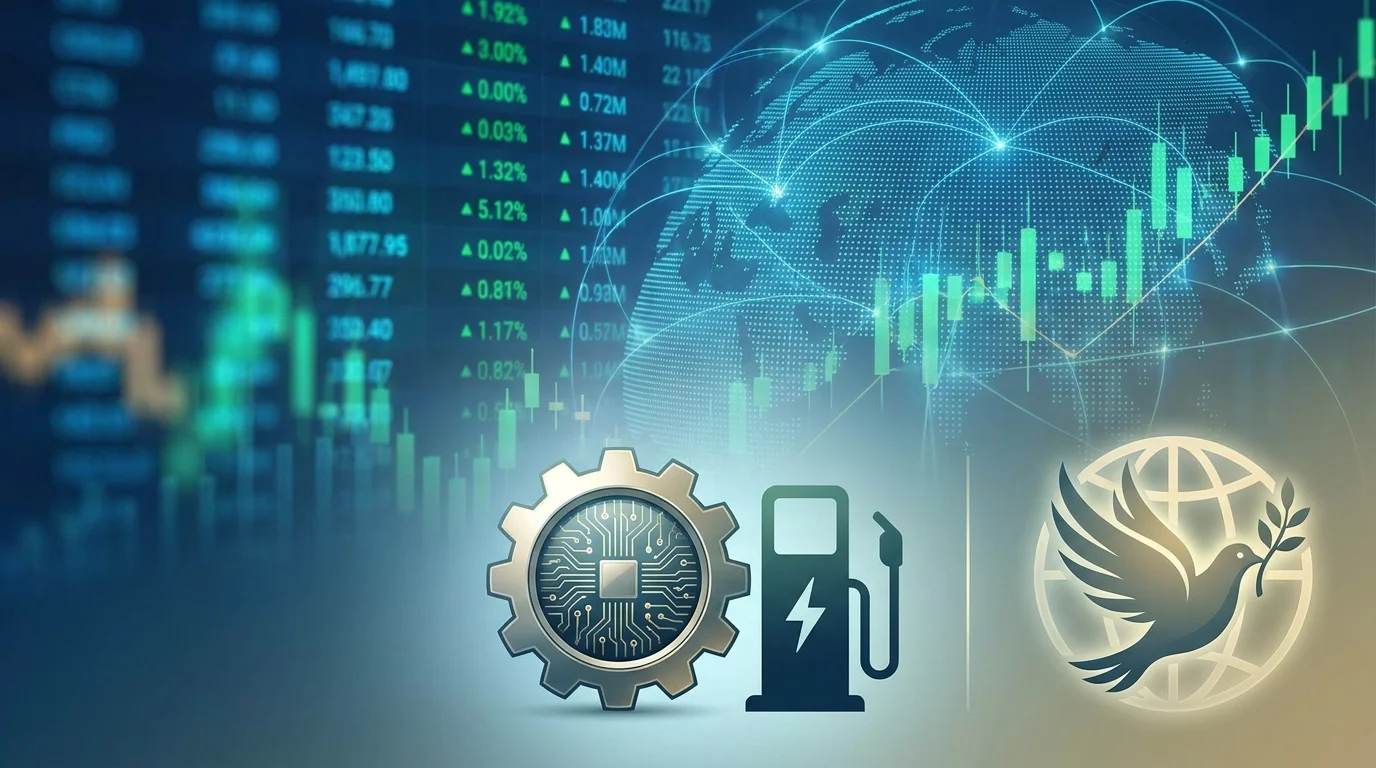
The S&P 500 has achieved a remarkable milestone, surging past 7,000 points to reach all-time highs even as the Iran war sends shockwaves through global energy markets. This unprecedented divergence between equity performance and geopolitical risk reveals a market that has developed surprising resilience, driven by strong corporate earnings, AI-fueled technology demand, and investor confidence in the Federal Reserve's ability to navigate inflationary pressures from soaring oil prices.
The rally represents more than just a number on a chart—it signals a fundamental shift in how investors are pricing risk. While Brent crude has surged over 55% since the conflict began, reaching nearly $120 per barrel at its peak, Wall Street has looked past the immediate disruption to focus on underlying economic strength. The Nasdaq Composite has been an even bigger beneficiary, climbing more than 18% from recent lows as semiconductor stocks extend their longest winning streak on record.
For investors trying to make sense of this apparent contradiction, the key lies in understanding sector rotation and the uneven impact of oil shocks across different industries. Technology companies, particularly those in AI and cloud computing, operate with minimal direct exposure to energy costs while benefiting from transformative secular trends that transcend short-term macro volatility.
The Historic Rally to 7,000
On April 15, 2026, the S&P 500 officially crossed into uncharted territory, closing at 7,022.95 and cementing its position as one of the most resilient bull markets in modern history. This milestone came despite—or perhaps because of—the extraordinary macroeconomic environment that has tested investor conviction at every turn. The index has now rallied more than 12% from its March lows, a recovery that few analysts anticipated given the severity of the geopolitical crisis unfolding in the Middle East.
What makes this rally particularly noteworthy is its composition. Unlike previous market surges that relied heavily on a handful of mega-cap technology stocks, the current advance has shown impressive breadth. Semiconductor companies have led the charge, with the sector posting its longest winning streak ever as demand for AI chips continues to outstrip supply. Companies like NVIDIA, AMD, and Broadcom have become the new market darlings, their growth trajectories seemingly immune to the macroeconomic headwinds that have derailed more traditional businesses.
The technology sector's dominance reflects a broader transformation in how the market values growth. In an era of persistent inflation and uncertain monetary policy, investors have gravitated toward companies that can demonstrate pricing power and scalable revenue models. Cloud infrastructure providers, cybersecurity firms, and enterprise software companies have all benefited from this flight to quality, their recurring revenue streams offering a hedge against the volatility that has plagued cyclical industries.
Earnings Season Validates the Rally
The market's confidence has been reinforced by a robust earnings season that has seen most major companies exceed Wall Street expectations. When Tesla reported its first-quarter results on April 22, the electric vehicle giant delivered an earnings beat that sent ripples through the entire market. The company posted adjusted earnings per share of 41 cents, comfortably beating analyst estimates of 37 cents, while revenue of $22.39 billion came in slightly ahead of expectations despite ongoing challenges in the automotive sector.
Tesla's results are particularly significant because they demonstrate the resilience of innovative companies even in challenging environments. Despite the stock's 14% decline year-to-date—the worst performance among mega-cap peers—the underlying business continues to generate healthy profits and maintain its technological leadership in autonomous driving and energy storage. The company's planned capital expenditures exceeding $25 billion for 2026 signal ambitious expansion plans that could drive growth for years to come, even if they pressure near-term free cash flow.
Other sectors have contributed to the earnings momentum as well. Financial stocks have surprised to the upside, with major banks reporting strong net interest income and manageable credit losses. Healthcare companies have maintained their defensive characteristics while delivering steady growth in pharmaceutical sales and medical device adoption. Even energy companies, despite the uncertainty surrounding the Iran conflict, have capitalized on higher oil prices to strengthen their balance sheets and return capital to shareholders.
Iran War and the Oil Price Shock
While equity markets celebrate new highs, the situation in the Middle East remains precarious. The Iran war has created what energy analysts call a "supply shock with demand consequences," as the closure of the Strait of Hormuz has disrupted approximately 20% of global oil supplies and significant volumes of liquefied natural gas. This vital waterway, which normally carries one-fifth of the world's oil between Iran and Oman, has become a chokepoint that threatens to reshape global energy markets for months or even years to come.
The economic impact has been immediate and severe. Brent crude prices surged 10-13% in the early days of the conflict, reaching $80-82 per barrel by early March, and have since climbed to nearly $120 at their peak—a 55% increase since hostilities began. This price shock has rippled through every corner of the global economy, from transportation costs to manufacturing input prices, creating inflationary pressures that central banks had only recently begun to bring under control.
European markets have felt the impact acutely, with the European Central Bank warning that the uncertainty associated with the war necessitates caution in setting interest rates. ECB Vice-President Luis de Guindos has specifically cited private credit, high market valuations, and loose fiscal policy as emerging risks to financial stability, suggesting that monetary policymakers are walking a tightrope between supporting growth and containing inflation.
Why Stocks Are Shrugging Off the Crisis
The apparent disconnect between oil prices and equity valuations has puzzled many observers, but several factors explain the market's resilience. First, the U.S. economy has become significantly less dependent on oil imports than in previous decades, thanks to the shale revolution and increased domestic production. This energy independence insulates American consumers and businesses from some of the worst effects of supply disruptions, even as European and Asian economies struggle with higher import bills.
Second, the composition of the S&P 500 has shifted dramatically toward technology and services companies that have minimal exposure to energy costs. When oil prices spike, it hurts transportation and manufacturing companies but actually benefits the information technology sector by diverting investment away from capital-intensive industries toward asset-light digital businesses. The market capitalization-weighted nature of the index means that the pain felt by energy consumers is more than offset by the gains realized by technology leaders.
Third, investors have taken comfort from the historical pattern that geopolitical conflicts, while frightening in the moment, rarely derail long-term economic growth. The market has a remarkable ability to price in known risks, and once the initial shock of the Iran war faded, traders began focusing on the potential for a ceasefire and the eventual normalization of energy flows. President Trump's recent announcement of an extended ceasefire has provided further ammunition for the bulls, even as experts question whether the peace will hold.
Sector Winners and Losers
The market's advance to record highs has masked significant divergence beneath the surface, with certain sectors thriving while others struggle to maintain momentum. Understanding these dynamics is crucial for investors seeking to position their portfolios for the remainder of 2026.
Semiconductor stocks have emerged as the clearest winners, benefiting from the AI boom that shows no signs of slowing. The sector's longest-ever winning streak reflects genuine fundamental strength, as data center operators and cloud providers race to secure limited supplies of high-performance chips. Companies with exposure to generative AI, autonomous vehicles, and edge computing have commanded premium valuations that seem justified by the transformative potential of these technologies.
On the other end of the spectrum, housing-related stocks have suffered as the Iran war pushes up interest rates and depresses sentiment in an already challenged market. British homebuilder Crest Nicholson saw its shares plummet more than 40% after cutting annual forecasts for land and home sales, citing the fallout from Middle East tensions as a primary factor. Similar weakness has appeared in U.S. homebuilder stocks, mortgage lenders, and real estate investment trusts with exposure to residential properties.
The financial sector presents a more nuanced picture. Banks have generally reported strong earnings, benefiting from the higher interest rate environment that has accompanied the oil shock. However, bond investors and lenders are increasingly demanding greater premiums on new financing as a precaution against potential economic weakness. This "risk-on, risk-off" dynamic has created winners and losers even within the same industry, with well-capitalized institutions gaining market share at the expense of more leveraged competitors.
The Role of Central Banks
Monetary policy has become the wildcard in market dynamics, with the Federal Reserve and European Central Bank walking a delicate tightrope between growth support and inflation containment. The oil price shock has complicated what was already a challenging policy environment, forcing central bankers to weigh the deflationary effects of slower growth against the inflationary impact of higher energy costs.
The ECB's cautious approach reflects the particular vulnerability of European economies to oil price shocks. With the eurozone still recovering from the energy crisis of 2022-2023, policymakers are reluctant to raise rates aggressively and risk choking off fragile growth. Instead, they have emphasized the need for "gradualism" and "data-dependency," code words for a wait-and-see approach that keeps options open while monitoring incoming economic indicators.
The Federal Reserve faces a different set of constraints. With U.S. inflation already running above target before the Iran war, the spike in oil prices threatens to embed inflationary expectations in ways that could be difficult to reverse. However, the resilience of the stock market and the broader economy suggests that the Fed may have more room to maneuver than its European counterparts, potentially allowing for a more measured approach to rate adjustments.
Market participants are divided on the likely path forward, with Fed funds futures pricing in a range of possibilities from additional hikes to early rate cuts depending on how the geopolitical situation evolves. This uncertainty has contributed to elevated volatility in fixed income markets, where bond investors and banks are demanding greater risk premiums to compensate for the uncertainty surrounding monetary policy trajectories.
Investor Strategies for the Current Environment
Navigating a market that is simultaneously hitting record highs and facing significant geopolitical risks requires a disciplined approach to portfolio construction and risk management. Investors who have ridden the rally to this point should consider strategies that protect gains while maintaining exposure to the secular trends driving long-term growth.
Diversification remains the cornerstone of sound investing, particularly in an environment where sector performance has diverged so dramatically. While technology stocks have led the charge, maintaining exposure to defensive sectors like healthcare, consumer staples, and utilities can provide a cushion if the market's optimism proves premature. International diversification offers additional benefits, as non-U.S. markets may outperform if the dollar weakens in response to fiscal expansion or monetary policy shifts.
For those seeking to capitalize on the AI and technology trends driving the current rally, selective exposure to quality companies with strong balance sheets and competitive moats makes more sense than chasing momentum in speculative names. The semiconductor sector's leadership is well-founded in genuine demand for AI infrastructure, but not all companies in the space will emerge as winners. Fundamental analysis that focuses on market share, pricing power, and technological differentiation can help separate the leaders from the laggards.
Risk management has taken on added importance given the geopolitical uncertainties surrounding the Iran war. Investors should ensure their portfolios can withstand potential spikes in volatility, whether through cash reserves, hedging strategies, or position sizing that accounts for the possibility of sudden reversals. The market's ability to look past the current crisis is impressive, but it is not infinite—prolonged conflict or escalation could test even the most resilient bull market.
Conclusion
The S&P 500's historic climb above 7,000 points represents a triumph of investor optimism over geopolitical uncertainty, but it also raises important questions about the sustainability of the current rally. With oil prices surging, interest rates in flux, and the Iran war showing no signs of rapid resolution, the market is pricing in a best-case scenario that may not fully account for the risks still lurking beneath the surface.
For investors, the lesson is clear: resilience and selectivity matter more than ever in this environment. The companies and sectors driving the rally—particularly those benefiting from the AI revolution—have genuine fundamental strength that justifies their outperformance. However, the divergence between winners and losers is likely to intensify as the full economic impact of the oil shock becomes apparent, rewarding those who have done the hard work of understanding their exposures and positioning accordingly.
As we look toward the remainder of 2026, the path forward will depend heavily on the evolution of the Iran conflict and the policy responses it elicits from central banks around the world. A swift resolution could unleash another leg higher for equity markets, while escalation or prolonged uncertainty could force a painful recalibration of expectations. In either scenario, the disciplined investor who maintains perspective and avoids emotional decision-making will be best positioned to navigate whatever comes next.
Ready to identify the next generation of market leaders? Intellectia's AI-powered stock screening tools help you cut through the noise and find opportunities that align with your investment goals. Our advanced algorithms analyze thousands of data points to surface high-quality companies with strong fundamentals and compelling growth prospects. Sign up today to start building a portfolio designed for the realities of today's market.