
Key Takeaway
The U.S. stock market has delivered a powerful rally in April 2026, with both the S&P 500 and Nasdaq Composite reaching fresh all-time highs. On Wednesday, April 22, the S&P 500 surged 1.1% to close at 7,138, while the tech-heavy Nasdaq Composite jumped an impressive 1.6% to finish at 24,658. This remarkable performance comes as investors shrug off lingering geopolitical concerns and refocus on strong corporate earnings, particularly from the technology and semiconductor sectors.
Three primary catalysts are driving this market momentum. First, President Donald Trump's decision to indefinitely extend the U.S. ceasefire with Iran has removed significant tail risks that had been weighing on investor sentiment since the conflict began in February. Second, Tesla's better-than-expected Q1 2026 earnings report has reignited enthusiasm for both the EV leader and the broader tech complex. Third, the continued surge in AI-related stocks, particularly semiconductor names like Nvidia and AMD, has created a powerful wealth effect that's rippling through the entire market. For investors, this combination of reduced geopolitical uncertainty and robust earnings growth presents a compelling case for continued equity exposure, though careful stock selection remains essential in this elevated environment.

Want to identify the next breakout stocks before they surge? Our AI Stock Picker analyzes thousands of data points to surface high-probability opportunities. Try it free today and get ahead of the market.
Iran Ceasefire Extension Removes Major Market Overhang
The geopolitical landscape shifted dramatically when President Trump announced the indefinite extension of the ceasefire with Iran, just hours before it was scheduled to expire. This decision has proven to be a significant catalyst for risk assets, as it effectively removes the worst-case scenario fears that had been haunting markets since the conflict erupted in late February.
Prior to the ceasefire extension, analysts had been warning of potentially catastrophic outcomes for global markets. The Strait of Hormuz, which carries approximately 20% of global oil and liquefied natural gas supplies, had become a flashpoint that threatened to send oil prices soaring past $200 per barrel. Such a spike would have had devastating consequences for inflation, potentially adding 0.8% to global inflation rates and forcing central banks to maintain higher interest rates for longer. The market had been pricing in these tail risks, creating a significant discount in equity valuations that is now being unwound.
As Ray Farris, chief economist for Eastspring Investments, noted in a recent interview, "Markets perceive that the worst-case scenarios in this war are probably over. What we're doing now is taking out all of those left-tail, worst-case, oil-at-$200-a-barrel risks, shifting the distribution of prices back and refocusing on earnings." This sentiment shift has been particularly beneficial for growth stocks, which are more sensitive to discount rate changes and had been disproportionately impacted by geopolitical uncertainty.
However, investors should remain cautious. While the ceasefire extension is undoubtedly positive, the truce remains fragile. Reports indicate that Iran has already challenged the agreement by seizing vessels in the region, and oil prices have resumed their upward climb with Brent crude hovering above $100 per barrel. The energy market has lost approximately one billion barrels due to the war, according to Vitol's CEO, and supply chain disruptions may persist even if military conflict is avoided. Prudent investors should maintain exposure to energy stocks as a hedge against potential flare-ups while enjoying the relief rally in the broader market.
Tesla Earnings Beat Reignites EV and Tech Enthusiasm
Tesla's Q1 2026 earnings report has emerged as another major catalyst for the current market rally, delivering results that exceeded Wall Street expectations on multiple fronts. The electric vehicle giant reported adjusted earnings per share of $0.41, beating analyst estimates of $0.37 by a healthy margin, while revenue came in at $22.39 billion. These results sent Tesla shares up 4% in after-hours trading and provided a significant boost to both the EV sector and the broader technology complex.
What makes Tesla's earnings particularly impressive is the context in which they were achieved. The company had reported a miss on vehicle deliveries for the first quarter, delivering 358,023 units, which had raised concerns about demand sustainability. However, Tesla managed to offset this weakness through several strategic moves. First, the company achieved a remarkable 21.1% gross margin, demonstrating impressive operational efficiency even in a challenging environment. Second, operating income surged 136% year-over-year, highlighting the company's ability to scale profitability as it matures. Third, free cash flow showed significant improvement, giving Tesla greater financial flexibility for future investments.
The earnings beat was driven by a combination of factors beyond just vehicle sales. Tesla's Full Self-Driving (FSD) subscription revenue continues to grow, providing a higher-margin recurring revenue stream that reduces dependence on one-time vehicle purchases. The company's energy storage business is also gaining traction, with deployments increasing significantly as grid operators worldwide seek solutions to intermittent renewable energy sources. These diversification efforts are transforming Tesla from a pure-play EV manufacturer into a comprehensive sustainable energy company, justifying a higher valuation multiple than traditional automakers.
For the broader market, Tesla's strong performance has reinforced the narrative that high-quality growth companies can continue to deliver even amid macroeconomic uncertainty. The stock had underperformed its megacap peers significantly in 2026, dropping 14% year-to-date prior to the earnings release, making it a coiled spring that was primed for a rebound. As Tesla leads the charge higher, it's creating positive sentiment spillovers into other beaten-down tech names, fueling the broad-based Nasdaq rally we're currently witnessing.
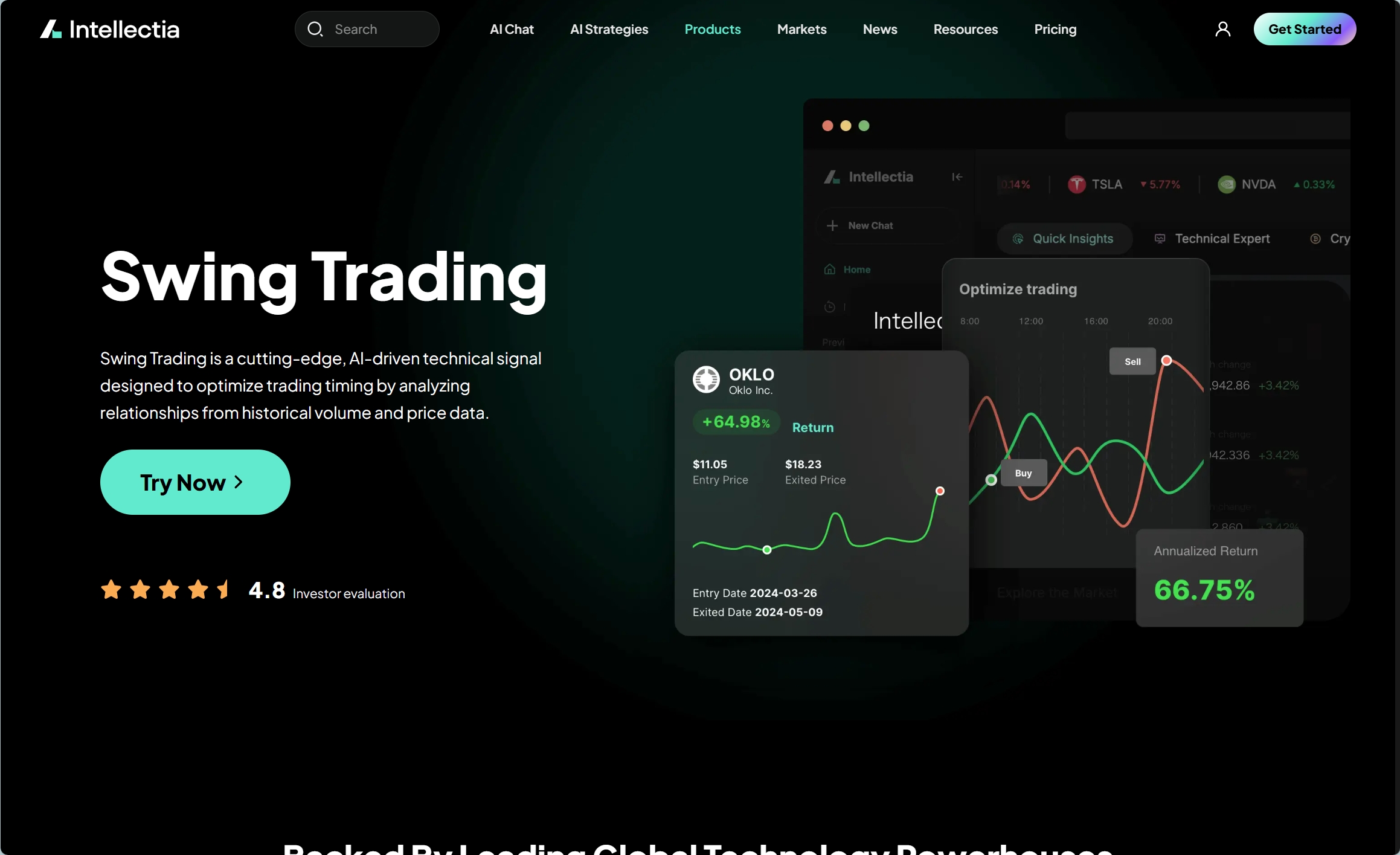
Looking to capitalize on earnings-driven momentum swings? Our AI-powered platform helps you time entries and exits with precision. Start your free trial and trade with confidence.
AI and Semiconductor Stocks Lead the Tech Renaissance
The semiconductor sector has been the undisputed leader of the April 2026 market rally, with the PHLX Semiconductor Index (SOX) reaching a fresh all-time high of 9,556.42 on April 17 and continuing to extend gains. This remarkable performance reflects the market's conviction that artificial intelligence infrastructure spending will remain robust regardless of broader economic conditions, creating a secular growth story that's attracting capital from across the investment spectrum.
Nvidia remains the bellwether for the AI trade, with the chip giant's stock trading between $200.45 and $201.44 on April 22. The company's GPUs continue to dominate the data center market, powering everything from large language models to autonomous driving systems. With AI infrastructure spending expected to reach approximately $660 billion in 2026 alone, Nvidia's market position appears stronger than ever. The company's data center revenue continues to grow at a torrid pace, with each successive generation of chips commanding higher average selling prices while maintaining overwhelming market share.
Advanced Micro Devices has been another standout performer, with the stock enjoying an impressive 11-day winning streak as of April 16, its longest since 2005. AMD has successfully captured significant market share in the server CPU space from Intel over the past three years, and its MI300 series AI accelerators are gaining traction as a credible alternative to Nvidia's offerings. The company's ability to offer competitive performance at lower price points is resonating with cost-conscious data center operators, particularly as AI workloads scale and power consumption becomes a critical consideration.
The semiconductor rally extends beyond just the AI chip designers. Taiwan Semiconductor Manufacturing Company (TSMC), which manufactures the vast majority of advanced AI chips, is benefiting enormously from surging demand. The company's advanced process nodes are essentially sold out for the foreseeable future, giving TSMC unprecedented pricing power. This dynamic has created a virtuous cycle where TSMC's capital investments in new fabrication facilities are being underwritten by guaranteed orders from AI chip designers, ensuring continued supply growth to meet seemingly insatiable demand.
For investors, the semiconductor rally presents both opportunities and risks. While the long-term growth story remains compelling, many chip stocks have become technically overbought after the recent surge. Selectivity is key, with companies that offer unique technology advantages or exposure to underappreciated end markets likely to outperform those trading at excessive valuations. Our AI Screener can help identify semiconductor stocks with the best risk-reward profiles in this dynamic environment.
Earnings Season Delivering Broad-Based Strength
The first-quarter 2026 earnings season has been remarkably strong across the board, with the vast majority of S&P 500 companies delivering results that have topped analyst expectations. This broad-based earnings strength has been a crucial support for the market rally, as it demonstrates corporate America's ability to navigate challenges ranging from elevated interest rates to geopolitical uncertainty.
{BALANCE:symbol=SPY, type=1, locale=US}
Several notable earnings beats have contributed to the positive sentiment. GE Vernova, the recently spun-off energy business from General Electric, reported fatter profits than analysts expected, driven by robust demand for power generation equipment. Boeing has also delivered encouraging results, suggesting that the aerospace giant is making progress in resolving its production challenges. These industrial earnings are particularly significant because they indicate that economic activity remains healthy beyond just the technology sector.
The financial sector has also contributed to the positive earnings narrative. Banks have benefited from higher interest rates, which have expanded net interest margins, while investment banking activity has shown signs of recovery as capital markets reopen. Regional banks, which had been under pressure earlier in the year due to concerns about commercial real estate exposure, have generally reported stable deposit bases and manageable credit quality trends.
What's particularly encouraging about this earnings season is the geographic and sectoral diversity of the strength. It's not just U.S. tech giants driving the results, companies across Europe, Asia, and Latin America are also exceeding expectations. This global synchronized earnings recovery suggests that the economic expansion has broadened beyond its initial narrow base, creating a more sustainable foundation for future market gains.
Looking ahead, analysts expect earnings growth to accelerate through the remainder of 2026 as comparables become easier and companies fully lap the impact of last year's economic slowdown. This earnings momentum should provide continued support for equity prices, even if valuation multiples compress somewhat from current elevated levels.
Market Rotation and Sector Performance Analysis
The April 2026 rally has been characterized by a notable rotation within the equity market, with leadership shifting from defensive sectors to cyclical and growth-oriented areas. Understanding these rotational dynamics is essential for positioning portfolios to capture the next phase of the market cycle.
Technology has unsurprisingly been the standout performer, with the Nasdaq 100 gaining 1.7% to reach new record highs. Within tech, semiconductors have led the charge, but software and internet stocks have also participated in the rally. The resurgence of growth stocks reflects improving investor confidence in the economic outlook and a willingness to look through near-term uncertainties. However, this leadership is more selective than in previous rallies, with companies demonstrating clear paths to profitability commanding premium valuations while speculative names lag.
Energy stocks have experienced a more mixed performance. While the Iran ceasefire extension initially caused oil prices to drop, concerns about the fragility of the truce and ongoing supply constraints have kept energy prices elevated. This has supported earnings for oil and gas producers, though the sector has underperformed the broader market as investors rotate toward growth names. For income-focused investors, energy remains an attractive destination given generous dividend yields and reasonable valuations relative to historical norms.
Healthcare and consumer staples, which had outperformed during the market's more uncertain periods, have taken a back seat in the current rally. These defensive sectors typically lag when investor risk appetite improves, and that pattern has held true in April. However, they remain important portfolio anchors for conservative investors, offering stability and dividend income that can buffer against future volatility.
Small-cap stocks, as represented by the Russell 2000 index, have shown more mixed performance, with the index actually falling 1% on some days despite the large-cap rally. This divergence reflects concerns about smaller companies' greater sensitivity to economic conditions and their heavier debt burdens in a higher interest rate environment. Until the Fed signals a more dovish stance, small caps may continue to lag their larger counterparts.
Conclusion
The S&P 500 and Nasdaq's march to fresh record highs in April 2026 represents a powerful convergence of positive catalysts. The removal of worst-case geopolitical scenarios through the Iran ceasefire extension, robust earnings performance led by Tesla and semiconductor giants, and the continued acceleration of AI infrastructure spending have created a fertile environment for equity gains. For investors who maintained conviction through the volatility of early 2026, this rally is validating the wisdom of staying invested through uncertain periods.
However, prudent investors should recognize that the easy gains may be behind us. With the S&P 500 trading at elevated valuations and many tech stocks showing signs of technical overextension, the path forward is likely to be characterized by higher volatility and more modest returns. Selectivity will be crucial, with companies that can demonstrate sustainable competitive advantages and consistent earnings growth likely to outperform those trading on momentum alone.
Looking ahead, the key variables to watch include the durability of the Iran ceasefire, the trajectory of Federal Reserve policy, and the pace of AI adoption across industries. Any deterioration in these areas could quickly reverse the current bullish sentiment. Conversely, continued progress on geopolitical stability, potential Fed rate cuts later in 2026, and accelerating AI monetization could drive markets even higher.
For those looking to navigate this complex environment, our platform offers the tools you need to make informed decisions. From our AI Stock Picker that identifies high-probability opportunities to our comprehensive AI Screener that filters thousands of stocks based on your criteria, we provide the analytical edge that can make the difference in today's fast-moving markets. Sign up now and join thousands of investors who are leveraging AI to stay ahead of the curve. The market waits for no one, make sure you're equipped to capture the opportunities that lie ahead.