
Key Takeaway
The escalating war in Iran has triggered a perfect storm across global financial markets, sending oil prices surging above $110 per barrel while pushing major U.S. stock indexes into correction territory. On March 27, 2026, Brent crude jumped roughly 5.7% to trade between $108 and $114 per barrel as investors grappled with the growing possibility of a prolonged conflict that could reshape the global energy landscape. The stock market responded with its sharpest weekly decline since 2022, with the Dow Jones Industrial Average plummeting nearly 800 points and the tech-heavy Nasdaq Composite officially entering correction territory after falling more than 10% from its recent all-time highs.
This market turbulence reflects deeper concerns about stagflation—a toxic combination of slowing economic growth and accelerating inflation that has historically challenged even seasoned investors. Analysts at Macquarie Group have raised their oil price forecasts dramatically, now projecting West Texas Intermediate to average $83 per barrel in fiscal 2026, up from previous estimates of $58. More alarming, some analysts warn that Brent crude could potentially reach $200 per barrel if the war extends into June, a scenario that would have profound implications for everything from consumer spending to central bank policy.
For investors, this environment demands a careful reassessment of portfolio positioning. The traditional 60/40 stock-bond allocation faces unique challenges when both equity and fixed-income markets face pressure from inflation expectations and geopolitical uncertainty. Energy sectors may offer relative strength in this environment, while technology stocks—particularly those with high valuations dependent on future earnings—face headwinds from rising discount rates and recession fears.
The Iran War's Impact on Global Oil Markets
Strait of Hormuz: The World's Most Critical Chokepoint
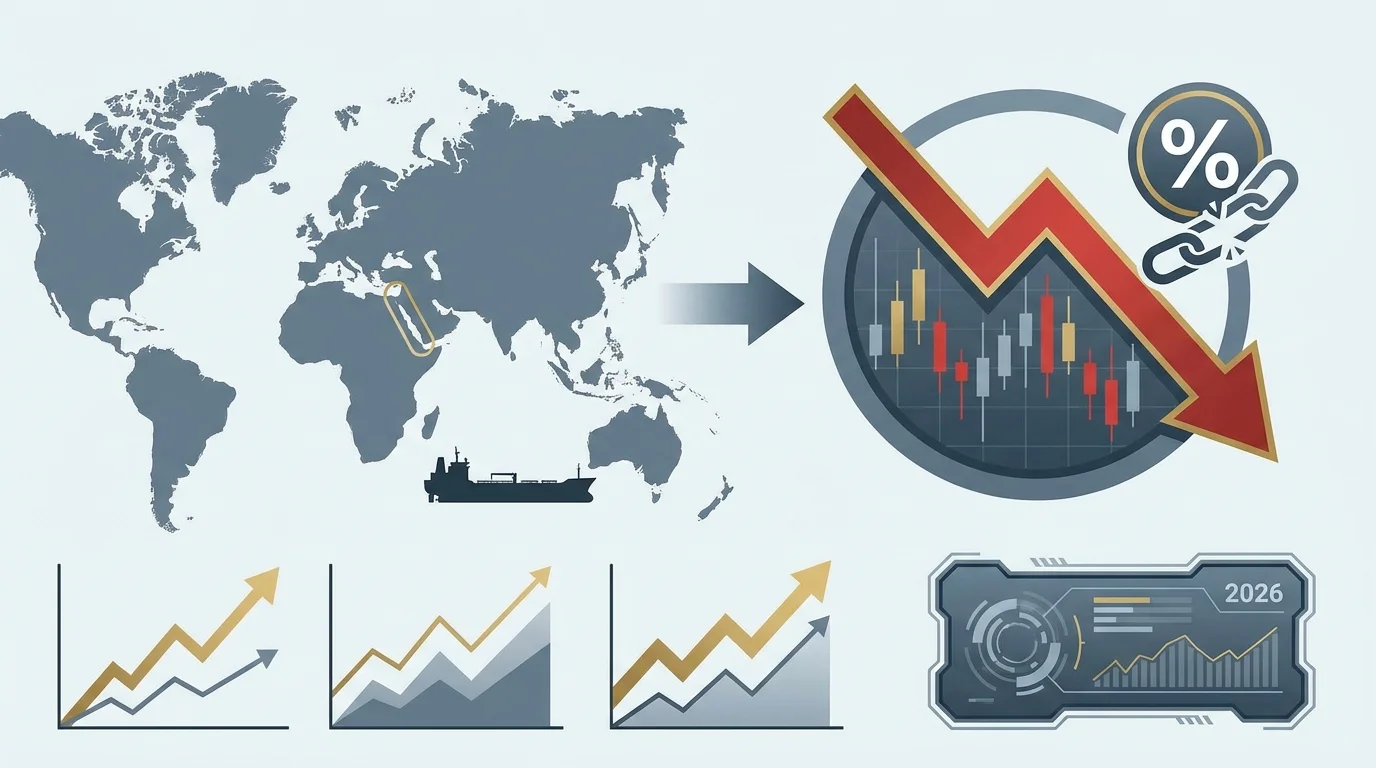
The Strait of Hormuz represents one of the most strategically important maritime passages in the world, with approximately 20% of global oil shipments passing through this narrow waterway between the Persian Gulf and the Gulf of Oman. When Iran effectively closed the strait on March 4, 2026, the move sent immediate shockwaves through energy markets that continue to reverberate weeks later. This single action stranded both oil and liquefied natural gas exports, forcing major exporters like QatarEnergy to declare force majeure on all shipments—a legal clause that releases companies from contractual obligations due to circumstances beyond their control.
The closure of Hormuz demonstrates how quickly geopolitical events can disrupt the carefully calibrated global energy supply chain. Unlike previous supply disruptions that primarily affected production capacity, the Hormuz closure impacts the actual transportation infrastructure that connects producers to consumers. This distinction matters because while alternative production can eventually come online, building new transportation routes requires years of infrastructure development and international cooperation that simply isn't available in the current crisis timeframe.
Market participants are now grappling with the possibility that the strait could remain closed for an extended period, fundamentally altering global energy trade flows. European and Asian buyers are scrambling to secure alternative supplies, with some turning to strategic petroleum reserves while others negotiate emergency purchases from non-traditional suppliers. This reconfiguration of energy trade patterns carries significant cost implications that are only beginning to appear in official economic data.
Brent Crude's Historic Surge
The speed and magnitude of oil's price appreciation has caught many market participants off guard. Brent crude's 5.7% single-day jump to $108.01 per barrel on Thursday, March 26, marked the highest level for the global benchmark in years, with prices continuing to climb past $110 and reaching as high as $114.81 in subsequent trading sessions. This represents a dramatic increase from the $70-80 range that had become familiar to traders in recent months, and the psychological impact of triple-digit oil prices cannot be understated.
Several factors beyond the Hormuz closure are contributing to the sustained upward pressure on oil prices. The broader conflict has raised concerns about potential damage to Iranian oil infrastructure, which could take months or years to fully repair even after hostilities cease. Additionally, the risk of the conflict spreading to involve other major oil producers in the region has created a significant risk premium that traders are demanding to hold oil positions. This geopolitical risk premium could persist even if immediate supply disruptions are resolved, fundamentally changing the cost structure of global energy markets.
Analysts at Macquarie Group have provided perhaps the most sobering assessment, suggesting that Brent crude could reach $200 per barrel if the war extends into June. While this represents a worst-case scenario rather than a baseline forecast, the possibility cannot be dismissed given the potential for further escalation. At $200 per barrel, the economic implications would extend far beyond higher gasoline prices, potentially triggering a global recession as energy costs consume an unsustainable portion of consumer and business budgets.
Energy Sector Winners and Losers
Within the equity markets, the oil price surge has created a clear divergence between energy producers and energy consumers. Exploration and production companies have seen their stock prices rise as the value of their reserves increases and profit margins expand dramatically. Companies with significant exposure to domestic U.S. production, which is less affected by Middle East disruptions, have particularly outperformed as investors anticipate sustained higher prices.
Conversely, industries that rely heavily on oil and refined products have faced severe pressure. Airlines have seen their shares decline sharply as jet fuel costs represent a major operating expense that cannot be easily passed on to consumers in a competitive market. Shipping companies face similar challenges, with container lines and tanker operators seeing their margins squeezed despite potentially higher freight rates. Retailers are also vulnerable, as higher transportation costs combine with potential weakness in consumer spending power to create a challenging operating environment.
The renewable energy sector presents a more complex picture. In theory, higher oil prices should accelerate the transition to renewable energy sources by improving their relative cost competitiveness. However, many renewable energy projects rely on global supply chains that could face disruption from the broader economic fallout of the crisis. Additionally, the capital-intensive nature of renewable infrastructure development could face headwinds if rising interest rates and risk aversion make financing more expensive and difficult to obtain.
Stock Market Enters Correction Territory
The Nasdaq's Technical Breakdown
The Nasdaq Composite's descent into correction territory—defined as a decline of 10% or more from recent highs—represents a significant psychological and technical milestone for technology investors. The index closed March 26 down 2.38% and extended those losses on March 27, officially confirming the correction with a total decline of 10.7% from its all-time closing high. This marks the first major correction for the tech-heavy index since the 2022 bear market, and it comes after an extended period of strong performance that had driven valuations to historically elevated levels.
The velocity of the decline has been particularly striking. Four out of the ten largest S&P 500 components have now fallen more than 20% from their 52-week highs, suggesting that the selling pressure has extended beyond speculative tech names to include some of the market's most established companies. This breadth of decline indicates that institutional investors are reducing equity exposure broadly rather than simply rotating between sectors, a behavior pattern that typically accompanies more significant market corrections.
From a technical analysis perspective, the Nasdaq has broken through several key support levels that had held during previous market pullbacks. The 50-day and 100-day moving averages have both been decisively breached, and volume patterns suggest that selling has accelerated as prices declined—a sign of panic selling rather than orderly profit-taking. While technical indicators like the relative strength index suggest that the market may be oversold in the short term, historical precedent suggests that corrections often overshoot to the downside before finding durable support.
Dow Jones and S&P 500 Follow Lower
While the Nasdaq has captured headlines with its dramatic decline, the broader market has not been spared. The Dow Jones Industrial Average fell nearly 800 points on March 27, extending its losing streak to five consecutive weeks—the longest such streak since 2022. The blue-chip index has now entered correction territory alongside the Nasdaq, representing a remarkable reversal from the record highs set just weeks earlier. This broad-based weakness suggests that the market's concerns extend beyond the technology sector to encompass the overall economic outlook.
The S&P 500 has fared somewhat better on a relative basis but still declined 1.74% on March 27, bringing its total pullback from highs to nearly 9%. The index is now flirting with correction territory and appears likely to join the other major indexes in that unenviable club if selling pressure continues. The equal-weight S&P 500, which provides a better measure of average stock performance than the market-cap-weighted version, has actually performed worse than its counterpart, indicating that the market weakness is broad rather than concentrated in a few large-cap names.
Sector performance within the S&P 500 reflects the market's attempt to grapple with the implications of higher oil prices and potential stagflation. Energy has been the clear outperformer, with the sector posting gains even as the broader market declined. Utilities have also shown relative strength as investors seek defensive positioning. At the other end of the spectrum, consumer discretionary stocks have been hit hard as the market prices in reduced consumer spending power, while technology and communication services have suffered from the dual headwinds of high valuations and rising discount rates.
VIX Surge Signals Elevated Fear
The CBOE Volatility Index, commonly known as the VIX, has surged alongside the market decline, reflecting a significant increase in investor fear and uncertainty. Often referred to as the market's "fear gauge," the VIX measures implied volatility in S&P 500 options and tends to spike during periods of market stress. The current elevation in the VIX suggests that traders are aggressively hedging their portfolios against further downside, which can create a self-reinforcing cycle of selling pressure as market makers adjust their hedges.
Elevated VIX levels also have practical implications for portfolio management. Higher implied volatility means that options premiums are more expensive, making protective put strategies costlier to implement. For income-focused investors, elevated volatility can actually be beneficial for strategies like covered call writing, as higher premiums provide additional downside cushion. However, the overall environment of elevated fear typically corresponds with lower risk appetite and reduced market liquidity, which can amplify price movements in both directions.
Historical analysis of VIX spikes suggests that while they often mark periods of maximum pessimism that eventually give way to recoveries, the timing of such reversals is notoriously difficult to predict. The VIX can remain elevated for extended periods during ongoing crises, and attempting to catch falling knives based solely on volatility signals has historically been a dangerous strategy. Investors would be wise to focus on longer-term fundamentals rather than attempting to time short-term volatility spikes.
Stagflation Fears Resurface
The Economic Impact of Sustained High Oil Prices
The combination of slowing economic growth and rising inflation—stagflation—represents perhaps the most challenging environment for both policymakers and investors. The current crisis threatens to create precisely this scenario, as higher oil prices act as a tax on consumers and businesses while simultaneously disrupting supply chains that had only recently normalized following the pandemic. The University of Michigan's survey of inflation expectations has already shown signs of deterioration, with longer-term expectations becoming less anchored—a development that could complicate the Federal Reserve's policy decisions.
Oil price shocks have historically been associated with economic recessions, and the current situation bears uncomfortable similarities to the 1970s oil crises that defined that era's economic narrative. When energy costs rise rapidly, consumers have less disposable income to spend on other goods and services, creating a drag on economic growth. At the same time, businesses face higher input costs that they attempt to pass on to consumers, creating inflationary pressure. This combination of slowing growth and rising prices creates a dilemma for central banks, who must choose between supporting economic activity and controlling inflation.
The timing of this oil price surge is particularly concerning given the existing vulnerabilities in the global economy. Many developed economies were already experiencing slowing growth as the post-pandemic recovery matured and monetary policy tightening worked its way through the system. Adding an oil shock to this already fragile environment increases the probability of a hard landing scenario in which restrictive monetary policy combines with energy costs to push economies into recession.
Central Bank Dilemma
The Federal Reserve and other major central banks now face an unenviable policy choice. On one hand, the inflationary pressure from higher oil prices suggests that monetary policy should remain restrictive to prevent inflation expectations from becoming unanchored. On the other hand, the economic drag from higher energy costs and the potential for financial market instability argue for a more accommodative stance to support growth and maintain market functioning. This tension is reflected in the increasingly divergent views among Federal Reserve officials regarding the appropriate path for interest rates.
Market pricing for Federal Reserve policy has shifted dramatically in recent weeks. Futures markets that had previously anticipated rate cuts in 2026 are now pricing in a higher probability of rate hikes or at least an extended pause in any easing cycle. This repricing has contributed to the weakness in longer-duration assets like technology stocks, which are more sensitive to changes in discount rates. The yield curve has steepened as short-term rates have risen relative to long-term rates, reflecting expectations of tighter monetary policy in the near term.
The European Central Bank faces an even more challenging situation given Europe's greater dependence on imported energy and its proximity to the conflict zone. ECB President Christine Lagarde has warned that markets are "overly optimistic" about the economic outlook, suggesting that the central bank may maintain a hawkish stance despite the growth risks. The euro has come under pressure as investors weigh the relative economic prospects of the U.S. and Europe in an energy crisis scenario.
Corporate Earnings Under Pressure
The earnings outlook for U.S. corporations has deteriorated meaningfully as analysts factor in the impact of higher oil prices and slower economic growth. Companies in energy-intensive industries like transportation, manufacturing, and chemicals face direct margin pressure from increased input costs. Consumer-facing businesses are preparing for reduced discretionary spending as households allocate more of their budgets to gasoline and utilities. Even technology companies, which are less directly exposed to oil prices, face headwinds from reduced corporate IT spending and potential advertising budget cuts.
The first major company to report earnings during this crisis, Carnival Corporation, posted results that provided a window into the challenges facing consumer discretionary companies. The cruise giant reported adjusted EPS of $0.18, slightly beating analyst estimates of $0.17, but the forward guidance was cautious given the uncertain economic environment. Fuel costs represent a significant expense for cruise operators, and while the company has hedging programs in place, sustained high prices will eventually impact profitability.
Analysts have begun reducing earnings estimates across the board, with the energy sector being the notable exception. The magnitude of these estimate cuts is likely to accelerate if oil prices remain elevated and economic data begins to show clear signs of slowing growth. This earnings recession scenario, combined with already elevated valuations, creates a challenging backdrop for equity returns in the near term.
Investment Strategies for a Stagflationary Environment
Sector Rotation and Defensive Positioning
In an environment characterized by stagflation fears and market volatility, sector rotation strategies take on heightened importance. Historically, certain sectors have demonstrated relative resilience during inflationary periods, while others have consistently underperformed. Energy stocks are the most obvious beneficiaries of higher oil prices, as their revenues increase directly with commodity prices while many have hedged production at lower levels, creating margin expansion opportunities. The energy sector's underweight position in many institutional portfolios suggests that further outperformance could be driven by rebalancing flows as well as fundamental improvements.
Utilities represent another defensive sector that often performs well during periods of economic uncertainty. These companies provide essential services with relatively inelastic demand, meaning that consumers prioritize paying their electricity and gas bills even when cutting back on discretionary spending. Additionally, utilities typically carry significant debt loads, and the high inflation environment can actually benefit these companies by eroding the real value of their fixed obligations. However, investors must be selective, as utilities with significant exposure to natural gas prices may face margin pressure if fuel costs rise faster than regulated rates.
Consumer staples offer defensive characteristics but require careful analysis of pricing power and input cost exposure. Companies with strong brands and market share can typically pass on higher costs to consumers through price increases, protecting their margins. However, staples companies without this pricing power may see their profitability squeezed between rising costs and competitive pressure to maintain market share. The key differentiator is often the strength of the company's brand portfolio and its historical ability to implement pricing actions without significant volume losses.
Alternative Assets and Inflation Hedges
Traditional inflation hedges like gold have seen renewed interest as investors seek protection from both market volatility and currency devaluation. Gold prices have surged to record highs as the geopolitical chaos upends traditional market relationships, with XAU/USD reaching levels that would have seemed improbable just months ago. The precious metal benefits from its status as a store of value that is not tied to any particular government or currency, making it attractive during periods of geopolitical instability and currency uncertainty.
Real estate investment trusts (REITs) and infrastructure assets can also provide inflation protection through their ability to pass on cost increases via rent escalations and regulated rate increases. However, these assets face headwinds from rising interest rates, which increase financing costs and can reduce the present value of future cash flows. The net effect depends on the specific characteristics of each investment, including leverage levels, lease structures, and the regulatory environment. REITs with shorter lease durations and the ability to reprice rents quickly may outperform those with long-term fixed-rate leases.
Treasury Inflation-Protected Securities (TIPS) offer direct inflation protection through their linkage to the Consumer Price Index. However, TIPS prices have been volatile as the market attempts to price in both inflation expectations and changes in real interest rates. In the current environment, TIPS may underperform if the Federal Reserve maintains a hawkish stance and real rates continue to rise, even as inflation remains elevated. Investors should view TIPS as a partial hedge rather than a complete solution to inflation risk.
Long-Term Opportunities Amid Volatility
While the near-term market outlook is challenging, periods of volatility often create attractive long-term investment opportunities for patient investors. High-quality companies with strong balance sheets, durable competitive advantages, and the ability to navigate economic downturns may see their stock prices decline along with the broader market, creating entry points for long-term positions. The key is distinguishing between temporary price declines driven by market sentiment and permanent impairments to business value driven by fundamental changes.
Technology companies with strong cash flow generation and reasonable valuations may represent particularly attractive opportunities given the severity of the sector's decline. While many tech stocks reached excessive valuations during the recent bull market, the indiscriminate selling during corrections often affects fundamentally sound companies along with speculative names. Investors should focus on companies with established profitability, recurring revenue streams, and competitive moats that will endure beyond the current crisis.
International diversification may also provide opportunities as different regions face varying impacts from the oil crisis. Emerging markets that are net oil exporters could benefit from higher commodity prices, while those dependent on energy imports may face additional challenges. The valuation differential between U.S. and international stocks had already reached extreme levels before the current crisis, suggesting that non-U.S. markets may offer relative value even if absolute returns remain challenged.
Conclusion
The Iran war has triggered a genuine market crisis that extends far beyond the immediate impact on oil prices. The confluence of surging energy costs, stock market correction, and stagflation fears has created an environment that challenges conventional investment approaches and demands careful portfolio repositioning. With Brent crude trading above $110 per barrel and major indexes in correction territory, investors must grapple with the possibility that the current volatility represents a fundamental regime change rather than a temporary disruption.
The historical parallels to the 1970s oil crises are both instructive and concerning. Like that earlier period, the current crisis combines a supply shock in the energy sector with already elevated inflation and slowing economic growth. The policy response from central banks will be critical in determining whether the economy can achieve a soft landing or whether the current slowdown develops into a more serious recession. Investors should prepare for a range of outcomes while maintaining the flexibility to adapt as the situation evolves.
For those looking to navigate these challenging markets, tools that provide real-time analysis and actionable insights are more valuable than ever. The ability to identify sector rotation opportunities, monitor valuation changes, and detect early signs of fundamental shifts can make the difference between preserving capital and suffering permanent losses. As the market continues to digest the implications of the Iran war, having access to sophisticated analytical capabilities will be essential for making informed investment decisions.
Ready to take control of your investment strategy during these volatile times? Discover how our AI-powered stock picker can help you identify opportunities and manage risk in any market environment. Our advanced algorithms analyze thousands of data points to deliver personalized recommendations based on your goals and risk tolerance. Don't let market uncertainty derail your financial future—get started today and navigate the current crisis with confidence.