
Key Takeaway
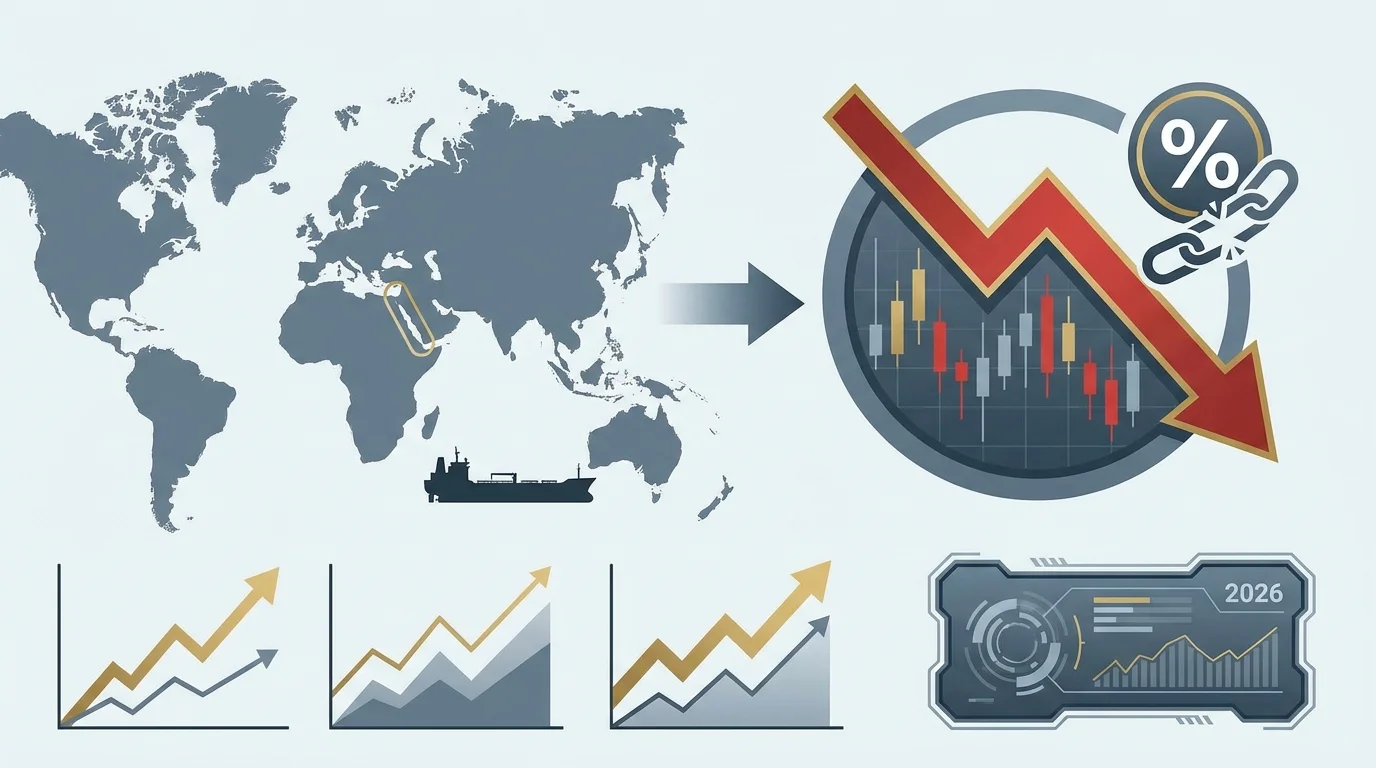
The ongoing closure of the Strait of Hormuz has emerged as the single most significant geopolitical risk factor for global energy markets in 2026. With approximately 20 million barrels of oil per day-representing roughly 20% of global seaborne oil trade-trapped behind this critical chokepoint, the ramifications extend far beyond immediate price spikes. Brent crude has already surged to $80-82 per barrel, while West Texas Intermediate futures have climbed above $96, reflecting the market's acute sensitivity to supply disruption.
For investors, this crisis presents both substantial risks and compelling opportunities. Energy sector ETFs like the Energy Select Sector SPDR (XLE) have gained over 23% year-to-date, while the U.S. Oil Fund (USO) tracking crude futures has skyrocketed nearly 90%. Yet performance among individual energy supermajors has varied dramatically: BP has outperformed peers with a 20% gain since the war began, while Exxon Mobil has actually declined approximately 2% due to trapped production assets in the Middle East and Qatar. Understanding these divergences is crucial for constructing a resilient energy portfolio during this period of heightened volatility.
The path forward hinges on diplomatic developments between Iran and the United States. Recent reports indicate Iran has proposed reopening the Strait in exchange for the U.S. lifting its blockade and ending the war, but negotiations have stalled as both sides maintain hardened positions. Until a sustainable resolution emerges, oil markets will continue trading with a substantial geopolitical risk premium, creating an environment where active management and careful stock selection within the energy sector can generate significant alpha.
Understanding the Strait of Hormuz Crisis
The Strait of Hormuz represents the world's most critical oil transit chokepoint, a narrow waterway merely 34 kilometers wide at its narrowest point separating Iran and Oman. This strategic passage facilitates the transit of oil primarily from Saudi Arabia, the United Arab Emirates, Iraq, and Qatar to global markets. When conflict erupted between Iran and coalition forces in early 2026, Iran's immediate closure of the Strait fundamentally altered global oil market dynamics overnight.
The economic impact was immediate and severe. Within the first month of the closure, Brent crude oil prices surged 10-13% to reach $80-82 per barrel by early March 2026. This price shock rippled through global markets, affecting everything from airline fuel costs to manufacturing input prices. The disruption has persisted for over two months now, creating what analysts describe as a sustained supply shock unlike anything seen since the 1970s oil crises.
Iran's position has evolved throughout the conflict. Initially, Iranian officials warned that the Strait would not return to its previous state under any circumstances. However, following a ceasefire in Lebanon on April 17, Iran temporarily announced the Strait would be open to commercial shipping during the truce period. When the United States continued its blockade of Iran despite this gesture, Iran re-imposed restrictions, demonstrating the intricate linkage between military actions and energy policy in this conflict.
The current stalemate reflects deeper strategic calculations on both sides. Iran's proposal to reopen the Strait in exchange for lifting the U.S. blockade represents a significant diplomatic opening, yet negotiations have failed to produce a second round of talks in Pakistan. Markets now face the prospect of prolonged disruption, with prediction markets suggesting dim prospects for a permanent peace deal without breakthroughs on core issues including Iran's nuclear program and regional influence.
Oil Price Dynamics and Market Response
Oil markets have exhibited remarkable volatility since the crisis began, with prices swinging dramatically on diplomatic headlines and military developments. WTI crude futures have climbed above $96 per barrel as of late April 2026, recouping losses from previous sessions even as the Strait remains effectively closed. This elevated price level reflects not just current supply constraints but also the market's pricing of ongoing risk premium into forward contracts.
The mechanics of the supply disruption are complex and far-reaching. Tankers attempting to transit the Strait have encountered effectively closed conditions, keeping crude trapped in the Middle East and away from customers worldwide. This has created a bifurcated market where crude availability varies dramatically by region, with Asian importers facing particularly acute shortages while some Atlantic basin markets maintain more stable supply through alternative sources.
Recent price action demonstrates the market's sensitivity to diplomatic developments. Oil prices plunged following President Trump's announcement of a two-week ceasefire agreement in early April, only to resume their upward trajectory as diplomatic progress stalled. Current Brent crude prices rising more than 2% on reports of failed talks illustrate how tightly correlated energy markets have become with geopolitical news flow.
Looking ahead, oil price forecasts depend heavily on resolution scenarios. A permanent reopening of the Strait could trigger a significant price correction, potentially sending crude back toward pre-crisis levels in the $70-75 range. Conversely, an escalation involving military confrontation or prolonged closure could drive prices well above $100 per barrel, testing demand destruction thresholds and potentially triggering global recessionary forces. Most analysts currently project an extended period of elevated prices, with the risk premium likely persisting even after any eventual reopening.
Energy Sector Stock Performance Analysis
The divergence in performance among energy supermajors during this crisis reveals critical insights about operational exposure and geographic risk. Understanding these variations is essential for investors seeking to navigate this volatile environment effectively.
Exxon Mobil has emerged as perhaps the most instructive case study in geopolitical risk exposure. Despite being the largest U.S. energy company and generally considered a defensive blue-chip holding, Exxon's shares have lost approximately 2% since the war began. This counterintuitive underperformance stems directly from the company's significant production assets trapped in the Middle East and Qatar, along with LNG volumes in which it holds stakes. The company lost roughly 6% of its global production in the first quarter of 2026 due to the Strait closure, demonstrating how even diversified supermajors can suffer concentrated impacts from regional disruptions.
Chevron has fared better, with shares gaining over 20% year-to-date and maintaining a moderate buy consensus among analysts featuring 18 buy ratings against just 3 sells. Chevron's relatively stronger performance reflects its more balanced geographic footprint, with substantial production in the Americas offsetting exposure to affected regions. The company raised its first quarter 2026 dividend by 4% to $1.78 per share, marking its 39th consecutive annual increase and signaling management confidence despite geopolitical headwinds. Chevron is also targeting $3-4 billion in structural cost cuts by year-end, positioning itself for margin expansion when operational normalization occurs.
BP has been the standout performer among supermajors, with shares surging 20% since the Iran war began and leading all major integrated oil companies. This impressive outperformance reflects BP's relatively lower exposure to Middle Eastern production disruptions and its strong downstream refining operations that benefit from wider crack spreads in tight oil markets. With shares currently trading around $46.25 against an average analyst price target of $49.47, BP appears reasonably valued while offering exposure to potential continued outperformance if the crisis persists.
Other notable performers include ConocoPhillips and Cheniere Energy, both of which enjoy strong Wall Street endorsements and delivered impressive 2025 performance entering 2026. Cheniere's LNG export facilities have become increasingly valuable as European and Asian buyers seek alternatives to disrupted Middle Eastern supplies, while ConocoPhillips' U.S.-focused production base provides insulation from Strait-related disruptions.
Energy ETF Performance and Investment Vehicles
For investors seeking diversified exposure to the energy sector rather than individual stock selection, several ETFs have delivered remarkable returns during this crisis while offering varying risk-return profiles.
The Energy Select Sector SPDR (XLE) has gained over 23% year-to-date, tracking an index of 22 major U.S. energy companies as of March 31, 2026. With an expense ratio of just 0.08%, XLE offers cost-efficient exposure to the sector's leading names including Exxon, Chevron, and Schlumberger. The fund provides broad diversification while maintaining focus on the largest, most liquid energy equities. Recent technical analysis shows XLE establishing important pivot points, with a pivot high at $56.98 and pivot low at $56.33 as of April 23, suggesting potential range-bound trading in the near term absent major geopolitical catalysts.
The U.S. Oil Fund (USO), which tracks crude oil futures contracts, has been the star performer with gains approaching 90% year-to-date. This explosive rally from late 2025 and early 2026 lows reflects the direct leverage oil futures provide to spot price movements. However, investors should note that USO's futures-based structure introduces roll yield considerations and tracking error relative to spot crude prices. The fund is best suited for shorter-term tactical positions rather than long-term buy-and-hold strategies.
Beyond these major funds, specialized ETFs targeting oil services, midstream infrastructure, and clean energy transition plays offer exposure to different segments of the energy value chain. The divergence in performance between upstream producers and downstream refiners has created relative value opportunities, with refiners generally benefiting from wider crack spreads while upstream companies face production challenges.
For investors new to energy sector investing, platforms like Intellectia's AI Stock Picker can help identify optimal entry points and sector allocations based on real-time market conditions and fundamental analysis.

Investment Strategies for the Current Environment
Navigating energy markets during the Hormuz crisis requires a nuanced approach that balances opportunistic positioning with risk management. Several strategic frameworks can help investors capitalize on the current environment while protecting against potential downside scenarios.
The first approach centers on geographic diversification. Companies with production concentrated in the Americas-particularly U.S. shale producers and Canadian oil sands operators-offer insulation from Middle East disruptions while still benefiting from higher global oil prices. Firms like ConocoPhillips, Pioneer Natural Resources, and Canadian Natural Resources fall into this category and have generally outperformed their more geographically exposed peers.
A second strategy focuses on the downstream value chain. Refiners and petrochemical companies often benefit from oil price spikes through wider crack spreads and improved margins on processed products. However, this relationship is complex and can reverse if high crude prices trigger demand destruction or if product markets become oversupplied. Selective exposure to well-positioned downstream operators with access to discounted domestic crudes may offer attractive risk-adjusted returns.
For income-focused investors, midstream pipeline and infrastructure companies present an appealing combination of yield and relative stability. These businesses typically operate on fee-based models with limited direct commodity price exposure, while their assets become more valuable when supply chains are disrupted and alternative routes command premium pricing. Enterprise Products Partners and Enbridge have been highlighted as stable income generators in this environment.
Active traders may find opportunities in volatility-based strategies. The elevated uncertainty surrounding diplomatic negotiations has increased implied volatility in energy options, creating potential for strategies that sell volatility during periods of diplomatic optimism or position for breakout moves when talks stall. However, such approaches require careful risk management given the binary nature of potential outcomes.
Long-term investors should consider the energy transition implications of this crisis. The supply disruption and price spike have renewed policy discussions around energy security and diversification, potentially accelerating investments in alternative energy sources and electrification. Companies positioned at the intersection of traditional energy and transition technologies may benefit from dual tailwinds.
Risks and Considerations for Energy Investors
While the current environment offers compelling opportunities, investors must remain cognizant of substantial risks that could quickly reverse recent gains or create unexpected losses.
The primary risk is a sudden diplomatic breakthrough. Should Iran and the United States reach a comprehensive agreement reopening the Strait, oil prices could experience a sharp correction as the risk premium rapidly deflates. Energy stocks that have rallied on supply disruption fears would likely give back a significant portion of their gains in such a scenario. Investors should size positions appropriately and consider hedging strategies for this tail risk.
Demand destruction represents another significant concern. Extended periods of oil prices above $100 per barrel historically trigger measurable reductions in consumption as consumers and businesses adjust behavior and seek alternatives. The global economy's current vulnerability to inflationary pressures makes this risk particularly acute, with the potential for high energy costs to tip vulnerable regions into recession.
Operational risks specific to individual companies require careful due diligence. As Exxon's experience demonstrates, even well-diversified supermajors can suffer concentrated impacts from regional disruptions. Investors should examine company disclosures regarding production exposure to affected regions and assess management's contingency planning for extended disruptions.
Regulatory and policy risks are also elevated. Governments facing public pressure over high energy costs may implement windfall profit taxes, export restrictions, or other interventions that directly impact energy company profitability. European governments have already demonstrated willingness to implement such measures, and similar actions could spread globally if prices remain elevated.
Finally, the transition risk remains ever-present for long-term energy investors. While the current crisis has highlighted energy security concerns that favor traditional hydrocarbons, it has also underscored the benefits of energy diversification and reduced fossil fuel dependence. Investors with extended time horizons must balance near-term opportunities in traditional energy against the sector's longer-term structural challenges.
Conclusion
The Iran Hormuz Strait crisis has fundamentally altered the investment landscape for energy markets in 2026, creating an environment where careful analysis and selective positioning can generate substantial returns. With 20% of global oil supplies effectively trapped behind this geopolitical chokepoint, the resulting supply shock has driven dramatic price appreciation across the energy complex while creating wide performance disparities among individual companies based on their geographic and operational exposures.
For investors, the key takeaway is that this is not a monolithic sector story but rather a nuanced environment requiring stock-specific analysis. While BP has capitalized on its relatively insulated position to deliver 20% gains, Exxon's trapped production has resulted in negative returns despite the broader sector rally. Understanding these distinctions-and using tools like Intellectia's AI Screener to identify similar patterns across the energy universe-is essential for constructing outperforming portfolios.
Looking forward, the resolution trajectory remains highly uncertain. Diplomatic channels appear stalled despite Iran's reported willingness to negotiate, suggesting the potential for extended disruption. Investors should position for multiple scenarios, maintaining flexibility to pivot as developments warrant while harvesting the income and appreciation opportunities the current environment provides.
The energy sector's 23% year-to-date gain through XLE and USO's nearly 90% surge demonstrate the magnitude of opportunity available to those who correctly anticipated this crisis. For those seeking to participate in potential further gains while managing downside exposure, establishing positions in geographically diversified producers, quality midstream infrastructure, and selective downstream operators offers an attractive risk-adjusted approach to energy investing in these turbulent times.
Ready to optimize your energy sector investments? Sign up for Intellectia today and access AI-powered analysis tools that help you navigate volatile markets with confidence.