
Key Takeaway
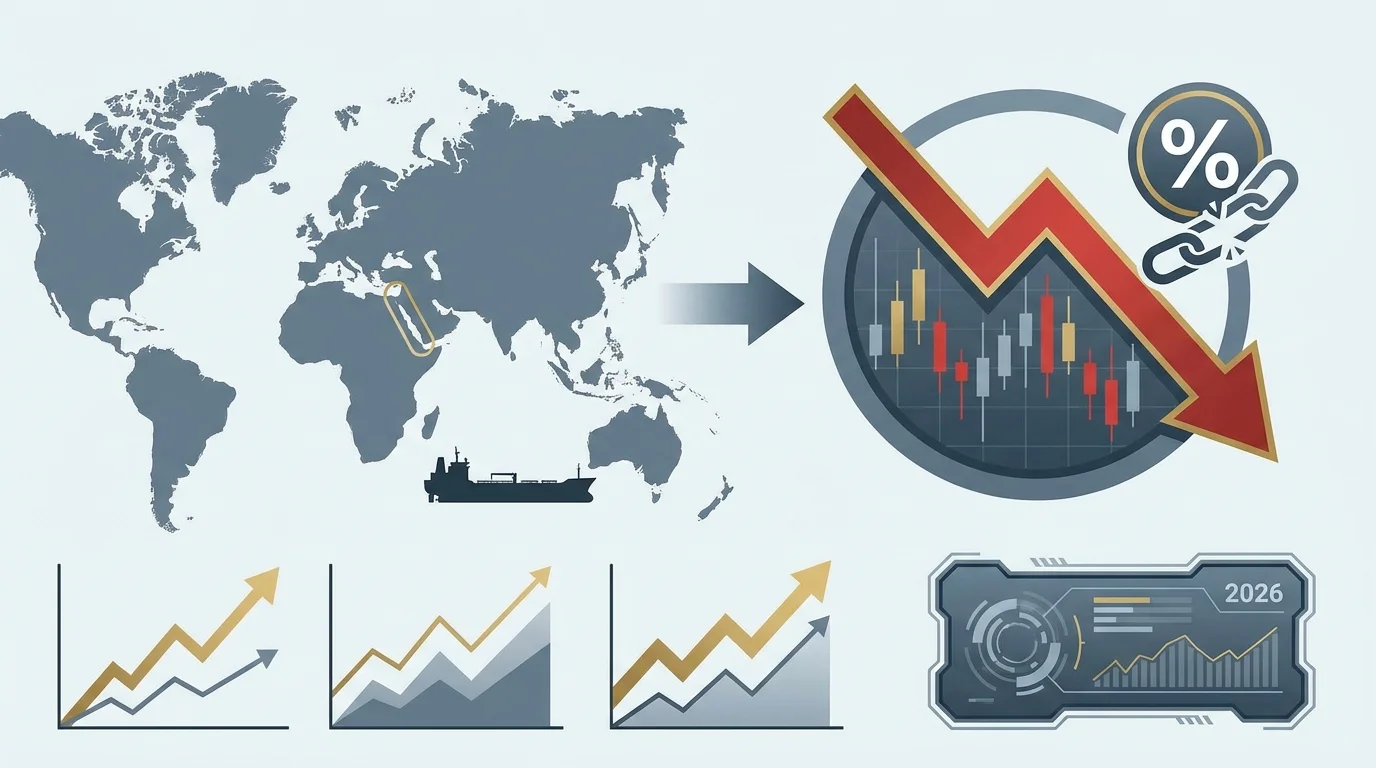
Crude oil prices have shattered the $100-per-barrel threshold in March 2026, driven by escalating geopolitical tensions surrounding Iran and mounting concerns about potential supply disruptions in the Strait of Hormuz. This dramatic price surge is triggering a fundamental realignment across global equity markets, with investors aggressively rotating capital away from rate-sensitive technology shares and toward energy producers and defensive utility sectors. While the immediate market reaction has been characterized by elevated volatility and sector-specific pain, history suggests that sustained oil prices above $100 typically signal deeper economic stress that investors cannot afford to ignore. Understanding the mechanics of this energy shock and positioning portfolios accordingly may prove to be the defining investment challenge of the second quarter.
The current oil price environment represents a sharp departure from the relatively stable energy markets that dominated 2024 and early 2025. Investors who grew accustomed to sub-$80 crude must now grapple with a new reality where energy costs are becoming a persistent headwind for corporate margins and consumer spending power. The market's response has been swift and decisive, with the CBOE Volatility Index remaining elevated even as Treasury yields retreat, signaling that bond markets and equity markets are interpreting the energy shock through different lenses.
For active investors seeking to navigate these turbulent conditions, Intellectia's AI-powered stock screener provides real-time analysis of sector rotations and momentum shifts that traditional screening tools often miss. The platform's ability to identify energy sector outperformers while flagging vulnerable technology positions can be invaluable during periods of rapid market repricing.

Why Oil Prices Are Surging: The Iran Conflict Explained
Geopolitical Tensions Reach Boiling Point
The primary catalyst for oil's dramatic ascent has been the deteriorating situation in the Middle East, specifically the conflict involving Iran and the broader regional security environment. President Trump's recent announcements regarding "serious discussions" with Iranian leadership have done little to calm market nerves, as investors remain acutely aware that any military escalation could threaten approximately 20% of global oil shipments that pass through the Strait of Hormuz. This narrow waterway represents the world's most critical oil transit chokepoint, and even temporary disruption could send prices spiraling significantly higher.
The market's reaction reflects a growing recognition that stopgap measures to soften the blow of potential oil cutoffs may not be sufficient to prevent substantial price volatility. While strategic petroleum reserves and increased production from alternative sources can provide temporary relief, the scale of potential disruption from a full-blown regional conflict dwarfs these mitigation efforts. Investors are therefore pricing in a meaningful probability of sustained supply constraints, driving both spot prices and longer-dated futures contracts higher in tandem.
Supply and Demand Fundamentals
Beyond the immediate geopolitical risk premium, underlying supply-demand dynamics are also contributing to higher oil prices. Recent data from the American Petroleum Institute revealed a sharp build in U.S. crude inventories of 13.4 million barrels, the largest increase since November 2023. While this might typically exert downward pressure on prices, the market has instead focused on the broader global supply picture and the potential for Middle Eastern production disruptions to overwhelm these localized inventory fluctuations.
OPEC's monthly market outlook, eagerly anticipated by energy traders, is expected to provide additional clarity on the cartel's production intentions. However, with many member nations already producing near capacity, the organization's ability to offset Iranian supply losses may be limited. This constraint on spare production capacity adds another layer of bullishness to the price outlook, as the buffer that historically dampened price spikes has eroded significantly over the past several years of underinvestment in new production capacity.
Stock Market Reaction: Winners and Losers
Energy Sector Surges to All-Time Highs
The most immediate and visible impact of rising oil prices has been the extraordinary performance of energy sector equities. Major integrated oil companies and independent exploration and production firms have rallied sharply, with many names reaching all-time highs as investors anticipate a sustained period of elevated cash flows and profitability. The energy sector's transformation from a value trap into a momentum leader represents one of the most significant factor rotations in recent market memory.
This outperformance is backed by fundamental improvements in sector profitability. With crude oil above $100, even marginal producers are generating substantial free cash flow, enabling debt reduction, share buybacks, and dividend increases that appeal to both value and income-focused investors. The sector's capital discipline, enforced by years of shareholder pressure, means that elevated prices are translating more directly into returns rather than being squandered on uneconomic growth projects.
Technology and Chip Stocks Under Pressure
While energy stocks have flourished, the technology sector has borne the brunt of market anxiety over oil prices and their implications for monetary policy and economic growth. Chip manufacturers have been particularly hard hit, with Micron Technology plunging 9.7% and Lam Research declining 5.4% during recent trading sessions. These declines reflect multiple converging concerns, including the sensitivity of semiconductor demand to broader economic activity and the potential for higher energy costs to compress corporate IT spending.
The rotation away from technology extends beyond semiconductors to encompass the broader growth complex that had led markets higher throughout much of 2024 and early 2025. High-multiple software companies, unprofitable tech startups, and emerging market technology plays have all experienced significant valuation compression as investors reassess the appropriate discount rate for future earnings in an environment of persistent energy-driven inflationary pressure.
Financials and Utilities Diverge
The banking and financial services sector has shown resilience amid the broader market volatility, with institutions like JPMorgan, American Express, and Blackstone posting gains between 1% and 3%. This outperformance reflects the sector's ability to benefit from a steeper yield curve, as falling long-term Treasury yields relative to short-term rates improve the profitability of lending operations. Additionally, the rotation into energy stocks has generated significant trading activity and advisory fees for Wall Street's largest institutions.
Utility stocks have similarly benefited from the flight to defensive characteristics and the sector's natural hedge against energy price inflation. Regulated utilities with pass-through mechanisms for fuel costs can maintain margins during periods of commodity volatility, while their dividend yields become increasingly attractive relative to declining Treasury rates. This combination of safety and income has driven the utilities sector to new highs alongside energy.
Bond Yields and Fed Policy Implications
The Disconnect Between Stocks and Bonds
One of the most intriguing aspects of the current market environment is the divergence between equity and fixed-income interpretations of oil-driven inflation. While stock markets have exhibited significant volatility and sector rotation in response to the energy shock, Treasury yields have actually declined, with the 10-year Treasury yield tumbling from recent highs. This counterintuitive movement reflects Federal Reserve Chair Jerome Powell's recent comments that inflation expectations remain "well anchored" despite the surge in oil prices.
The bond market's relatively sanguine response suggests that fixed-income investors view the current oil price spike as a supply-driven shock rather than a symptom of overheating demand that would require aggressive monetary tightening. Supply-driven inflation, while painful for consumers and certain businesses, does not typically prompt the same policy response as demand-driven price increases, as raising interest rates cannot directly address geopolitical supply constraints.
Fed Policy at a Crossroads
The Federal Reserve faces a delicate balancing act as it navigates the current environment. On one hand, headline inflation readings will almost certainly rise in coming months as higher energy costs flow through to transportation, manufacturing, and consumer prices. On the other hand, the underlying economic momentum may actually be slowing as energy costs act as a tax on consumption and investment, potentially justifying a more accommodative policy stance.
Market participants are closely watching for any shift in Fed communication that might suggest a more hawkish response to oil-driven inflation. History provides cautionary tales of central banks that tightened aggressively into supply shocks, only to exacerbate economic downturns without addressing the root cause of price pressures. The current Fed leadership appears cognizant of these risks, but persistent oil prices above $100 could test their resolve if inflation expectations begin to drift higher.
Investment Strategies for High Oil Price Environments
Sector Allocation Adjustments
Investors seeking to navigate the current environment should consider tilting portfolios toward sectors that demonstrate positive correlation with energy prices while reducing exposure to those most vulnerable to cost pressures and demand destruction. Energy sector allocations can be diversified across integrated majors, exploration and production companies, and midstream infrastructure operators, each offering different risk-reward profiles within the broader energy theme.
Beyond direct energy exposure, investors may benefit from increasing allocations to materials and industrial sectors that can pass through input costs to customers, as well as defensive sectors like consumer staples and healthcare that demonstrate more stable demand regardless of economic conditions. These reallocations need not represent wholesale portfolio transformations, but rather tactical tilts that acknowledge the changed macroeconomic landscape.
Looking for data-driven sector rotation insights? Intellectia's AI stock picker analyzes thousands of data points to identify momentum shifts before they become obvious to the broader market. The platform's machine learning algorithms can help investors stay ahead of factor rotations and position for outperformance.

Commodity Exposure and Inflation Hedges
Beyond equity sector rotation, investors may wish to consider direct commodity exposure through futures, ETFs, or commodity-linked equities as a portfolio hedge against sustained energy price inflation. While crude oil itself is the most obvious beneficiary of current conditions, related commodities including natural gas, refined products, and even agricultural goods subject to higher transportation costs may experience correlated price appreciation.
Inflation-protected securities such as Treasury Inflation-Protected Securities (TIPS) can provide additional portfolio ballast, though the bond market's recent rally has compressed real yields and reduced the relative attractiveness of these instruments. Real assets including real estate investment trusts (REITs) with inflation-linked lease structures may also provide meaningful protection against energy-driven cost increases.
Risk Management Considerations
Elevated oil prices and geopolitical uncertainty warrant a reassessment of portfolio risk management frameworks. Volatility targeting strategies that reduce overall exposure during periods of elevated market turbulence can help preserve capital during sharp drawdowns while maintaining participation in upside moves. Similarly, options-based hedging strategies including protective puts and collar structures can provide downside protection at a time when tail risks are elevated.
Investors should also pay careful attention to position sizing and liquidity, as high-volatility environments can amplify the impact of forced liquidations and create dislocations between quoted prices and achievable execution. Maintaining adequate cash reserves and avoiding excessive leverage become particularly important when markets are characterized by the kind of sector rotation and rapid repricing currently underway.
Historical Precedents: Lessons from Past Oil Shocks
The 2008 Experience
The most recent sustained period of triple-digit oil prices occurred in 2008, when crude briefly touched $147 per barrel before collapsing amid the global financial crisis. While the current environment differs significantly from the demand-driven price surge of 2008, several lessons remain relevant. Most notably, sustained oil prices above $100 ultimately contributed to demand destruction as consumers and businesses adjusted behavior to reduce energy consumption, eventually undermining the price rally through reduced consumption rather than increased supply.
The 2008 experience also demonstrated that high oil prices can coincide with significant equity market volatility even when the broader economic backdrop appears stable. Investors who assumed that strong corporate earnings and low unemployment would insulate markets from energy shocks were disappointed as margin compression and consumer spending weakness eventually manifested in weaker-than-expected results.
The 2011-2014 Period
The more relevant precedent may be the 2011-2014 period, when oil prices remained elevated but range-bound between $90 and $110 per barrel for several years. During this time, equity markets proved capable of advancing despite high energy costs, as companies adapted through efficiency improvements and the U.S. shale revolution began to moderate global price pressures. This period saw the emergence of energy sector outperformance alongside broader market gains, suggesting that high oil prices need not be fatal for equity returns if properly anticipated and priced.
The key difference in the current environment is the geopolitical nature of the supply constraints, which may prove more durable than the gradual demand growth that characterized the 2011-2014 period. Investors should be cautious about assuming that history will repeat exactly, while still recognizing that markets have demonstrated resilience in the face of high energy costs under the right conditions.
Outlook and Key Catalysts to Watch
Diplomatic Developments
The most significant variable for oil prices and market sentiment in coming weeks will be the trajectory of diplomatic efforts to de-escalate tensions with Iran. President Trump's characterization of ongoing discussions as "serious" has provided some hope for resolution, but the market remains skeptical given the complexity of the underlying issues and the history of failed negotiations. Any concrete progress toward a diplomatic solution could trigger a sharp reversal in oil prices and a corresponding rotation back toward growth sectors that have underperformed during the energy rally.
Conversely, escalation of military activities or evidence that supply disruptions are materializing could drive prices substantially higher, potentially testing the $120-130 range that would represent genuine crisis levels. Investors should maintain flexibility in their positioning to accommodate either outcome, as the binary nature of geopolitical developments makes high conviction bets particularly risky.
Economic Data Evolution
Incoming economic data will provide crucial information about how effectively the economy is absorbing high energy costs. Employment reports, consumer confidence surveys, and retail sales data will all offer clues about whether elevated oil prices are translating into broader economic weakness or remain contained within specific sectors. Similarly, corporate earnings reports in coming weeks will reveal the extent to which companies are able to pass cost increases to customers versus absorbing them through compressed margins.
The Federal Reserve's policy meeting minutes and official communications will also be closely scrutinized for any shift in the central bank's assessment of inflation risks and appropriate policy responses. A more hawkish pivot would likely pressure equity markets regardless of energy sector fundamentals, while continued dovishness could support valuations even in a high-oil-price environment.
Conclusion
The surge in crude oil prices above $100 per barrel represents more than a temporary market dislocation; it signals a fundamental shift in the macroeconomic environment that investors must carefully navigate. While the immediate beneficiaries are clear, with energy sector equities reaching all-time highs and defensive sectors showing resilience, the broader implications for economic growth, corporate profitability, and monetary policy remain uncertain. The market's current sector rotation reflects a rational reassessment of these risks, but the speed and magnitude of moves suggest that positioning has become crowded in certain areas.
For investors seeking to preserve and grow capital in this challenging environment, a balanced approach that acknowledges the reality of high energy costs while maintaining flexibility for potential reversals appears most prudent. Direct exposure to energy sector fundamentals can capture the upside of sustained high prices, while diversification across defensive sectors and inflation-protected assets can provide downside protection should the economic impact prove more severe than currently anticipated.
The key to navigating this period will be avoiding the temptation to extrapolate recent price movements indefinitely while remaining responsive to the genuine risks that elevated oil prices present. Markets have demonstrated an ability to adapt to high energy costs, but the adjustment process is rarely smooth, and investors who fail to respect the potential for continued volatility may find themselves caught on the wrong side of continued sector rotation.
Ready to position your portfolio for the energy market transformation? Start your free trial with Intellectia today and access AI-powered tools that help you identify sector winners, time your entries, and manage risk in volatile markets. Our platform's real-time analytics and predictive modeling can give you the edge you need to navigate complex macroeconomic transitions.
Sign up now and join thousands of investors who rely on Intellectia's AI-driven insights to stay ahead of market trends.