
Key Takeaway
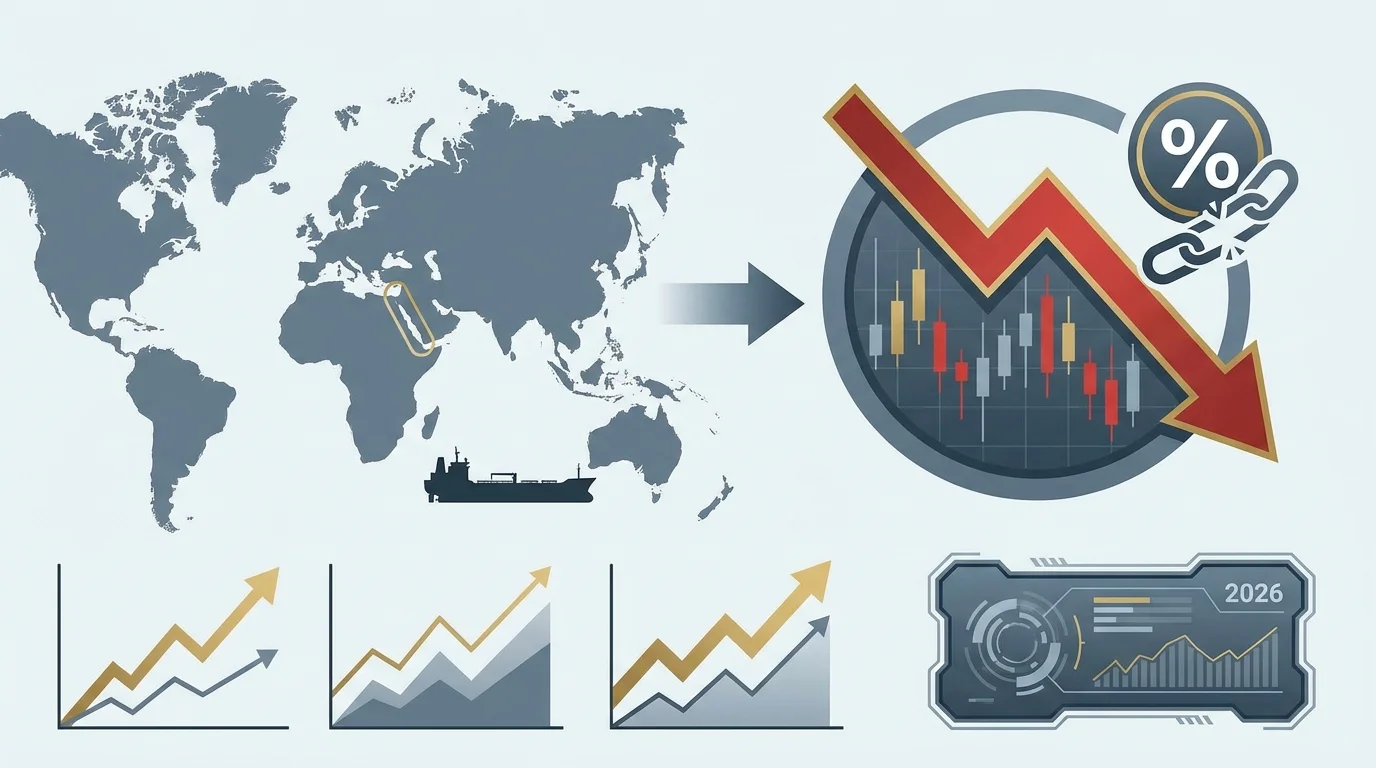
The escalating conflict in Iran has triggered one of the most significant oil supply shocks in recent memory, with Brent crude prices surging toward $100 per barrel and the Strait of Hormuz—a critical chokepoint for 20% of global oil supply—effectively closed. Barclays estimates that sustained $100 oil would reduce global growth by 0.2 percentage points while pushing headline inflation 0.7 percentage points higher to 3.8%. For investors, this creates both acute risks and compelling opportunities. Energy stocks, particularly integrated majors like ExxonMobil and Chevron, have historically outperformed during supply-driven price spikes, while pipeline operators offer contract-backed income insulated from commodity volatility. The key strategic imperative is selective exposure: own the companies that benefit from higher prices without taking pure commodity risk. As the conflict enters a critical phase with President Trump threatening military action if the strait remains closed, investors must position defensively while capturing the structural tailwinds driving the sector.
The current situation differs fundamentally from previous oil shocks. Unlike the demand-driven price collapse of 2020 or the gradual supply recovery of 2021-2024, this is a geopolitically-driven supply disruption with no clear resolution timeline. The International Monetary Fund estimates that every 10% sustained rise in oil prices translates to 0.4% higher global inflation and 0.15% lower economic growth. With crude up over 25% since hostilities began, the macroeconomic impact is already materializing across consumer prices, central bank policy expectations, and corporate earnings forecasts.
Investors should focus on three primary themes: direct exposure to elevated oil prices through quality upstream producers, inflation-resistant income through midstream infrastructure, and hedging broader portfolio risk through energy's negative correlation with rate-sensitive sectors. The energy sector's 2026 rally—led by Chevron, ConocoPhillips, and ExxonMobil gaining roughly 30%—reflects this positioning, though stocks remain undervalued relative to spot oil prices, suggesting further upside if prices remain elevated.
Understanding the Iran War Oil Shock
The Strait of Hormuz Crisis
The Strait of Hormuz represents the world's most critical energy chokepoint, with approximately 21 million barrels of oil and substantial liquefied natural gas volumes passing through daily. When Iran effectively closed this passage in early March 2026, it removed nearly one-fifth of global oil supply from accessible markets overnight. The immediate market reaction was severe—Brent crude surged 10-13% in the first trading sessions, climbing from approximately $72 to $80-82 per barrel, with analysts warning of an imminent move toward $100 if the closure persists.
The strategic significance extends beyond simple supply arithmetic. Alternative routes simply cannot handle the volume diverted from Hormuz. The Saudi East-West Pipeline and UAE's Fujairah terminal lack capacity to offset more than a fraction of disrupted flows. Maritime insurers have already withdrawn war risk coverage for vessels attempting passage, creating a de facto blockade regardless of Iran's explicit threats. This structural constraint means even a partial reopening may not restore full supply volumes, supporting elevated prices for an extended period.
President Trump's ultimatum—threatening to "obliterate" Iranian power plants if the strait remains closed—raises escalation risks further. While markets have partially priced in a military response, the range of outcomes remains extraordinarily wide. A successful reopening could see prices collapse back toward $70, while extended closure or regional escalation could drive crude toward $150-200 in extreme scenarios. This uncertainty premium, combined with physical supply constraints, creates the foundation for sustained elevated prices.
Global Economic Impact Analysis
The economic consequences of sustained $100 oil extend far beyond the gas pump. For the United States, every $10 increase in crude prices typically translates to roughly 0.2-0.3% higher headline inflation within six months, with similar effects across developed economies. The Federal Reserve, already navigating sticky services inflation, faces an increasingly difficult policy calculus. Fed Governor Waller's recent acknowledgment that prolonged conflict would fuel inflation directly contradicts the administration's messaging, highlighting the tension between political objectives and economic reality.
European economies face compounded challenges. The eurozone's energy-intensive industrial base, still adjusting to post-Ukraine war supply reconfigurations, now confronts renewed input cost pressure. The European Central Bank's dovish pivot anticipated for 2026 may be delayed or reversed if energy-driven inflation proves persistent. Emerging markets face even sharper trade-offs between growth and currency stability, with oil-importing nations in Asia particularly vulnerable to current account deterioration.
Corporate earnings impacts vary dramatically by sector. Energy companies naturally benefit from higher realized prices, while airlines, shipping firms, and chemical producers face margin compression. Consumer discretionary sectors face headwinds from reduced household purchasing power as fuel costs consume larger budget shares. The bifurcation creates both long and short opportunities for active investors willing to parse the second-order effects across industries.
Top Energy Stocks to Buy in a $100 Oil Environment
ExxonMobil: The Integrated Giant
ExxonMobil stands as the quintessential play on sustained higher oil prices. The company's integrated model—spanning upstream production, midstream transportation, and downstream refining—provides multiple margin capture points as prices rise. Recent structural cost reductions, achieved through aggressive portfolio rationalization and operational efficiency programs, have lowered break-even levels significantly. Even if prices retreat toward $70, Exxon maintains robust free cash flow generation supporting its dividend and share repurchase programs.
The company's Permian Basin position represents a particular strategic asset. As one of the largest operators in America's most productive shale field, Exxon benefits from low production costs and short-cycle investment returns. Recent acquisitions have consolidated acreage positions, enabling scaled development with improved capital efficiency. With breakeven costs in the $40-50 range for much of its Permian production, Exxon generates substantial surplus cash at current and projected prices.
Exxon's dividend track record spans over four decades of consecutive increases, providing income stability rare among commodity-exposed equities. Management's capital allocation discipline—prioritizing dividend security over aggressive growth investments—aligns shareholder returns with sustainable free cash flow generation. For investors seeking exposure to elevated oil prices through a quality franchise with downside protection, Exxon represents a core holding.
Chevron: Dividend Growth and Capital Efficiency
Chevron has emerged as perhaps the most shareholder-friendly major among the supermajors, with aggressive dividend growth and disciplined capital deployment. The company's balance sheet strength—boasting among the lowest leverage ratios in the sector—provides flexibility to weather price volatility while maintaining return commitments. Recent production growth in the Permian and international LNG positions Chevron to capture sustained demand for conventional energy.
Chevron's Australian LNG operations deserve particular attention. As Asian economies seek alternatives to Middle Eastern supply amid Hormuz uncertainty, Chevron's Gorgon and Wheatstone facilities command premium pricing. Long-term contracts with Japanese and South Korean utilities provide predictable cash flows insulated from spot market volatility. This geographic diversification reduces portfolio concentration risk while capturing the structural premium for non-Middle Eastern supply.
Management's commitment to capital discipline differentiates Chevron from peers with more aggressive growth ambitions. Rather than pursuing volume at any cost, Chevron targets projects meeting strict return thresholds, preserving capital for shareholder distributions. This philosophy—emphasizing returns over growth—positions the company to excel in a range of price environments while maintaining flexibility for opportunistic investments if competitors falter.
ConocoPhillips: Pure-Play Production Leverage
For investors seeking maximum sensitivity to oil prices, ConocoPhillips offers the most direct exposure among major U.S. producers. As the largest independent exploration and production company, ConocoPhillips lacks downstream operations that dampen upstream volatility. This pure-play structure means earnings expand dramatically as prices rise, with management guiding to substantial free cash flow generation at sustained $100 oil.
ConocoPhillips' Alaska and Lower 48 positions provide geographic diversification within stable jurisdictions. The Willow project in Alaska, recently approved despite environmental opposition, adds significant long-term production at competitive costs. Lower 48 operations span multiple basins, allowing capital allocation to the most attractive drilling opportunities as relative economics shift. This operational flexibility enables rapid response to price signals, accelerating activity when returns justify investment.
The company's shareholder return framework—committing to return 30% of operating cash flow through dividends and buybacks—provides tangible income while maintaining growth optionality. Unlike peers with rigid dividend policies, ConocoPhillips' variable component allows distributions to scale with commodity prices, directly passing through oil market strength to shareholders. For investors comfortable with higher volatility in exchange for greater upside leverage, ConocoPhillips represents a compelling tactical position.
Defensive Energy Investing: Pipeline and Midstream Opportunities
Kinder Morgan: Fee-Based Income Stability
While upstream producers capture commodity upside, midstream operators like Kinder Morgan offer contract-backed income with minimal direct commodity exposure. Kinder Morgan's vast natural gas and refined products pipeline network generates predictable cash flows through take-or-pay contracts, under which customers pay regardless of volume shipped. This structure insulates revenues from price volatility while maintaining sensitivity to production growth.
The company's natural gas infrastructure positions it to benefit from secular demand growth regardless of oil price trajectories. Power generation switching from coal to gas, LNG export capacity expansions, and Mexican industrial demand all drive volume growth through Kinder Morgan's network. These demand drivers operate independently of crude prices, providing portfolio diversification while maintaining energy sector exposure.
Kinder Morgan's distribution coverage ratio consistently exceeds 1.0, providing a safety cushion even during operational disruptions. Management's conservative leverage targets and investment-grade credit rating limit refinancing risks in higher rate environments. For income-focused investors seeking energy exposure without commodity volatility, Kinder Morgan offers an attractive risk-adjusted yield.
Energy Transfer: Integrated Midstream Value
Energy Transfer operates one of the largest and most diversified midstream footprints in North America, spanning crude oil, natural gas, and NGL transportation and processing. The partnership's scale creates competitive advantages in serving major production basins and demand centers. Recent expansion projects, including Gulf Coast LNG export connectivity, position Energy Transfer to capture growing international demand for North American energy.
Energy Transfer's distribution yield significantly exceeds peers, reflecting historical governance concerns and leverage levels. However, recent deleveraging progress and improved disclosure have narrowed the valuation discount. The partnership's ability to grow distributions while funding growth capital provides total return potential exceeding pure yield plays.
The merger with Crestwood Enhanced Energy Partners, completed in 2025, added complementary gathering and processing assets while achieving substantial cost synergies. Integration execution has exceeded expectations, demonstrating management's operational competence. As Energy Transfer continues reducing leverage toward industry norms, further valuation multiple expansion is achievable.
Investment Strategies for Volatile Oil Markets
Balancing Upside Exposure and Downside Protection
The current environment demands nuanced positioning that captures oil price upside while maintaining portfolio resilience. Pure commodity plays offer maximum leverage but suffer disproportionately if prices retreat. Conversely, avoiding energy entirely leaves portfolios exposed to inflation and misses a sector with strong momentum and improving fundamentals.
A balanced approach allocates across the value chain: upstream producers for price leverage, midstream operators for income stability, and integrated majors for diversified exposure. This barbell strategy allows participation in commodity upside while maintaining cash flow visibility from fee-based assets. The optimal weighting depends on risk tolerance and conviction regarding price sustainability—more aggressive investors favor upstream, while conservative portfolios emphasize midstream.
Sector rotation considerations also matter. Energy historically outperforms in late-cycle environments and inflationary periods, both conditions currently present. Relative valuations remain attractive, with the sector trading at discount multiples despite substantial 2026 price appreciation. As institutional capital rotates from growth to value, energy's combination of cash flow generation and inflation protection should attract incremental flows.
Ready to identify the best energy stocks for your portfolio? Intellectia.AI's AI Stock Picker analyzes thousands of data points to surface top opportunities in volatile markets. Our AI-powered screening tools help you discover undervalued energy plays before the broader market catches on. Sign up today for intelligent investment insights.
Hedging Broader Portfolio Risk
Energy's negative correlation with rate-sensitive sectors creates natural portfolio hedging properties. As oil prices rise, inflation expectations increase, pressuring bond prices and growth stock valuations. Energy equities typically appreciate in this environment, offsetting losses elsewhere in diversified portfolios. This diversification benefit is particularly valuable given current concerns about persistent inflation and Federal Reserve policy uncertainty.
Options strategies can provide additional protection. Selling covered calls on energy positions generates income while capping upside—appropriate for investors skeptical of extreme price scenarios. Purchasing protective puts on broad market indices while maintaining energy exposure creates an asymmetric payoff benefiting from energy outperformance during risk-off periods.
Commodity exposure through futures or ETFs offers direct price participation but introduces contango costs and tax inefficiencies. Most investors achieve better risk-adjusted returns through quality energy equities with operational leverage to prices. The key is selecting companies with low break-even levels, strong balance sheets, and shareholder-friendly capital allocation—attributes that enable survival and prosperity across price cycles.
The Inflation Impact and Central Bank Dilemma
Fed Policy Constraints
Perhaps the most underappreciated risk from sustained $100 oil is its impact on central bank flexibility. Federal Reserve officials have emphasized data-dependent policy, with inflation remaining the primary concern even as growth indicators soften. Oil-driven inflation complicates this calculus—cutting rates to support growth risks fueling broader price pressures, while holding firm may deepen slowdown risks.
Fed Governor Waller's recent comments acknowledging inflation concerns from prolonged conflict diverged from administration messaging seeking to downplay economic impacts. This tension between political pressure and policy independence will intensify as the election approaches. Markets currently price rate cuts for late 2026, but sustained energy inflation could delay or eliminate this easing cycle.
The historical pattern of central banks looking through energy price spikes—treating them as temporary supply shocks—has become less reliable as inflation expectations have become less anchored. After the post-pandemic inflation experience, policymakers are more sensitive to any signs of persistent price pressures. This heightened vigilance means energy-driven inflation may provoke more aggressive policy responses than in previous oil shock episodes.
Consumer and Business Impacts
The transmission from oil prices to broader inflation operates through multiple channels. Direct fuel costs affect transportation and heating expenses for households and businesses. Indirect effects emerge as energy-intensive goods and services adjust pricing to reflect higher input costs. Perhaps most importantly, inflation expectations can become self-fulfilling if consumers and businesses anticipate persistent price increases.
Consumer spending patterns typically shift as fuel costs consume larger budget shares. Discretionary categories—dining out, entertainment, durable goods—face headwinds as households prioritize essential transportation and heating. Retailers and consumer brands face volume pressure even as they attempt to pass through cost increases, creating margin compression.
Business investment decisions also shift in higher energy price environments. Capital allocation toward energy efficiency and alternative sources accelerates, supporting long-term demand for renewable technologies and electrification infrastructure. However, the immediate impact typically involves delayed or canceled projects in energy-intensive industries, weighing on industrial activity and capital goods demand.

Track inflation-resistant stocks and monitor sector rotations with Intellectia.AI's AI Screener. Our platform identifies companies with pricing power and cost structures that enable margin preservation during commodity shocks. Filter by sector, valuation metrics, and analyst ratings to build resilient portfolios for uncertain times.
Conclusion
The Iran war has triggered an oil price shock with profound implications for investors and the global economy. With Brent crude approaching $100 and the Strait of Hormuz effectively closed, markets must price sustained supply constraints against demand destruction risks. For investors, this environment creates selective opportunities in quality energy companies positioned to thrive amid volatility.
ExxonMobil, Chevron, and ConocoPhillips offer varying degrees of oil price leverage through proven reserves, operational efficiency, and shareholder-friendly capital allocation. For those seeking income stability, midstream operators Kinder Morgan and Energy Transfer provide contract-backed cash flows insulated from commodity swings. The key is maintaining exposure without overconcentration—energy should complement, not dominate, diversified portfolios.
Beyond sector selection, investors must monitor the macroeconomic feedback loops. Sustained $100 oil threatens to reignite inflation, constraining central bank flexibility and potentially extending the higher-for-longer interest rate environment. This dynamic supports energy's relative attractiveness while creating headwinds for rate-sensitive growth sectors.
The current situation remains fluid, with outcomes ranging from rapid de-escalation and price collapse to regional expansion and $200 oil. Prudent positioning maintains flexibility across scenarios rather than betting on specific geopolitical resolutions. Quality companies with strong balance sheets, low break-even costs, and disciplined capital allocation will prosper regardless of price path while protecting capital if conditions deteriorate.
Ready to navigate volatile energy markets with AI-powered insights? Sign up for Intellectia.AI today and access our suite of investment tools including AI-driven stock screening, portfolio analysis, and real-time market intelligence. Whether you're seeking energy exposure or inflation protection, our platform helps you make informed decisions with confidence. Join thousands of investors using AI to stay ahead in rapidly changing markets.