
Key Takeaway
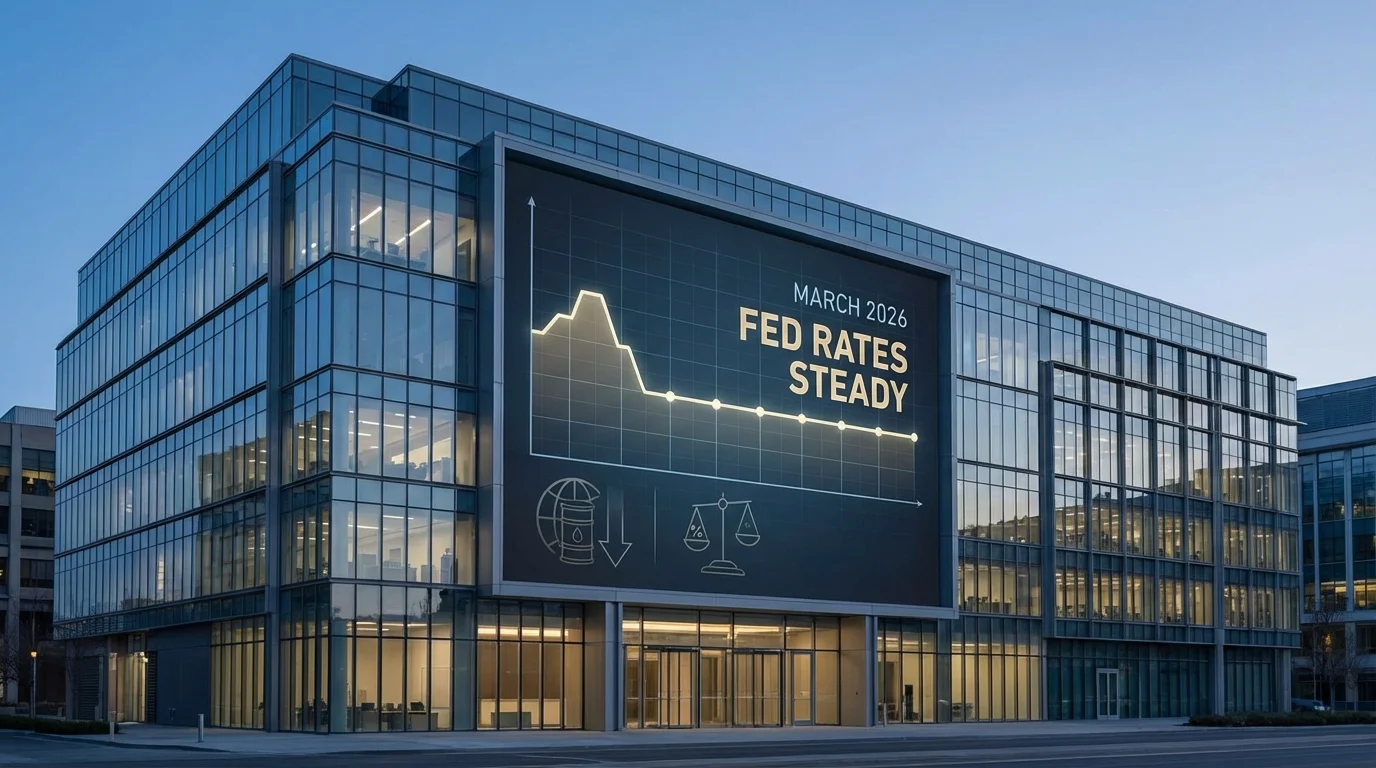
The Federal Reserve's March 2026 interest rate decision has sent ripples through global financial markets, with the central bank choosing to hold rates steady at 3.5% to 3.75% while simultaneously delivering a sobering message about the economic outlook. Fed Chair Jerome Powell acknowledged during his press conference that inflation is not coming down as much as policymakers had hoped, citing the ongoing geopolitical turmoil in the Middle East as a major complicating factor. The central bank now expects only a single rate cut in 2026, a dramatic shift from earlier projections that had anticipated multiple reductions throughout the year.
This policy stance reflects the Federal Reserve's delicate balancing act between supporting economic growth and containing persistent inflationary pressures. The conflict between the United States, Israel, and Iran has created an energy price shock that threatens to reignite the inflationary forces the Fed has been battling since 2022. With oil prices surging due to supply concerns, the central bank is taking a cautious approach that prioritizes its 2% inflation target over immediate economic stimulus. For investors, this signals a prolonged period of elevated borrowing costs that will continue to pressure corporate earnings and valuations across multiple sectors.
The market reaction to the Fed's announcement was swift and negative, with major indices falling to session lows as traders digested the implications of fewer rate cuts ahead. The S&P 500 faced immediate selling pressure as investors recalibrated their expectations for monetary policy accommodation. Wall Street analysts at major firms including JPMorgan have responded by cutting their year-end targets for the benchmark index, with some warning that recession risks are rising as higher energy costs squeeze consumer spending power.

The Fed's March 2026 Decision: Holding Steady Amid Uncertainty
Why Rates Remained Unchanged
The Federal Reserve's decision to maintain the federal funds rate at its current range of 3.5% to 3.75% represents the second consecutive meeting without policy adjustment, following three successive 25-basis-point cuts late last year. This pause reflects the central bank's assessment that the economy remains resilient enough to withstand current borrowing costs, while inflationary risks from the Middle East conflict warrant maintaining a restrictive policy stance. The Federal Open Market Committee's statement emphasized that recent indicators suggest economic activity has continued to expand at a solid pace, with job gains remaining steady and the unemployment rate holding at low levels.
Powell's commentary during the post-meeting press conference revealed the Fed's growing concern about the persistence of inflation. The central bank now projects that its preferred inflation gauge will reach 2.7% by the end of 2026, up from its December forecast of 2.5% though slightly below the 2.8% recorded in January. This upward revision reflects the Fed's expectation that higher oil and gas prices will temporarily elevate headline inflation, even as underlying price pressures may continue to moderate. The chairman stressed that the full economic effects of the Iran war remain uncertain, suggesting that policymakers are keeping their options open for future meetings.
The decision to hold rates steady also reflects the Fed's desire to avoid policy errors that could either reignite inflation or unnecessarily tip the economy into recession. With the unemployment rate expected to hold steady at 4.3% through the end of the year, the central bank sees limited urgency to provide additional stimulus. However, the dot plot of individual policymakers' expectations now shows a median projection of just one rate cut in 2026, down from two cuts anticipated in December. This hawkish shift surprised markets that had been pricing in more aggressive policy easing.
The Iran War's Impact on Monetary Policy
The escalating conflict in the Middle East has fundamentally altered the Federal Reserve's policy calculus, creating an energy price shock that complicates the central bank's inflation-fighting mission. Oil prices have surged as markets price in risks to supply from the region, which accounts for a significant portion of global petroleum production. Powell acknowledged that these higher energy costs will have both direct and indirect effects on consumer prices, potentially keeping inflation elevated for longer than previously anticipated.
The Fed chairman's assessment that the oil crisis may have only temporary economic effects has been met with skepticism from some market observers. Historical precedents suggest that sustained increases in energy prices can have lasting impacts on consumer behavior and business investment decisions. Higher gasoline prices act as a tax on consumption, reducing discretionary spending power for households across the income spectrum. This dynamic is particularly concerning given that consumer spending accounts for approximately two-thirds of U.S. economic activity.
The central bank's cautious approach reflects its recognition that monetary policy operates with long and variable lags. Rate changes take months to fully impact the economy, and policymakers must therefore make decisions based on their best estimates of future conditions rather than current data alone. With the trajectory of the Middle East conflict highly uncertain, the Fed has chosen to maintain optionality rather than commit to a predetermined policy path. This stance provides flexibility to respond to either further inflationary pressures or signs of economic weakness as they emerge.
Market Reaction: Stocks Tumble on Reduced Rate Cut Expectations
Immediate Price Action
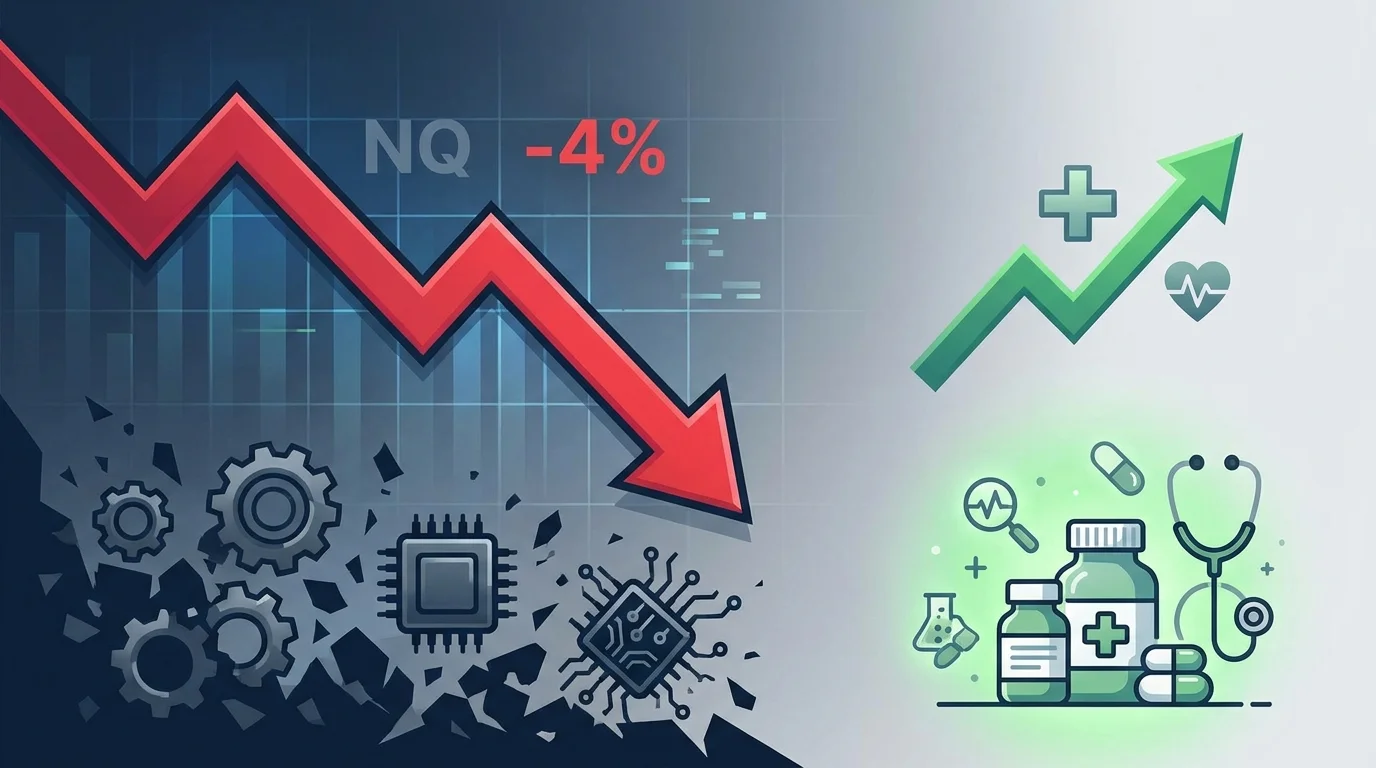
Wall Street's response to the Fed's March decision was unequivocally negative, with major indices selling off sharply as investors digested the implications of fewer rate cuts ahead. The S&P 500 fell to session lows during Powell's press conference, with declines led by rate-sensitive sectors including technology and real estate. The Nasdaq Composite faced particularly heavy selling pressure as growth stocks, which are valued based on future earnings potential, saw their valuations compress in response to higher discount rates.
Individual stocks reflected the market's concern about a prolonged period of elevated borrowing costs. Tesla shares declined as investors worried about the impact of higher rates on consumer demand for electric vehicles, while Micron Technology led semiconductor stocks lower on fears that restrictive monetary policy could dampen corporate spending on technology infrastructure. Financial stocks showed mixed performance, with banks benefiting from wider net interest margins but facing concerns about potential credit quality deterioration if economic growth slows.
The bond market also experienced significant volatility, with Treasury yields rising as traders reduced their expectations for rate cuts. The yield curve, which had been pricing in aggressive policy easing, flattened somewhat as the front end of the curve repriced to reflect the Fed's more hawkish stance. The U.S. dollar strengthened against major currencies, reflecting both the higher interest rate differential and safe-haven flows amid geopolitical uncertainty.
Analyst Downgrades and Recession Fears
The Fed's sobering economic outlook prompted immediate revisions to Wall Street forecasts, with several major firms cutting their S&P 500 targets for year-end 2026. JPMorgan reduced its official forecast to 7,200 while warning that the index could potentially dip as low as 6,000 if recession risks materialize. The firm's strategists emphasized that investors may be underestimating the effect higher oil prices will have on consumer demand, which could prove more damaging than the direct inflationary impact alone.
Other market veterans have issued even more bearish warnings. One prominent strategist told Business Insider that he would not be surprised to see the S&P 500 drop 20% to 35% from current levels through the first quarter of next year, citing the confluence of elevated valuations, restrictive monetary policy, and geopolitical risks. While Ed Yardeni of Yardeni Research maintains a more optimistic target of 7,700 for the benchmark index, he acknowledges that the probability of a recession-triggered market correction, while still low at 20%, is not zero.
These revised forecasts reflect growing concerns that the Fed may be forced to choose between two unpalatable outcomes: either maintaining rates at restrictive levels long enough to trigger an economic slowdown, or cutting rates prematurely and allowing inflation to become entrenched. The margin for error appears slim, and investors are increasingly positioning for scenarios where both stocks and bonds could face headwinds in the months ahead.
What This Means for Your Portfolio
Asset Allocation Strategies
The Fed's March decision has significant implications for portfolio construction, requiring investors to recalibrate their expectations for returns across asset classes. With the federal funds rate likely to remain elevated for an extended period, traditional 60/40 stock-bond portfolios may face challenges as both asset classes experience simultaneous pressure. Investors should consider diversifying into alternative investments that can generate returns uncorrelated with traditional markets.
Real assets including commodities, real estate, and infrastructure investments may offer attractive hedges against the inflationary pressures the Fed is monitoring. Treasury Inflation-Protected Securities (TIPS) provide explicit inflation protection, though current real yields must be weighed against the potential for further rate increases. Short-duration fixed income instruments offer reduced interest rate risk while still providing attractive absolute yields in the current environment.
Equity investors should focus on quality factors including strong balance sheets, consistent cash flows, and pricing power that can help companies weather a higher-rate environment. Defensive sectors such as consumer staples, healthcare, and utilities may outperform cyclical areas if economic growth slows. International diversification also merits consideration, as valuations in developed and emerging markets outside the United States appear more attractive on both an absolute and relative basis.
Sector Rotation Opportunities
Higher interest rates create winners and losers across the equity market, and the Fed's March decision reinforces the case for selective sector positioning. Financial stocks stand to benefit from wider net interest margins as banks can earn higher spreads on their lending activities. However, investors must differentiate between institutions with strong credit underwriting standards and those more exposed to potential loan losses if the economy weakens.
Energy stocks have already rallied in response to higher oil prices, but select companies with low production costs and strong free cash flow generation may continue to outperform. The sector's free cash flow yields remain attractive compared to the broader market, and disciplined capital allocation by management teams has improved the investment case following years of wasteful spending.
Technology stocks face headwinds from higher discount rates applied to their future earnings, but the most innovative companies with durable competitive advantages may present buying opportunities if valuations compress further. Investors should focus on businesses with strong moats, recurring revenue streams, and the ability to maintain pricing power in a challenging economic environment. Artificial intelligence leaders with clear paths to monetization may prove particularly resilient despite broader sector weakness.

The Path Forward: When Will the Fed Cut Rates?
Conditions for Policy Easing
The Federal Reserve has made clear that any future rate cuts will depend on convincing evidence that inflation is sustainably moving toward its 2% target. Powell emphasized during his press conference that policymakers will need to see more than just a few months of favorable data before gaining confidence that inflation pressures have truly subsided. This suggests that the bar for rate cuts remains relatively high, and investors should not expect aggressive policy easing unless economic conditions deteriorate significantly.
The Fed's own projections envision inflation falling back to 2.2% by 2027 and reaching the 2% target by 2028, implying a gradual rather than dramatic disinflation process. This timeline suggests that interest rates may remain in restrictive territory for an extended period, potentially well into 2027 if current projections hold. Markets are currently pricing in two rate cuts for 2026, with the first potentially coming in April and the second in September, though these expectations remain highly data-dependent.
Geopolitical developments will play a crucial role in shaping the Fed's policy path. If the conflict in the Middle East de-escalates and oil prices retreat, the central bank may gain confidence to proceed with rate cuts as inflationary pressures ease. Conversely, an intensification of the conflict could force the Fed to maintain or even increase its restrictive stance if energy costs spike further. The central bank has explicitly acknowledged that the economic effects of the Iran war remain highly uncertain, creating additional volatility in policy expectations.
Economic Scenarios to Watch
Investors should monitor several key indicators that could influence the Fed's policy trajectory in coming months. The monthly employment reports remain critical, with any signs of material weakening in the labor market potentially accelerating the timeline for rate cuts. Consumer spending data will reveal whether households are pulling back in response to higher energy costs and borrowing rates. Business surveys including the Purchasing Managers' Indexes can provide early warning signs of economic momentum shifts.
The inflation data itself will naturally be paramount, with particular attention paid to core measures that exclude volatile food and energy components. If core inflation continues to grind lower despite the headline pressure from oil prices, the Fed may gain confidence to ease policy. Conversely, signs that inflation is becoming entrenched across a broader range of goods and services could prompt the central bank to extend its pause or even contemplate further tightening if necessary.
Financial conditions more broadly will also influence Fed policy. The central bank has acknowledged that monetary policy works partly through its effects on asset prices and credit availability. If equity markets experience a disorderly decline or credit spreads widen dramatically, the Fed may be prompted to provide support even if inflation has not fully returned to target. This put option remains implicit in the Fed's reaction function, though Powell has been careful not to explicitly validate market expectations of such support.
Conclusion
The Federal Reserve's March 2026 interest rate decision marks a pivotal moment for markets, with the central bank signaling a more cautious and hawkish stance than many investors had anticipated. By holding rates steady and projecting only a single cut this year, the Fed has made clear that its inflation-fighting mission remains incomplete and that the economic risks from the Iran war cannot be ignored. This represents a significant recalibration of policy expectations that will require investors to adapt their strategies for a prolonged period of elevated interest rates.
For long-term investors, the key takeaway is that patience and selectivity will be essential in navigating the current environment. The days of easy returns from broad market exposure may be behind us, replaced by a more challenging landscape where security selection and risk management take on added importance. Quality companies with strong competitive positions, durable cash flows, and prudent balance sheets are likely to outperform as the economic cycle matures and financing conditions remain tight.
Ready to navigate these uncertain markets with confidence? Discover how Intellectia.AI's advanced AI-powered tools can help you identify the best opportunities in any market environment. Our AI Stock Screener analyzes thousands of securities to find investments aligned with your goals, while our AI Stock Picker provides data-driven recommendations based on fundamental and technical analysis. Sign up today and start your 7-day free trial to access professional-grade investment insights that can help you stay ahead of the Fed and build a resilient portfolio for whatever comes next.