
Key Takeaway
The February 2026 Consumer Price Index (CPI) report revealed that inflation remains stubbornly persistent, holding steady at 2.4% annually while remaining above the Federal Reserve's 2% target. This unwavering inflation rate, unchanged from January's reading, signals that the central bank's aggressive rate-cutting cycle has yet to fully tame price pressures across the economy. With core CPI registering 0.2% monthly and 2.5% annually, underlying inflation trends suggest that the path toward price stability may be longer and more challenging than previously anticipated by market participants and policymakers alike.
The broader economic landscape presents a complex picture that has sparked renewed concerns about stagflation entering 2026. The combination of elevated inflation readings alongside rising unemployment creates a challenging policy environment for the Federal Reserve, which has already cut rates by 1.75 percentage points this cycle, bringing the fed funds rate to the current range of 3.5% to 3.75%. Adding to these concerns are mounting geopolitical risks in the Middle East that threaten to push oil prices to $100 per barrel, a scenario that could potentially drive CPI inflation to 3.5% or higher. With the upcoming March 17-18 FOMC meeting widely expected to maintain current rates unchanged, investors and consumers alike are grappling with the possibility that inflation may prove more persistent than the transitory narrative suggested.
Despite these challenges, there are some encouraging signs beneath the headline numbers. Shelter costs showed their smallest monthly gain since 2021, offering hope that one of the largest components of the CPI basket may finally be cooling. However, persistent increases in food and medical costs continue to exert upward pressure on overall inflation, affecting household budgets and purchasing power across income levels. For investors seeking to navigate this complex inflationary environment, leveraging advanced AI-powered screening tools can provide crucial insights into sectors and assets that may benefit from or be resilient to ongoing inflationary pressures.
February 2026 CPI Data Deep Dive
The February 2026 CPI report provided markets with a sobering reminder that inflation remains a persistent challenge for the U.S. economy. The headline annual inflation rate held steady at 2.4%, matching January's reading and surprising economists who had anticipated some moderation in price pressures. This stability in the headline figure masks important underlying dynamics that merit careful analysis by investors, policymakers, and consumers seeking to understand the trajectory of prices in the coming months.
Breaking down the components reveals a mixed picture across different categories of goods and services. Energy prices have shown increased volatility in recent months, reflecting both seasonal factors and geopolitical developments that continue to create uncertainty in global oil markets. The goods sector has exhibited more moderation compared to services, where price increases have proven more persistent and difficult to reverse. This divergence between goods and services inflation has important implications for monetary policy and suggests that the final mile toward the Fed's 2% target may be the most challenging to achieve.
Year-over-year comparisons have become increasingly favorable from a mathematical perspective as base effects from the high inflation period of 2024-2025 work their way through the calculation. However, the fact that inflation has stabilized above target rather than continuing to decline toward 2% indicates that new inflationary pressures are offsetting these favorable base effects. This dynamic suggests that inflation expectations may be becoming unanchored, a development that would concern Federal Reserve officials committed to maintaining price stability as their primary mandate.
The monthly inflation readings have also shown persistence, with several consecutive months of positive but moderating gains. This pattern indicates that while the rapid price increases of the previous inflationary surge have subsided, the economy has settled into a higher-inflation equilibrium that will require sustained restrictive policy to break. The challenge for the Federal Reserve lies in maintaining sufficiently tight monetary conditions to push inflation lower without triggering an unnecessarily severe economic contraction that would harm employment and growth.
Market reactions to the CPI report reflected the complex interpretation of these data. Treasury yields initially rose as traders reduced expectations for imminent rate cuts, while equity markets experienced volatility as investors recalibrated their assessments of corporate earnings growth in a higher-for-longer interest rate environment. The dollar strengthened against major currencies as the prospect of sustained U.S. rates enhanced the relative attractiveness of dollar-denominated assets for international investors.
Core CPI Analysis: The Underlying Trend
Core CPI, which excludes the volatile food and energy components to provide a clearer picture of underlying inflation trends, registered a 0.2% increase in February on a monthly basis. This translates to a 2.5% annual rate, slightly above the headline CPI figure and reinforcing concerns about the persistence of inflationary pressures in the economy's more stable sectors. The core measure is closely watched by Federal Reserve officials because it tends to be a better predictor of future inflation trends than the headline figure, which can be distorted by temporary swings in commodity prices.
The composition of core inflation reveals important insights about the nature of price pressures in the economy. Services inflation has remained notably sticky, driven by wage growth in labor-intensive sectors and ongoing supply constraints in various industries. Housing costs, which comprise a significant portion of the core CPI basket, have shown signs of moderation but remain elevated compared to pre-pandemic levels. This stickiness in services prices reflects the gradual nature of wage and contract adjustments in the economy, suggesting that inflation may decline more slowly than goods prices.
Goods inflation within the core measure has shown more favorable trends, benefiting from improved supply chains, reduced transportation costs, and moderating demand for durable goods. However, the rate of disinflation in goods has slowed compared to the rapid price declines seen in 2024, indicating that much of the easy progress on goods inflation has already been achieved. Going forward, further reductions in core goods inflation may require softer consumer demand or additional efficiency gains in production and distribution networks.
The relationship between core CPI and wage growth remains a critical variable for the inflation outlook. Average hourly earnings growth has moderated from peak levels but remains above what would be consistent with 2% inflation over the long term. The labor market's continued tightness, evidenced by low unemployment and elevated job openings relative to available workers, suggests that wage pressures may persist even as economic growth slows. This wage-price dynamic creates the risk of a feedback loop that could keep inflation elevated absent a more significant weakening in labor market conditions.
Federal Reserve policymakers have emphasized that they need to see more consistent improvement in core inflation measures before gaining confidence that inflation is sustainably moving toward their 2% target. The February core CPI reading of 2.5% annualized provides some progress in that direction but falls short of the consistent disinflationary trend that would justify a shift toward more accommodative monetary policy. This data-dependent approach means that each subsequent inflation report will carry significant weight in shaping market expectations for the timing and pace of future rate adjustments.
Federal Reserve Policy Outlook
The Federal Reserve finds itself in a delicate position as it navigates the current inflationary environment, having already implemented substantial rate cuts totaling 1.75 percentage points during this cycle. The federal funds rate now sits in the range of 3.5% to 3.75%, a level that officials believe is restrictive enough to continue exerting downward pressure on inflation while remaining sufficiently flexible to respond to evolving economic conditions. This calibrated approach reflects the Fed's dual mandate to pursue both maximum employment and price stability, objectives that may increasingly come into conflict if stagflationary pressures intensify.
The upcoming March 17-18 FOMC meeting is widely expected to result in no change to the current policy rate, with markets pricing in a high probability of the Fed maintaining its wait-and-see approach. Federal Reserve Chair Jerome Powell and other officials have emphasized the importance of not declaring victory on inflation prematurely, citing the painful lessons from the 1970s when premature policy easing allowed inflation to resurge. This hawkish bias in communications suggests that the threshold for rate cuts remains elevated and will require compelling evidence that inflation is sustainably approaching the 2% target.
The Fed's balance sheet normalization program continues in the background, with quantitative tightening gradually reducing the central bank's holdings of Treasury securities and mortgage-backed securities. This process of balance sheet reduction effectively tightens financial conditions by withdrawing liquidity from the banking system, complementing the impact of higher short-term interest rates. The interaction between rate policy and balance sheet policy creates a complex monetary policy stance that is more restrictive than the headline fed funds rate alone would suggest.
Looking ahead, the Federal Reserve faces the challenge of maintaining restrictive policy long enough to ensure that inflation is truly vanquished while avoiding an overtightening that would trigger an unnecessary recession. Historical experience suggests that the final phase of disinflation often takes longer than anticipated, as inflationary psychology takes time to reverse and price-setting behavior adjusts to a new low-inflation equilibrium. Patience will be required from both policymakers and markets as this process unfolds over the coming quarters.
For investors looking to position their portfolios in anticipation of Fed policy decisions, utilizing sophisticated AI stock picking technology can help identify companies and sectors that historically perform well during periods of monetary policy uncertainty and elevated interest rates. These tools analyze vast amounts of market data to uncover opportunities that may not be apparent through traditional analysis methods.

Stagflation Concerns: A 2026 Risk Scenario
The economic landscape in early 2026 has sparked growing concerns about the potential emergence of stagflation, a toxic combination of rising inflation and rising unemployment that plagued the U.S. economy in the 1970s. While the current situation differs significantly from that earlier period in important respects, the simultaneous presence of above-target inflation and deteriorating labor market conditions has raised legitimate questions about whether policymakers can successfully navigate a soft landing. The challenge of reducing inflation without causing a significant rise in unemployment has become the central economic question of 2026.
Recent labor market data has shown signs of cooling that warrant careful monitoring. Job growth has slowed from the robust pace of 2024, and unemployment has ticked higher as employers become more cautious about hiring in an uncertain economic environment. The Sahm Rule, a recession indicator based on the unemployment rate, has moved closer to triggering levels, though it has not yet signaled a definitive downturn. These labor market developments create a dilemma for the Federal Reserve, which must weigh the employment side of its mandate against the imperative to bring inflation down to target.
The stagflation scenario represents the most challenging policy environment for central bankers because the standard tools for addressing inflation and unemployment work in opposite directions. Raising interest rates to combat inflation would further weaken the labor market, while cutting rates to support employment would risk reigniting inflationary pressures. This policy dilemma explains why Fed officials have been so cautious about committing to a specific path for interest rates, emphasizing instead that policy will remain data-dependent and flexible in response to incoming information.
Several factors differentiate the current environment from the stagflation of the 1970s, offering some grounds for optimism. The structure of the economy has changed significantly, with services playing a larger role and labor market institutions evolving to provide more flexibility. The Federal Reserve has learned from the mistakes of that era and has demonstrated greater willingness to take preemptive action to prevent inflation expectations from becoming unanchored. Additionally, supply chain disruptions that contributed to the initial inflation surge have largely resolved, removing one source of price pressure that was present in earlier periods.
Nevertheless, the risk of stagflation cannot be dismissed entirely, particularly if external shocks such as energy price spikes or renewed supply disruptions materialize. Investors should consider diversifying their portfolios to include assets that have historically performed well during stagflationary periods, such as commodities, real estate, and inflation-protected securities. Maintaining a balanced approach that accounts for multiple economic scenarios remains prudent given the uncertainty surrounding the economic outlook.
Oil Price Risks and Middle East Conflict
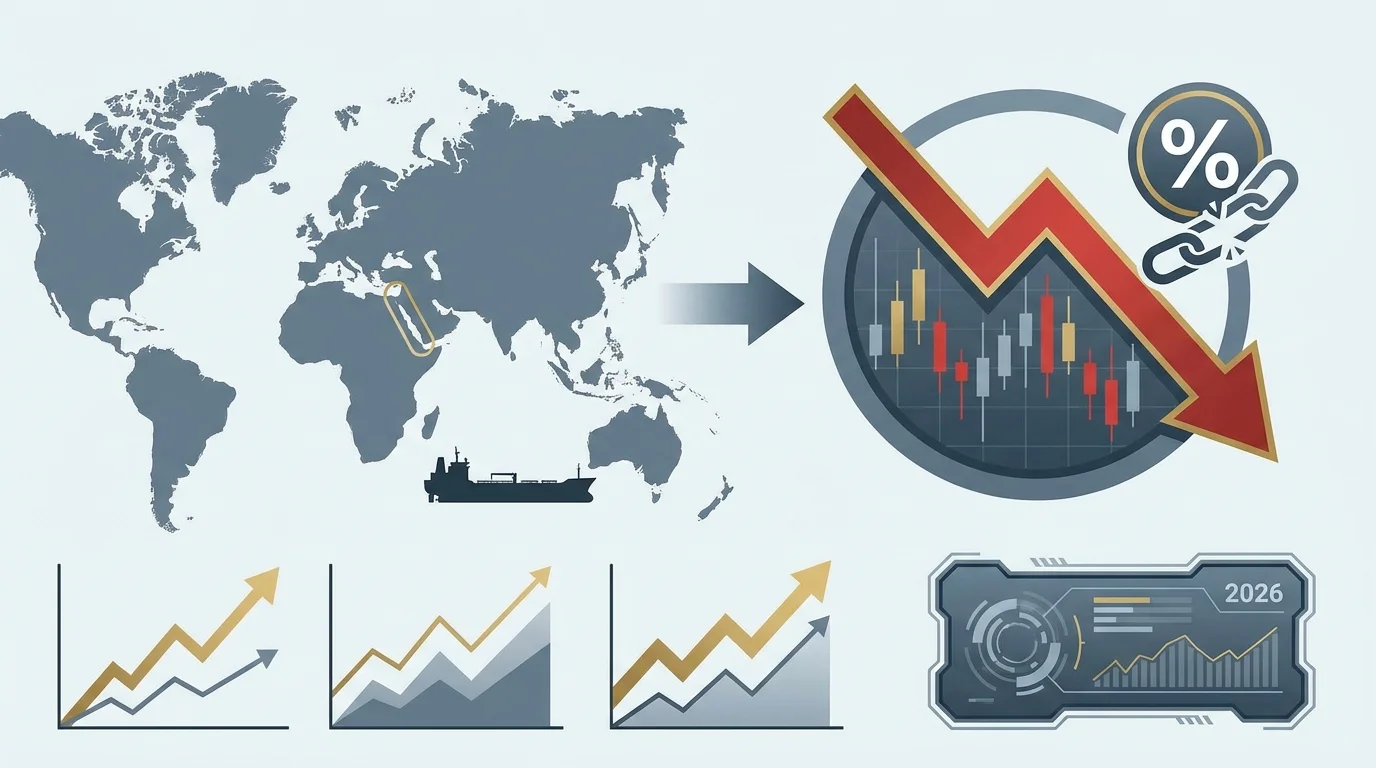
Geopolitical developments in the Middle East have emerged as a significant wildcard for the inflation outlook in 2026, with the potential to dramatically alter the trajectory of consumer prices depending on how tensions evolve. The region's importance as a major oil-producing area means that any escalation of conflict could have immediate and substantial impacts on global energy markets, reverberating through the entire economy via higher transportation costs, increased production expenses, and reduced consumer purchasing power. The risk of oil prices spiking to $100 per barrel or higher represents a credible threat that could push headline CPI inflation from the current 2.4% to approximately 3.5%.
The transmission mechanism from oil prices to consumer inflation operates through multiple channels. Direct energy costs for consumers, including gasoline and heating oil, would rise immediately, directly impacting household budgets and reducing discretionary spending power. Indirect effects would follow as transportation costs increase for businesses, feeding through to higher prices for goods across the economy. The airline industry, logistics companies, and manufacturers with energy-intensive production processes would face particular pressure from sustained higher oil prices.
Historical analysis suggests that oil price shocks have asymmetric effects on the economy, with price increases hurting growth more than equivalent price decreases help it. This asymmetry arises because consumers tend to view oil price increases as a reduction in their real income that requires immediate spending cuts, while price decreases are saved or spent more gradually. If oil prices were to spike due to Middle East conflict, the negative impact on consumer confidence and spending could compound the inflationary effects, creating a challenging environment for both growth and prices.
The Federal Reserve would face a particularly difficult challenge if oil prices spike while the economy is already showing signs of weakness. The standard approach of looking through temporary energy price fluctuations might not apply if the supply shock proves persistent or if it triggers broader inflationary dynamics through wage-price spirals. In such a scenario, the Fed might be forced to choose between accommodating higher inflation to support growth or maintaining its inflation-fighting credibility at the cost of deeper economic weakness.
For investors, energy sector exposure can serve as a partial hedge against geopolitical oil price risks while also providing income through dividends. However, the overall equity market typically faces headwinds during oil price spikes as corporate profit margins compress and consumer discretionary spending declines. A diversified approach that includes commodities, energy infrastructure, and inflation-protected bonds can help mitigate the risks associated with potential oil price volatility.
Shelter Costs: Signs of Moderation
One encouraging development within the February 2026 CPI report was the behavior of shelter costs, which showed their smallest monthly gain since 2021. This moderation in housing inflation represents a significant development given that shelter comprises approximately one-third of the overall CPI basket and has been a major contributor to elevated inflation readings over the past several years. The cooling in shelter costs provides hope that inflation may continue to grind lower even if other components remain sticky, offering a potential path for the headline CPI to approach the Federal Reserve's 2% target.
The slowdown in shelter inflation reflects the gradual transmission of earlier weakness in market rents to the official inflation statistics. Private sector measures of asking rents peaked in 2024 and have declined or stabilized since then, but these changes take time to feed through to the CPI because of the way the index measures housing costs. The Bureau of Labor Statistics collects data on all housing units, including those with long-term leases, meaning that changes in market rents only gradually affect the overall shelter index as leases turn over and new agreements are signed.
Several factors have contributed to the moderation in housing market pressures. The construction boom of 2024-2025 has added substantial new supply to the housing stock, particularly in multi-family apartment buildings. Demographic trends, including slower household formation among younger cohorts, have reduced the rate of new demand growth. Additionally, the work-from-home trend has moderated, reducing the premium previously placed on larger homes with dedicated office space and allowing some relocation to more affordable markets.
The question facing economists is whether the improvement in shelter inflation will prove durable or whether it represents a temporary lull before renewed pressures emerge. Housing affordability remains stretched by historical standards, with home prices elevated relative to incomes and mortgage rates significantly higher than the ultra-low levels of 2020-2021. If the economy avoids recession and wage growth remains healthy, demand for housing could strengthen again, potentially putting renewed upward pressure on shelter costs later in 2026 or beyond.
Regional variations in shelter inflation remain significant, with some markets continuing to experience tight supply conditions while others have seen more substantial moderation. High-cost coastal markets and rapidly growing Sun Belt cities have exhibited different dynamics, reflecting local economic conditions, regulatory environments, and migration patterns. Understanding these regional differences is important for investors in real estate markets and for policymakers seeking to address housing affordability concerns.
Food and Medical Costs: Persistent Pressures
While shelter costs have shown signs of cooling, food and medical expenses continue to exert upward pressure on the overall CPI, affecting household budgets and complicating the inflation picture. These categories represent essential spending for most families, meaning that price increases in these areas are particularly painful and cannot easily be avoided through substitution or delayed consumption. The persistence of inflation in food and medical care highlights the uneven nature of the disinflationary process and explains why many consumers continue to feel that inflation remains a serious problem despite moderation in some other categories.
Food price inflation has been driven by a combination of factors including weather-related disruptions to agricultural production, higher input costs for farmers, and increased transportation and processing expenses. Climate change has increased the frequency and severity of extreme weather events that damage crops and disrupt supply chains, creating a structural headwind for food price stability. Additionally, the consolidation of various segments of the food industry has raised concerns about market power and its potential contribution to elevated prices for consumers.
Medical care inflation reflects the ongoing challenges of controlling healthcare costs in the United States, where spending consistently outpaces that of other developed countries while delivering mixed results in terms of health outcomes. The aging of the population increases demand for medical services, while advances in medical technology often come with high price tags. Labor shortages in healthcare professions have put upward pressure on wages in the sector, contributing to higher costs that are passed through to consumers and insurers.
The stickiness of food and medical inflation has important implications for monetary policy and for assessments of consumer well-being. Unlike discretionary purchases that can be postponed during periods of high inflation, food and medical care represent non-discretionary spending that households must absorb regardless of price levels. This means that elevated inflation in these categories has a disproportionate impact on lower-income households, who spend a larger share of their budgets on necessities. The political salience of food and medical prices may pressure policymakers to take action even if overall inflation metrics show improvement.
For investors, companies in the consumer staples and healthcare sectors may offer defensive characteristics during periods of persistent inflation in these categories. These businesses often possess pricing power that allows them to pass cost increases through to customers, protecting their profit margins. However, regulatory risks in the healthcare sector and consumer pushback against food price increases create potential headwinds that require careful analysis of individual company fundamentals and competitive positioning.
Investment Implications and Market Outlook
The February 2026 CPI data and the broader inflation outlook have significant implications for investment strategy across asset classes. The persistence of above-target inflation combined with elevated interest rates creates a challenging environment for traditional portfolios that rely heavily on stocks and bonds. Investors must adapt their approaches to account for the possibility that the low-inflation, low-rate regime of the 2010s may not return, requiring a more nuanced approach to asset allocation and security selection.
Fixed income markets have repriced dramatically as inflation has proven more persistent than initially anticipated. Treasury yields remain elevated by historical standards, offering more attractive income opportunities than were available during the zero-interest-rate period but also carrying duration risk if rates rise further. Inflation-protected securities such as TIPS provide direct hedges against rising consumer prices, though their valuations must be carefully assessed relative to nominal alternatives. Credit spreads have remained relatively tight despite economic uncertainty, suggesting that investors are not pricing in a significant recession risk.
Equity market performance has become increasingly dependent on the path of inflation and interest rates, with growth stocks facing particular pressure from higher discount rates applied to future earnings. Value stocks and companies with pricing power have generally outperformed in the current environment, as have energy and materials sectors that benefit from commodity price strength. International diversification offers potential benefits, as inflation dynamics and monetary policy cycles vary across different economies and regions.
Alternative investments including commodities, real estate, and infrastructure assets can provide inflation hedges and diversification benefits in the current environment. These assets often have cash flows that adjust with inflation or benefit directly from rising commodity prices. However, liquidity considerations and valuation risks must be carefully evaluated, particularly for private market investments that may be difficult to exit during periods of market stress.
The importance of active management and careful security selection has increased in the current environment, as broad market exposure may not provide adequate protection against inflationary headwinds. Investors who can identify companies with strong competitive positions, pricing power, and resilient business models may be better positioned to navigate the challenges ahead. Taking advantage of advanced AI-driven analysis tools can provide investors with the insights needed to make informed decisions in this complex market environment.
Conclusion
The February 2026 CPI report paints a picture of an economy grappling with persistent inflationary pressures that refuse to fade as quickly as policymakers and markets had hoped. With headline inflation holding steady at 2.4% and core CPI at 2.5%, the Federal Reserve faces a challenging road ahead as it attempts to guide inflation back to its 2% target without causing undue harm to employment and economic growth. The risk of stagflation, while not the base case, has increased as the labor market shows signs of cooling while price pressures remain elevated.
Geopolitical risks in the Middle East add another layer of uncertainty to the inflation outlook, with the potential for oil price spikes representing a significant upside risk to consumer prices. The encouraging moderation in shelter costs provides a potential path for gradual disinflation, but persistent increases in food and medical costs continue to pressure household budgets and complicate the Fed's policy decisions. As the March 17-18 FOMC meeting approaches, investors should expect the central bank to maintain its cautious stance and emphasize data-dependent policy rather than committing to a specific path for interest rates.
For investors navigating this complex environment, diversification and careful attention to inflation-sensitive asset classes will be essential. Companies with pricing power, real assets, and inflation-protected securities offer potential protection against the risk of persistent or rising inflation. At the same time, maintaining flexibility to adjust positioning as new data emerges will be crucial given the uncertainty surrounding the economic outlook. The days of assuming that inflation will naturally return to low levels may be over, requiring a more active and thoughtful approach to portfolio management.
Ready to take control of your investment strategy in this inflationary environment? Sign up for Intellectia.ai today and gain access to cutting-edge AI tools that can help you identify opportunities, manage risks, and make smarter investment decisions. Our platform provides real-time analysis of market conditions, sector trends, and individual securities to give you the edge you need in uncertain times. Don't let inflation erode your wealth—join thousands of investors who are using AI to navigate complex markets and build more resilient portfolios.