
Key Takeaway
As we navigate through 2026, investors are grappling with a fundamental question: are we standing on the precipice of a bear market, or will the bull run continue? The consensus among major financial institutions reveals a landscape of uncertainty rather than unanimous doom. J.P. Morgan Global Research currently assigns a 35% probability to a U.S. and global recession in 2026, while Goldman Sachs maintains that significant equity setbacks are unlikely without an accompanying economic contraction. This divergence of expert opinion underscores the complexity of today's market environment, where traditional indicators are sending mixed signals and unprecedented factors like artificial intelligence growth are reshaping economic dynamics.
The reality is that 2026 represents a critical inflection point for markets. On one hand, we have persistent inflationary pressures, with the Federal Reserve acknowledging that inflation remains "somewhat elevated" even as it maintains a commitment to its 2% target. On the other hand, corporate earnings expectations remain robust, with analysts projecting double-digit growth for S&P 500 companies this year. This tension between macroeconomic headwinds and microeconomic resilience creates a market environment where volatility is not just expected but likely to define the investment landscape. For investors, understanding these competing forces is essential to making informed decisions about portfolio positioning and risk management.
What becomes clear from analyzing current market conditions is that 2026 may not deliver a clear-cut bear or bull market, but rather a period of sustained churn and rotation. Charles Schwab's outlook suggests ongoing instability will usher in bouts of volatility, while Morgan Stanley notes that U.S. equities historically perform well when the Federal Reserve is in a rate-cutting cycle. The positive impact of 2025's rate cuts is likely to be felt into 2026, providing a potential cushion against sharper declines. However, investors should remain vigilant as the interplay between fiscal policy, inflation trajectories, and geopolitical developments could quickly shift the narrative.
Understanding Bear Markets: Definition and Historical Context
A bear market is technically defined as a decline of 20% or more from recent highs in a broad market index such as the S&P 500, typically accompanied by widespread pessimism and negative investor sentiment. While this 20% threshold provides a clear mathematical benchmark, the reality of bear markets is far more nuanced. They often develop gradually, with initial corrections giving way to sustained selling pressure as economic fundamentals deteriorate and confidence erodes. Understanding the anatomy of bear markets is crucial for investors seeking to navigate potential downturns while avoiding panic-driven decisions that can permanently impair long-term wealth.
Historically, bear markets have been accompanied by recessions approximately 70% of the time, though the causality can flow in both directions. Market declines can anticipate economic contractions as forward-looking investors price in deteriorating conditions, while severe bear markets can themselves contribute to economic weakness through the wealth effect and reduced business confidence. The average bear market since World War II has lasted about 13 months and delivered peak-to-trough declines of roughly 33%, though individual experiences have varied dramatically. The 2008 financial crisis bear market saw the S&P 500 fall 57%, while the COVID-19 crash of 2020 was remarkably brief at just 33 days from peak to trough, demonstrating that not all bear markets follow the same playbook.
The characteristics that define bear market environments extend beyond simple price action. Rising unemployment, contracting corporate earnings, tightening credit conditions, and deteriorating consumer confidence typically accompany sustained market declines. In 2026, investors are monitoring these traditional recession indicators closely while also contending with unique modern factors. The unprecedented monetary policy experimentation of the past decade, massive fiscal stimulus programs, and the transformative impact of artificial intelligence on productivity and corporate profitability all represent variables that could either accelerate or mitigate bear market conditions. This complexity makes historical comparisons useful but imperfect guides for current decision-making.
Current Economic Indicators: Reading the Tea Leaves
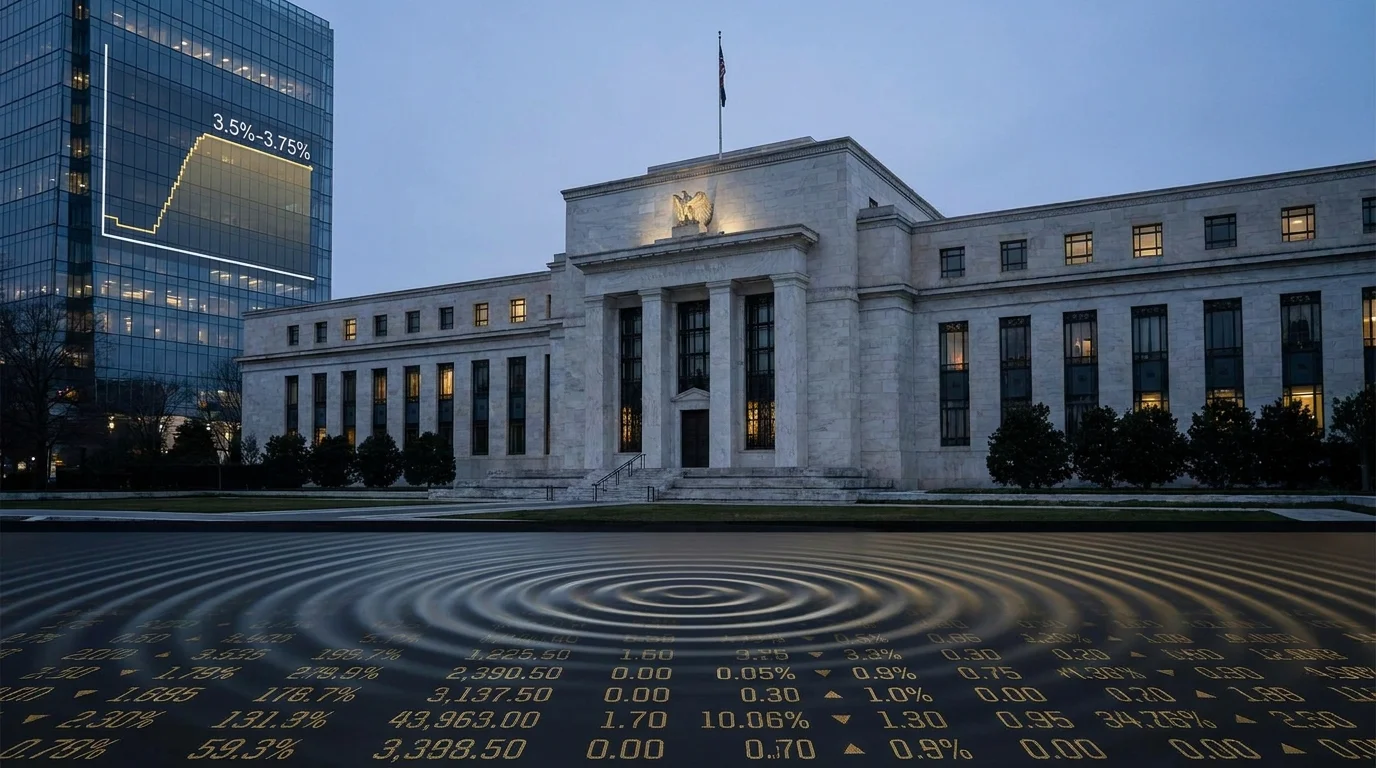
The Federal Reserve's monetary policy stance remains perhaps the most critical variable for 2026 market outcomes. After aggressive rate hikes in 2022-2023 brought the federal funds rate to its highest level in over two decades, the central bank began easing in 2025. Current projections suggest the Fed may seek to cut interest rates one or two additional times to bring overnight rates closer to the 3% to 3.25% range, though any changes will depend heavily on how inflation and employment data evolves. This dovish pivot generally supports equity markets, as lower discount rates increase the present value of future corporate earnings and can stimulate economic activity through cheaper borrowing costs.
However, the inflation picture remains stubbornly complex. Despite the Fed's strong commitment to returning inflation to its 2% objective, recent data shows inflation maintaining momentum across both goods and services sectors. Business surveys from regional Federal Reserve banks consistently report rising input and selling prices, suggesting that inflationary pressures have become somewhat entrenched in the economy. This persistence creates a challenging policy dilemma for the Fed: cutting rates too aggressively could reignite inflation, while maintaining restrictive policy for too long could trigger the very recession markets fear. The central bank's navigation of this tightrope will likely determine whether 2026 sees continued market resilience or succumbs to bear market pressures.
Labor market conditions present another critical data point for investors monitoring recession risks. While job gains have moderated from the torrid pace of post-pandemic recovery, the unemployment rate has shown signs of stabilization rather than deterioration. This Goldilocks scenario of cooling but not collapsing employment supports the soft landing narrative that many policymakers and investors are hoping for. However, labor market data is famously lagging, meaning that by the time significant deterioration appears in official statistics, the economy may already be in recession. Forward-looking indicators such as hiring freezes, reduced overtime, and declining job openings warrant close attention as potential early warning signals.
Market Performance and Valuation Concerns
Entering 2026, equity valuations remain elevated by historical standards, creating a vulnerability that could amplify any negative developments. The S&P 500's forward price-to-earnings ratio has been hovering at levels that imply strong earnings growth and low discount rates continuing indefinitely. While elevated valuations alone rarely cause bear markets, they can magnify downside moves when sentiment shifts or fundamentals deteriorate. The transition from a valuation-driven bull market to one supported by actual earnings growth represents a baton pass that matters enormously for sustainability, and analysts generally expect this handoff to occur through double-digit earnings growth for S&P 500 companies this year.
The concentration of market gains in a handful of mega-cap technology companies has created additional structural risks that could contribute to bear market conditions. When market leadership becomes excessively narrow, the entire index becomes vulnerable to disappointments from just a few names. The artificial intelligence boom that has driven much of recent market gains represents both an opportunity and a risk. Fidelity International calls AI "the defining theme for equity markets" in 2026, while BlackRock suggests the technology will likely "keep trumping tariffs and traditional macro drivers." This enthusiasm is well-founded given the transformative potential of AI, but it also creates the potential for significant volatility if growth expectations prove overly optimistic or if regulatory headwinds emerge.
Sector rotation patterns offer additional insight into market health and bear market risks. Healthy bull markets typically feature broad participation across sectors, while deteriorating markets often see defensive sectors outperforming as investors seek safety. In 2026, monitoring these rotation patterns will be crucial for identifying whether current volatility represents normal consolidation within an ongoing bull market or early signs of more significant trouble. Energy, utilities, and consumer staples sectors often serve as canaries in the coal mine, with sustained outperformance frequently signaling defensive positioning by institutional investors concerned about economic growth prospects.
The AI Paradox: Technology as Market Stabilizer
Perhaps the most unique factor influencing 2026 market dynamics is the artificial intelligence revolution, which is simultaneously driving massive capital expenditure while promising unprecedented productivity gains. Unlike previous technological cycles, AI's impact is being felt across virtually every sector of the economy, from healthcare to manufacturing to financial services. This broad-based adoption creates multiple vectors through which AI growth could support markets even if traditional economic indicators deteriorate. Companies investing heavily in AI infrastructure are seeing these expenditures flow through to revenue for chipmakers, cloud providers, and data center operators, creating a virtuous cycle of investment and growth.
However, the AI boom also introduces new vulnerabilities that could exacerbate bear market conditions if sentiment shifts. The sheer scale of capital being allocated to AI development creates the risk of overcapacity and disappointing returns on investment. Additionally, regulatory scrutiny of AI technologies is intensifying globally, with potential implications for the business models of companies most exposed to this theme. Investors must weigh the transformative potential of AI against these risks when positioning portfolios for 2026. The technology likely represents a powerful engine of economic expansion, as NatWest analysts have noted, but this doesn't eliminate the possibility of significant corrections as markets digest the pace and magnitude of change.
Looking for an edge in navigating these complex market dynamics? Intellectia's AI-powered stock analysis can help you identify opportunities and risks that traditional analysis might miss. Our platform processes millions of data points to deliver actionable insights tailored to your investment style.

Historical Patterns: What Past Bear Markets Teach Us
Examining historical bear markets reveals important patterns that can inform 2026 positioning, while also highlighting why current conditions may be unique. The 2008 financial crisis was fundamentally a credit event, with excessive leverage in the housing market triggering a cascade of defaults that brought the global financial system to the brink. Today's banking system is significantly better capitalized, and while commercial real estate presents some localized risks, the systemic vulnerabilities that characterized 2008 are largely absent. This suggests that any 2026 bear market would likely follow a different script than the most severe modern example.
The 2020 COVID-19 crash offers perhaps more relevant lessons for current conditions. That bear market was remarkably brief because it was caused by an external shock rather than fundamental economic imbalances, and because policymakers responded with unprecedented speed and scale. Similarly, any 2026 downturn would likely be met with aggressive fiscal and monetary support, potentially limiting both the depth and duration of declines. However, the 2020 experience also reminds us that bear markets can emerge suddenly and violently, with the S&P 500 falling 34% in just 23 trading days. This volatility potential underscores the importance of maintaining appropriate risk management even when base case scenarios appear favorable.
The 2022 bear market, which saw the S&P 500 decline approximately 25% peak-to-trough, may offer the most instructive parallels for 2026. That decline was driven primarily by Federal Reserve tightening in response to inflation, with technology and growth stocks bearing the brunt of the selling as rising discount rates reduced the present value of future earnings. If 2026 brings renewed inflation concerns that force the Fed to pause or reverse its easing cycle, similar dynamics could play out. However, the starting point matters enormously, and valuations entering 2026 were already somewhat compressed relative to the extremes seen in 2021, potentially providing a cushion against severe declines.
Expert Predictions: A Spectrum of Views
The divergence of expert opinion on 2026 market prospects reflects genuine uncertainty about how competing forces will resolve. At the bullish end of the spectrum, Goldman Sachs projects global stocks to return approximately 11% over the next twelve months, arguing that it would be unusual to see a significant equity setback without an accompanying recession. Morgan Stanley similarly emphasizes that U.S. equities tend to perform well when the Fed is cutting rates, and the positive impact of 2025's reductions is likely to be felt into 2026. These views emphasize the resilience of corporate earnings, the supportive policy environment, and the transformative potential of technological innovation.
At the other extreme, some Wall Street veterans are predicting a 2026 bear market with average declines of 20% or more. These bearish forecasts typically emphasize stretched valuations, persistent inflationary pressures, and the cumulative impact of higher interest rates on economic activity. The BCA Research team, among the most bearish major firms, warns of a potential U.S. recession while maintaining a neutral stance on stocks for now due to the tailwind from AI capital expenditure. This nuanced bearishness reflects a recognition that even negative macro views can be partially offset by powerful micro-level trends.
The middle ground is occupied by analysts who expect significant volatility and sector rotation without an outright bear market. Charles Schwab's outlook anticipates that "ongoing instability is likely to usher in bouts of volatility and sustained high churn and rotation," while maintaining that the market can advance even while climbing a wall of worry. This base case scenario of a choppy but ultimately positive year seems to capture the consensus view, though the range of potential outcomes is wide enough that investors should prepare for multiple scenarios rather than betting heavily on any single forecast.
Sector-Specific Risks and Opportunities
Different sectors face dramatically different risk-reward profiles in a potential 2026 bear market scenario. Technology stocks, despite their recent dominance, may be particularly vulnerable if earnings growth disappoints or if regulatory pressures intensify. The high valuations assigned to AI-exposed companies create significant downside risk if the technology's commercialization timeline proves longer than hoped. However, technology also offers the strongest fundamental growth story in an otherwise slowing economy, making it a double-edged sword for portfolio construction.
Traditional defensive sectors such as consumer staples, utilities, and healthcare typically outperform during bear markets as investors seek earnings stability and dividend income. However, these sectors entered 2026 with their own vulnerabilities, including stretched valuations in some cases and interest rate sensitivity that could create headwinds if the Fed maintains higher rates for longer. Additionally, the unique characteristics of any 2026 downturn, whether driven by recession, inflation, or external shocks, will determine which defensive strategies prove most effective.
Financials present a particularly interesting case study for 2026. Banks benefit from higher interest rates through improved net interest margins, but face credit risk if economic conditions deteriorate significantly. Regional banks may be especially vulnerable given their exposure to commercial real estate, an asset class facing significant structural challenges in the post-pandemic environment. Meanwhile, large-cap diversified financials with strong capital positions and diverse revenue streams may prove relatively resilient, potentially offering attractive entry points for long-term investors if broader market weakness creates dislocations.
Energy and commodities sectors could provide important diversification benefits in 2026, particularly if inflation proves more persistent than hoped. These sectors often perform well during late-cycle environments when commodity prices rise and capital discipline has constrained supply growth. However, the energy transition and long-term demand concerns create structural uncertainties that differentiate the current environment from previous commodity supercycles. Investors seeking inflation protection through commodity exposure must balance near-term cyclical opportunities against longer-term structural challenges.
Portfolio Strategies for Uncertain Times
Navigating potential bear market conditions requires a disciplined approach to risk management that balances defense with the recognition that timing market tops and bottoms is notoriously difficult. One fundamental principle is to ensure that your asset allocation reflects your risk tolerance and investment horizon, rather than being driven by recent market performance. Investors who have seen equity allocations drift higher due to strong market returns may want to rebalance toward target weights, effectively taking some profits from winners and building cash reserves for potential opportunities.
Quality factors become especially important during periods of market stress. Companies with strong balance sheets, consistent cash flows, and durable competitive advantages typically outperform during bear markets as investors flee speculative positions for safety. This quality premium can be accessed through individual stock selection focused on metrics like debt-to-equity ratios, free cash flow generation, and return on invested capital, or through factor-based approaches that systematically tilt portfolios toward high-quality names.
Diversification across asset classes, geographies, and strategies remains the cornerstone of bear market preparation. While U.S. equities have dominated returns in recent years, international diversification may provide valuable benefits if dollar strength moderates or if foreign markets offer more attractive valuations. Alternative investments such as real assets, private credit, and absolute return strategies can provide additional diversification benefits, though liquidity considerations and fee structures warrant careful evaluation. For most investors, a core-satellite approach that maintains broad market exposure while tilting toward defensive or opportunistic positions offers an appropriate balance.
Protect your portfolio with Intellectia's comprehensive AI-powered screening tools that help you identify high-quality stocks and avoid potential landmines before they impact your returns.

Conclusion: Preparing for Multiple Outcomes
The evidence suggests that 2026 is unlikely to deliver a straightforward bull or bear market narrative, but rather a complex environment where sector selection, risk management, and emotional discipline will determine investment outcomes. The 35% probability of recession assigned by J.P. Morgan implies a 65% chance of continued expansion, while even the more bearish forecasts acknowledge that AI-driven capital expenditure and earnings growth could support markets despite macroeconomic headwinds. For investors, this uncertainty is not a reason for paralysis but rather a call for preparation and adaptability.
Rather than attempting to predict whether a bear market will materialize, prudent investors should focus on building resilient portfolios that can weather multiple scenarios. This means maintaining appropriate diversification, emphasizing quality factors, ensuring adequate liquidity for opportunistic deployment, and avoiding excessive concentration in the most vulnerable segments of the market. It also means maintaining perspective during inevitable bouts of volatility, recognizing that market corrections are a normal feature of long-term wealth creation rather than a signal to abandon well-constructed investment plans.
Ultimately, the question of whether we face a bear market in 2026 may be less important than whether we are prepared for whatever markets deliver. History shows that investors who maintain discipline through market cycles, continuing to invest regularly and rebalance systematically, generally achieve better outcomes than those who attempt to time their way around volatility. As we navigate the uncertainties of 2026, this time-tested wisdom remains the most reliable guide for long-term investment success.
Ready to take control of your investment journey? Sign up for Intellectia today and access the AI-powered tools that professional investors use to stay ahead of market trends. Whether we're heading into a bear market or a continued bull run, having the right intelligence makes all the difference.