
Key Takeaway
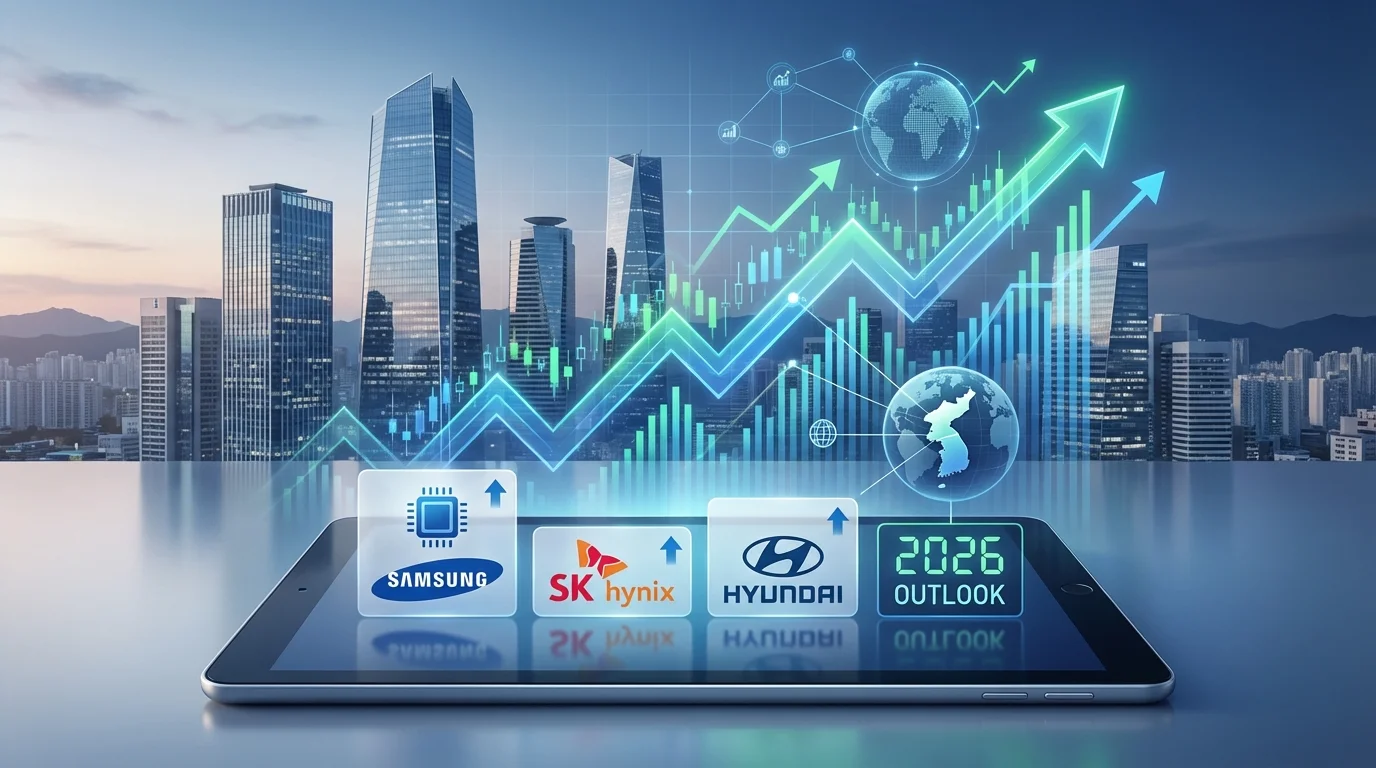
South Korea's stock market has emerged as a global standout in 2026, with the KOSPI surging over 75% in the past year driven by an unprecedented memory chip boom that has sent Samsung Electronics and SK Hynix shares to record highs. For investors seeking exposure to the AI revolution through established technology leaders, Korean equities offer a compelling combination of world-class semiconductor companies, attractive valuations trading at 30% discounts to global peers, and earnings growth that Macquarie projects at an extraordinary 48% for 2026.
The memory chip supercycle, fueled by AI data center spending projected to reach $655 billion by 2026, has transformed Samsung and SK Hynix into the primary beneficiaries of surging demand for High Bandwidth Memory (HBM). Samsung shares have nearly quadrupled since the start of 2025, while SK Hynix has jumped six-fold, yet both remain attractively valued compared to American counterparts like Micron Technology. Despite these dramatic gains, the so-called "Korea Discount"—reflecting concerns about chaebol family control structures—means Korean stocks still trade at meaningful valuation discounts.
For US investors, the iShares MSCI South Korea ETF (EWY) offers the simplest exposure, with Samsung (approximately 25% of the portfolio) and SK Hynix (approximately 20%) representing nearly half the fund's weight. The ETF has surged 36% year-to-date in 2026, making it the top-performing equity ETF. However, recent volatility—including a 12% single-day decline in early March amid geopolitical tensions—underscores the risks of this concentrated, export-dependent market. Investors must weigh the compelling growth story against currency volatility, geopolitical risks, and the potential for profit-taking after such dramatic gains.
Ready to discover international investment opportunities? Try Intellectia.AI's AI-powered stock screener to identify top Korean stocks and optimize your global portfolio allocation.

The Korean Stock Market Phenomenon of 2026
South Korea's equity market has experienced one of the most dramatic rallies among developed markets, transforming from an overlooked market to a top performer driven by semiconductor demand and corporate governance improvements. Understanding the magnitude of this move and its drivers is essential for evaluating future opportunities.
KOSPI's Historic Rally
The KOSPI index has surged over 75% in the past year, with the benchmark breaking through the psychologically significant 6,000 level in early 2026. This performance dwarfs gains in US and European markets, with the KOSPI reaching new highs on the strength of semiconductor giants benefiting from robust demand for memory chips.
Macquarie Research projects that their universe of 103 Korean stocks, representing 70% of the KOSPI/KOSDAQ, should register extraordinary 48% EPS growth in 2026. This earnings acceleration, up from historical norms of 8-10%, reflects the structural shift in memory chip demand driven by AI infrastructure buildout.
However, the rally has not been without volatility. In early March 2026, the KOSPI plummeted more than 12% in a single session—the most significant decline on record—as geopolitical tensions surrounding the Iran conflict drove risk-averse sentiment. The index fell to 5,094 points before stabilizing, demonstrating that even strong fundamental trends can be overwhelmed by macro shocks.
The Memory Chip Supercycle
The primary driver of Korean stock performance is the unprecedented boom in memory chip demand, particularly High Bandwidth Memory (HBM) essential for AI data centers. Major technology companies are expected to ramp up spending on AI infrastructure, with estimates suggesting hyperscale firms could invest up to $655 billion in capital expenditure by 2026.
Samsung Electronics and SK Hynix have emerged as the dominant suppliers of HBM, a technology that offers significantly higher data transfer rates than conventional memory. As AI models grow larger and more complex, demand for HBM has exploded, creating supply constraints that have driven prices and profit margins sharply higher.
Kim Un-ho, a researcher at a leading Korean securities firm, evaluated: "In 2026, semiconductor division performance will improve in earnest, and the company will receive the greatest benefits from the growth structure centered on DRAM and NAND." This view reflects consensus expectations that memory chip demand will remain robust as AI deployment accelerates globally.
Top Korean Stocks to Buy in 2026
Korea's equity market offers exposure to world-leading companies across semiconductors, automotive, and financial services. The following represent particularly compelling opportunities for investors seeking to capitalize on Korean growth trends.
Samsung Electronics: The Memory King
Samsung Electronics stands as Korea's largest company and the world's leading memory chip manufacturer. With a market capitalization exceeding $260 billion, Samsung represents approximately 25% of the EWY ETF and dominates the global DRAM, NAND flash, and HBM markets.
Samsung shares have nearly quadrupled since the start of 2025, yet analysts argue further upside remains. Compared to overseas competitors, Korean chip giants trade at meaningful valuation discounts despite stronger scale in the memory segment. While American peer Micron Technology trades at 3.1x price-to-book, Samsung maintains lower multiples despite superior market position and technology leadership.
Beyond memory chips, Samsung's diverse business includes smartphones, displays, and consumer electronics, providing multiple growth avenues. The company's vertical integration—from chip manufacturing to end-user devices—creates competitive advantages and pricing power that pure-play competitors cannot match.
SK Hynix: The HBM Leader
SK Hynix has emerged as the standout performer among Korean equities, with shares jumping six-fold as the company solidified its leadership in High Bandwidth Memory. Representing approximately 20% of EWY's portfolio, SK Hynix has become synonymous with the AI memory boom.
The company's technological leadership in HBM has created a competitive moat that competitors struggle to breach. As AI data centers require ever-more memory bandwidth, SK Hynix's products have become essential infrastructure components, commanding premium pricing and generating extraordinary profit margins.
Analysts note that even after dramatic gains, SK Hynix has upside potential due to low valuations relative to American counterparts and continued strong demand for HBM. The top 1% return on equity investment has been net purchasing SK Hynix and Samsung Electronics, indicating continued institutional confidence in the memory chip story.
Interested in semiconductor investment opportunities? Sign up for Intellectia.AI to discover top chip stocks and AI infrastructure plays with AI-powered analysis.
Hyundai Motor: Automotive Excellence
Hyundai Motor Company represents Korea's automotive prowess, with a market capitalization that makes it one of the largest holdings in Korean equity ETFs. The company has successfully navigated the global transition toward electric vehicles while maintaining strength in traditional internal combustion engine markets.
Despite tariff concerns and competitive pressures, Hyundai continues to gain US market share through competitive pricing, strong product quality, and an expanding SUV lineup. The company's Ioniq sub-brand has established credible EV credentials, positioning Hyundai for the long-term transition away from fossil fuels.
Mirae Asset Securities maintains a Buy rating on Hyundai Motor, noting that tariff impact continues to be offset by strong product momentum. For investors seeking exposure to global automotive trends through a non-Japanese Asian manufacturer, Hyundai offers an attractive combination of value and growth.
KB Financial Group: Banking on Recovery
KB Financial Group represents Korea's banking sector, offering exposure to domestic economic recovery and potential interest rate normalization. As one of the largest holdings in EWY at approximately 2% of the portfolio, KB Financial provides diversification away from the technology-heavy concentration of Samsung and SK Hynix.
The financial sector stands to benefit from any normalization of interest rates, which would improve net interest margins after years of compressed spreads. KB Financial's strong capital ratios and dominant market position create a relatively defensive play on Korea's domestic economy.
Understanding the Korea Discount
Despite dramatic gains, Korean stocks continue to trade at valuations below global peers, a phenomenon known as the "Korea Discount." Understanding this discount—and whether it may narrow—helps investors evaluate potential returns.
Chaebol Structure and Governance Concerns
The Korea Discount reflects concerns about the chaebol family control structures that dominate the KOSPI index. Chaebols are massive family-run conglomerates like Samsung and Hyundai that control Korean business through complex cross-shareholding arrangements that prioritize family interests over minority shareholders.
These structures create governance concerns including limited transparency, potential for related-party transactions, and the risk that controlling families may make decisions that benefit themselves at the expense of other shareholders. Historical instances of corruption and political influence have reinforced skepticism about Korean corporate governance.
However, recent reforms including the Korea Value-Up Program have pressured chaebols to improve capital efficiency, increase dividends, and enhance shareholder rights. If these reforms prove durable, the Korea Discount could narrow, providing additional upside beyond earnings growth.
Valuation Comparison
Even after significant gains, Korean stocks trade at approximately 30% lower valuations than global peers. This discount persists despite Korean companies demonstrating world-class technology, manufacturing capabilities, and market positions in critical industries like semiconductors and displays.
Micron Technology, SK Hynix's closest American peer, trades at 3.1x price-to-book while SK Hynix maintains lower multiples despite stronger HBM market position. Similarly, Samsung trades at discounts to American technology peers despite its diversified technology leadership.
For value-oriented investors, this discount represents opportunity—if Korean governance continues improving and global investors gain comfort with chaebol structures, valuation multiples could expand toward global norms, providing significant returns even without earnings surprises.
How to Invest in Korean Stocks
US investors have multiple pathways for gaining exposure to Korean equities, each with distinct advantages and considerations.
EWY ETF: Concentrated Exposure
The iShares MSCI South Korea ETF (EWY) provides the most straightforward access to Korean equities for US investors. With approximately $9.5 billion in assets, EWY is the largest and most liquid Korea-focused ETF available.
The fund's top holdings reflect the concentrated nature of the Korean market: Samsung Electronics at approximately 23-26% of the portfolio, SK Hynix at approximately 19-20%, Hyundai Motor at 3.2%, and KB Financial Group at 2.1%. Samsung and SK Hynix together comprise roughly 45% of the ETF's weight, meaning EWY performance largely tracks these two semiconductor giants.
EWY has surged 36% year-to-date in 2026, making it the top-performing equity ETF. However, this concentration creates significant single-stock risk—investors are essentially making a leveraged bet on memory chip demand through Samsung and SK Hynix exposure.
Direct Investment Considerations
Sophisticated investors may consider direct investment in Korean equities through international brokerage accounts that provide access to the Korea Exchange. This approach enables investment in smaller companies, mid-cap opportunities, and sectors underrepresented in EWY.
However, direct investment requires navigating Korean securities regulations, currency conversion, and settlement processes that differ from US markets. Tax implications including potential Korean withholding taxes on dividends add complexity that makes this approach suitable primarily for dedicated investors with significant capital.
Samsung and SK Hynix both offer American Depositary Receipts (ADRs) that trade on US exchanges, providing convenient access to Korea's largest companies without international brokerage accounts. However, ADR liquidity may be lower than underlying Korean shares, potentially resulting in wider bid-ask spreads.
Want professional guidance on international investing? Explore Intellectia.AI's premium features for comprehensive global portfolio analysis and risk management tools.
Risks and Considerations
While the Korean equity story is compelling, investors must acknowledge significant risks that could undermine even optimistic forecasts.
Geopolitical Tensions and North Korea
Korea's proximity to North Korea creates persistent geopolitical risk that can trigger sudden market volatility. While North Korea has been relatively quiet recently, any military provocation or nuclear test could spark immediate risk-off sentiment and sharp equity declines.
The recent 12% single-day decline in the KOSPI demonstrates how quickly geopolitical developments can overwhelm fundamental trends. Investors must be prepared for volatility that exceeds developed market norms.
Broader geopolitical tensions including US-China competition also impact Korea, as Chinese demand represents a significant market for Korean exports. Any deterioration in regional stability could pressure Korean corporate earnings.
Currency Risk
The South Korean won's exchange rate significantly impacts returns for US investors. Won weakness erodes dollar returns even if local equity prices rise, while won strength amplifies gains. The won has experienced significant volatility, creating additional uncertainty for foreign investors.
Currency-hedged alternatives for Korean exposure are limited compared to Japanese or European markets, meaning most US investors accept won exposure as part of their Korean equity allocation.
Concentration Risk
Korea's equity market is extraordinarily concentrated, with Samsung and SK Hynix representing nearly half of EWY's portfolio. This concentration creates single-stock risk that dwarfs the diversification benefits typically expected from broad market ETFs.
Any negative developments for the memory chip sector—technological disruption, price wars, or demand destruction—would disproportionately impact Korean equity returns. Investors must accept that Korean exposure is essentially a bet on semiconductor demand.
Profit-Taking After Dramatic Gains
Following gains of 75%+ in the past year and 36% year-to-date in 2026, Korean stocks face potential profit-taking pressure. CLSA has noted that rising valuations spark debate about whether to take profits, even as fundamentals remain strong.
Investors entering positions after such dramatic moves face heightened risk of corrections or consolidation periods. Dollar-cost averaging or waiting for pullbacks may be prudent approaches for those seeking Korean exposure.
Conclusion
South Korea's stock market offers a compelling investment case for 2026, combining world-class semiconductor companies, attractive valuations trading at discounts to global peers, and earnings growth projected at nearly 50% by Macquarie. The memory chip supercycle driven by AI infrastructure spending has transformed Samsung Electronics and SK Hynix into global technology leaders commanding premium market positions.
The best Korean stocks for 2026 reflect this semiconductor dominance: Samsung Electronics provides diversified technology exposure with leadership across memory, displays, and consumer electronics; SK Hynix offers pure-play HBM exposure with the strongest growth trajectory; Hyundai Motor represents automotive excellence gaining global market share; and KB Financial Group provides banking sector exposure to domestic recovery.
However, investors must navigate the Korea Discount reflecting governance concerns, extraordinary concentration in just two semiconductor companies, geopolitical risks from North Korea, and currency volatility that can significantly impact dollar returns. The recent 12% single-day decline serves as a stark reminder that Korean equities carry risks exceeding typical developed market exposure.
For investors willing to accept these risks, the EWY ETF offers the simplest access to Korean growth, with Samsung and SK Hynix comprising nearly half the portfolio. Those seeking maximum diversification may want to limit Korean exposure within broader emerging market or Asia-Pacific allocations rather than making concentrated standalone bets.
Ready to expand your investment horizons globally? Start your free trial with Intellectia.AI today and discover how AI-powered tools can help you identify top international opportunities, manage currency risk, and build a globally diversified portfolio positioned for long-term success.