

Integra Resources Corp. (ITRG) Q2 2025 Earnings Call Transcript
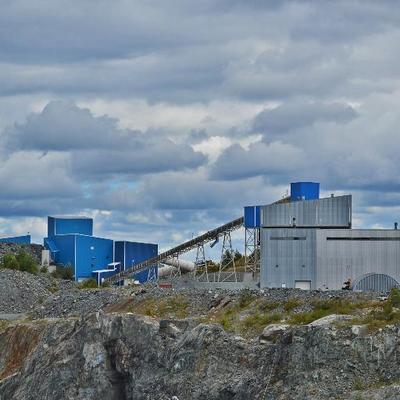
Access earnings results, analyst expectations, report, slides, earnings call, and transcript.
Overview
Despite record revenue and a strong cash position, high costs and capital-intensive projects pose risks. The market may react cautiously due to elevated costs and potential regulatory delays. The absence of a clear shareholder return plan and uncertainties in exploration outcomes further moderate sentiment.
Key Financial Performance
Gold Production Florida Canyon produced 18,087 ounces of gold in Q2 2025, slightly lower than 19,323 ounces in Q1 2025. The decrease was due to a one-time efficiency improvement project in Q1 that added approximately 2,000 ounces.
Revenue Q2 2025 revenue was a record $61.1 million, driven by higher gold prices and consistent production.
Operating Cash Flow Operating cash flow generated from Florida Canyon was $16.3 million in Q2 2025, supported by strong gold prices and operational performance.
Sustaining Capital Expenditures $14.2 million was deployed in Q2 2025 for sustaining capital at Florida Canyon, including heap leach pad expansions, fleet refurbishments, and capitalized stripping.
Growth Capital Expenditures $800,000 was spent in Q2 2025 on growth capital, focusing on resource expansion drilling at Florida Canyon.
Cash Balance Integra ended Q2 2025 with a robust cash balance of $63 million, marking the strongest financial position in the company's history.
Gross Profit Gross profit for Q2 2025 was $25.2 million, equating to a 41% operating profit margin, primarily due to an increase in gold prices.
Adjusted Earnings Adjusted earnings for Q2 2025 were $11.8 million, or $0.07 per share, up from $4.4 million, or $0.03 per share, in Q1 2025. The increase was driven by higher realized gold prices.
Cash Costs Cash costs averaged $1,849 per gold ounce in Q2 2025, slightly lower than $1,936 per ounce for H1 2025, reflecting operational efficiencies.
All-In Sustaining Costs (AISC) Mine site AISC averaged $2,641 per gold ounce in Q2 2025, in line with the company's guidance of $2,450 to $2,550 per ounce.
You have reached the limit. Sign up to access full content
Get started
Operating Highlights
Florida Canyon Mine: The mine generated greater-than-expected cash flow, significantly improving the company's financial position. Investments are being made in heap leach pad expansion, waste stripping, equipment upgrades, and process optimization to sustain and grow operations.
DeLamar Project: Significant investments were made in refining the mine plan and advancing permitting efforts. Federal mine permitting is expected to commence in H2 2025.
Nevada North Project: Increased budget allocation to complete test work and support future economic studies and permitting efforts.
Gold Price Leverage: The average realized gold price in Q2 2025 was $3,332 per ounce, significantly enhancing cash flow and profitability.
Index Inclusion: Integra was added to the Global Silver Miners Total Return Index, marking its first index inclusion and enhancing its market profile.
Operational Performance: Florida Canyon produced 18,087 ounces of gold in Q2 2025 at cash costs of $1,849 per ounce. Revenue reached $61.1 million, with $16.3 million in operating cash flow.
Sustaining Capital Investments: $14.2 million was deployed for heap leach pad expansions, fleet refurbishments, and waste stripping.
Growth Drilling Program: The program at Florida Canyon was expanded from 10,000 to 16,000 meters due to successful initial results, focusing on oxide potential and inter-pit areas.
Strategic Objectives: The company aims to optimize production, grow cash flow, and advance its development projects. It is also evaluating strategic M&A opportunities to become a mid-tier gold producer.
Capital Allocation: Disciplined capital allocation is a priority, ensuring funds are directed towards sustaining and growing operations.
You have reached the limit. Sign up to access full content
Get started
Risk or Challenges
Capital-Intensive Phase: The next 18 months represent a capital-intensive phase for Florida Canyon, requiring significant reinvestment in heap leach pad expansion, waste stripping, equipment upgrades, and process optimization. This could strain financial resources and operational focus.
Increased Costs: Cash costs at Florida Canyon averaged $1,849 per ounce, and all-in sustaining costs (AISC) were $2,641 per ounce in Q2 2025, which are relatively high. Elevated costs could impact profitability, especially if gold prices decline.
Elevated Strip Ratio: The strip ratio increased to 0.96 in Q2 2025, reflecting higher waste stripping requirements. This could lead to increased operational costs and reduced efficiency.
Regulatory and Permitting Risks: The DeLamar Project is undergoing federal permitting and environmental review, which could face delays or challenges, impacting project timelines and costs.
Operational Risks at Florida Canyon: Production at Florida Canyon slightly declined in Q2 2025 compared to Q1 due to a one-time efficiency improvement project in Q1. Consistent production levels may be challenging to maintain.
Dependence on Gold Prices: The company’s profitability is highly sensitive to gold price fluctuations. A decline in gold prices could significantly impact revenue and cash flow.
Historical Underinvestment: Florida Canyon is addressing historical underinvestment, requiring substantial capital to improve operations and extend mine life. This could delay returns on investment.
Exploration and Drilling Uncertainty: The success of growth drilling programs at Florida Canyon and other sites is uncertain, and failure to achieve desired results could impact resource expansion and future production.
Economic and Market Conditions: Economic uncertainties and market conditions, including inflation and supply chain disruptions, could increase costs and impact project timelines.
You have reached the limit. Sign up to access full content
Get started
Guidance & Outlook
Florida Canyon Mine: Significant reinvestment planned for the remaining quarters of 2025 and into 2026, including heap leach pad expansion, increased capitalized waste stripping, mobile equipment fleet revitalization, process optimization, and enhanced mine planning. A new NI 43-101 technical report is expected in the first half of 2026 to highlight improvements.
DeLamar Project: Federal mine permitting is expected to commence in the second half of 2025. A feasibility study is also expected to be announced in the second half of 2025.
Nevada North Project: Increased budget allocation to complete test work on-site to support future economic studies and permitting efforts. Hydrogeological drilling and environmental permitting are expected to progress in the second half of 2025.
Florida Canyon Gold Production: Gold production guidance for 2025 is 70,000 to 75,000 ounces. Mining rates are expected to remain elevated in the second half of 2025 due to continued waste stripping and accessing new areas.
Florida Canyon Costs: Cash costs are expected to range from $1,800 to $1,900 per ounce of gold sold, with mine site all-in sustaining costs (AISC) expected to range from $2,450 to $2,550 per ounce of gold sold in 2025.
Growth Capital at Florida Canyon: Between $8 million and $10 million will be deployed on expansion projects and various studies, including drill testing oxide targets, mobile equipment financing, and engineering studies.
2025 Growth Drilling Program: The program has been expanded from 10,000 meters to 16,000 meters, focusing on near-surface oxide potential, inter-pit areas, and lateral extensions. Results will support a mineral resource and reserve update in the first half of 2026.
DeLamar Environmental Review: Environmental review for the DeLamar Project is expected to commence in the second half of 2025, with permitting efforts continuing.
Nevada North Permitting: Permits for the Wildcat and Mountain View deposits are expected to be completed in the second half of 2025, including reclamation and exploration plan approvals.
You have reached the limit. Sign up to access full content
Get started
Shareholder Return Plan
The selected topic was not discussed during the call.
You have reached the limit. Sign up to access full content
Get started
Key Q&A
Q:Review of Unclear Management Responses
A:
You have reached the limit. Sign up to access full content
Get started
Earnings Word Cloud
The most frequently occurring keywords in this quarter's earning call
Bureau
Dump South
Environmental
Mining
North Dump
South Dump
analysis
area potential
drilling North
drilling program
dump
gold material
gold meter
grade gold
gram tonne
intercept
life
mine cutoff
ounce Phase
oxide gold
pit area
radio tower
ratio strip
reclamation
refurbishment
resource reserve
saddle
strip ratio
testing
tonne ore
tonne oxide
tonne waste
tower pit
waste stripping
ITRG Transcript
Integra Resources Corp. (ITR:CA) Q1 2026 Earnings Call Transcript
Unknown5-12
Despite strong financial performance, the company faces significant risks, including regulatory hurdles, supply chain disruptions, and economic uncertainties. The lack of discussion on strategic initiatives and returns further limits positive sentiment. The financial metrics show improvements, but the risks and uncertainties balance out the positive aspects, leading to a neutral sentiment overall.
Integra Resources Corp. (ITR:CA) Q4 2025 Earnings Call Transcript
Unknown3-25
The earnings call presents a mixed picture. Record high revenue and adjusted earnings are strong positives, but challenges such as cost pressures and production issues at Florida Canyon offset these gains. The Q&A revealed some investor interest due to GDXJ inclusion, yet management's vague responses on cost impacts may raise concerns. The neutral sentiment reflects these balanced positives and negatives, suggesting limited immediate stock price movement.
Integra Resources Corp. (ITR:CA) Q3 2025 Earnings Call Transcript
Unknown11-13
The earnings call presents a mixed outlook. Record high revenue and strong financials are positives, but high AISC and cash costs raise concerns. Management's optimistic guidance and ongoing investments could support future growth, yet uncertainties in operational improvements and exploration risks persist. The Q&A reveals management's evasiveness on timelines, adding to uncertainties. Overall, the sentiment is neutral due to balanced positive and negative factors, with no clear catalyst for significant stock movement.
Integra Resources Corp. (ITRG) Q2 2025 Earnings Call Transcript
Unknown8-14
Despite record revenue and a strong cash position, high costs and capital-intensive projects pose risks. The market may react cautiously due to elevated costs and potential regulatory delays. The absence of a clear shareholder return plan and uncertainties in exploration outcomes further moderate sentiment.
ITRG Report
Frequently Asked Questions
Where does this earnings call transcript come from?
All transcripts are sourced directly from the official live webcast or the company’s official investor relations website. We use the exact words spoken during the call with no paraphrasing of the core discussion.
How soon is the transcript available after the earnings call ends?
Full verbatim transcripts are typically published within 4–12 hours after the call ends. Same-day availability is guaranteed for all S&P 500 and most mid-cap companies.
Is the transcript edited or altered in any way?
No material content is ever changed or summarized in the “Full Transcript” section. We only correct obvious spoken typos (e.g., “um”, “ah”, repeated 10 times”, or clear misspoken ticker symbols) and add speaker names/titles for readability. Every substantive sentence remains 100% as spoken.
Why do some answers appear as “Unclear” or “Inaudible”?
When audio quality is poor or multiple speakers talk over each other, we mark the section instead of guessing. This ensures complete accuracy rather than introducing potential errors.
Who creates the AI Summary and Key Q&A highlights shown above the transcript?
They are generated by a specialized financial-language model trained exclusively on 15+ years of earnings transcripts. The model extracts financial figures, guidance, and tone with 97%+ accuracy and is regularly validated against human analysts. The full raw transcript always remains available for verification.




