Wall Street opens lower as Trump takes aim at Powell By Reuters
Written by Emily J. Thompson, Senior Investment Analyst
Updated: Apr 21 2025
0mins

Should l Buy GOOG?
Source: Investing.com
Market Reaction to Political Tensions: Wall Street's main indexes opened lower following President Trump's criticism of Federal Reserve Chair Jerome Powell, raising concerns about the Fed's independence amid a trade war.
Index Performance: The Dow Jones fell by 236.2 points (0.60%), the S&P 500 dropped by 49.8 points (0.94%), and the Nasdaq Composite decreased by 233.7 points (1.43%) at the market open.
Trade with 70% Backtested Accuracy
Stop guessing "Should I Buy GOOG?" and start using high-conviction signals backed by rigorous historical data.
Sign up today to access powerful investing tools and make smarter, data-driven decisions.
Analyst Views on GOOG
Wall Street analysts forecast GOOG stock price to rise
15 Analyst Rating
14 Buy
1 Hold
0 Sell
Strong Buy
Current: 311.330

Low
255.00
Averages
336.08
High
400.00
Current: 311.330
Low
255.00
Averages
336.08
High
400.00
About GOOG
Alphabet Inc. is a holding company. The Company's segments include Google Services, Google Cloud, and Other Bets. The Google Services segment includes products and services such as ads, Android, Chrome, devices, Google Maps, Google Play, Search, and YouTube. The Google Cloud segment includes infrastructure and platform services, collaboration tools, and other services for enterprise customers. Its Other Bets segment is engaged in the sale of healthcare-related services and Internet services. Its Google Cloud provides enterprise-ready cloud services, including Google Cloud Platform and Google Workspace. Google Cloud Platform provides access to solutions such as artificial intelligence (AI) offerings, including its AI infrastructure, Vertex AI platform, and Gemini for Google Cloud; cybersecurity, and data and analytics. Google Workspace includes cloud-based communication and collaboration tools for enterprises, such as Calendar, Gmail, Docs, Drive, and Meet.
About the author

Emily J. Thompson
Emily J. Thompson, a Chartered Financial Analyst (CFA) with 12 years in investment research, graduated with honors from the Wharton School. Specializing in industrial and technology stocks, she provides in-depth analysis for Intellectia’s earnings and market brief reports.

Waymo Unveils 6th Generation Autonomous Driving Technology

- Technological Breakthrough: Waymo launches its 6th generation autonomous driving technology, leveraging nearly 200 million miles of fully autonomous data to enhance performance in complex road conditions, marking an acceleration in large-scale deployment and strengthening the company's competitive edge in the autonomous driving sector.
- Enhanced Perception Capabilities: The new system utilizes advanced lidar, radar, and external audio receivers to surpass human vision and hearing, capable of extracting critical details in bright lights and shadows, thereby improving safety and reliability.
- Cost Efficiency Optimization: The 6th generation Waymo Driver employs a 17-megapixel imaging technology that reduces the number of required cameras while maintaining obstruction-free operation in adverse weather conditions like snow and rain, thus lowering operational costs.
- Production Scale Expansion: Waymo is undergoing a significant transformation at its autonomous vehicle factory in Phoenix, aiming to produce tens of thousands of autonomous vehicles annually, demonstrating the company's ambition and potential in the autonomous driving market.
See More

Waymo Partners with DoorDash to Address Autonomous Vehicle Challenges

- Human Intervention Requirement: Waymo's pilot in Atlanta employs DoorDash drivers to close open doors on autonomous vehicles, highlighting that even advanced self-driving technology requires human intervention for basic operations, reflecting limitations in technological maturity.
- Economic Compensation Model: DoorDash drivers can earn $11.25 for closing Waymo doors, while Honk users in Los Angeles are offered up to $24, providing flexible income opportunities that support delivery workers financially.
- Operating Loss Overview: Alphabet's Other Bets segment reported an operating loss of $7.5 billion last year, which included a $2.1 billion stock-based compensation charge at Waymo, indicating significant financial pressure despite Waymo's $126 billion valuation.
- Market Expansion Plans: Waymo currently offers fully autonomous taxi services in six U.S. markets and plans to expand to several more this year, demonstrating its ongoing investment and leadership position in the autonomous driving sector.
See More

Waymo Hires Gig Workers to Close Robotaxi Doors

- Gig Economy Utilization: Waymo is piloting a program in Atlanta that pays gig workers from DoorDash and Honk between $11.25 and $24 to close robotaxi doors left ajar by passengers, thereby enhancing operational efficiency of its autonomous vehicles.
- Human Dependency in Tech: Despite its advanced autonomous technology, Waymo's reliance on human intervention for basic tasks highlights the necessity of human involvement in high-tech sectors, which may impact its long-term profitability.
- Market Expansion Plans: Waymo plans to expand into several new U.S. cities this year, currently offering fully autonomous robotaxi services in six markets, indicating its competitive edge and growth potential in the self-driving sector.
- Financial Disclosure: Alphabet's recent annual filing revealed that its Other Bets segment incurred an operating loss of $7.5 billion last year, including a $2.1 billion stock-based compensation charge at Waymo, reflecting the high costs and risks associated with technology development.
See More

Alphabet and Amazon: Top Stocks to Buy Now

- Google Search Engine Advantage: Alphabet (GOOGL) holds a dominant position as the primary search engine globally, leveraging AI to drive search growth, with its cloud computing revenue surging 48% last quarter, indicating strong market demand and profitability.
- Capital Expenditure Plans: Alphabet plans to invest between $175 billion and $185 billion in capital expenditures in 2023, particularly on its proprietary TPU chips, which provide a cost advantage in the AI sector, thereby enhancing its return on investment.
- Amazon E-commerce Growth: Amazon (AMZN) drives a 24% increase in operating income in its North American e-commerce business, with a 10% rise in sales, showcasing its dominant market position and operational efficiency through a robust logistics network.
- Cloud Computing Market Leadership: Amazon Web Services (AWS) sees a 24% revenue growth last quarter, marking an acceleration in its cloud computing sector, while committing to $200 billion in capital expenditures in 2023 to meet the rising demand for infrastructure and AI services.
See More

Alphabet Leverages AI for Profit Growth
- Search Revenue Growth: Google Search revenue grew 17% year-over-year to $63 billion, demonstrating its strong performance as Alphabet's largest growth engine, accounting for over 55% of total revenue, which boosts investor confidence in its stock.
- Increased User Engagement: Since the launch of Gemini 3's AI Mode search feature, the number of queries per user in the U.S. has doubled, indicating high user acceptance of the new feature and further solidifying Google's competitive advantage in the search market.
- Increased Advertising Opportunities: As user searches become longer and more conversational, Google has more opportunities to display ads, thereby increasing revenue and continuously reinvesting in AI capabilities to ensure long-term growth potential.
- Investment and Profit Pressure: While higher spending on data centers may pressure near-term profitability, these investments will ultimately drive better AI and user experiences, ensuring sustained growth for the company, which currently trades at 28 times forward earnings estimates, highlighting its investment appeal.
See More
Alphabet's Century Bond for AI Funding Signals Major Tech Bet
- Major Investment Decision: Alphabet's (GOOG, GOOGL) choice to fund its AI capital expenditures with a $100 billion century bond represents a significant bet on a technology that is only three years old, reflecting the company's confidence in future tech advancements.
- Strong Market Response: The bond offering was oversubscribed by 10 times, indicating that despite historical challenges faced by similar century bond issuers, investor confidence in large tech firms remains robust, suggesting expectations for long-term returns.
- Historical Lessons Caution: Economic strategist Hardika Singh highlighted cautionary tales from JCPenney and General Motors, which faced bankruptcy after issuing long-term debt, warning investors to carefully assess whether Alphabet can maintain its market dominance over the next century.
- Broader Market Implications: Given the significant share of large tech companies in major indices, Singh questioned whether the market could continue to push toward all-time highs if these firms fail to sustain growth, hinting at potential market risks ahead.
See More
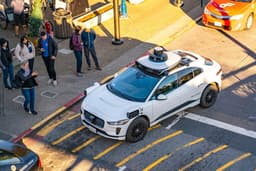
Waymo Unveils 6th Generation Autonomous Driving Technology
- Technological Breakthrough: Waymo launches its 6th generation autonomous driving technology, leveraging nearly 200 million miles of fully autonomous data to enhance performance in complex road conditions, marking an acceleration in large-scale deployment and strengthening the company's competitive edge in the autonomous driving sector.
- Enhanced Perception Capabilities: The new system utilizes advanced lidar, radar, and external audio receivers to surpass human vision and hearing, capable of extracting critical details in bright lights and shadows, thereby improving safety and reliability.
- Cost Efficiency Optimization: The 6th generation Waymo Driver employs a 17-megapixel imaging technology that reduces the number of required cameras while maintaining obstruction-free operation in adverse weather conditions like snow and rain, thus lowering operational costs.
- Production Scale Expansion: Waymo is undergoing a significant transformation at its autonomous vehicle factory in Phoenix, aiming to produce tens of thousands of autonomous vehicles annually, demonstrating the company's ambition and potential in the autonomous driving market.
See More
Waymo Partners with DoorDash to Address Autonomous Vehicle Challenges
- Human Intervention Requirement: Waymo's pilot in Atlanta employs DoorDash drivers to close open doors on autonomous vehicles, highlighting that even advanced self-driving technology requires human intervention for basic operations, reflecting limitations in technological maturity.
- Economic Compensation Model: DoorDash drivers can earn $11.25 for closing Waymo doors, while Honk users in Los Angeles are offered up to $24, providing flexible income opportunities that support delivery workers financially.
- Operating Loss Overview: Alphabet's Other Bets segment reported an operating loss of $7.5 billion last year, which included a $2.1 billion stock-based compensation charge at Waymo, indicating significant financial pressure despite Waymo's $126 billion valuation.
- Market Expansion Plans: Waymo currently offers fully autonomous taxi services in six U.S. markets and plans to expand to several more this year, demonstrating its ongoing investment and leadership position in the autonomous driving sector.
See More
Waymo Hires Gig Workers to Close Robotaxi Doors
- Gig Economy Utilization: Waymo is piloting a program in Atlanta that pays gig workers from DoorDash and Honk between $11.25 and $24 to close robotaxi doors left ajar by passengers, thereby enhancing operational efficiency of its autonomous vehicles.
- Human Dependency in Tech: Despite its advanced autonomous technology, Waymo's reliance on human intervention for basic tasks highlights the necessity of human involvement in high-tech sectors, which may impact its long-term profitability.
- Market Expansion Plans: Waymo plans to expand into several new U.S. cities this year, currently offering fully autonomous robotaxi services in six markets, indicating its competitive edge and growth potential in the self-driving sector.
- Financial Disclosure: Alphabet's recent annual filing revealed that its Other Bets segment incurred an operating loss of $7.5 billion last year, including a $2.1 billion stock-based compensation charge at Waymo, reflecting the high costs and risks associated with technology development.
See More
Alphabet and Amazon: Top Stocks to Buy Now
- Google Search Engine Advantage: Alphabet (GOOGL) holds a dominant position as the primary search engine globally, leveraging AI to drive search growth, with its cloud computing revenue surging 48% last quarter, indicating strong market demand and profitability.
- Capital Expenditure Plans: Alphabet plans to invest between $175 billion and $185 billion in capital expenditures in 2023, particularly on its proprietary TPU chips, which provide a cost advantage in the AI sector, thereby enhancing its return on investment.
- Amazon E-commerce Growth: Amazon (AMZN) drives a 24% increase in operating income in its North American e-commerce business, with a 10% rise in sales, showcasing its dominant market position and operational efficiency through a robust logistics network.
- Cloud Computing Market Leadership: Amazon Web Services (AWS) sees a 24% revenue growth last quarter, marking an acceleration in its cloud computing sector, while committing to $200 billion in capital expenditures in 2023 to meet the rising demand for infrastructure and AI services.
See More
Alphabet Leverages AI for Profit Growth
- Search Revenue Growth: Google Search revenue grew 17% year-over-year to $63 billion, demonstrating its strong performance as Alphabet's largest growth engine, accounting for over 55% of total revenue, which boosts investor confidence in its stock.
- Increased User Engagement: Since the launch of Gemini 3's AI Mode search feature, the number of queries per user in the U.S. has doubled, indicating high user acceptance of the new feature and further solidifying Google's competitive advantage in the search market.
- Increased Advertising Opportunities: As user searches become longer and more conversational, Google has more opportunities to display ads, thereby increasing revenue and continuously reinvesting in AI capabilities to ensure long-term growth potential.
- Investment and Profit Pressure: While higher spending on data centers may pressure near-term profitability, these investments will ultimately drive better AI and user experiences, ensuring sustained growth for the company, which currently trades at 28 times forward earnings estimates, highlighting its investment appeal.
See More
Alphabet's Century Bond for AI Funding Signals Major Tech Bet
- Major Investment Decision: Alphabet's (GOOG, GOOGL) choice to fund its AI capital expenditures with a $100 billion century bond represents a significant bet on a technology that is only three years old, reflecting the company's confidence in future tech advancements.
- Strong Market Response: The bond offering was oversubscribed by 10 times, indicating that despite historical challenges faced by similar century bond issuers, investor confidence in large tech firms remains robust, suggesting expectations for long-term returns.
- Historical Lessons Caution: Economic strategist Hardika Singh highlighted cautionary tales from JCPenney and General Motors, which faced bankruptcy after issuing long-term debt, warning investors to carefully assess whether Alphabet can maintain its market dominance over the next century.
- Broader Market Implications: Given the significant share of large tech companies in major indices, Singh questioned whether the market could continue to push toward all-time highs if these firms fail to sustain growth, hinting at potential market risks ahead.
See More