Tech Stocks Plummet, Investor Confidence Shaken
Written by Emily J. Thompson, Senior Investment Analyst
Updated: Feb 07 2026
0mins


Should l Buy NVDA?
Source: Fool
- Tech Sector Decline: Over the past week, major tech stocks have suffered significant losses, with AMD down nearly 21% and Intuit down over 17%, indicating a sharp decline in market confidence that could lead investors to reassess their portfolios.
- AI Fatigue Emerges: As investor optimism around artificial intelligence wanes, tech stocks have continued to decline over the past three months, with the Russell 1000 Value index up 8.4% while the tech-heavy Russell 1000 Growth index is down 3.7%, reflecting a shift in market preference towards value stocks.
- Microsoft's Earnings Fail to Boost Stock: Despite Microsoft beating Wall Street expectations in its earnings report, concerns over slowing cloud revenue led to an 11% drop in its stock on the day of the announcement, marking the largest single-day decline since March 2020 and highlighting the fragile confidence in tech stocks.
- Software Industry Challenges: With the rapid advancement of AI technology, there are concerns that AI could replace many software providers at lower costs, resulting in the IGV Software index dropping nearly a third from its September high, signaling intensified competition within the industry.
Trade with 70% Backtested Accuracy
Stop guessing "Should I Buy NVDA?" and start using high-conviction signals backed by rigorous historical data.
Sign up today to access powerful investing tools and make smarter, data-driven decisions.
Analyst Views on NVDA
Wall Street analysts forecast NVDA stock price to rise
41 Analyst Rating
39 Buy
1 Hold
1 Sell
Strong Buy
Current: 175.750

Low
200.00
Averages
264.97
High
352.00
Current: 175.750
Low
200.00
Averages
264.97
High
352.00
About NVDA
NVIDIA Corporation is an artificial intelligence (AI) infrastructure company. The Company is engaged in accelerated computing to help solve the challenging computational problems. Its segments include Compute & Networking and Graphics. The Compute & Networking segment includes its Data Center accelerated computing and networking platforms and AI solutions and software, and automotive platforms and autonomous and electric vehicle solutions, including software. The Graphics segment includes GeForce GPUs for gaming and personal computers (PCs), and Quadro/NVIDIA RTX GPUs for enterprise workstation graphics. Its technology stack includes the foundational NVIDIA CUDA development platform that runs on all NVIDIA GPUs, as well as hundreds of domain-specific software libraries, frameworks, algorithms, software development kits (SDKs), and application programming interfaces (APIs). Its platforms address four markets, which include Data Center, Gaming, Professional Visualization, and Automotive.
About the author

Emily J. Thompson
Emily J. Thompson, a Chartered Financial Analyst (CFA) with 12 years in investment research, graduated with honors from the Wharton School. Specializing in industrial and technology stocks, she provides in-depth analysis for Intellectia’s earnings and market brief reports.

Nvidia's Future Outlook Remains Bullish

- Strong Earnings Report: Nvidia reported total revenue of $215.9 billion for fiscal year 2026, marking a 65% year-over-year increase, which underscores the company's robust growth potential in the AI chip market and solidifies its market leadership.
- Surging Order Forecast: CEO Jensen Huang indicated that Nvidia expects approximately $1 trillion in purchase orders for its Blackwell and Vera Rubin chips by 2027, doubling last year's forecast of $500 billion, signaling sustained strong demand for AI chips.
- Future Revenue Expectations: Nvidia anticipates first-quarter revenue of $78 billion for fiscal year 2027, representing an almost 77% increase compared to the same period last year, reflecting strong growth potential in the Agentic AI applications sector, which will further drive demand for AI chips.
- High Market Valuation: Despite Nvidia's forward P/E ratio of 30, significantly above the average of 20.9 for the tech sector, investors believe the premium is justified given the company's outstanding financial results and its position in a rapidly growing market.
See More
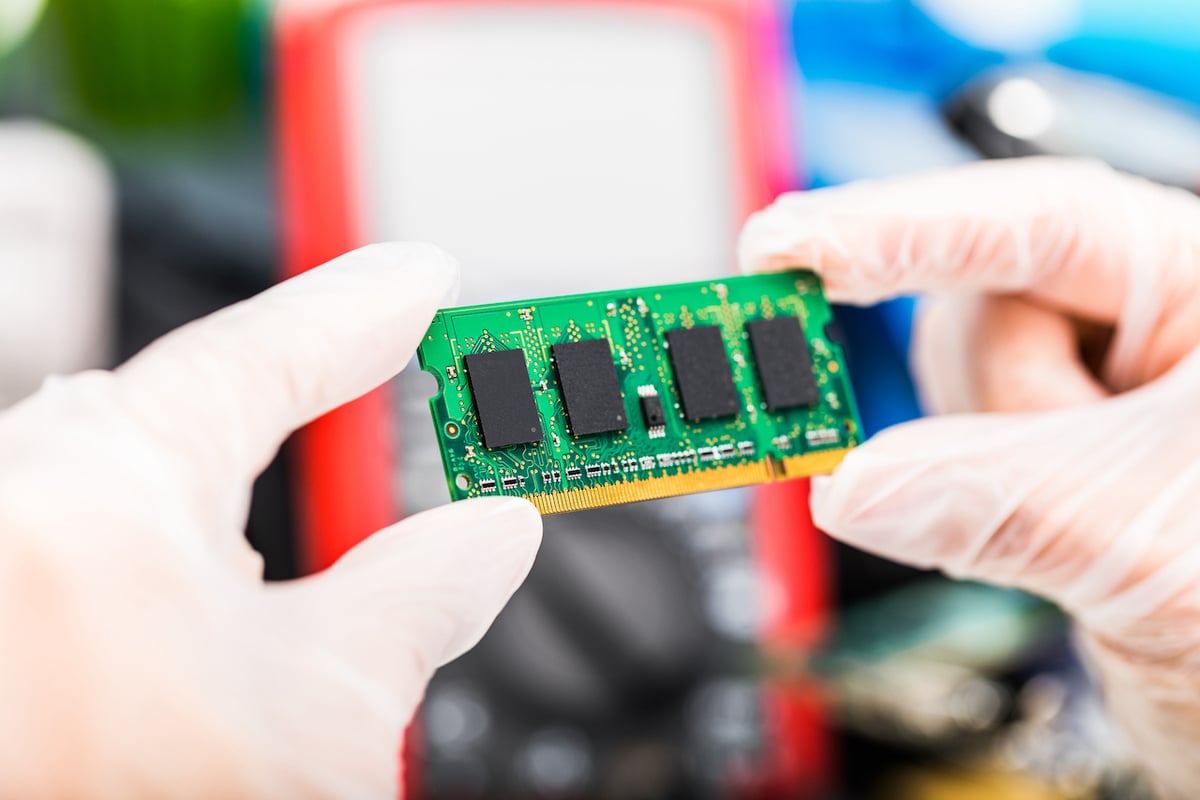
Can Micron Technology Reach a $1 Trillion Market Cap?


- Strong Market Demand: Micron Technology's market cap has surpassed $410 billion, with expectations of a 40% revenue growth by 2027 driven by surging AI demand, indicating a promising growth trajectory for the coming years.
- Share Buyback Plans: Management anticipates starting
See More

Micron Technology Faces Market Challenges and Opportunities
- Market Value Growth: Micron Technology's market cap has surpassed $410 billion, and despite a recent pullback, the company is expected to see significant profit growth by 2027 due to surging AI demand, indicating strong market potential.
- Supply Tightness Expectations: The company anticipates that supply-demand conditions will remain tight at least until 2027, with projected third-quarter revenue around $33.5 billion, a 40% increase from the second quarter, which will further drive stock price appreciation.
- Stock Buyback Plans: Cantor Fitzgerald expects Micron to initiate 'very aggressive' stock buybacks starting in December after restrictions from the CHIPS Act expire, which will help lift the stock price and provide lasting benefits to investors.
- Cyclical Market Risks: While Micron's growth outlook in the AI sector is optimistic, it still faces cyclical market volatility risks, and investors are concerned about potential cooling in pricing dynamics, necessitating close attention to how the company navigates these challenges.
See More

Two Utility Stocks Worth Buying This Month


- Brookfield Renewable Growth: As of the end of 2025, Brookfield Renewable operates 47 GW of renewable capacity and has over 200 GW of projects in development, with expected revenue CAGR of 22% from 2025 to 2028, indicating strong growth potential in the green energy market.
- Long-Term Contract Benefits: Brookfield has secured long-term renewable power agreements with hyperscalers like Microsoft and Google, incorporating inflation escalators in contracts to maintain profitability amid inflation, thereby reinforcing its market position.
- Rapid Growth of GE Vernova: Since its spin-off in 2024, GE Vernova's stock has surged nearly eightfold, with projected revenue CAGR of 15% and adjusted EBITDA CAGR of 55% from 2025 to 2028, reflecting strong demand in the power and electrification sectors.
- Demand-Driven Market Expansion: GE Vernova's Power and Electrification orders have seen double-digit growth over the past two years, driven by the expansion of cloud computing and AI markets, although its wind segment grows slower, the overall business will benefit from surging electricity demand.
See More

Nvidia Stock Pullback: Future Outlook Remains Positive
- Stock Price Context: Nvidia has been a top performer since 2023, but in 2026, it has seen a 20% decline, reflecting market concerns over geopolitical instability and the future of AI spending, which has shaken investor confidence.
- Historical Performance Insight: Since the AI arms race began in 2023, Nvidia has experienced four 20% pullbacks, each followed by a new all-time high within six months, demonstrating its strong recovery capability and market potential.
- Current Valuation Status: Nvidia's current P/E ratio stands at 19.9, lower than the S&P 500's 20.4, indicating its cheapest valuation in the past two years, with projected revenue growth of 71% this year and 30% next year, showcasing robust growth prospects.
- Investment Timing: Despite the current bearish market sentiment, analysts believe that elevated AI spending will continue, positioning Nvidia for potential new highs, making this an opportune time to invest in Nvidia stock.
See More

Nvidia's Outlook Bearish as Investors Panic Amid Market Concerns
- Market Confidence Shaken: Despite the multi-year growth trend of artificial intelligence (AI) buildout, Nvidia (NVDA) is underperforming in 2026, with its stock down approximately 20% from its all-time high, leading to investor panic as market confidence is affected by geopolitical instability.
- Historical Performance Review: Since 2023, Nvidia's stock has experienced four 20% declines from its all-time high, each time recovering to new highs within six months, indicating strong resilience, and while current market sentiment is bearish, historical data may provide reassurance to investors.
- AI Spending Outlook: 2026 is projected to be another record year for capital expenditures, and despite cautious market attitudes towards AI spending, demand for AI continues to rise, suggesting significant growth potential for Nvidia in the coming years as elevated AI spending is crucial for achieving future goals.
- Valuation Appeal: Nvidia's current price-to-earnings ratio stands at 19.9, lower than the S&P 500's 20.4, with Wall Street forecasting a 71% revenue growth this year and 30% next year, indicating that Nvidia's stock could rebound to new highs as long as AI spending remains robust.
See More
Nvidia's Future Outlook Remains Bullish
- Strong Earnings Report: Nvidia reported total revenue of $215.9 billion for fiscal year 2026, marking a 65% year-over-year increase, which underscores the company's robust growth potential in the AI chip market and solidifies its market leadership.
- Surging Order Forecast: CEO Jensen Huang indicated that Nvidia expects approximately $1 trillion in purchase orders for its Blackwell and Vera Rubin chips by 2027, doubling last year's forecast of $500 billion, signaling sustained strong demand for AI chips.
- Future Revenue Expectations: Nvidia anticipates first-quarter revenue of $78 billion for fiscal year 2027, representing an almost 77% increase compared to the same period last year, reflecting strong growth potential in the Agentic AI applications sector, which will further drive demand for AI chips.
- High Market Valuation: Despite Nvidia's forward P/E ratio of 30, significantly above the average of 20.9 for the tech sector, investors believe the premium is justified given the company's outstanding financial results and its position in a rapidly growing market.
See More
Can Micron Technology Reach a $1 Trillion Market Cap?
- Strong Market Demand: Micron Technology's market cap has surpassed $410 billion, with expectations of a 40% revenue growth by 2027 driven by surging AI demand, indicating a promising growth trajectory for the coming years.
- Share Buyback Plans: Management anticipates starting
See More
Micron Technology Faces Market Challenges and Opportunities
- Market Value Growth: Micron Technology's market cap has surpassed $410 billion, and despite a recent pullback, the company is expected to see significant profit growth by 2027 due to surging AI demand, indicating strong market potential.
- Supply Tightness Expectations: The company anticipates that supply-demand conditions will remain tight at least until 2027, with projected third-quarter revenue around $33.5 billion, a 40% increase from the second quarter, which will further drive stock price appreciation.
- Stock Buyback Plans: Cantor Fitzgerald expects Micron to initiate 'very aggressive' stock buybacks starting in December after restrictions from the CHIPS Act expire, which will help lift the stock price and provide lasting benefits to investors.
- Cyclical Market Risks: While Micron's growth outlook in the AI sector is optimistic, it still faces cyclical market volatility risks, and investors are concerned about potential cooling in pricing dynamics, necessitating close attention to how the company navigates these challenges.
See More
Two Utility Stocks Worth Buying This Month
- Brookfield Renewable Growth: As of the end of 2025, Brookfield Renewable operates 47 GW of renewable capacity and has over 200 GW of projects in development, with expected revenue CAGR of 22% from 2025 to 2028, indicating strong growth potential in the green energy market.
- Long-Term Contract Benefits: Brookfield has secured long-term renewable power agreements with hyperscalers like Microsoft and Google, incorporating inflation escalators in contracts to maintain profitability amid inflation, thereby reinforcing its market position.
- Rapid Growth of GE Vernova: Since its spin-off in 2024, GE Vernova's stock has surged nearly eightfold, with projected revenue CAGR of 15% and adjusted EBITDA CAGR of 55% from 2025 to 2028, reflecting strong demand in the power and electrification sectors.
- Demand-Driven Market Expansion: GE Vernova's Power and Electrification orders have seen double-digit growth over the past two years, driven by the expansion of cloud computing and AI markets, although its wind segment grows slower, the overall business will benefit from surging electricity demand.
See More
Nvidia Stock Pullback: Future Outlook Remains Positive
- Stock Price Context: Nvidia has been a top performer since 2023, but in 2026, it has seen a 20% decline, reflecting market concerns over geopolitical instability and the future of AI spending, which has shaken investor confidence.
- Historical Performance Insight: Since the AI arms race began in 2023, Nvidia has experienced four 20% pullbacks, each followed by a new all-time high within six months, demonstrating its strong recovery capability and market potential.
- Current Valuation Status: Nvidia's current P/E ratio stands at 19.9, lower than the S&P 500's 20.4, indicating its cheapest valuation in the past two years, with projected revenue growth of 71% this year and 30% next year, showcasing robust growth prospects.
- Investment Timing: Despite the current bearish market sentiment, analysts believe that elevated AI spending will continue, positioning Nvidia for potential new highs, making this an opportune time to invest in Nvidia stock.
See More
Nvidia's Outlook Bearish as Investors Panic Amid Market Concerns
- Market Confidence Shaken: Despite the multi-year growth trend of artificial intelligence (AI) buildout, Nvidia (NVDA) is underperforming in 2026, with its stock down approximately 20% from its all-time high, leading to investor panic as market confidence is affected by geopolitical instability.
- Historical Performance Review: Since 2023, Nvidia's stock has experienced four 20% declines from its all-time high, each time recovering to new highs within six months, indicating strong resilience, and while current market sentiment is bearish, historical data may provide reassurance to investors.
- AI Spending Outlook: 2026 is projected to be another record year for capital expenditures, and despite cautious market attitudes towards AI spending, demand for AI continues to rise, suggesting significant growth potential for Nvidia in the coming years as elevated AI spending is crucial for achieving future goals.
- Valuation Appeal: Nvidia's current price-to-earnings ratio stands at 19.9, lower than the S&P 500's 20.4, with Wall Street forecasting a 71% revenue growth this year and 30% next year, indicating that Nvidia's stock could rebound to new highs as long as AI spending remains robust.
See More