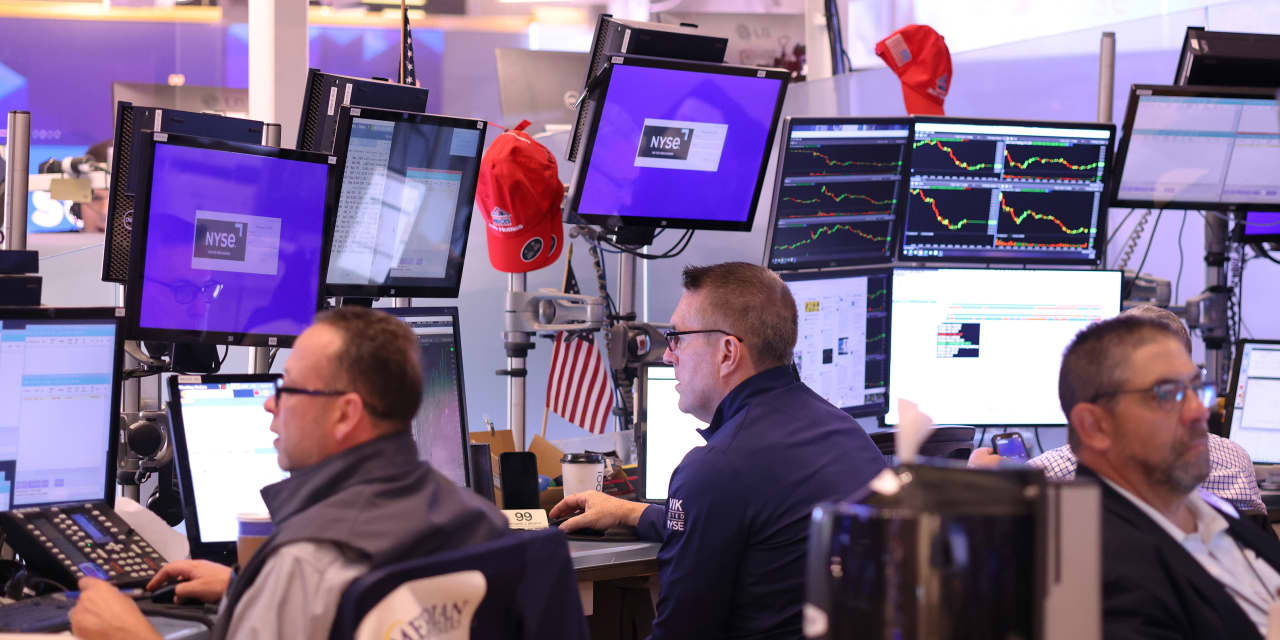
Semiconductor Stocks Surge, Defensive Stocks Under Pressure
Written by Emily J. Thompson, Senior Investment Analyst
Updated: May 15 2026
0mins

Source: CNBC
- Semiconductor Stocks Shine: Companies like Intel, Micron, and Seagate have surged over 40% in 2026, significantly exceeding their 200-day moving averages, indicating a robust momentum driven by AI and data center trades that are reshaping market dynamics.
- Storage Companies Benefit: Firms such as Seagate and Western Digital are favored by investors due to rising demand for memory and data infrastructure, further solidifying their market positions and reflecting a sustained preference for tech stocks.
- Defensive Stocks Under Pressure: Defensive consumer and healthcare stocks like Zoetis and Abbott are trading significantly below their long-term trends, illustrating a shift in investor preference towards high-beta tech stocks, resulting in severe overselling of these names.
- Cautious Sentiment in Software Sector: IT services and enterprise software companies, including Accenture and ServiceNow, feature prominently on the oversold list, indicating investor caution regarding the software trade amid slowing corporate spending and potential long-term disruptions from generative AI tools.
Trade with 70% Backtested Accuracy
Stop guessing "Should I Buy INTC?" and start using high-conviction signals backed by rigorous historical data.
Sign up today to access powerful investing tools and make smarter, data-driven decisions.
Analyst Views on INTC
Wall Street analysts forecast INTC stock price to fall
29 Analyst Rating
5 Buy
19 Hold
5 Sell
Hold
Current: 111.780

Low
20.00
Averages
39.30
High
52.00
Current: 111.780
Low
20.00
Averages
39.30
High
52.00
About INTC
Intel Corporation is a global designer and manufacturer of semiconductor products. The Company's segments include Intel Products, Intel Foundry, and All Other. Its Intel Products comprise Client Computing Group (CCG) and Data Center and AI (DCAI). CCG delivers platforms and processors that power PCs and edge devices, enabling enhanced performance, connectivity and user experience for consumer and commercial markets with capabilities that also support retail, industrial robotics and AI ecosystems at the edge. DCAI delivers workload-optimized solutions based upon its x86 architecture for data centers, including CPUs, AI accelerators, NICs, IPUs and custom ASICs, enabling performance and scalability for cloud, enterprise, telecommunication and HPC environments. The Intel Foundry segment comprises technology development, manufacturing and foundry services, developing new semiconductor process technologies and advanced packaging technologies. All Other segments include Mobileye and Other.
About the author

Emily J. Thompson
Emily J. Thompson, a Chartered Financial Analyst (CFA) with 12 years in investment research, graduated with honors from the Wharton School. Specializing in industrial and technology stocks, she provides in-depth analysis for Intellectia’s earnings and market brief reports.
Intel's Stock Soars 453% Amid Foundry Developments

- Government Support Boost: The U.S. government's announcement of an $8.9 billion equity investment to support the domestic semiconductor supply chain has enhanced Intel's market credibility, driving its stock price up 453% over the past 12 months.
- Customer Collaboration Potential: Intel is in discussions with Amazon and Alphabet to provide advanced chip packaging services and has reportedly struck a preliminary deal with Apple, which could significantly elevate Intel Foundry's market position if successful.
- Financial Challenges Emerge: Despite generating $5.4 billion in revenue for its foundry business in Q1 2026, Intel reported an operating loss of $2.4 billion, highlighting severe challenges in achieving profitability.
- Market Valuation Risks: Intel's enterprise value has surged to $568 billion, with an EBITDA multiple of 42, significantly higher than industry leader TSMC's 24, suggesting that market expectations for Intel's future growth may be overly optimistic.
See More
GitLab Reports Strong Revenue Growth Amid Workforce Cuts


- Significant Revenue Growth: GitLab reported a 23% year-over-year increase in fiscal Q1 revenue, reaching $264.2 million, exceeding the guidance of $253 million to $255 million, indicating strong growth within its customer base.
- Strong Customer Expansion: The company achieved a 30% growth in new customer acquisition, with a dollar-based net retention rate of 117%, demonstrating solid revenue growth from existing customers, particularly in the enterprise segment.
- Optimistic Future Outlook: GitLab raised its fiscal 2027 revenue guidance to between $1.112 billion and $1.118 billion, projecting a growth rate of 16% to 17%, while also increasing its adjusted EPS forecast, reflecting management's confidence in future performance.
- Organizational Restructuring: The company announced a 14% workforce reduction and exit from 22 countries, yet plans to increase the number of sales representatives, expecting a positive impact on sales performance in the second half of the year, indicating a strategic focus on operational efficiency while expanding market reach.
See More
Solana: The Next Potential Star of the Crypto Bull Run
- Market Performance Analysis: As of June 2, the total cryptocurrency market cap stands at $2.5 trillion, having fallen nearly 30% from last year's peak of $4.3 trillion, indicating significant market volatility and uncertainty, although history suggests a potential for price recovery.
- Growth Potential of Solana: With a market cap of approximately $46 billion, representing about 20% of Ethereum's, Solana has surged over 160% since June 2021, demonstrating its strong survival capabilities and growth potential in a competitive landscape.
- Technological Advantages and Use Cases: Solana's near-instant transaction settlement and minimal fees position it as a formidable competitor to traditional payment processors, making it ideal for high-volume applications like payments and AI agents, further driving the expansion of its ecosystem.
- Stablecoin Partnerships and Market Position: Solana has established multiple stablecoin partnerships with traditional financial firms, such as Western Union building its stablecoin on Solana, which not only strengthens its market position but also lays the groundwork for future mainstream adoption.
See More

Nvidia Slips Below $5 Trillion; Competitors Eye Market Value

- Nvidia's Market Dynamics: Nvidia became the first company to reach a $5 trillion market cap by late 2025, but after a recent pullback, it now sits just below that level, maintaining its position as the most valuable company globally, reflecting its strong leadership in the AI sector.
- Alphabet's Growth Momentum: Alphabet's market cap recently fell to $4.45 trillion after a stock market pullback, yet its first-quarter cloud revenue surged 63% year-over-year to $20 billion, indicating robust growth potential in the AI market.
- Microsoft's Challenge: With a market cap of around $3.1 trillion, Microsoft reported an 18% revenue increase to $82.9 billion in its third quarter, and its AI business reached a $37 billion annual revenue run rate, but catching Nvidia will require higher investor valuations and sustained cloud growth.
- Apple's Competitive Edge: Apple, valued at over $4.5 trillion, benefits from a vast installed base of over 2.5 billion active devices and strong iPhone demand, particularly with the upcoming new iPhone model and the overhaul of its AI assistant Siri, suggesting significant future growth potential.
See More

Stock Market Plummets as Tech Stocks Take a Hit

- Market Turmoil: The stock market faced a massive sell-off on Friday, with the S&P 500 and Nasdaq dropping 2.6% and 4.2%, respectively, breaking a nine-week winning streak and indicating investor anxiety over the Federal Reserve's interest rate policies.
- Tech Stock Struggles: Broadcom's stock plummeted 12.6% post-earnings, failing to meet high market expectations, which undermined investor confidence and exacerbated the overall decline in tech stocks.
- IPO Surge: SpaceX plans to issue 555.6 million shares at $135 each, raising approximately $75 billion and achieving a market value of $1.8 trillion, highlighting strong demand for high-tech companies but raising concerns about market oversupply.
- Investor Sentiment Dips: Following Alphabet's announcement of an $85 billion stock sale to fund AI investments, the market reacted negatively, with Meta Platforms also dropping over 6% due to potential dilution fears, reflecting investor apprehension about equity dilution.
See More
Nvidia Enters CPU Market, Challenging Intel and AMD
- New CPU Challenge: Nvidia's launch of the standalone Vera CPU, which completes tasks 1.8 times faster than x86 processors, indicates its potential to manage AI agent tasks and could reshape the CPU market landscape.
- Significant Market Opportunity: With the standalone CPU market valued at approximately $200 billion, Nvidia forecasts $20 billion in revenue from standalone CPUs this year, showcasing its strong growth potential in this new market.
- Innovative Partnership with Microsoft: Nvidia's collaboration with Microsoft to introduce the RTX Spark superchip, which integrates a new custom CPU with the Blackwell GPU, aims to redefine the personal computing market and drive sales of premium products.
- Clear Strategic Goals: Nvidia has set its sights on becoming the world's leading CPU supplier, and while it may take time to penetrate various price points, its potential in the high-end market is undeniable.
See More
Intel's Stock Soars 453% Amid Foundry Developments
- Government Support Boost: The U.S. government's announcement of an $8.9 billion equity investment to support the domestic semiconductor supply chain has enhanced Intel's market credibility, driving its stock price up 453% over the past 12 months.
- Customer Collaboration Potential: Intel is in discussions with Amazon and Alphabet to provide advanced chip packaging services and has reportedly struck a preliminary deal with Apple, which could significantly elevate Intel Foundry's market position if successful.
- Financial Challenges Emerge: Despite generating $5.4 billion in revenue for its foundry business in Q1 2026, Intel reported an operating loss of $2.4 billion, highlighting severe challenges in achieving profitability.
- Market Valuation Risks: Intel's enterprise value has surged to $568 billion, with an EBITDA multiple of 42, significantly higher than industry leader TSMC's 24, suggesting that market expectations for Intel's future growth may be overly optimistic.
See More
GitLab Reports Strong Revenue Growth Amid Workforce Cuts
- Significant Revenue Growth: GitLab reported a 23% year-over-year increase in fiscal Q1 revenue, reaching $264.2 million, exceeding the guidance of $253 million to $255 million, indicating strong growth within its customer base.
- Strong Customer Expansion: The company achieved a 30% growth in new customer acquisition, with a dollar-based net retention rate of 117%, demonstrating solid revenue growth from existing customers, particularly in the enterprise segment.
- Optimistic Future Outlook: GitLab raised its fiscal 2027 revenue guidance to between $1.112 billion and $1.118 billion, projecting a growth rate of 16% to 17%, while also increasing its adjusted EPS forecast, reflecting management's confidence in future performance.
- Organizational Restructuring: The company announced a 14% workforce reduction and exit from 22 countries, yet plans to increase the number of sales representatives, expecting a positive impact on sales performance in the second half of the year, indicating a strategic focus on operational efficiency while expanding market reach.
See More
Solana: The Next Potential Star of the Crypto Bull Run
- Market Performance Analysis: As of June 2, the total cryptocurrency market cap stands at $2.5 trillion, having fallen nearly 30% from last year's peak of $4.3 trillion, indicating significant market volatility and uncertainty, although history suggests a potential for price recovery.
- Growth Potential of Solana: With a market cap of approximately $46 billion, representing about 20% of Ethereum's, Solana has surged over 160% since June 2021, demonstrating its strong survival capabilities and growth potential in a competitive landscape.
- Technological Advantages and Use Cases: Solana's near-instant transaction settlement and minimal fees position it as a formidable competitor to traditional payment processors, making it ideal for high-volume applications like payments and AI agents, further driving the expansion of its ecosystem.
- Stablecoin Partnerships and Market Position: Solana has established multiple stablecoin partnerships with traditional financial firms, such as Western Union building its stablecoin on Solana, which not only strengthens its market position but also lays the groundwork for future mainstream adoption.
See More
Nvidia Slips Below $5 Trillion; Competitors Eye Market Value
- Nvidia's Market Dynamics: Nvidia became the first company to reach a $5 trillion market cap by late 2025, but after a recent pullback, it now sits just below that level, maintaining its position as the most valuable company globally, reflecting its strong leadership in the AI sector.
- Alphabet's Growth Momentum: Alphabet's market cap recently fell to $4.45 trillion after a stock market pullback, yet its first-quarter cloud revenue surged 63% year-over-year to $20 billion, indicating robust growth potential in the AI market.
- Microsoft's Challenge: With a market cap of around $3.1 trillion, Microsoft reported an 18% revenue increase to $82.9 billion in its third quarter, and its AI business reached a $37 billion annual revenue run rate, but catching Nvidia will require higher investor valuations and sustained cloud growth.
- Apple's Competitive Edge: Apple, valued at over $4.5 trillion, benefits from a vast installed base of over 2.5 billion active devices and strong iPhone demand, particularly with the upcoming new iPhone model and the overhaul of its AI assistant Siri, suggesting significant future growth potential.
See More
Stock Market Plummets as Tech Stocks Take a Hit
- Market Turmoil: The stock market faced a massive sell-off on Friday, with the S&P 500 and Nasdaq dropping 2.6% and 4.2%, respectively, breaking a nine-week winning streak and indicating investor anxiety over the Federal Reserve's interest rate policies.
- Tech Stock Struggles: Broadcom's stock plummeted 12.6% post-earnings, failing to meet high market expectations, which undermined investor confidence and exacerbated the overall decline in tech stocks.
- IPO Surge: SpaceX plans to issue 555.6 million shares at $135 each, raising approximately $75 billion and achieving a market value of $1.8 trillion, highlighting strong demand for high-tech companies but raising concerns about market oversupply.
- Investor Sentiment Dips: Following Alphabet's announcement of an $85 billion stock sale to fund AI investments, the market reacted negatively, with Meta Platforms also dropping over 6% due to potential dilution fears, reflecting investor apprehension about equity dilution.
See More
Nvidia Enters CPU Market, Challenging Intel and AMD
- New CPU Challenge: Nvidia's launch of the standalone Vera CPU, which completes tasks 1.8 times faster than x86 processors, indicates its potential to manage AI agent tasks and could reshape the CPU market landscape.
- Significant Market Opportunity: With the standalone CPU market valued at approximately $200 billion, Nvidia forecasts $20 billion in revenue from standalone CPUs this year, showcasing its strong growth potential in this new market.
- Innovative Partnership with Microsoft: Nvidia's collaboration with Microsoft to introduce the RTX Spark superchip, which integrates a new custom CPU with the Blackwell GPU, aims to redefine the personal computing market and drive sales of premium products.
- Clear Strategic Goals: Nvidia has set its sights on becoming the world's leading CPU supplier, and while it may take time to penetrate various price points, its potential in the high-end market is undeniable.
See More