

Scorpio Tankers Sells Three Vessels and Charters Out Two
Scorpio Tankers announced that it has entered into agreements to sell three product tankers and time charter-out two product tankers. Vessel Sales. Company has entered into agreements to sell two 2015 built scrubber-fitted MR product tankers, STI Seneca and STI Osceola, for $35.0M per vessel and a 2015 built scrubber-fitted LR2 product tanker, STI Solidarity, for $60.0M. The sale of these vessels is expected to close within the Q1 or Q2. The vessels are currently financed on the Company's 2023 $1.0B Credit Facility with an aggregate outstanding debt balance of $20.2B. The Company has entered into agreements to time charter-out two LR2 product tankers, STI Lombard and STI Rambla. The term of the agreement for STI Lombard is five years at a rate of $33,000 per day. The term of the agreement for STI Rambla is eight years at a rate of $30,500 per day. These charters are expected to commence in the Q1 or Q2.
Trade with 70% Backtested Accuracy
Analyst Views on STNG

About STNG
About the author


Amazon Joins AI Stocks in Investment Portfolio


- Portfolio Update: Amazon was added to the SwingTrader portfolio on Thursday, indicating its ongoing market appeal and is expected to further enhance its stock performance.
- Industry Leaders: Cadence Design Systems and GE Vernova were also included, with the former's design software playing a crucial role in advanced semiconductors and the latter's gas turbines powering data centers, highlighting a focus on technology and energy sectors.
- Excellent Ratings: Both Amazon and Cadence Design Systems received an IBD Composite Rating of 98 out of a possible 99, reflecting their strong competitiveness and investor confidence in the industry.
- Market Trends: As the AI and semiconductor sectors rapidly evolve, the inclusion of these stocks may attract more investor attention, further boosting market enthusiasm in these areas.
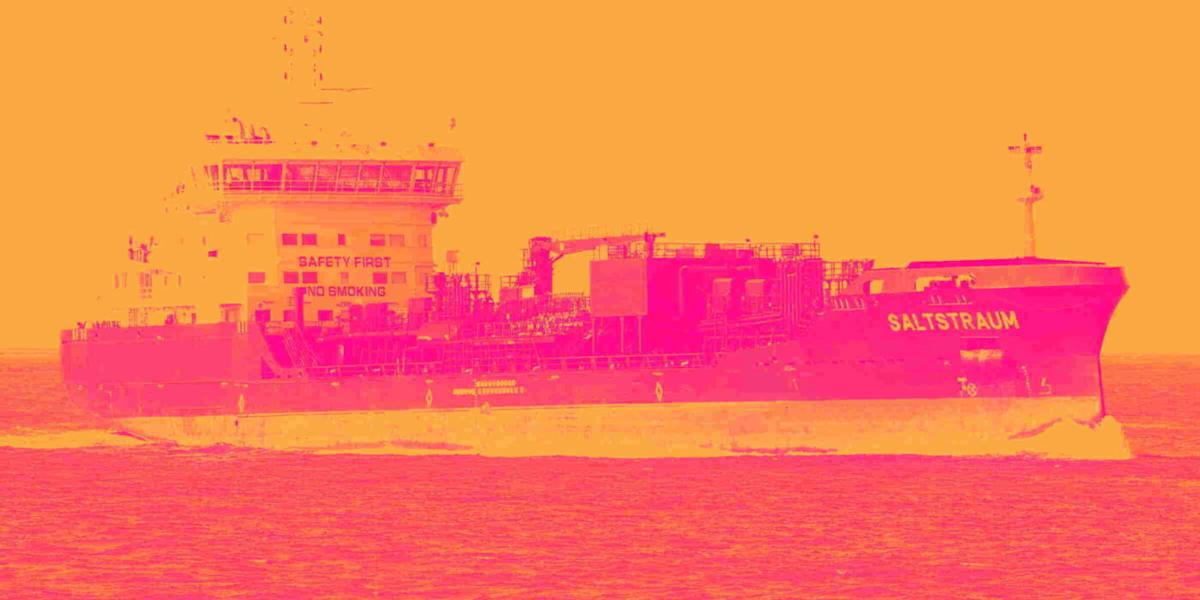
Scorpio Tankers Q1 Performance Exceeds Expectations
- Performance Exceeds Expectations: Scorpio Tankers reported Q1 revenue of $303 million, surpassing analyst estimates of $285 million with a 48.4% year-on-year growth, indicating strong market performance and profitability.
- Strong Cash Flow: CEO Emanuele Lauro emphasized the company's ability to generate substantial free cash flow even under market stress, attributed to effective asset management and financing strategies, enhancing financial stability.
- Operational Efficiency Improvement: Adjusted EPS reached $3.02, exceeding the expected $2.62, with an operating margin of 72.4%, significantly up from 29.6% in the same quarter last year, reflecting success in cost control and efficiency enhancements.
- Optimistic Market Outlook: As global product inventories rebuild and demand normalizes, Scorpio Tankers will closely monitor market dynamics in the coming quarters, particularly focusing on vessel sales and buyback execution to ensure sustained profitability and competitive positioning.
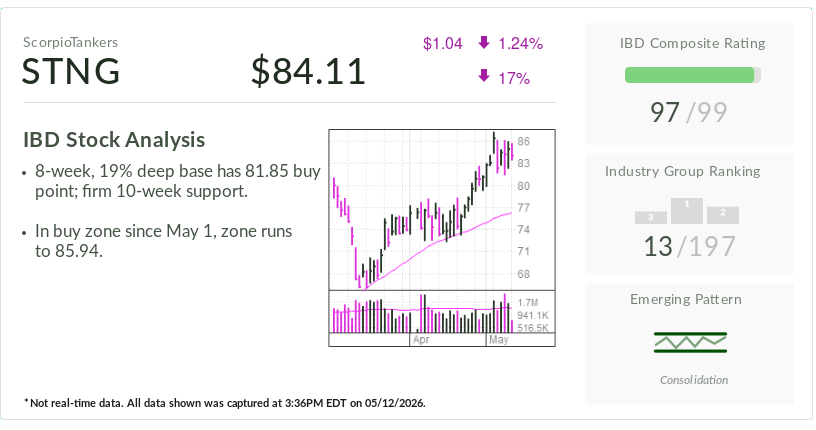
Scorpio Tankers Stock Soars 65% Amid Rising Demand from Iran Conflict

- Stock Performance: Scorpio Tankers' stock has surged 65% recently, currently trading in a buy zone, indicating strong market demand and investor confidence.
- Demand Surge: The geopolitical tensions from the Iran conflict have significantly increased tanker transportation demand, driving improvements in the company's performance and stock price.
- Market Dynamics: The closure of the Strait of Hormuz has intensified global tanker transportation pressures, enhancing Scorpio Tankers' competitive position in the market and likely attracting more investor attention.
- Strategic Implications: With soaring freight rates, Scorpio Tankers is not only poised to enhance profitability but may also capture a larger market share amid future market fluctuations, solidifying its industry leadership.
Scorpio Tankers to Issue $150 Million 1.75% Convertible Notes
- Financing Plan: Scorpio Tankers plans to issue $150 million of 1.75% convertible senior notes due in 2031, aiming to strengthen its capital structure and provide funding for future expansion.
- Bond Features: The notes carry a 1.75% interest rate, and their convertible nature allows investors to convert them into company stock in the future, offering flexible financing options and reducing overall financing costs.
- Market Reaction: This financing initiative may attract investors interested in fixed-income opportunities, particularly in the current interest rate environment, providing a relatively low-risk investment option and enhancing the company's appeal in capital markets.
- Strategic Implications: By issuing these bonds, Scorpio Tankers not only optimizes its capital structure but also secures funding for future vessel acquisitions and operational expenses, further solidifying its competitive position in the shipping industry.

Scorpio Tankers Prices $200M Convertible Notes Offering
- Increased Convertible Notes Offering: Scorpio Tankers has successfully priced a $200 million offering of 1.75% convertible senior notes, up from the previously announced $150 million, indicating strong market confidence in its financing needs, with the offering expected to close on May 12, 2026.
- Interest Rate and Accrued Interest: The new notes are priced at 110.25% of par, with approximately $1.56 in accrued interest per $1,000 principal from April 10 to May 11, 2026, enhancing investor yield expectations and making the offering more attractive.
- Stock Buyback Initiative: Concurrently, the company will repurchase 649,427 shares at $84.69 each, a move that not only aims to boost earnings per share but also reflects management's confidence in the stock's value.
- Future Growth Outlook: Scorpio Tankers anticipates approximately 3% fleet growth over the next three years and has authorized a $500 million buyback, demonstrating a proactive expansion strategy in the oil transportation market.

Scorpio Tankers Inc. Prices $200 Million Convertible Notes Offering
- Increased Offering Size: Scorpio Tankers Inc. has raised the size of its convertible notes offering from $150 million to $200 million, reflecting strong market confidence in its financing needs and providing greater financial flexibility for future growth.
- Yield and Interest Rate: The newly issued notes carry an annual interest rate of 1.75%, with an expected yield to maturity of approximately 1.0%, which will help lower the company's financing costs while offering investors stable returns, enhancing their attractiveness.
- Stock Buyback Plan: The company plans to use $55 million of the net proceeds to repurchase 649,427 shares of common stock at a price of $84.69 per share, a move that not only supports earnings per share but may also provide price support for the stock.
- Future Outlook: The offering is expected to close on May 12, 2026, and if the initial purchaser exercises its option to purchase additional notes, net proceeds could reach $248.8 million, further strengthening the company's capital structure and supporting its long-term growth strategy.
Amazon Joins AI Stocks in Investment Portfolio
- Portfolio Update: Amazon was added to the SwingTrader portfolio on Thursday, indicating its ongoing market appeal and is expected to further enhance its stock performance.
- Industry Leaders: Cadence Design Systems and GE Vernova were also included, with the former's design software playing a crucial role in advanced semiconductors and the latter's gas turbines powering data centers, highlighting a focus on technology and energy sectors.
- Excellent Ratings: Both Amazon and Cadence Design Systems received an IBD Composite Rating of 98 out of a possible 99, reflecting their strong competitiveness and investor confidence in the industry.
- Market Trends: As the AI and semiconductor sectors rapidly evolve, the inclusion of these stocks may attract more investor attention, further boosting market enthusiasm in these areas.
Scorpio Tankers Q1 Performance Exceeds Expectations
- Performance Exceeds Expectations: Scorpio Tankers reported Q1 revenue of $303 million, surpassing analyst estimates of $285 million with a 48.4% year-on-year growth, indicating strong market performance and profitability.
- Strong Cash Flow: CEO Emanuele Lauro emphasized the company's ability to generate substantial free cash flow even under market stress, attributed to effective asset management and financing strategies, enhancing financial stability.
- Operational Efficiency Improvement: Adjusted EPS reached $3.02, exceeding the expected $2.62, with an operating margin of 72.4%, significantly up from 29.6% in the same quarter last year, reflecting success in cost control and efficiency enhancements.
- Optimistic Market Outlook: As global product inventories rebuild and demand normalizes, Scorpio Tankers will closely monitor market dynamics in the coming quarters, particularly focusing on vessel sales and buyback execution to ensure sustained profitability and competitive positioning.
Scorpio Tankers Stock Soars 65% Amid Rising Demand from Iran Conflict
- Stock Performance: Scorpio Tankers' stock has surged 65% recently, currently trading in a buy zone, indicating strong market demand and investor confidence.
- Demand Surge: The geopolitical tensions from the Iran conflict have significantly increased tanker transportation demand, driving improvements in the company's performance and stock price.
- Market Dynamics: The closure of the Strait of Hormuz has intensified global tanker transportation pressures, enhancing Scorpio Tankers' competitive position in the market and likely attracting more investor attention.
- Strategic Implications: With soaring freight rates, Scorpio Tankers is not only poised to enhance profitability but may also capture a larger market share amid future market fluctuations, solidifying its industry leadership.
Scorpio Tankers to Issue $150 Million 1.75% Convertible Notes
- Financing Plan: Scorpio Tankers plans to issue $150 million of 1.75% convertible senior notes due in 2031, aiming to strengthen its capital structure and provide funding for future expansion.
- Bond Features: The notes carry a 1.75% interest rate, and their convertible nature allows investors to convert them into company stock in the future, offering flexible financing options and reducing overall financing costs.
- Market Reaction: This financing initiative may attract investors interested in fixed-income opportunities, particularly in the current interest rate environment, providing a relatively low-risk investment option and enhancing the company's appeal in capital markets.
- Strategic Implications: By issuing these bonds, Scorpio Tankers not only optimizes its capital structure but also secures funding for future vessel acquisitions and operational expenses, further solidifying its competitive position in the shipping industry.
Scorpio Tankers Prices $200M Convertible Notes Offering
- Increased Convertible Notes Offering: Scorpio Tankers has successfully priced a $200 million offering of 1.75% convertible senior notes, up from the previously announced $150 million, indicating strong market confidence in its financing needs, with the offering expected to close on May 12, 2026.
- Interest Rate and Accrued Interest: The new notes are priced at 110.25% of par, with approximately $1.56 in accrued interest per $1,000 principal from April 10 to May 11, 2026, enhancing investor yield expectations and making the offering more attractive.
- Stock Buyback Initiative: Concurrently, the company will repurchase 649,427 shares at $84.69 each, a move that not only aims to boost earnings per share but also reflects management's confidence in the stock's value.
- Future Growth Outlook: Scorpio Tankers anticipates approximately 3% fleet growth over the next three years and has authorized a $500 million buyback, demonstrating a proactive expansion strategy in the oil transportation market.
Scorpio Tankers Inc. Prices $200 Million Convertible Notes Offering
- Increased Offering Size: Scorpio Tankers Inc. has raised the size of its convertible notes offering from $150 million to $200 million, reflecting strong market confidence in its financing needs and providing greater financial flexibility for future growth.
- Yield and Interest Rate: The newly issued notes carry an annual interest rate of 1.75%, with an expected yield to maturity of approximately 1.0%, which will help lower the company's financing costs while offering investors stable returns, enhancing their attractiveness.
- Stock Buyback Plan: The company plans to use $55 million of the net proceeds to repurchase 649,427 shares of common stock at a price of $84.69 per share, a move that not only supports earnings per share but may also provide price support for the stock.
- Future Outlook: The offering is expected to close on May 12, 2026, and if the initial purchaser exercises its option to purchase additional notes, net proceeds could reach $248.8 million, further strengthening the company's capital structure and supporting its long-term growth strategy.




