Reliance Jio inks deal with Elon Musk’s Starlink for satellite internet in India By Investing.com
Written by Emily J. Thompson, Senior Investment Analyst
Updated: Mar 12 2025
0mins
Source: Investing.com
Jio and Starlink Partnership: Reliance Jio has signed a deal with Elon Musk's Starlink to provide satellite internet services in India, following a similar agreement by Bharti Airtel. Both companies await government approval for their operations.
Market Competition and Pricing: The entry of Starlink into the Indian market poses a threat to established telecom providers like Jio and Airtel, especially given India's low broadband rates, which may force Starlink to lower its pricing significantly from its current U.S. rate of $120 per month.
Trade with 70% Backtested Accuracy
Stop guessing "Should I Buy TSLA?" and start using high-conviction signals backed by rigorous historical data.
Sign up today to access powerful investing tools and make smarter, data-driven decisions.
Analyst Views on TSLA
Wall Street analysts forecast TSLA stock price to rise
30 Analyst Rating
12 Buy
11 Hold
7 Sell
Hold
Current: 381.590

Low
25.28
Averages
401.93
High
600.00
Current: 381.590
Low
25.28
Averages
401.93
High
600.00
About TSLA
Tesla, Inc. designs, develops, manufactures, sells and leases high-performance fully electric vehicles and energy generation and storage systems, and offers services related to its products. Its segments include automotive, and energy generation and storage. The automotive segment includes the design, development, manufacturing, sales and leasing of high-performance fully electric vehicles, and sales of automotive regulatory credits. It also includes sales of used vehicles, non-warranty maintenance services and collisions, part sales, paid supercharging, insurance services revenue and retail merchandise sales. The energy generation and storage segment include the design, manufacture, installation, sales and leasing of solar energy generation and energy storage products and related services and sales of solar energy systems incentives. Its consumer vehicles include the Model 3, Y, S, X and Cybertruck. Its lithium-ion battery energy storage products include Powerwall and Megapack.
About the author

Emily J. Thompson
Emily J. Thompson, a Chartered Financial Analyst (CFA) with 12 years in investment research, graduated with honors from the Wharton School. Specializing in industrial and technology stocks, she provides in-depth analysis for Intellectia’s earnings and market brief reports.
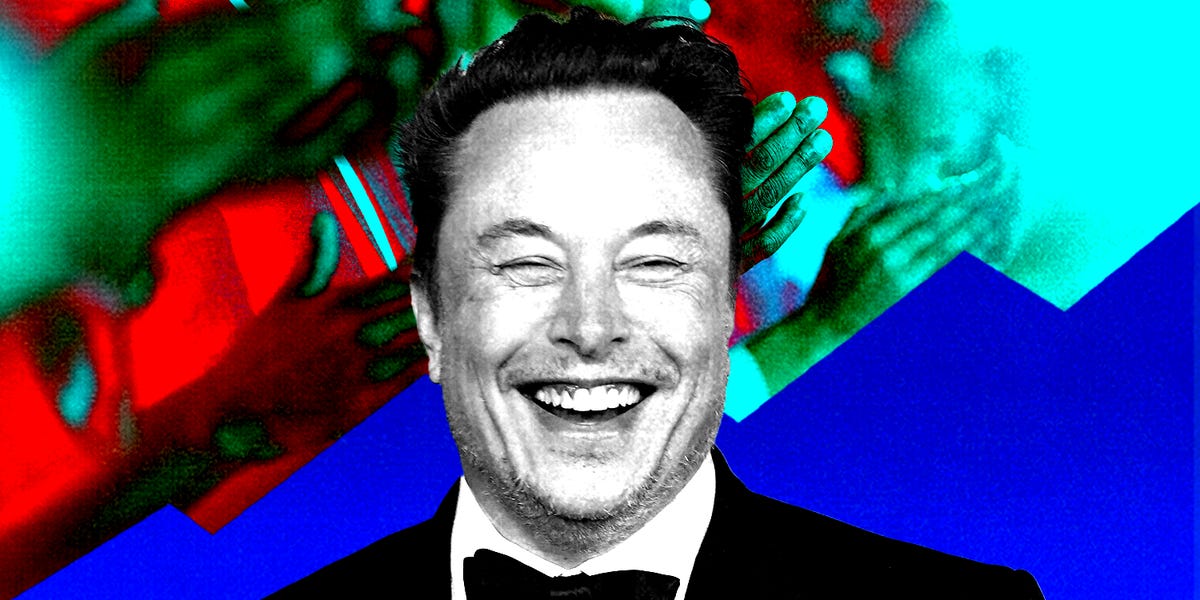
Tesla Gains Approval for FSD Software in Europe

- Regulatory Approval Progress: Belgium and Denmark have approved Tesla's Full Self-Driving Supervised software, marking a significant step forward for Tesla in the European market, particularly in regions where regulation typically moves slowly, showcasing the company's efforts in driving technology compliance.
- Market Access Expansion: Belgium's approval makes it one of the EU countries to authorize the system, joining the Netherlands, Lithuania, Estonia, and Denmark, thereby enhancing Tesla's competitive position in Europe and its ability to collect real-world driving data.
- Software Commercialization Potential: Tesla is striving to prove that software can become a crucial part of its business, especially as competition in electric vehicles intensifies; this approval provides more market opportunities and real-world driving data for the company.
- Future Outlook: As Tesla expands in Europe, investors should watch for approvals from more countries for the FSD Supervised software, which will have significant implications for Tesla's market strategy and long-term growth potential.
See More
Analysis of SpaceX's IPO Prospects and Market Potential
- Musk's Vision: SpaceX CEO Elon Musk emphasizes in the IPO prospectus that the company's mission is to build the systems and technologies necessary for a multiplanetary life; however, the timeline for achieving this vision remains unclear, potentially affecting investor confidence.
- Market Size Analysis: SpaceX's total addressable market is projected to reach $28.5 trillion, with only $370 billion related to rockets, while $1.6 trillion is linked to the Starlink internet service, highlighting the company's significant potential in the AI sector.
- Investor Caution: Although Musk is known for his bold predictions, history shows that many promises have not been met on time, prompting investors to carefully assess the gap between his future commitments and actual performance.
- Importance of AI Strategy: The long-term value of SpaceX does not solely depend on realizing a multiplanetary civilization but should focus more on its strategic positioning in AI, particularly the $22.7 trillion market potential in enterprise applications, which may offer investors more stable returns.
See More

SpaceX Launches Historic IPO, Musk Poised to Become First Trillionaire


- Historic IPO: SpaceX launched on Nasdaq with over 555 million shares priced at $135 each, expected to raise over $75 billion, marking the largest IPO in history with a valuation nearing $1.8 trillion, surpassing Tesla and Meta.
- Investor Enthusiasm: The IPO saw demand soar, being oversubscribed more than four times, with 20% of shares reserved for retail investors, reflecting strong market confidence in Musk and his ventures, likely creating thousands of new millionaires and several billionaires.
- Future Outlook: Despite projected revenues of $18.7 billion in 2025, SpaceX faces a net loss of $4.9 billion primarily due to heavy investments in AI, with future success hinging on the performance of its Starlink satellite internet service and xAI.
- Societal Impact: Musk's wealth stands at $782 billion, and if the IPO succeeds, he could become the first trillionaire in history; however, economists warn that such concentrated wealth could negatively impact both the economy and democracy.
See More

SpaceX Plans Historic $75 Billion IPO

- Record-Setting IPO: SpaceX plans to conduct an IPO on June 12, 2026, aiming to raise $75 billion at a valuation of $1.77 trillion, which would make it the largest IPO in history, reflecting immense market interest in the space sector.
- Significant Revenue Growth: SpaceX reported revenues of $10.4 billion in 2023, projected to rise to $14 billion in 2024 and $18.7 billion in 2025, despite a net loss of $4.9 billion in 2025, indicating a strong growth trajectory for the company.
- Diverse Business Segment Performance: The Connectivity segment, including Starlink, generated $11.4 billion in sales and $4.4 billion in operating income in 2025, making it the only profitable segment, while the AI segment faced a $6.4 billion operating loss, highlighting disparities in profitability across divisions.
- Valuation Challenges: Despite a staggering market cap of $1.77 trillion, equivalent to 95 times its 2025 sales, Morningstar values SpaceX at $780 billion, suggesting a significant divergence in market expectations regarding its future profitability.
See More
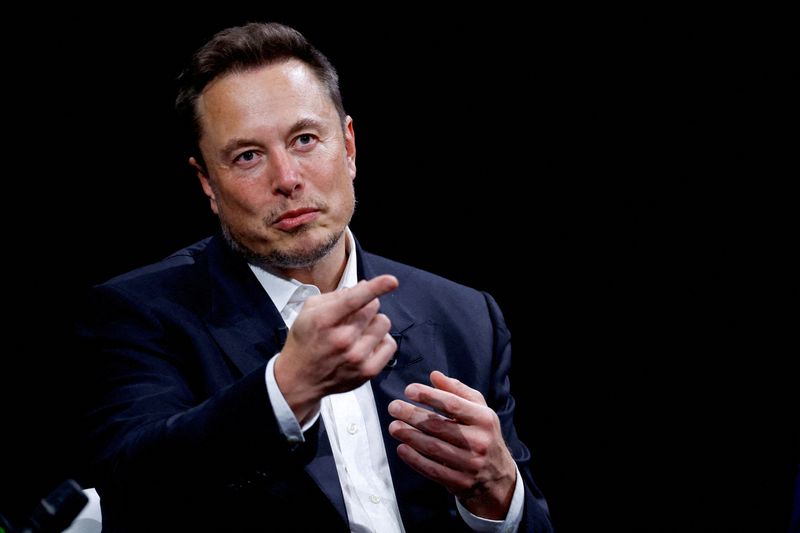
SpaceX Targets $1.77 Trillion Valuation for IPO
- IPO Valuation Analysis: SpaceX is targeting a $1.77 trillion valuation for its IPO on June 12, despite only generating $18.7 billion in sales in 2025, which translates to a staggering 95 times its sales, reflecting both high market expectations and inherent risks.
- Segment Performance Disparity: Among its three business segments, Starlink stands out as the only profitable one, generating $11.4 billion in sales and $4.4 billion in operating income in 2025, while the AI segment faces a significant operating loss of $6.4 billion, highlighting the varied profitability across its operations.
- Market Outlook and Risks: Although Starlink's revenue grew by 49.8% year-over-year, SpaceX remains unprofitable overall, reporting a net loss of $4.9 billion in 2025, prompting investors to carefully assess the potential returns post-IPO, especially given the anticipated market volatility.
- Investor Return Expectations: In an optimistic scenario, SpaceX could achieve annual returns of 25% to 30% by 2030, with a market cap reaching $5 trillion; however, the more likely outcome is modest returns or losses, as Morningstar values the company at $780 billion, significantly below the expected valuation.
See More
SpaceX Plans Historic $75 Billion IPO in 2026
- Record IPO Size: SpaceX plans to conduct an IPO on June 12, 2026, aiming to raise $75 billion at a valuation of $1.77 trillion, which would make it the largest IPO in history, highlighting strong market interest and investment potential in the space sector.
- Significant Revenue Growth: SpaceX's total revenue reached $10.4 billion in 2023, with projections of $14 billion in 2024 and $18.7 billion in 2025; despite a net loss of $4.9 billion in 2025, the upward revenue trend indicates the company's competitive position in the market.
- Diverse Business Segment Performance: SpaceX's Connectivity segment, including Starlink, generated $11.4 billion in sales and $4.4 billion in operating income in 2025, making it the only profitable segment, while the AI segment faced substantial losses, illustrating the varying profitability across its business lines.
- Valuation Challenges: Despite SpaceX's market cap of $1.77 trillion, equivalent to 95 times its 2025 sales, Morningstar values it at only $780 billion, reflecting cautious market sentiment regarding its future profitability and urging investors to carefully assess potential risks.
See More
Tesla Gains Approval for FSD Software in Europe
- Regulatory Approval Progress: Belgium and Denmark have approved Tesla's Full Self-Driving Supervised software, marking a significant step forward for Tesla in the European market, particularly in regions where regulation typically moves slowly, showcasing the company's efforts in driving technology compliance.
- Market Access Expansion: Belgium's approval makes it one of the EU countries to authorize the system, joining the Netherlands, Lithuania, Estonia, and Denmark, thereby enhancing Tesla's competitive position in Europe and its ability to collect real-world driving data.
- Software Commercialization Potential: Tesla is striving to prove that software can become a crucial part of its business, especially as competition in electric vehicles intensifies; this approval provides more market opportunities and real-world driving data for the company.
- Future Outlook: As Tesla expands in Europe, investors should watch for approvals from more countries for the FSD Supervised software, which will have significant implications for Tesla's market strategy and long-term growth potential.
See More
Analysis of SpaceX's IPO Prospects and Market Potential
- Musk's Vision: SpaceX CEO Elon Musk emphasizes in the IPO prospectus that the company's mission is to build the systems and technologies necessary for a multiplanetary life; however, the timeline for achieving this vision remains unclear, potentially affecting investor confidence.
- Market Size Analysis: SpaceX's total addressable market is projected to reach $28.5 trillion, with only $370 billion related to rockets, while $1.6 trillion is linked to the Starlink internet service, highlighting the company's significant potential in the AI sector.
- Investor Caution: Although Musk is known for his bold predictions, history shows that many promises have not been met on time, prompting investors to carefully assess the gap between his future commitments and actual performance.
- Importance of AI Strategy: The long-term value of SpaceX does not solely depend on realizing a multiplanetary civilization but should focus more on its strategic positioning in AI, particularly the $22.7 trillion market potential in enterprise applications, which may offer investors more stable returns.
See More
SpaceX Launches Historic IPO, Musk Poised to Become First Trillionaire
- Historic IPO: SpaceX launched on Nasdaq with over 555 million shares priced at $135 each, expected to raise over $75 billion, marking the largest IPO in history with a valuation nearing $1.8 trillion, surpassing Tesla and Meta.
- Investor Enthusiasm: The IPO saw demand soar, being oversubscribed more than four times, with 20% of shares reserved for retail investors, reflecting strong market confidence in Musk and his ventures, likely creating thousands of new millionaires and several billionaires.
- Future Outlook: Despite projected revenues of $18.7 billion in 2025, SpaceX faces a net loss of $4.9 billion primarily due to heavy investments in AI, with future success hinging on the performance of its Starlink satellite internet service and xAI.
- Societal Impact: Musk's wealth stands at $782 billion, and if the IPO succeeds, he could become the first trillionaire in history; however, economists warn that such concentrated wealth could negatively impact both the economy and democracy.
See More
SpaceX Plans Historic $75 Billion IPO
- Record-Setting IPO: SpaceX plans to conduct an IPO on June 12, 2026, aiming to raise $75 billion at a valuation of $1.77 trillion, which would make it the largest IPO in history, reflecting immense market interest in the space sector.
- Significant Revenue Growth: SpaceX reported revenues of $10.4 billion in 2023, projected to rise to $14 billion in 2024 and $18.7 billion in 2025, despite a net loss of $4.9 billion in 2025, indicating a strong growth trajectory for the company.
- Diverse Business Segment Performance: The Connectivity segment, including Starlink, generated $11.4 billion in sales and $4.4 billion in operating income in 2025, making it the only profitable segment, while the AI segment faced a $6.4 billion operating loss, highlighting disparities in profitability across divisions.
- Valuation Challenges: Despite a staggering market cap of $1.77 trillion, equivalent to 95 times its 2025 sales, Morningstar values SpaceX at $780 billion, suggesting a significant divergence in market expectations regarding its future profitability.
See More
SpaceX Targets $1.77 Trillion Valuation for IPO
- IPO Valuation Analysis: SpaceX is targeting a $1.77 trillion valuation for its IPO on June 12, despite only generating $18.7 billion in sales in 2025, which translates to a staggering 95 times its sales, reflecting both high market expectations and inherent risks.
- Segment Performance Disparity: Among its three business segments, Starlink stands out as the only profitable one, generating $11.4 billion in sales and $4.4 billion in operating income in 2025, while the AI segment faces a significant operating loss of $6.4 billion, highlighting the varied profitability across its operations.
- Market Outlook and Risks: Although Starlink's revenue grew by 49.8% year-over-year, SpaceX remains unprofitable overall, reporting a net loss of $4.9 billion in 2025, prompting investors to carefully assess the potential returns post-IPO, especially given the anticipated market volatility.
- Investor Return Expectations: In an optimistic scenario, SpaceX could achieve annual returns of 25% to 30% by 2030, with a market cap reaching $5 trillion; however, the more likely outcome is modest returns or losses, as Morningstar values the company at $780 billion, significantly below the expected valuation.
See More
SpaceX Plans Historic $75 Billion IPO in 2026
- Record IPO Size: SpaceX plans to conduct an IPO on June 12, 2026, aiming to raise $75 billion at a valuation of $1.77 trillion, which would make it the largest IPO in history, highlighting strong market interest and investment potential in the space sector.
- Significant Revenue Growth: SpaceX's total revenue reached $10.4 billion in 2023, with projections of $14 billion in 2024 and $18.7 billion in 2025; despite a net loss of $4.9 billion in 2025, the upward revenue trend indicates the company's competitive position in the market.
- Diverse Business Segment Performance: SpaceX's Connectivity segment, including Starlink, generated $11.4 billion in sales and $4.4 billion in operating income in 2025, making it the only profitable segment, while the AI segment faced substantial losses, illustrating the varying profitability across its business lines.
- Valuation Challenges: Despite SpaceX's market cap of $1.77 trillion, equivalent to 95 times its 2025 sales, Morningstar values it at only $780 billion, reflecting cautious market sentiment regarding its future profitability and urging investors to carefully assess potential risks.
See More