

Quantum Stocks Surge as Science Transitions to Commercialization


Investment Opportunities in Quantum Technology: Public investors now have more avenues to invest in quantum technology as the sector transitions from research to early market applications, with companies categorized into quantum computer makers, post-quantum security firms, software developers, and large tech firms involved in quantum research.
Performance of Quantum Firms: Leading pure-play quantum companies like IonQ, D-Wave Quantum, Rigetti Computing, and Quantum Computing Inc. are still pre-profit but have significant cash reserves to support R&D, while post-quantum security firms like SEALSQ and BTQ Technologies are already generating revenue with products that protect against future quantum threats.
Role of Large Tech Companies: Major global firms such as IBM, Microsoft, and Amazon are investing in quantum research as a long-term strategy, allowing investors to gain indirect exposure to quantum advancements with lower financial risk compared to smaller firms.
Market Outlook and Investor Considerations: Despite the early-stage nature of most public quantum firms and their low annual revenues relative to valuations, factors like cash runway, R&D progress, and customer contracts are crucial for investors looking to engage in this evolving field.
Trade with 70% Backtested Accuracy
Analyst Views on NVDA

About NVDA
About the author

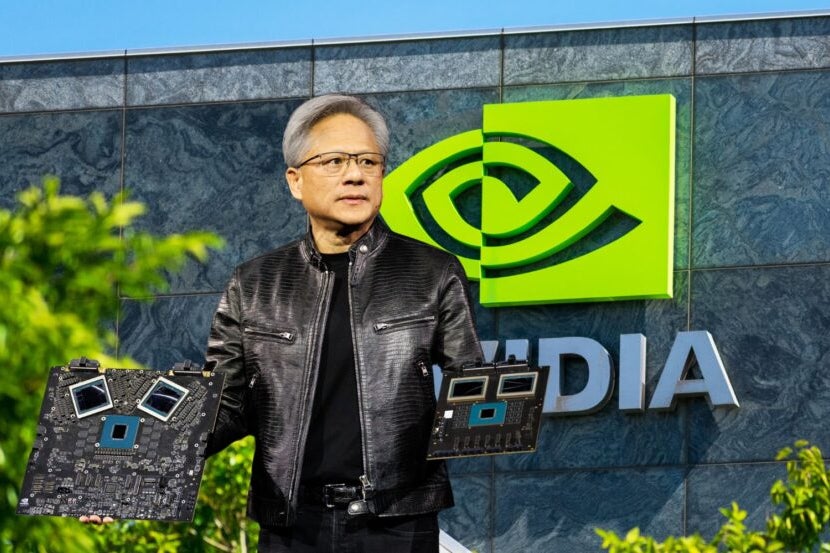
Foxconn Reports 39.8% Revenue Growth in Q2 Driven by AI Demand

- Significant Revenue Growth: Foxconn reported second-quarter revenue of T$2.513 trillion (approximately $78.71 billion), marking a 39.8% year-on-year increase that surpassed market expectations, indicating strong demand for AI products.
- AI Product Boost: The cloud and networking products division experienced robust growth driven by AI demand, while smart consumer electronics, including iPhones, also showed 'significant' growth, further solidifying the company's market position.
- Record June Performance: Foxconn's revenue in June alone rose 52.1% year-on-year to T$821.8 billion, setting a record for that month and reflecting strong market demand for its products.
- Cautious Future Outlook: Although the company anticipates continued revenue growth in the third quarter, it emphasizes the need to monitor the impact of volatile global political and economic conditions on its business, highlighting uncertainty in future markets.

Dow Jones Index Gains 8.9% in First Half of 2026
- Strong Dow Performance: The Dow Jones Industrial Average gained 8.9% in the first half of 2026, marking its best performance since 2021, indicating a robust recovery in the U.S. stock market that may attract more investor interest.
- ETF Investment Opportunity: The SPDR Dow Jones Industrial Average ETF (DIA) offers exposure to these 30 blue-chip stocks, boasting an annualized return of 22.5% over the past year, while maintaining a low expense ratio of 0.16%, though investors should be cautious of its concentration risk.
- Market Comparison Analysis: Compared to the S&P 500 and Nasdaq-100, DIA's portfolio is concentrated in 30 stocks, lacking diversification, which could expose investors to greater risks during market volatility, especially given the strong performance of tech stocks.
- Cautious Investment Advice: While the Dow is often viewed as a barometer of the U.S. stock market, analysts suggest that investors should consider a broader portfolio when selecting ETFs, particularly those with greater long-term growth potential, as DIA is not recommended as the best choice.

Micron Technology's Stock Soars with $2,200 Price Target


- Massive Market Opportunity: According to PwC analysts, the global opportunity for artificial intelligence is estimated at $15.7 trillion, highlighting the profound impact of technological advancements on the economy, particularly in the semiconductor sector.
- Stock Surge: Micron Technology's shares have surged nearly 700% over the past year and 1,850% since the beginning of 2023, indicating strong market confidence in its potential within the AI sector, likely attracting more investor interest.
- Analyst Optimism: Melius Research analyst Ben Reitzes raised Micron's price target from $700 to $2,200 in just two months, implying a market cap of $2.5 trillion, reflecting strong confidence in its future growth prospects.
- Strategic Agreements Secured: In the same week Reitzes raised the price target, Micron announced securing approximately $100 billion in strategic long-term agreements, further solidifying its position as a key supplier in AI-accelerated data centers, expected to drive future revenue growth.

Marvell Technology Stock Soars 129% Amid AI Growth Prospects


- Stock Surge: Marvell Technology's stock has surged 129% over the past three months, reflecting strong investor confidence in its growing prominence in the AI infrastructure sector, indicating a robust market outlook for future growth.
- Surge in Custom Chip Demand: The demand for Marvell's custom ASIC chips has skyrocketed due to their deployment in AI data centers, with projections suggesting that custom ASIC shipments could equal GPU sales next year, significantly boosting company revenues.
- Optical Networking Market Potential: The demand for optical networking products is vastly outpacing supply, with Goldman Sachs forecasting a 9x increase in sales over the next two years; Marvell's interconnect business is expected to grow by 70% this year, highlighting its critical role in AI data centers.
- Market Share Expectations: Marvell anticipates its total addressable market in data centers will reach $94 billion by 2028, aiming to capture 20% of this market, translating to over $19 billion in revenue, showcasing its strong potential in the rapidly expanding AI market.

Marvell Technology Seizes Growth Opportunities in AI Infrastructure
- Surge in Custom Chip Demand: Marvell's custom ASIC chip demand has surged due to deployment in AI data centers, with shipments expected to match GPU sales next year, highlighting its strong growth potential in the AI infrastructure market.
- Optical Networking Supply Shortage: As optical networking becomes a key bottleneck in AI data centers, Marvell's sales of optical networking components are projected to increase ninefold in two years, driving rapid growth in its data center interconnect and switching businesses.
- Earnings Expectations Raised: Analysts project Marvell's earnings to grow by 43% this fiscal year, and the company anticipates its total addressable market for data centers to reach $94 billion by 2028, indicating sustained growth capability in the coming years.
- Market Share Gains: Marvell expects to capture 20% of the data center market by 2028, translating to $19 billion in revenue, more than tripling its fiscal 2026 data center revenue of $6.1 billion, underscoring its long-term growth potential in the AI infrastructure sector.

Micron Technology Joins the Trillion-Dollar Club
- Surging Market Demand: Micron Technology's stock has surged nearly 700% over the past year and 1,850% since the beginning of 2023, driven by overwhelming demand for AI data center memory solutions, showcasing the company's robust performance in a rapidly growing market.
- Analyst Optimism: Ben Reitzes from Melius Research raised Micron's price target from $700 to $2,200 within two months, implying a market cap of nearly $2.5 trillion and a 126% upside from the July 2 closing price, reflecting strong market confidence in its future growth.
- Strategic Agreements Secured: In the same week, Micron announced securing approximately $100 billion in long-term strategic agreements for memory solutions, ensuring stable supply and reinforcing its position as a key supplier in AI-accelerated data centers, enhancing the company's pricing power.
- Industry Cyclicality Challenges: While Micron's long-term agreements mitigate past cyclicality, historical precedents indicate that disruptive technologies often face early-stage bubble-bursting risks, prompting investors to approach future market fluctuations with caution.
Foxconn Reports 39.8% Revenue Growth in Q2 Driven by AI Demand
- Significant Revenue Growth: Foxconn reported second-quarter revenue of T$2.513 trillion (approximately $78.71 billion), marking a 39.8% year-on-year increase that surpassed market expectations, indicating strong demand for AI products.
- AI Product Boost: The cloud and networking products division experienced robust growth driven by AI demand, while smart consumer electronics, including iPhones, also showed 'significant' growth, further solidifying the company's market position.
- Record June Performance: Foxconn's revenue in June alone rose 52.1% year-on-year to T$821.8 billion, setting a record for that month and reflecting strong market demand for its products.
- Cautious Future Outlook: Although the company anticipates continued revenue growth in the third quarter, it emphasizes the need to monitor the impact of volatile global political and economic conditions on its business, highlighting uncertainty in future markets.
Dow Jones Index Gains 8.9% in First Half of 2026
- Strong Dow Performance: The Dow Jones Industrial Average gained 8.9% in the first half of 2026, marking its best performance since 2021, indicating a robust recovery in the U.S. stock market that may attract more investor interest.
- ETF Investment Opportunity: The SPDR Dow Jones Industrial Average ETF (DIA) offers exposure to these 30 blue-chip stocks, boasting an annualized return of 22.5% over the past year, while maintaining a low expense ratio of 0.16%, though investors should be cautious of its concentration risk.
- Market Comparison Analysis: Compared to the S&P 500 and Nasdaq-100, DIA's portfolio is concentrated in 30 stocks, lacking diversification, which could expose investors to greater risks during market volatility, especially given the strong performance of tech stocks.
- Cautious Investment Advice: While the Dow is often viewed as a barometer of the U.S. stock market, analysts suggest that investors should consider a broader portfolio when selecting ETFs, particularly those with greater long-term growth potential, as DIA is not recommended as the best choice.
Micron Technology's Stock Soars with $2,200 Price Target
- Massive Market Opportunity: According to PwC analysts, the global opportunity for artificial intelligence is estimated at $15.7 trillion, highlighting the profound impact of technological advancements on the economy, particularly in the semiconductor sector.
- Stock Surge: Micron Technology's shares have surged nearly 700% over the past year and 1,850% since the beginning of 2023, indicating strong market confidence in its potential within the AI sector, likely attracting more investor interest.
- Analyst Optimism: Melius Research analyst Ben Reitzes raised Micron's price target from $700 to $2,200 in just two months, implying a market cap of $2.5 trillion, reflecting strong confidence in its future growth prospects.
- Strategic Agreements Secured: In the same week Reitzes raised the price target, Micron announced securing approximately $100 billion in strategic long-term agreements, further solidifying its position as a key supplier in AI-accelerated data centers, expected to drive future revenue growth.
Marvell Technology Stock Soars 129% Amid AI Growth Prospects
- Stock Surge: Marvell Technology's stock has surged 129% over the past three months, reflecting strong investor confidence in its growing prominence in the AI infrastructure sector, indicating a robust market outlook for future growth.
- Surge in Custom Chip Demand: The demand for Marvell's custom ASIC chips has skyrocketed due to their deployment in AI data centers, with projections suggesting that custom ASIC shipments could equal GPU sales next year, significantly boosting company revenues.
- Optical Networking Market Potential: The demand for optical networking products is vastly outpacing supply, with Goldman Sachs forecasting a 9x increase in sales over the next two years; Marvell's interconnect business is expected to grow by 70% this year, highlighting its critical role in AI data centers.
- Market Share Expectations: Marvell anticipates its total addressable market in data centers will reach $94 billion by 2028, aiming to capture 20% of this market, translating to over $19 billion in revenue, showcasing its strong potential in the rapidly expanding AI market.
Marvell Technology Seizes Growth Opportunities in AI Infrastructure
- Surge in Custom Chip Demand: Marvell's custom ASIC chip demand has surged due to deployment in AI data centers, with shipments expected to match GPU sales next year, highlighting its strong growth potential in the AI infrastructure market.
- Optical Networking Supply Shortage: As optical networking becomes a key bottleneck in AI data centers, Marvell's sales of optical networking components are projected to increase ninefold in two years, driving rapid growth in its data center interconnect and switching businesses.
- Earnings Expectations Raised: Analysts project Marvell's earnings to grow by 43% this fiscal year, and the company anticipates its total addressable market for data centers to reach $94 billion by 2028, indicating sustained growth capability in the coming years.
- Market Share Gains: Marvell expects to capture 20% of the data center market by 2028, translating to $19 billion in revenue, more than tripling its fiscal 2026 data center revenue of $6.1 billion, underscoring its long-term growth potential in the AI infrastructure sector.
Micron Technology Joins the Trillion-Dollar Club
- Surging Market Demand: Micron Technology's stock has surged nearly 700% over the past year and 1,850% since the beginning of 2023, driven by overwhelming demand for AI data center memory solutions, showcasing the company's robust performance in a rapidly growing market.
- Analyst Optimism: Ben Reitzes from Melius Research raised Micron's price target from $700 to $2,200 within two months, implying a market cap of nearly $2.5 trillion and a 126% upside from the July 2 closing price, reflecting strong market confidence in its future growth.
- Strategic Agreements Secured: In the same week, Micron announced securing approximately $100 billion in long-term strategic agreements for memory solutions, ensuring stable supply and reinforcing its position as a key supplier in AI-accelerated data centers, enhancing the company's pricing power.
- Industry Cyclicality Challenges: While Micron's long-term agreements mitigate past cyclicality, historical precedents indicate that disruptive technologies often face early-stage bubble-bursting risks, prompting investors to approach future market fluctuations with caution.




