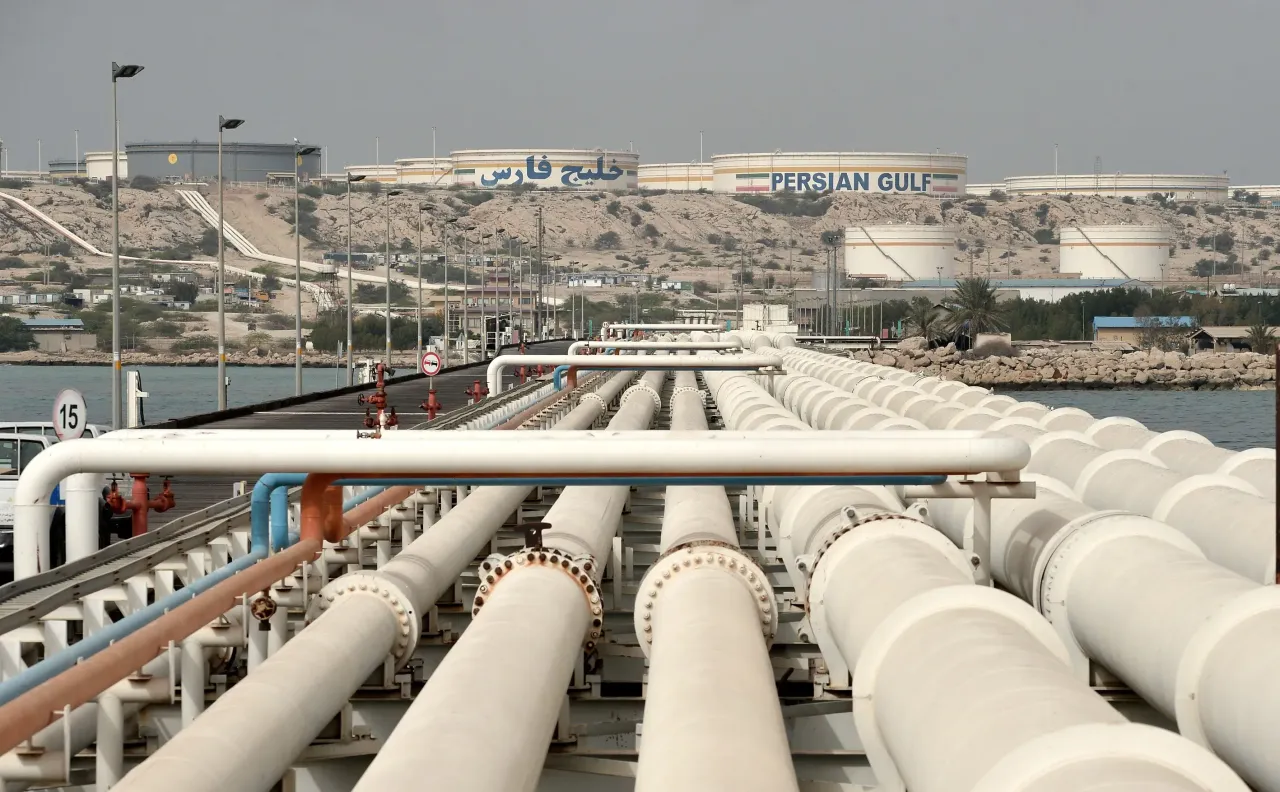
Oil Prices Set for Largest Monthly Gain Since 1990
Written by Emily J. Thompson, Senior Investment Analyst
Updated: 1 hour ago
0mins

Should l Buy INDO?
Source: stocktwits
- Oil Price Surge: Brent crude is nearing $105 per barrel and West Texas Intermediate is close to $93, driven by the near-total closure of the Strait of Hormuz, which has led to a significant reduction in global supply, setting the stage for the largest monthly gain since 1990, profoundly impacting the global energy market.
- Geopolitical Risks Intensify: Despite President Trump's claims of ongoing negotiations with Iran, Tehran has rejected proposals and is considering imposing transit fees on vessels, further tightening its grip on the Strait of Hormuz, which could lead to future supply chain instability.
- Positive Market Reaction: In premarket trading, Battalion Oil (BATL) rose about 8%, the United States Oil Fund (USO) gained roughly 3%, and both EON Resources (EONR) and Trio Petroleum (TPET) added around 3%, reflecting investor optimism regarding the rebound in oil prices.
- Supply Risk Alerts: Barclays warns that a prolonged closure of the Strait of Hormuz could remove 13 to 14 million barrels per day from global supply, increasing market sensitivity to disruptions and suggesting that oil prices may rise further in the coming months.
Trade with 70% Backtested Accuracy
Stop guessing "Should I Buy INDO?" and start using high-conviction signals backed by rigorous historical data.
Sign up today to access powerful investing tools and make smarter, data-driven decisions.
Analyst Views on INDO
About INDO
Indonesia Energy Corporation Limited is an independent energy company engaged in the oil and gas business. The Company holds two oil and gas assets through its subsidiaries in Indonesia: The Kruh Block and the Citarum Block. It has also identified a potential third exploration block known as the Rangkas area. The Kruh Block is a producing block covering approximately 258 square kilometers and is located 16 miles northwest of Pendopo, Pali, South Sumatra. Of the eight identified oil-bearing structures, three structures (North Kruh, Kruh, and West Kruh fields) have combined proved developed and undeveloped gross crude oil reserves of approximately 2.06 million barrels (with net crude oil proved reserves of over 1.18 million barrels) and probable undeveloped gross crude oil reserves of over 2.44 million barrels. The block has drilled over four oil discoveries and one gas discovery. The Citarum Block, an exploration block, spans an area of approximately 3,924.67 square kilometers.
About the author

Emily J. Thompson
Emily J. Thompson, a Chartered Financial Analyst (CFA) with 12 years in investment research, graduated with honors from the Wharton School. Specializing in industrial and technology stocks, she provides in-depth analysis for Intellectia’s earnings and market brief reports.
Oil Prices Set for Largest Monthly Gain Since 1990


- Oil Price Surge: Brent crude is nearing $105 per barrel and West Texas Intermediate is close to $93, driven by the near-total closure of the Strait of Hormuz, which has led to a significant reduction in global supply, setting the stage for the largest monthly gain since 1990, profoundly impacting the global energy market.
- Geopolitical Risks Intensify: Despite President Trump's claims of ongoing negotiations with Iran, Tehran has rejected proposals and is considering imposing transit fees on vessels, further tightening its grip on the Strait of Hormuz, which could lead to future supply chain instability.
- Positive Market Reaction: In premarket trading, Battalion Oil (BATL) rose about 8%, the United States Oil Fund (USO) gained roughly 3%, and both EON Resources (EONR) and Trio Petroleum (TPET) added around 3%, reflecting investor optimism regarding the rebound in oil prices.
- Supply Risk Alerts: Barclays warns that a prolonged closure of the Strait of Hormuz could remove 13 to 14 million barrels per day from global supply, increasing market sensitivity to disruptions and suggesting that oil prices may rise further in the coming months.
See More

Oil Prices Rise as Brent Holds Above $102 Amid Geopolitical Tensions
- Surge in Oil Prices: Brent crude has surged approximately 40% this month, surpassing $102 per barrel, primarily due to ongoing conflicts in the Strait of Hormuz that have led to output cuts, thereby triggering global energy supply concerns and impacting market expectations.
- Small-Cap Oil Stocks Active: In premarket trading, the United States Oil Fund (USO) rose over 1%, and Indonesia Energy (INDO) added nearly 1%, indicating investor interest in smaller exploration-linked stocks, while larger energy companies like Chevron (CVX) and Halliburton (HAL) showed muted movements.
- Supply Risks Widen: Countries like Chile, Japan, and Thailand have begun implementing measures to address rising fuel prices due to escalating tensions in the Middle East, highlighting growing global market concerns over energy supply chains, particularly with disruptions in the Strait of Hormuz.
- Shifting Market Sentiment: Despite the market's strong reaction to short-term oil price fluctuations, analysts note that the war premium remains embedded, with expectations that oil prices will stay above $100 per barrel in the near term, reflecting concerns over future supply tightness.
See More
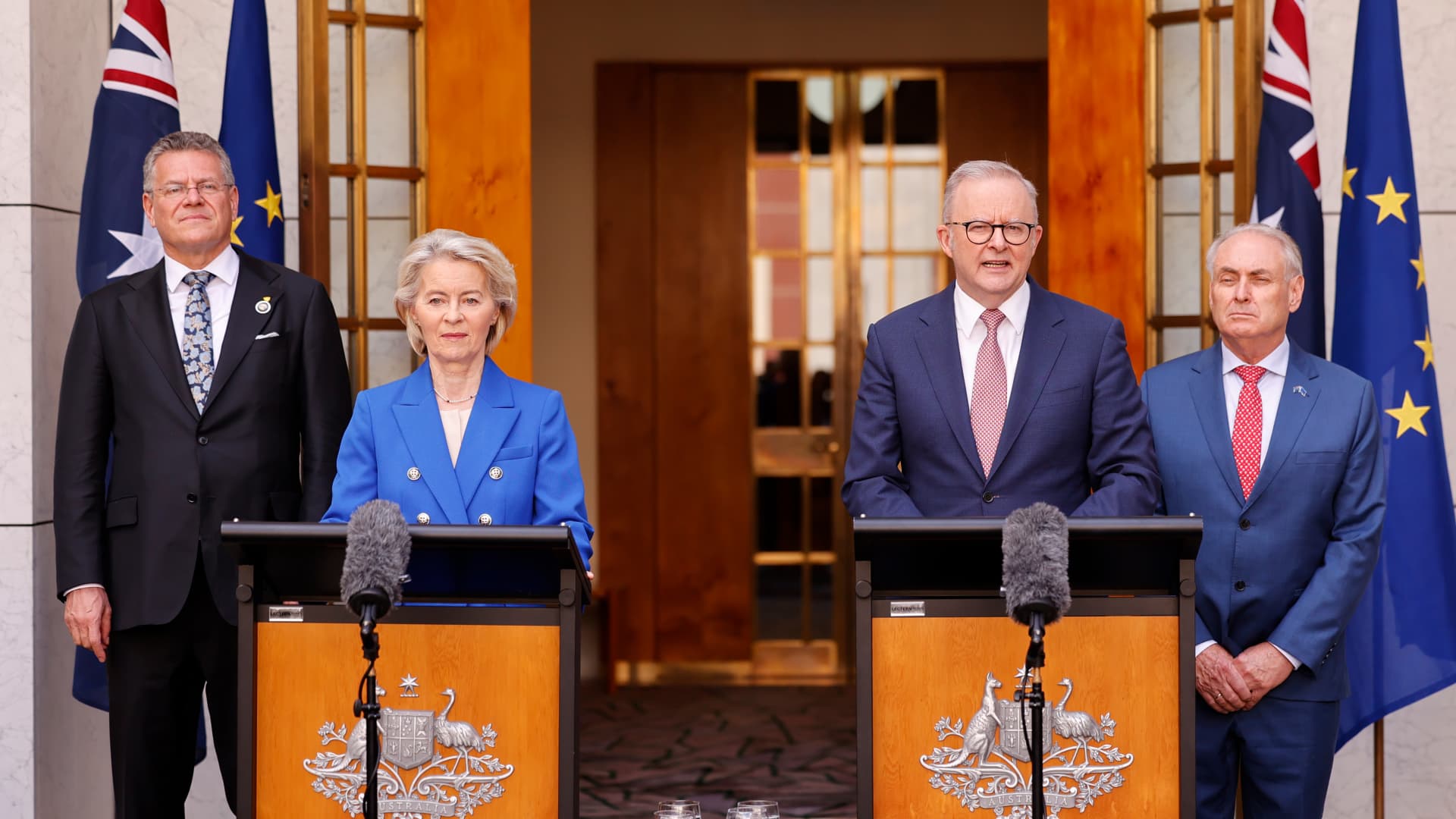
EU and Australia Reach Major Trade Agreement


- Tariff Reductions: The newly reached trade agreement will see the EU eliminate around 98% of tariffs on Australian goods, including wine, dairy, and seafood, while Australia will remove tariffs on over 99% of EU goods, significantly boosting bilateral trade.
- Export Growth Expectations: EU exports to Australia are projected to grow by up to 33% over the next decade, with annual export value reaching €17.7 billion ($20.5 billion), further enhancing the EU's economic influence in the Asia-Pacific region.
- Critical Mineral Supply Assurance: The agreement secures EU access to critical raw materials from Australia, such as aluminum, lithium, and manganese, which are vital for the EU's economic security amid rising global geopolitical uncertainties.
- Investment Growth Potential: According to the Australian government, investment from the EU is expected to increase by over 87%, solidifying the EU's position as Australia's second-largest source of foreign investment and fostering deeper economic integration between the two regions.
See More

INDONESIA ENERGY CORP LTD - PLANS TO START DRILLING FIRST NEW WELL AT KRUH BLOCK IN 60 DAYS
Drilling Announcement: Indonesia Energy Corp Ltd has commenced drilling the first new well at the Kruh Block.
Timeline: The drilling is expected to be completed within 60 days.
See More

Oil Prices Surge Amid Geopolitical Tensions, Market Reacts Strongly
- Oil Price Surge: Brent crude has surged over 50% since the escalation of the U.S.-Iran conflict in late February, currently trading above $113 per barrel, with market fears of supply disruptions intensifying, leading to widespread gains in major oil stocks during premarket trading.
- Major Stock Performance: Trio Petroleum (TPET) shares rose 15%, EON Resources (EONR) jumped 13%, the United States Oil Fund (USO) gained 4%, while Battalion Oil (BATL) and Indonesia Energy (INDO) each increased by 3%, reflecting investor optimism regarding rising oil prices.
- Supply Disruption Expectations: Analysts warn that disruptions in the Strait of Hormuz may persist, with UBS noting that even a planned 400-million-barrel strategic reserve release by OECD countries may not fully offset the impact, especially as refinery output cuts in the Middle East begin to affect Asian and European markets.
- Market Sentiment Shift: Despite BATL surging over 1,000% in the past year, retail sentiment on Stocktwits for USO, INDO, TPET, and BATL remains 'bearish', while EONR shows 'bullish' sentiment amid high message volume, indicating a divergence in market outlook.
See More

Oil Price Retreat Raises Market Concerns
- Oil Price Decline: Brent crude prices have eased toward $107 per barrel, while West Texas Intermediate hovers near $94, as signals of restraint from U.S. and Israeli leaders raise concerns about potential supply relief from Iran, intensifying market worries.
- Market Reaction: Shares of EON Resources (EONR) fell 6%, Battalion Oil (BATL) dropped 3%, and both the United States Oil Fund (USO) and Trio Petroleum (TPET) slipped 0.5%, reflecting the market's sensitivity to oil price fluctuations.
- Demand Warning: JPMorgan warns that if oil prices remain around $110, S&P 500 earnings estimates could decline by 2% to 5%, indicating that the market may be underestimating the potential impact of high oil prices on demand, which could slow economic growth.
- Economic Outlook Concerns: Economists highlight that sustained high oil prices could significantly raise recession risks, and while the U.S. economy shows resilience, the “surging oil prices” and geopolitical tensions should not be taken lightly.
See More
Oil Prices Set for Largest Monthly Gain Since 1990
- Oil Price Surge: Brent crude is nearing $105 per barrel and West Texas Intermediate is close to $93, driven by the near-total closure of the Strait of Hormuz, which has led to a significant reduction in global supply, setting the stage for the largest monthly gain since 1990, profoundly impacting the global energy market.
- Geopolitical Risks Intensify: Despite President Trump's claims of ongoing negotiations with Iran, Tehran has rejected proposals and is considering imposing transit fees on vessels, further tightening its grip on the Strait of Hormuz, which could lead to future supply chain instability.
- Positive Market Reaction: In premarket trading, Battalion Oil (BATL) rose about 8%, the United States Oil Fund (USO) gained roughly 3%, and both EON Resources (EONR) and Trio Petroleum (TPET) added around 3%, reflecting investor optimism regarding the rebound in oil prices.
- Supply Risk Alerts: Barclays warns that a prolonged closure of the Strait of Hormuz could remove 13 to 14 million barrels per day from global supply, increasing market sensitivity to disruptions and suggesting that oil prices may rise further in the coming months.
See More
Oil Prices Rise as Brent Holds Above $102 Amid Geopolitical Tensions
- Surge in Oil Prices: Brent crude has surged approximately 40% this month, surpassing $102 per barrel, primarily due to ongoing conflicts in the Strait of Hormuz that have led to output cuts, thereby triggering global energy supply concerns and impacting market expectations.
- Small-Cap Oil Stocks Active: In premarket trading, the United States Oil Fund (USO) rose over 1%, and Indonesia Energy (INDO) added nearly 1%, indicating investor interest in smaller exploration-linked stocks, while larger energy companies like Chevron (CVX) and Halliburton (HAL) showed muted movements.
- Supply Risks Widen: Countries like Chile, Japan, and Thailand have begun implementing measures to address rising fuel prices due to escalating tensions in the Middle East, highlighting growing global market concerns over energy supply chains, particularly with disruptions in the Strait of Hormuz.
- Shifting Market Sentiment: Despite the market's strong reaction to short-term oil price fluctuations, analysts note that the war premium remains embedded, with expectations that oil prices will stay above $100 per barrel in the near term, reflecting concerns over future supply tightness.
See More
EU and Australia Reach Major Trade Agreement
- Tariff Reductions: The newly reached trade agreement will see the EU eliminate around 98% of tariffs on Australian goods, including wine, dairy, and seafood, while Australia will remove tariffs on over 99% of EU goods, significantly boosting bilateral trade.
- Export Growth Expectations: EU exports to Australia are projected to grow by up to 33% over the next decade, with annual export value reaching €17.7 billion ($20.5 billion), further enhancing the EU's economic influence in the Asia-Pacific region.
- Critical Mineral Supply Assurance: The agreement secures EU access to critical raw materials from Australia, such as aluminum, lithium, and manganese, which are vital for the EU's economic security amid rising global geopolitical uncertainties.
- Investment Growth Potential: According to the Australian government, investment from the EU is expected to increase by over 87%, solidifying the EU's position as Australia's second-largest source of foreign investment and fostering deeper economic integration between the two regions.
See More
INDONESIA ENERGY CORP LTD - PLANS TO START DRILLING FIRST NEW WELL AT KRUH BLOCK IN 60 DAYS
Drilling Announcement: Indonesia Energy Corp Ltd has commenced drilling the first new well at the Kruh Block.
Timeline: The drilling is expected to be completed within 60 days.
See More
Oil Prices Surge Amid Geopolitical Tensions, Market Reacts Strongly
- Oil Price Surge: Brent crude has surged over 50% since the escalation of the U.S.-Iran conflict in late February, currently trading above $113 per barrel, with market fears of supply disruptions intensifying, leading to widespread gains in major oil stocks during premarket trading.
- Major Stock Performance: Trio Petroleum (TPET) shares rose 15%, EON Resources (EONR) jumped 13%, the United States Oil Fund (USO) gained 4%, while Battalion Oil (BATL) and Indonesia Energy (INDO) each increased by 3%, reflecting investor optimism regarding rising oil prices.
- Supply Disruption Expectations: Analysts warn that disruptions in the Strait of Hormuz may persist, with UBS noting that even a planned 400-million-barrel strategic reserve release by OECD countries may not fully offset the impact, especially as refinery output cuts in the Middle East begin to affect Asian and European markets.
- Market Sentiment Shift: Despite BATL surging over 1,000% in the past year, retail sentiment on Stocktwits for USO, INDO, TPET, and BATL remains 'bearish', while EONR shows 'bullish' sentiment amid high message volume, indicating a divergence in market outlook.
See More
Oil Price Retreat Raises Market Concerns
- Oil Price Decline: Brent crude prices have eased toward $107 per barrel, while West Texas Intermediate hovers near $94, as signals of restraint from U.S. and Israeli leaders raise concerns about potential supply relief from Iran, intensifying market worries.
- Market Reaction: Shares of EON Resources (EONR) fell 6%, Battalion Oil (BATL) dropped 3%, and both the United States Oil Fund (USO) and Trio Petroleum (TPET) slipped 0.5%, reflecting the market's sensitivity to oil price fluctuations.
- Demand Warning: JPMorgan warns that if oil prices remain around $110, S&P 500 earnings estimates could decline by 2% to 5%, indicating that the market may be underestimating the potential impact of high oil prices on demand, which could slow economic growth.
- Economic Outlook Concerns: Economists highlight that sustained high oil prices could significantly raise recession risks, and while the U.S. economy shows resilience, the “surging oil prices” and geopolitical tensions should not be taken lightly.
See More