Nvidia's Dominance in the AI Market Analyzed
Written by Emily J. Thompson, Senior Investment Analyst
Updated: 1 hour ago
0mins
Source: NASDAQ.COM
- Market Performance Analysis: Nvidia (NASDAQ: NVDA) has seen a roughly 10% increase in stock price since the beginning of the year, but with the S&P 500 rising nearly 9%, shareholders are barely outperforming the market, indicating cautious sentiment regarding future growth.
- Industry Standard Position: Nvidia's graphics processing units (GPUs) have become the benchmark for AI computing, having been utilized across various sectors for over 30 years, which positions the company favorably for significant future growth in computationally intensive workloads.
- Optimistic Long-Term Outlook: Nvidia's management projects that AI infrastructure spending will reach $1 trillion by 2027 and rise to $3 trillion to $4 trillion annually by 2030, establishing a solid foundation for the company's future performance growth.
- Attractive Valuation: Currently, Nvidia's forward P/E ratio stands at 22.9, slightly above the S&P 500's 21.5, but when factoring in next year's forecast results, its valuation drops to just 16 times earnings, creating a favorable opportunity for stock price recovery in the latter half of 2026.
Trade with 70% Backtested Accuracy
Stop guessing "Should I Buy NVDA?" and start using high-conviction signals backed by rigorous historical data.
Sign up today to access powerful investing tools and make smarter, data-driven decisions.
Analyst Views on NVDA
Wall Street analysts forecast NVDA stock price to rise
41 Analyst Rating
39 Buy
1 Hold
1 Sell
Strong Buy
Current: 207.410

Low
200.00
Averages
264.97
High
352.00
Current: 207.410
Low
200.00
Averages
264.97
High
352.00
About NVDA
NVIDIA Corporation is an artificial intelligence (AI) infrastructure company. The Company is engaged in accelerated computing to help solve the challenging computational problems. Its segments include Compute & Networking and Graphics. The Compute & Networking segment includes its Data Center accelerated computing and networking platforms and AI solutions and software, and automotive platforms and autonomous and electric vehicle solutions, including software. The Graphics segment includes GeForce GPUs for gaming and personal computers (PCs), and Quadro/NVIDIA RTX GPUs for enterprise workstation graphics. Its technology stack includes the foundational NVIDIA CUDA development platform that runs on all NVIDIA GPUs, as well as hundreds of domain-specific software libraries, frameworks, algorithms, software development kits (SDKs), and application programming interfaces (APIs). Its platforms address four markets, which include Data Center, Gaming, Professional Visualization, and Automotive.
About the author

Emily J. Thompson
Emily J. Thompson, a Chartered Financial Analyst (CFA) with 12 years in investment research, graduated with honors from the Wharton School. Specializing in industrial and technology stocks, she provides in-depth analysis for Intellectia’s earnings and market brief reports.
Nvidia's AI-Driven Growth Surges Significantly

- Stellar Financial Performance: Nvidia achieved a staggering 1,250% revenue increase and a 4,000% net income surge in 2023, driving a 1,320% rise in stock price, showcasing the company's robust performance and market dominance in AI.
- Data Center Growth: The company commands an 85% to 92% share of the data center GPU market, with global spending expected to reach $7 trillion by 2030, further solidifying Nvidia's leadership position in this booming sector.
- Optimistic Future Outlook: CEO Jensen Huang stated that Nvidia has visibility into $500 billion in sales over the next two years, with expectations to exceed $1 trillion in revenue by 2027, indicating strong growth potential ahead.
- Accelerated R&D Cycle: By shortening its GPU update cycle to 12-18 months compared to competitors' 3-5 years, Nvidia enhances its competitive edge in AI, with projections suggesting a market cap of $20 trillion by 2030.
See More
DGP Outperforms UGL in Five-Year Returns
- Return Comparison: DGP's five-year return of 242.93% significantly outpaces UGL's 200.29%, indicating DGP's structural advantage as an ETN, despite its direct credit risk tied to Deutsche Bank.
- Structural Differences: As an ETN issued by Deutsche Bank, DGP tracks an index calculation rather than holding physical futures, thus avoiding investor-level rolling costs, while UGL must roll futures contracts, which affects its performance due to contango or backwardation.
- Tax Implications: UGL holders receive a Schedule K-1 tax form, adding annual complexity, while DGP offers a 1099 form, simplifying tax handling and appealing to a broader investor base.
- Liquidity Considerations: UGL boasts larger asset size and tighter spreads, whereas DGP's smaller footprint can lead to wider bid-ask spreads during volatility, and the ETN carries closure or early redemption risks that UGL does not face.
See More

SpaceX Achieves Historic $1.77 Trillion IPO Valuation


- Historic IPO: SpaceX went public on June 12 with a valuation of $1.77 trillion, marking the largest IPO in history, and its current market cap has surged to $2.59 trillion, making it the fourth most valuable company globally, reflecting strong market expectations for its future growth.
- Valuation Risks: Despite SpaceX's market cap being 139 times its projected 2025 revenue, concerns arise over its high valuation as an unprofitable company, with a 33% revenue growth rate in 2025, particularly since its space and AI divisions remain in the red.
- Impact on AI Market: The IPO has drawn significant investor attention, leading to declines of 7% and 8% in Nvidia and Broadcom stocks over the past month, respectively, indicating that investors may be cashing out from high-flying AI stocks to fund their SpaceX purchases.
- Future IPO Implications: The performance of SpaceX's stock will set the tone for upcoming AI IPOs like OpenAI and Anthropic; if SpaceX maintains its high valuation, it could encourage frothy pricing for these IPOs, whereas a drop below its IPO price might lead to more conservative pricing strategies.
See More
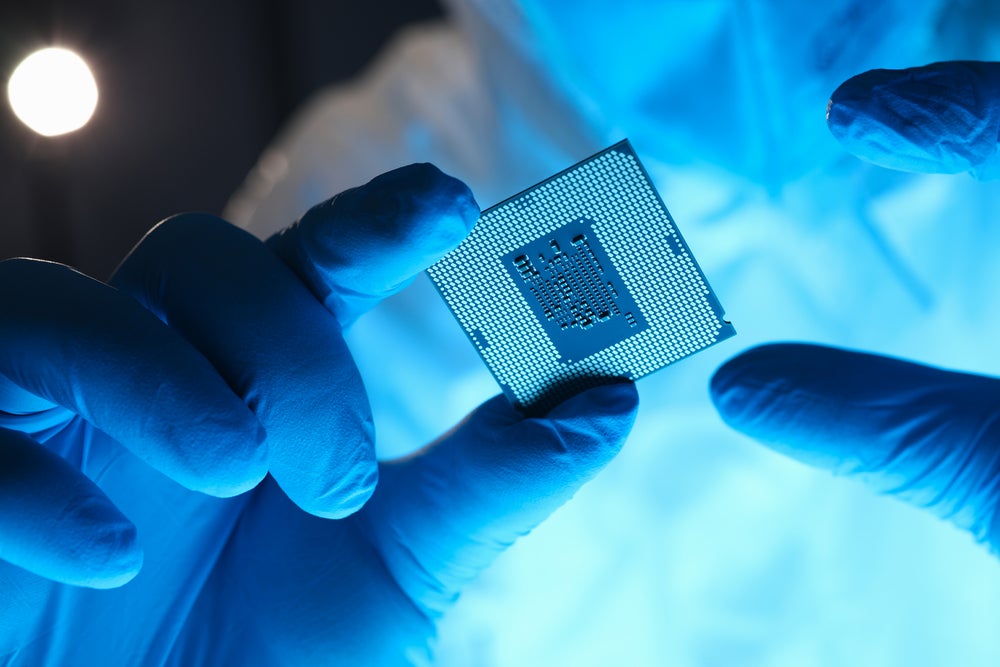
Intel's Market Comeback: Aiming for $5 Trillion Valuation

- Strategic Transformation Success: Under the leadership of its new CEO in 2025, Intel has focused on foundry operations and AI, resulting in a 7% year-over-year revenue increase to $13.6 billion in Q1, with adjusted EPS soaring 123% to $0.29, indicating a recovery in growth momentum.
- Major Partnership Agreements: Intel has reached a preliminary agreement with Apple to manufacture some chips for its flagship devices, while also securing an order for 3 million custom Tensor Processing Units (TPUs) from Alphabet for 2028, further solidifying its position in the AI chip market.
- Analyst Optimism for the Future: Global Equities Research analyst Trip Chowdhry maintains a buy rating with a $200 price target for Intel, suggesting a potential 70% upside over the next year, while also expressing a bullish long-term outlook for Intel in the AI inference and applications market.
- Significant Market Potential: Chowdhry projects Intel's EPS will reach $10 by 2030, and if the P/E ratio remains constant, the stock price could rise 848% to $1,100, pushing its market cap to $5.57 trillion, highlighting Intel's vast potential in the AI sector.
See More
SpaceX IPO's Impact on AI Market Dynamics
- Historic IPO: SpaceX went public on June 12 with a valuation of $1.77 trillion, making it the largest IPO in history, and its current market cap has surged to $2.59 trillion, reflecting high market expectations but also raising concerns about its valuation sustainability.
- Profitability Challenges: While SpaceX's Starlink division is profitable, its aerospace and AI segments remain unprofitable, and planned investments in these areas are likely to keep its bottom line in the red, prompting investors to reassess its long-term value.
- AI Market Fund Flow: The IPO has drawn significant investor attention, leading to declines of 7% and 8% in Nvidia and Broadcom stocks over the past month, indicating a shift of funds away from the AI market that could impact future growth potential for these companies.
- Impact on Future IPOs: SpaceX's performance will set the tone for upcoming AI IPOs; if its stock falters, it may lead to more conservative pricing for companies like OpenAI and Anthropic, thereby altering the investment landscape across the AI sector.
See More
Intel May Join $5 Trillion Club Alongside Nvidia
- Strategic Transformation: Under new CEO Lip-Bu Tan since early 2025, Intel has streamlined its operations to focus on foundry services and AI, resulting in a 7% year-over-year revenue increase to $13.6 billion in Q1 2026, indicating signs of recovery.
- Profitability Improvement: Intel's adjusted earnings per share (EPS) surged 123% to $0.29 in Q1, although it remains unprofitable on a GAAP basis, the company generated over $1 billion in operating cash flow, reflecting an improving financial position.
- Positive Market Outlook: Analyst Trip Chowdhry maintains a buy rating with a $200 price target for Intel, suggesting a potential upside of 70% over the next year, with projected EPS reaching $10 by 2030, which would elevate its market cap to $5 trillion.
- Shifting AI Market Dynamics: Chowdhry emphasizes that the AI market is transitioning from training to inference and applications, predicting that the inference and applications markets will be eight times larger than the training market, presenting significant growth opportunities for Intel, despite rising competition.
See More
Nvidia's AI-Driven Growth Surges Significantly
- Stellar Financial Performance: Nvidia achieved a staggering 1,250% revenue increase and a 4,000% net income surge in 2023, driving a 1,320% rise in stock price, showcasing the company's robust performance and market dominance in AI.
- Data Center Growth: The company commands an 85% to 92% share of the data center GPU market, with global spending expected to reach $7 trillion by 2030, further solidifying Nvidia's leadership position in this booming sector.
- Optimistic Future Outlook: CEO Jensen Huang stated that Nvidia has visibility into $500 billion in sales over the next two years, with expectations to exceed $1 trillion in revenue by 2027, indicating strong growth potential ahead.
- Accelerated R&D Cycle: By shortening its GPU update cycle to 12-18 months compared to competitors' 3-5 years, Nvidia enhances its competitive edge in AI, with projections suggesting a market cap of $20 trillion by 2030.
See More
DGP Outperforms UGL in Five-Year Returns
- Return Comparison: DGP's five-year return of 242.93% significantly outpaces UGL's 200.29%, indicating DGP's structural advantage as an ETN, despite its direct credit risk tied to Deutsche Bank.
- Structural Differences: As an ETN issued by Deutsche Bank, DGP tracks an index calculation rather than holding physical futures, thus avoiding investor-level rolling costs, while UGL must roll futures contracts, which affects its performance due to contango or backwardation.
- Tax Implications: UGL holders receive a Schedule K-1 tax form, adding annual complexity, while DGP offers a 1099 form, simplifying tax handling and appealing to a broader investor base.
- Liquidity Considerations: UGL boasts larger asset size and tighter spreads, whereas DGP's smaller footprint can lead to wider bid-ask spreads during volatility, and the ETN carries closure or early redemption risks that UGL does not face.
See More
SpaceX Achieves Historic $1.77 Trillion IPO Valuation
- Historic IPO: SpaceX went public on June 12 with a valuation of $1.77 trillion, marking the largest IPO in history, and its current market cap has surged to $2.59 trillion, making it the fourth most valuable company globally, reflecting strong market expectations for its future growth.
- Valuation Risks: Despite SpaceX's market cap being 139 times its projected 2025 revenue, concerns arise over its high valuation as an unprofitable company, with a 33% revenue growth rate in 2025, particularly since its space and AI divisions remain in the red.
- Impact on AI Market: The IPO has drawn significant investor attention, leading to declines of 7% and 8% in Nvidia and Broadcom stocks over the past month, respectively, indicating that investors may be cashing out from high-flying AI stocks to fund their SpaceX purchases.
- Future IPO Implications: The performance of SpaceX's stock will set the tone for upcoming AI IPOs like OpenAI and Anthropic; if SpaceX maintains its high valuation, it could encourage frothy pricing for these IPOs, whereas a drop below its IPO price might lead to more conservative pricing strategies.
See More
Intel's Market Comeback: Aiming for $5 Trillion Valuation
- Strategic Transformation Success: Under the leadership of its new CEO in 2025, Intel has focused on foundry operations and AI, resulting in a 7% year-over-year revenue increase to $13.6 billion in Q1, with adjusted EPS soaring 123% to $0.29, indicating a recovery in growth momentum.
- Major Partnership Agreements: Intel has reached a preliminary agreement with Apple to manufacture some chips for its flagship devices, while also securing an order for 3 million custom Tensor Processing Units (TPUs) from Alphabet for 2028, further solidifying its position in the AI chip market.
- Analyst Optimism for the Future: Global Equities Research analyst Trip Chowdhry maintains a buy rating with a $200 price target for Intel, suggesting a potential 70% upside over the next year, while also expressing a bullish long-term outlook for Intel in the AI inference and applications market.
- Significant Market Potential: Chowdhry projects Intel's EPS will reach $10 by 2030, and if the P/E ratio remains constant, the stock price could rise 848% to $1,100, pushing its market cap to $5.57 trillion, highlighting Intel's vast potential in the AI sector.
See More
SpaceX IPO's Impact on AI Market Dynamics
- Historic IPO: SpaceX went public on June 12 with a valuation of $1.77 trillion, making it the largest IPO in history, and its current market cap has surged to $2.59 trillion, reflecting high market expectations but also raising concerns about its valuation sustainability.
- Profitability Challenges: While SpaceX's Starlink division is profitable, its aerospace and AI segments remain unprofitable, and planned investments in these areas are likely to keep its bottom line in the red, prompting investors to reassess its long-term value.
- AI Market Fund Flow: The IPO has drawn significant investor attention, leading to declines of 7% and 8% in Nvidia and Broadcom stocks over the past month, indicating a shift of funds away from the AI market that could impact future growth potential for these companies.
- Impact on Future IPOs: SpaceX's performance will set the tone for upcoming AI IPOs; if its stock falters, it may lead to more conservative pricing for companies like OpenAI and Anthropic, thereby altering the investment landscape across the AI sector.
See More
Intel May Join $5 Trillion Club Alongside Nvidia
- Strategic Transformation: Under new CEO Lip-Bu Tan since early 2025, Intel has streamlined its operations to focus on foundry services and AI, resulting in a 7% year-over-year revenue increase to $13.6 billion in Q1 2026, indicating signs of recovery.
- Profitability Improvement: Intel's adjusted earnings per share (EPS) surged 123% to $0.29 in Q1, although it remains unprofitable on a GAAP basis, the company generated over $1 billion in operating cash flow, reflecting an improving financial position.
- Positive Market Outlook: Analyst Trip Chowdhry maintains a buy rating with a $200 price target for Intel, suggesting a potential upside of 70% over the next year, with projected EPS reaching $10 by 2030, which would elevate its market cap to $5 trillion.
- Shifting AI Market Dynamics: Chowdhry emphasizes that the AI market is transitioning from training to inference and applications, predicting that the inference and applications markets will be eight times larger than the training market, presenting significant growth opportunities for Intel, despite rising competition.
See More