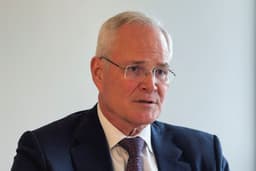
NioCorp Supports U.S. Strategic Critical Minerals Reserve Initiative

Catch up on the top industries and stocks that were impacted, or were predicted to be impacted, by the comments, actions and policies of President Donald Trump with this daily recap compiled by The Fly.FUNDING PACKAGE:The U.S. House of Representatives voted 217-214 to pass legislation funding major parts of the government and ending a partial shutdown, with the package heading to President Trump's desk, CBS News' Caitlin Yilek and Kaia Hubbard. The package includes five full-year spending bills and an extension of Department of Homeland Security funding through February 13, the authors say. Democrats are demanding changes to how immigration enforcement agencies such as ICE conduct their operations, with the issue now serving as the focus of talks on Capitol Hill, the authors note.GOOGLE SEARCH RULING:The U.S. Justice Department, DOJ, and a group of states intend to appeal US District Judge Amit Mehta's ruling that imposed only modest limits on Google'scontracts related to its search engine and AI apps, Leah Nylen and Josh Sisco of Bloomberg. The DOJ and states filed notices they will appeal in ruling in which Google avoided a forced sale of its Chrome browser.PROJECT VAULT:NioCorp Developments"applauded" the launch by the White House and the Export-Import Bank of the United States of "Project Vault," an effort to establish a U.S. Strategic Critical Minerals Reserve to procure, store, and enable the sale of critical minerals to American manufacturers. The government-industry partnership is anchored by $11B from EXIM and approximately $1.67B in seed capital from some of the nation's leading companies. "This effort represents exactly the kind of bold and innovative public-private partnership that the U.S. needs right now to facilitate the rapid build-out of domestic critical minerals production and integrated supply chains," said Mark Smith, CEO. "I commend President Trump and EXIM Chairman John Jovanovic for their vision. Coupled with the Trump Administration's recent Section 232 findings and January 14 Presidential Proclamation, the Administration is signaling that it intends to move rapidly and aggressively to address excessive U.S. reliance on imported processed critical minerals and derivative products. Breaking China's dominance over critical minerals is essential to America's economic and national security future. We appreciate the Administration's leadership and EXIM's commitment to practical solutions that strengthen U.S. manufacturers and critical minerals producers. NioCorp stands ready to do its part by advancing the Elk Creek Project and supplying American-made critical materials to help power the next generation of U.S. industry."
Trade with 70% Backtested Accuracy
Analyst Views on GOOGL

About GOOGL
About the author


Google Employees Demand End to Immigration Enforcement Ties


- Employee Open Letter: A total of 1,002 full-time employees at Google have signed an open letter urging the company to sever ties with federal immigration enforcement agencies, reflecting strong dissatisfaction with the lack of transparency regarding the company's contracts and technology usage with the federal government.
- Transparency Demands: The letter highlights that Google has failed to provide internal transparency about its collaboration with federal agencies, prompting employees to call on leadership, particularly CEO Sundar Pichai, for greater disclosure to enhance internal trust and accountability.
- Request to Withdraw Technology: Employees are demanding that Google withdraw its technology from all work associated with the Department of Homeland Security, Immigration and Customs Enforcement, and Customs and Border Protection, aiming to protect workers and communities from immigration enforcement actions and emphasizing social responsibility.
- Advocacy for Safety Measures: Additionally, employees are advocating for safety measures to protect workers and are calling for an all-hands meeting to address these concerns, indicating a heightened awareness of corporate policies and social responsibilities among the workforce.

Japan's LDP Secures Overwhelming Election Victory


- Election Impact: Japan's Prime Minister Sanae Takaichi and her ruling LDP secured a supermajority in the election, controlling over two-thirds of the Lower House, which allows her to freely pursue an agenda of increased spending and suspension of certain food taxes, likely stimulating economic growth further.
- Market Surge: Following the election results, Japanese stocks reached a record high, with the yen strengthening to 156.88 per dollar, reflecting renewed investor confidence and indicating positive market expectations regarding Takaichi's policies.
- U.S. Market Rebound: Major U.S. indexes rebounded post-election, with the S&P 500 rising 1.97% and the Nasdaq Composite climbing 2.18%, driven by strong performances from tech stocks like Nvidia and Oracle, which bolstered global investor confidence.
- Private Credit Concerns: The private credit market faces renewed uncertainty as AI pressures software companies, raising investor concerns about borrower business models and potentially increasing default risks, which could impact overall financial stability.

Google Cloud Revenue Soars 48%, Analysts Weigh In

- Google Cloud Performance: Google Cloud's revenue surged 48% in the December quarter to $17.7 billion, significantly exceeding the $16.2 billion consensus estimate, highlighting its robust performance in AI, although investor reactions to the stock's rally have been muted.
- Competitive Landscape Shift: Since the launch of the Gemini 3 model in November, Google has secured a cloud partnership with Apple, leveraging its AI capabilities to drive business growth, while Amazon faces competitive disadvantages due to its lack of in-house AI operations.
- Investor Sentiment Fluctuations: Despite Amazon and Microsoft's cloud units also beating expectations, the size of their beats failed to impress investors, leading to post-earnings selloffs, with DA Davidson downgrading Amazon to 'Neutral'.
- Increased Capital Expenditures: Google plans to double its capital expenditures this year, marking the largest increase among Big Tech peers, and while its stock has rallied about 65% over the past six months, analysts remain cautious about its future upside potential.

Analysis of Investment Opportunities in Artificial Intelligence
- Hardware Companies Surge: Companies like Nvidia, Broadcom, and Taiwan Semiconductor are profiting from AI demand, with Nvidia's GPUs being the preferred choice for AI workloads; AI spending is projected to reach $3 trillion to $4 trillion by 2030, indicating significant market potential.
- Cloud Computing Market Expansion: Major cloud providers such as Amazon, Google, and Microsoft are heavily investing in data centers to meet the demand for computing power from AI developers, with Microsoft Azure achieving a growth rate of 39% in Q2 FY 2026, showcasing its competitive edge in the market.
- Recurring Revenue Stream: The rental model of cloud computing provides these companies with a continuous revenue stream; while they need to regularly replace computing units, the initial investment in infrastructure is already covered, leading to a substantial increase in future profitability.
- Intensifying Market Competition: As AI hardware and cloud computing rapidly evolve, competition among related companies will intensify, prompting investors to monitor these firms' performance in technological innovation and market share.

AI Computing Hardware Demand Expected to Surge Through 2030
- Market Demand Growth: AI computing hardware demand is expected to surge through 2030, with cloud computing companies being key drivers, indicating that AI remains a leading investment theme attracting significant capital inflows.
- Hardware Investment Opportunities: Companies like Nvidia, Broadcom, and Taiwan Semiconductor are excelling in the AI hardware space, with Nvidia's GPUs widely used for AI workloads, known for their high performance despite higher costs, while Broadcom's ASIC designs offer more cost-effective solutions, with AI semiconductor revenue expected to double by Q1 2026.
- Cloud Computing Infrastructure: Amazon, Google, and Microsoft are the major cloud providers, with Microsoft Azure achieving a 39% growth rate in Q2 FY 2026; although AWS is growing slower, all three are actively investing in data centers to meet rising demand, ensuring a continuous revenue stream.
- Long-Term Investment Potential: With AI spending projected to reach $3 trillion to $4 trillion by 2030, the combination of cloud computing and AI hardware presents enormous long-term return potential for investors, especially as infrastructure builds out, significantly enhancing profitability.

Czech Government Considers Social Media Ban for Children Under 15
- Government Support: Czech Prime Minister Andrej Babis expressed support for restricting social media access for children under 15, citing expert warnings about the detrimental effects on mental health and development, highlighting the government's commitment to child protection.
- Legislative Proposal Potential: Deputy Prime Minister Karel Havlicek indicated that the government is seriously considering legislative action, with a proposal potentially introduced this year if the cabinet agrees, signaling a significant policy shift regarding children's social media use in the Czech Republic.
- European Trend: The discussions in the Czech Republic align with trends in other European countries, as Spain, Greece, Britain, and France also explore stricter rules on teenage social media use, reflecting a reassessment of the impact of digital platforms on children's well-being.
- Tech Giants Push Back: Following Australia's precedent of banning social media access for users under 16, tech giants like Elon Musk's X complied swiftly, indicating strong industry pushback against youth social media bans and the challenges of implementing such regulations.
Google Employees Demand End to Immigration Enforcement Ties
- Employee Open Letter: A total of 1,002 full-time employees at Google have signed an open letter urging the company to sever ties with federal immigration enforcement agencies, reflecting strong dissatisfaction with the lack of transparency regarding the company's contracts and technology usage with the federal government.
- Transparency Demands: The letter highlights that Google has failed to provide internal transparency about its collaboration with federal agencies, prompting employees to call on leadership, particularly CEO Sundar Pichai, for greater disclosure to enhance internal trust and accountability.
- Request to Withdraw Technology: Employees are demanding that Google withdraw its technology from all work associated with the Department of Homeland Security, Immigration and Customs Enforcement, and Customs and Border Protection, aiming to protect workers and communities from immigration enforcement actions and emphasizing social responsibility.
- Advocacy for Safety Measures: Additionally, employees are advocating for safety measures to protect workers and are calling for an all-hands meeting to address these concerns, indicating a heightened awareness of corporate policies and social responsibilities among the workforce.
Japan's LDP Secures Overwhelming Election Victory
- Election Impact: Japan's Prime Minister Sanae Takaichi and her ruling LDP secured a supermajority in the election, controlling over two-thirds of the Lower House, which allows her to freely pursue an agenda of increased spending and suspension of certain food taxes, likely stimulating economic growth further.
- Market Surge: Following the election results, Japanese stocks reached a record high, with the yen strengthening to 156.88 per dollar, reflecting renewed investor confidence and indicating positive market expectations regarding Takaichi's policies.
- U.S. Market Rebound: Major U.S. indexes rebounded post-election, with the S&P 500 rising 1.97% and the Nasdaq Composite climbing 2.18%, driven by strong performances from tech stocks like Nvidia and Oracle, which bolstered global investor confidence.
- Private Credit Concerns: The private credit market faces renewed uncertainty as AI pressures software companies, raising investor concerns about borrower business models and potentially increasing default risks, which could impact overall financial stability.
Google Cloud Revenue Soars 48%, Analysts Weigh In
- Google Cloud Performance: Google Cloud's revenue surged 48% in the December quarter to $17.7 billion, significantly exceeding the $16.2 billion consensus estimate, highlighting its robust performance in AI, although investor reactions to the stock's rally have been muted.
- Competitive Landscape Shift: Since the launch of the Gemini 3 model in November, Google has secured a cloud partnership with Apple, leveraging its AI capabilities to drive business growth, while Amazon faces competitive disadvantages due to its lack of in-house AI operations.
- Investor Sentiment Fluctuations: Despite Amazon and Microsoft's cloud units also beating expectations, the size of their beats failed to impress investors, leading to post-earnings selloffs, with DA Davidson downgrading Amazon to 'Neutral'.
- Increased Capital Expenditures: Google plans to double its capital expenditures this year, marking the largest increase among Big Tech peers, and while its stock has rallied about 65% over the past six months, analysts remain cautious about its future upside potential.
Analysis of Investment Opportunities in Artificial Intelligence
- Hardware Companies Surge: Companies like Nvidia, Broadcom, and Taiwan Semiconductor are profiting from AI demand, with Nvidia's GPUs being the preferred choice for AI workloads; AI spending is projected to reach $3 trillion to $4 trillion by 2030, indicating significant market potential.
- Cloud Computing Market Expansion: Major cloud providers such as Amazon, Google, and Microsoft are heavily investing in data centers to meet the demand for computing power from AI developers, with Microsoft Azure achieving a growth rate of 39% in Q2 FY 2026, showcasing its competitive edge in the market.
- Recurring Revenue Stream: The rental model of cloud computing provides these companies with a continuous revenue stream; while they need to regularly replace computing units, the initial investment in infrastructure is already covered, leading to a substantial increase in future profitability.
- Intensifying Market Competition: As AI hardware and cloud computing rapidly evolve, competition among related companies will intensify, prompting investors to monitor these firms' performance in technological innovation and market share.
AI Computing Hardware Demand Expected to Surge Through 2030
- Market Demand Growth: AI computing hardware demand is expected to surge through 2030, with cloud computing companies being key drivers, indicating that AI remains a leading investment theme attracting significant capital inflows.
- Hardware Investment Opportunities: Companies like Nvidia, Broadcom, and Taiwan Semiconductor are excelling in the AI hardware space, with Nvidia's GPUs widely used for AI workloads, known for their high performance despite higher costs, while Broadcom's ASIC designs offer more cost-effective solutions, with AI semiconductor revenue expected to double by Q1 2026.
- Cloud Computing Infrastructure: Amazon, Google, and Microsoft are the major cloud providers, with Microsoft Azure achieving a 39% growth rate in Q2 FY 2026; although AWS is growing slower, all three are actively investing in data centers to meet rising demand, ensuring a continuous revenue stream.
- Long-Term Investment Potential: With AI spending projected to reach $3 trillion to $4 trillion by 2030, the combination of cloud computing and AI hardware presents enormous long-term return potential for investors, especially as infrastructure builds out, significantly enhancing profitability.
Czech Government Considers Social Media Ban for Children Under 15
- Government Support: Czech Prime Minister Andrej Babis expressed support for restricting social media access for children under 15, citing expert warnings about the detrimental effects on mental health and development, highlighting the government's commitment to child protection.
- Legislative Proposal Potential: Deputy Prime Minister Karel Havlicek indicated that the government is seriously considering legislative action, with a proposal potentially introduced this year if the cabinet agrees, signaling a significant policy shift regarding children's social media use in the Czech Republic.
- European Trend: The discussions in the Czech Republic align with trends in other European countries, as Spain, Greece, Britain, and France also explore stricter rules on teenage social media use, reflecting a reassessment of the impact of digital platforms on children's well-being.
- Tech Giants Push Back: Following Australia's precedent of banning social media access for users under 16, tech giants like Elon Musk's X complied swiftly, indicating strong industry pushback against youth social media bans and the challenges of implementing such regulations.