Micron Technology's Stock Surge Outlook Remains Positive
Written by Emily J. Thompson, Senior Investment Analyst
Updated: Jun 07 2026
0mins

Source: NASDAQ.COM
- Memory Price Surge: The overwhelming demand for DRAM and NAND flash memory from AI data centers has led to a severe shortage of memory chips, resulting in a remarkable 174% surge in Micron Technology's stock in 2026, presenting a positive outlook for investors.
- Strong Earnings Expectations: Micron anticipates reporting $33.5 billion in revenue for its fiscal Q3 on June 24, representing a potential 3.6x increase year-over-year, showcasing the company's robust performance amid soaring memory prices.
- Market Research Predictions: TrendForce estimates that DRAM prices could rise by 58%-63% in Q2 2026, while the NAND flash market's revenue surged 3.5x year-over-year in Q1, further solidifying Micron's market position.
- Investment Opportunities: Despite the significant rise in Micron's stock price, its forward P/E ratio stands at just 6, indicating that the market may not have fully priced in its growth potential, thus presenting an opportunity for investors to consider buying shares ahead of the earnings report.
Trade with 70% Backtested Accuracy
Stop guessing "Should I Buy MU?" and start using high-conviction signals backed by rigorous historical data.
Sign up today to access powerful investing tools and make smarter, data-driven decisions.
Analyst Views on MU
Wall Street analysts forecast MU stock price to fall
26 Analyst Rating
24 Buy
2 Hold
0 Sell
Strong Buy
Current: 1032.280

Low
235.00
Averages
336.12
High
500.00
Current: 1032.280
Low
235.00
Averages
336.12
High
500.00
About MU
Micron Technology, Inc. provides memory and storage solutions. The Company delivers a portfolio of high-performance dynamic random-access memory (DRAM), NAND, and NOR memory and storage products through its Micron and Crucial brands. The Company's products enable advancing in artificial intelligence (AI) and compute-intensive applications. Its segments include Cloud Memory Business Unit (CMBU), Core Data Center Business Unit (CDBU), Mobile and Client Business Unit (MCBU) and Automotive and Embedded Business Unit (AEBU). CMBU is focused on memory solutions for large hyperscale cloud customers, and high bandwidth memory (HBM) for all data center customers. CDBU is focused on memory solutions for mid-tier cloud, enterprise, and OEM data center customers and storage solutions for all data center customers. MCBU is focused on memory and storage solutions for mobile and client segments. AEBU is focused on memory and storage solutions for the automotive, industrial, and consumer segments.
About the author

Emily J. Thompson
Emily J. Thompson, a Chartered Financial Analyst (CFA) with 12 years in investment research, graduated with honors from the Wharton School. Specializing in industrial and technology stocks, she provides in-depth analysis for Intellectia’s earnings and market brief reports.

Micron Technology Reports Record Q3 Earnings Amid AI Demand Surge

- Record Earnings: Micron Technology reported a remarkable earnings per share of $24.67 for Q3 2026, with revenue soaring 346% year-over-year to $41.46 billion and net income reaching $28.24 billion, driven by robust demand for high-bandwidth memory used in AI accelerators.
- Strong Cash Flow: The company generated $25.4 billion in operating cash flow and $18.3 billion in adjusted free cash flow during the quarter, ending with approximately $30.2 billion in cash and investments, underscoring its strategic value in the AI era.
- Optimistic Outlook: Management guided for Q4 revenue of about $50 billion, representing a further 20% increase, reflecting strong demand for high-bandwidth memory and confidence in market conditions.
- Capital Allocation Strategy: Micron plans to return 100% of its excess cash to shareholders, with potential increases in dividends and stock buybacks, as management adopts a cautious approach to avoid over-investing during the peak of the memory cycle.
See More
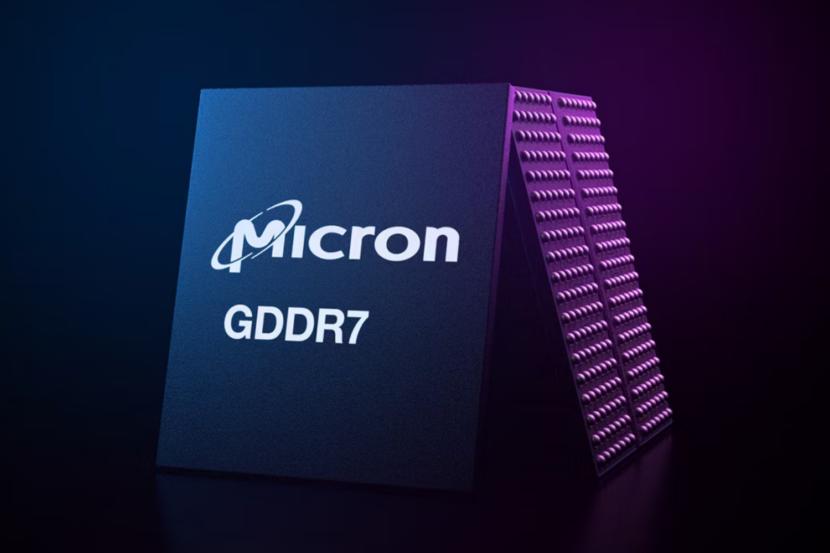
Micron Technology Expands Factory in Japan
- Massive Investment: Micron Technology has announced a $9.3 billion investment for the expansion of its factory in Higashihiroshima, Japan, aimed at boosting large-scale production of advanced memory chips, reflecting its ambitions in the global semiconductor market.
- Government Support: Japan's Ministry of Economy, Trade, and Industry will provide up to $3.3 billion in subsidies, enhancing Micron's investment appeal in Japan and ensuring its competitive edge in the rapidly growing AI market.
- Construction Timeline: The expansion will proceed in phases, with semiconductor manufacturing equipment installation expected to begin in the second half of 2028, providing Micron with flexibility to adapt to future technological innovations and market demands.
- Strategic Implications: This expansion will not only enable Micron to produce next-generation high-bandwidth memory chips required for AI processors but also promote the localization of Japan's semiconductor industry, ensuring a stable supply chain that aligns with the government's strategic goal of semiconductor self-sufficiency.
See More

Strong Prospects for AI Infrastructure Market

- Nvidia's Market Leadership: Nvidia has grown to become the world's largest company by market cap, with its GPUs serving as the primary chips for training AI models, and its CUDA software creating a strong competitive moat, positioning it for continued robust growth.
- AMD's Growth Potential: Although AMD lags behind Nvidia in AI model training, its strategic positioning in inference and agentic AI presents significant market opportunities, with inference expected to surpass training, and AMD's chip design being better suited for this demand.
- Micron's Financial Performance: Micron Technology reported a staggering revenue increase from $9.3 billion last year to $41.5 billion in its fiscal third quarter, with gross margins expanding from 37.7% to 84.6%, reflecting strong demand in the high-bandwidth memory market, which is projected to reach $100 billion next year.
- Advantages of Long-term Customer Agreements: Micron's long-term strategic agreements with customers, which include non-cancellable HBM and NAND contracts, are expected to mitigate the typical cyclicality of the memory business, enhancing its competitive position in the market.
See More

Buying Opportunities in AI Stocks Amid Recent Pullback
- Market Pullback Opportunity: Despite the recent pullback in AI stocks, hyperscalers are still planning significant investments in AI data centers, indicating strong ongoing demand for AI infrastructure and potential buying opportunities for investors.
- Nvidia's Market Leadership: As the world's largest company by market cap, Nvidia dominates AI model training with its GPUs and has expanded into inference chips through the acquisition of Groq, positioning itself for continued strong growth and reinforcing its market advantage.
- AMD's Growth Potential: Although trailing Nvidia in AI model training, AMD's focus on inference and agentic AI provides substantial market potential, with expectations to benefit from a $120 billion market over the coming years, enhancing its market share.
- Micron's Strong Performance: Micron Technology reported a revenue surge from $9.3 billion to $41.5 billion in its latest fiscal quarter, with gross margin rising from 37.7% to 84.6%, and anticipates the high-bandwidth memory market to reach $100 billion next year, showcasing its robust competitiveness in the memory market.
See More

Tech Stocks Face Intense Sell-Off Pressure
- Nasdaq Decline: The Nasdaq Composite closed 0.8% lower on Thursday, primarily dragged down by declines in chipmakers like Nvidia (NVDA) and Sandisk (SNDK), reflecting heightened investor concerns over the tech sector's stability.
- Meta's Cloud Business Plan: Meta Platforms (META) saw its shares rise nearly 9% on Wednesday following reports that it is building a cloud business to monetize excess AI computing power, indicating a strategic pivot towards AI revenue generation.
- Analyst Rating Changes: DA Davidson upgraded Palantir (PLTR) from Neutral to Buy, raising the price target from $165 to $175, highlighting its competitive advantages in the AI era, which signals strong market confidence in its growth prospects.
- Microsoft Layoff Plans: Microsoft (MSFT) is reportedly preparing a fresh round of layoffs that could affect 2.5% of its global workforce, while also investing $2.5 billion to establish a new business to assist clients in implementing AI solutions, demonstrating a strategic balance between cost management and technological investment.
See More

Micron Technology Reports Strong Q3 Performance Amid AI Demand
- Significant Revenue Growth: Micron Technology's revenue surged from $9.3 billion to $41.5 billion in Q3, easily surpassing the $35.8 billion consensus, demonstrating the company's robust performance driven by AI infrastructure demand, which solidifies its market position.
- Gross Margin Improvement: The company's gross margin increased dramatically from 37.7% a year ago to 84.6%, reflecting successful cost control and enhanced profitability in a high-demand environment, providing a stronger financial foundation for future investments.
- Long-Term Agreements Locking Revenue: Approximately 40% of Micron's revenue is secured through long-term strategic customer agreements, which not only mitigates market volatility risks but also provides stable cash flow for the company over the coming years, enhancing its resilience.
- Increased Capital Expenditure: Micron raised its capital expenditure budget to $27 billion to support new project construction, which is expected to further boost DRAM and NAND supply capabilities to meet the growing market demand, ensuring the company maintains its competitive edge in the semiconductor industry.
See More
Micron Technology Reports Record Q3 Earnings Amid AI Demand Surge
- Record Earnings: Micron Technology reported a remarkable earnings per share of $24.67 for Q3 2026, with revenue soaring 346% year-over-year to $41.46 billion and net income reaching $28.24 billion, driven by robust demand for high-bandwidth memory used in AI accelerators.
- Strong Cash Flow: The company generated $25.4 billion in operating cash flow and $18.3 billion in adjusted free cash flow during the quarter, ending with approximately $30.2 billion in cash and investments, underscoring its strategic value in the AI era.
- Optimistic Outlook: Management guided for Q4 revenue of about $50 billion, representing a further 20% increase, reflecting strong demand for high-bandwidth memory and confidence in market conditions.
- Capital Allocation Strategy: Micron plans to return 100% of its excess cash to shareholders, with potential increases in dividends and stock buybacks, as management adopts a cautious approach to avoid over-investing during the peak of the memory cycle.
See More
Micron Technology Expands Factory in Japan
- Massive Investment: Micron Technology has announced a $9.3 billion investment for the expansion of its factory in Higashihiroshima, Japan, aimed at boosting large-scale production of advanced memory chips, reflecting its ambitions in the global semiconductor market.
- Government Support: Japan's Ministry of Economy, Trade, and Industry will provide up to $3.3 billion in subsidies, enhancing Micron's investment appeal in Japan and ensuring its competitive edge in the rapidly growing AI market.
- Construction Timeline: The expansion will proceed in phases, with semiconductor manufacturing equipment installation expected to begin in the second half of 2028, providing Micron with flexibility to adapt to future technological innovations and market demands.
- Strategic Implications: This expansion will not only enable Micron to produce next-generation high-bandwidth memory chips required for AI processors but also promote the localization of Japan's semiconductor industry, ensuring a stable supply chain that aligns with the government's strategic goal of semiconductor self-sufficiency.
See More
Strong Prospects for AI Infrastructure Market
- Nvidia's Market Leadership: Nvidia has grown to become the world's largest company by market cap, with its GPUs serving as the primary chips for training AI models, and its CUDA software creating a strong competitive moat, positioning it for continued robust growth.
- AMD's Growth Potential: Although AMD lags behind Nvidia in AI model training, its strategic positioning in inference and agentic AI presents significant market opportunities, with inference expected to surpass training, and AMD's chip design being better suited for this demand.
- Micron's Financial Performance: Micron Technology reported a staggering revenue increase from $9.3 billion last year to $41.5 billion in its fiscal third quarter, with gross margins expanding from 37.7% to 84.6%, reflecting strong demand in the high-bandwidth memory market, which is projected to reach $100 billion next year.
- Advantages of Long-term Customer Agreements: Micron's long-term strategic agreements with customers, which include non-cancellable HBM and NAND contracts, are expected to mitigate the typical cyclicality of the memory business, enhancing its competitive position in the market.
See More
Buying Opportunities in AI Stocks Amid Recent Pullback
- Market Pullback Opportunity: Despite the recent pullback in AI stocks, hyperscalers are still planning significant investments in AI data centers, indicating strong ongoing demand for AI infrastructure and potential buying opportunities for investors.
- Nvidia's Market Leadership: As the world's largest company by market cap, Nvidia dominates AI model training with its GPUs and has expanded into inference chips through the acquisition of Groq, positioning itself for continued strong growth and reinforcing its market advantage.
- AMD's Growth Potential: Although trailing Nvidia in AI model training, AMD's focus on inference and agentic AI provides substantial market potential, with expectations to benefit from a $120 billion market over the coming years, enhancing its market share.
- Micron's Strong Performance: Micron Technology reported a revenue surge from $9.3 billion to $41.5 billion in its latest fiscal quarter, with gross margin rising from 37.7% to 84.6%, and anticipates the high-bandwidth memory market to reach $100 billion next year, showcasing its robust competitiveness in the memory market.
See More
Tech Stocks Face Intense Sell-Off Pressure
- Nasdaq Decline: The Nasdaq Composite closed 0.8% lower on Thursday, primarily dragged down by declines in chipmakers like Nvidia (NVDA) and Sandisk (SNDK), reflecting heightened investor concerns over the tech sector's stability.
- Meta's Cloud Business Plan: Meta Platforms (META) saw its shares rise nearly 9% on Wednesday following reports that it is building a cloud business to monetize excess AI computing power, indicating a strategic pivot towards AI revenue generation.
- Analyst Rating Changes: DA Davidson upgraded Palantir (PLTR) from Neutral to Buy, raising the price target from $165 to $175, highlighting its competitive advantages in the AI era, which signals strong market confidence in its growth prospects.
- Microsoft Layoff Plans: Microsoft (MSFT) is reportedly preparing a fresh round of layoffs that could affect 2.5% of its global workforce, while also investing $2.5 billion to establish a new business to assist clients in implementing AI solutions, demonstrating a strategic balance between cost management and technological investment.
See More
Micron Technology Reports Strong Q3 Performance Amid AI Demand
- Significant Revenue Growth: Micron Technology's revenue surged from $9.3 billion to $41.5 billion in Q3, easily surpassing the $35.8 billion consensus, demonstrating the company's robust performance driven by AI infrastructure demand, which solidifies its market position.
- Gross Margin Improvement: The company's gross margin increased dramatically from 37.7% a year ago to 84.6%, reflecting successful cost control and enhanced profitability in a high-demand environment, providing a stronger financial foundation for future investments.
- Long-Term Agreements Locking Revenue: Approximately 40% of Micron's revenue is secured through long-term strategic customer agreements, which not only mitigates market volatility risks but also provides stable cash flow for the company over the coming years, enhancing its resilience.
- Increased Capital Expenditure: Micron raised its capital expenditure budget to $27 billion to support new project construction, which is expected to further boost DRAM and NAND supply capabilities to meet the growing market demand, ensuring the company maintains its competitive edge in the semiconductor industry.
See More