Micron Technology's Stock Soars 250% Amid AI Demand Surge
Written by Emily J. Thompson, Senior Investment Analyst
Updated: Feb 18 2026
0mins
Should l Buy MU?
Source: Fool
- Stock Surge: Micron Technology's stock has skyrocketed 250% since September, achieving a market cap exceeding $460 billion, reflecting strong market confidence in its future growth and raising questions about its potential to reach a $1 trillion valuation soon.
- Demand Drivers: The surge in demand for high bandwidth memory (HBM), particularly for AI training and inference, has led hyperscalers to increase their chip budgets, directly boosting Micron's sales, with projected earnings per share reaching $8.42 in 2026.
- Price Increases: Due to a shortage of DRAM memory chips, Micron's average selling price rose 20% sequentially in Q1, with gross margins expanding from 46% to 57%, enhancing the company's profitability and competitive position in a fierce market.
- Future Outlook: While Micron plans to invest $20 billion in capital expenditures for fiscal 2026, the cyclical nature of the industry suggests potential volatility in its earnings, with analysts raising their earnings expectations for 2026 and 2027 to $33.73 and $43.54 per share, respectively.
Trade with 70% Backtested Accuracy
Stop guessing "Should I Buy MU?" and start using high-conviction signals backed by rigorous historical data.
Sign up today to access powerful investing tools and make smarter, data-driven decisions.
Analyst Views on MU
Wall Street analysts forecast MU stock price to fall
26 Analyst Rating
24 Buy
2 Hold
0 Sell
Strong Buy
Current: 367.850

Low
235.00
Averages
336.12
High
500.00
Current: 367.850
Low
235.00
Averages
336.12
High
500.00
About MU
Micron Technology, Inc. provides memory and storage solutions. The Company delivers a portfolio of high-performance dynamic random-access memory (DRAM), NAND, and NOR memory and storage products through its Micron and Crucial brands. The Company's products enable advancing in artificial intelligence (AI) and compute-intensive applications. Its segments include Cloud Memory Business Unit (CMBU), Core Data Center Business Unit (CDBU), Mobile and Client Business Unit (MCBU) and Automotive and Embedded Business Unit (AEBU). CMBU is focused on memory solutions for large hyperscale cloud customers, and high bandwidth memory (HBM) for all data center customers. CDBU is focused on memory solutions for mid-tier cloud, enterprise, and OEM data center customers and storage solutions for all data center customers. MCBU is focused on memory and storage solutions for mobile and client segments. AEBU is focused on memory and storage solutions for the automotive, industrial, and consumer segments.
About the author

Emily J. Thompson
Emily J. Thompson, a Chartered Financial Analyst (CFA) with 12 years in investment research, graduated with honors from the Wharton School. Specializing in industrial and technology stocks, she provides in-depth analysis for Intellectia’s earnings and market brief reports.

Micron Technology's Low Valuation Requires Proof of Growth Potential

- Valuation Analysis: Micron Technology's forward P/E ratio stands at just 3.3 times, despite tripling its quarterly revenue and increasing gross margin from 36.8% to 74.4%, indicating a significant undervaluation; however, market confidence in its future growth remains to be proven.
- Market Cyclicality: Micron's primary business, DRAM, accounts for 80% of its revenue and has historically experienced significant cyclical fluctuations; while the rise of AI has boosted DRAM demand, the company must demonstrate structural growth drivers to sustain its valuation.
- Growing HBM Demand: The surge in demand for high-bandwidth memory (HBM) linked to AI chip growth has created a DRAM market shortage, driving up Micron's revenue and gross margin, yet the sustainability of this growth remains uncertain.
- Long-term Contract Strategy: Micron is working to secure long-term agreements with HBM customers to mitigate business cyclicality; if it can successfully transition into a long-term AI infrastructure winner, a tripling of its stock price by 2030 is feasible, but this requires enhanced stability and market trust.
See More

Stock Markets Start Weak, Presenting Buying Opportunities


- Weak Market Performance: Afternoon stock prices from April 1, 2026, indicate that stock markets are starting the year on a weak note, leading investors to feel cautious about future market trends, which could impact short-term investment decisions.
- Emerging Investment Opportunities: Despite the market weakness, this situation creates attractive buying opportunities for investors, particularly value investors who may seek undervalued stocks for long-term gains in a sluggish market environment.
- Market Sentiment Analysis: Current market sentiment reflects concerns over economic recovery, prompting investors to potentially reassess their portfolios in the coming weeks to navigate potential market volatility and uncertainty.
- Need for Strategic Adjustments: In this market environment, investors must consider adjusting their investment strategies to quickly capitalize on opportunities when the stock market rebounds, ensuring maximum returns during future recoveries.
See More

Stock Market Dip Creates Buying Opportunity for Investors
- Market Dip Opportunity: The stock market's sluggish start in 2026 presents an attractive buying opportunity for investors, particularly in the tech sector, which may draw increased capital inflows.
- AI and Trillionaires: A recent report suggests that AI could create the world's first trillionaire, indicating significant future potential and investment value in the tech industry, especially for companies linked to Nvidia and Intel.
- Investment Recommendations: The Motley Fool's analyst team has identified 10 top stocks for investors, notably excluding Microsoft, which reflects a shift in market preference towards other tech stocks that could impact Microsoft's investment appeal.
- Historical Returns Comparison: Stock Advisor boasts an average return of 926%, significantly outperforming the S&P 500's 185%, indicating that its recommended stocks have substantial long-term excess return potential.
See More

Investment Opportunity Analysis for Micron Technology Stock

- Memory Price Surge: Micron Technology's stock has surged approximately 300% over the past year due to a bottleneck in memory chip supply, and despite a recent drop of over 20% from its all-time high, it remains a compelling buy for long-term investors.
- Google Algorithm Impact: Google's TurboQuant algorithm reduces memory requirements by six times, leading the market to mistakenly assume a decrease in memory chip demand; however, AI hyperscalers are likely to repurpose this memory for other applications, thus not alleviating the memory bottleneck.
- High-Bandwidth Memory Market Growth: Micron estimates the high-bandwidth memory market will reach $35 billion by 2025 and triple to $100 billion by 2028, yet the company can currently only fulfill 50% to 66% of its orders, indicating robust market demand.
- Future Revenue Expectations: Micron anticipates revenue of $33.5 billion next quarter, a significant increase from $23.9 billion in the previous quarter, and with a low forward P/E ratio of 6.2, it presents a strong investment opportunity in the AI sector during this market correction.
See More

Google's Breakthrough Affects Micron's Stock Price
- Memory Market Bottleneck: Despite Micron's (NASDAQ: MU) stock soaring approximately 300% over the past year, it recently fell over 20% due to concerns about memory demand following Google's introduction of the TurboQuant algorithm, highlighting ongoing worries in the AI sector.
- Algorithm Innovation Impact: Google's TurboQuant algorithm reduces memory requirements by six times; however, while the market anticipates a decrease in memory chip demand, AI hyperscalers may repurpose released memory for other applications, thus not alleviating the memory bottleneck.
- Market Demand Forecast: Micron estimates that the high-bandwidth memory market will reach $35 billion by 2025 and triple to $100 billion by 2028, yet the company currently meets only about 50% to 66% of its orders, indicating significant challenges in fulfilling market demand.
- Future Growth Potential: Micron expects revenue of $33.5 billion next quarter, a substantial increase from $23.9 billion in the previous quarter, and with a forward P/E ratio of just 6.2, it presents a compelling investment opportunity in the AI space, despite cautious market sentiment regarding its short-term performance.
See More
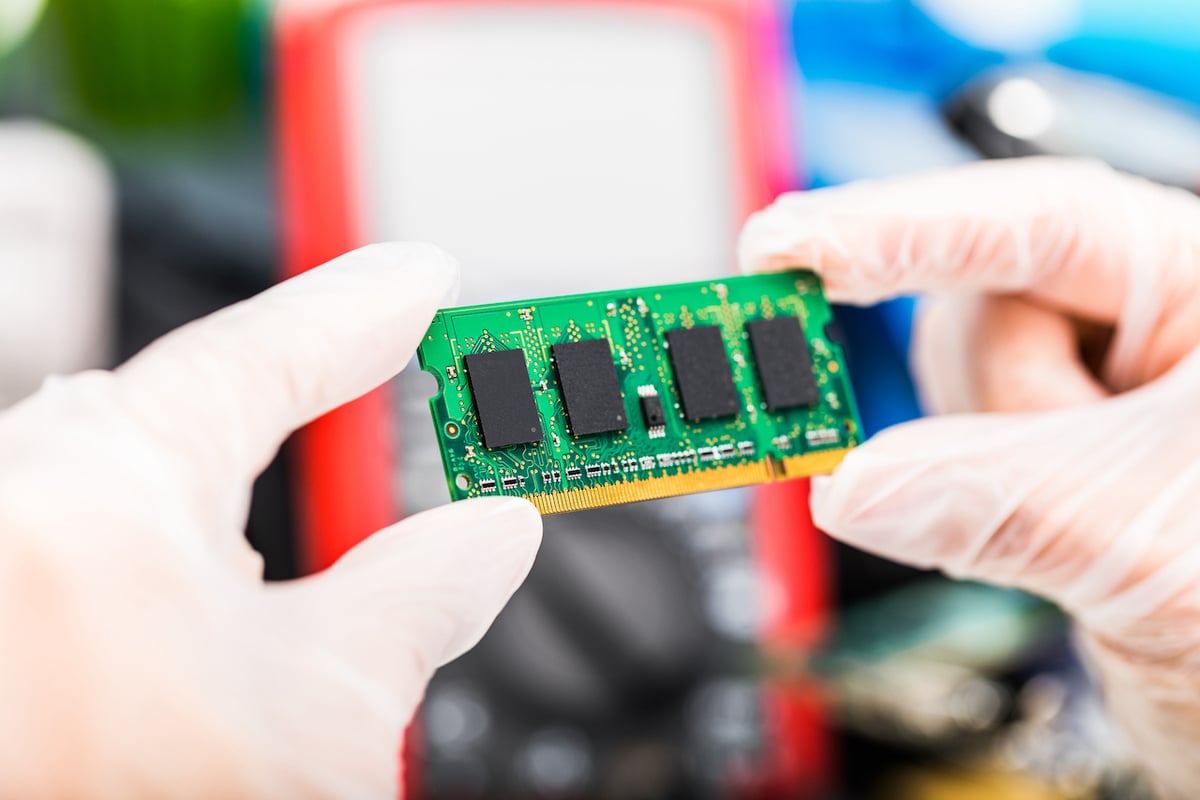
Can Micron Technology Reach a $1 Trillion Market Cap?

- Strong Market Demand: Micron Technology's market cap has surpassed $410 billion, with expectations of a 40% revenue growth by 2027 driven by surging AI demand, indicating a promising growth trajectory for the coming years.
- Share Buyback Plans: Management anticipates starting
See More
Micron Technology's Low Valuation Requires Proof of Growth Potential
- Valuation Analysis: Micron Technology's forward P/E ratio stands at just 3.3 times, despite tripling its quarterly revenue and increasing gross margin from 36.8% to 74.4%, indicating a significant undervaluation; however, market confidence in its future growth remains to be proven.
- Market Cyclicality: Micron's primary business, DRAM, accounts for 80% of its revenue and has historically experienced significant cyclical fluctuations; while the rise of AI has boosted DRAM demand, the company must demonstrate structural growth drivers to sustain its valuation.
- Growing HBM Demand: The surge in demand for high-bandwidth memory (HBM) linked to AI chip growth has created a DRAM market shortage, driving up Micron's revenue and gross margin, yet the sustainability of this growth remains uncertain.
- Long-term Contract Strategy: Micron is working to secure long-term agreements with HBM customers to mitigate business cyclicality; if it can successfully transition into a long-term AI infrastructure winner, a tripling of its stock price by 2030 is feasible, but this requires enhanced stability and market trust.
See More
Stock Markets Start Weak, Presenting Buying Opportunities
- Weak Market Performance: Afternoon stock prices from April 1, 2026, indicate that stock markets are starting the year on a weak note, leading investors to feel cautious about future market trends, which could impact short-term investment decisions.
- Emerging Investment Opportunities: Despite the market weakness, this situation creates attractive buying opportunities for investors, particularly value investors who may seek undervalued stocks for long-term gains in a sluggish market environment.
- Market Sentiment Analysis: Current market sentiment reflects concerns over economic recovery, prompting investors to potentially reassess their portfolios in the coming weeks to navigate potential market volatility and uncertainty.
- Need for Strategic Adjustments: In this market environment, investors must consider adjusting their investment strategies to quickly capitalize on opportunities when the stock market rebounds, ensuring maximum returns during future recoveries.
See More
Stock Market Dip Creates Buying Opportunity for Investors
- Market Dip Opportunity: The stock market's sluggish start in 2026 presents an attractive buying opportunity for investors, particularly in the tech sector, which may draw increased capital inflows.
- AI and Trillionaires: A recent report suggests that AI could create the world's first trillionaire, indicating significant future potential and investment value in the tech industry, especially for companies linked to Nvidia and Intel.
- Investment Recommendations: The Motley Fool's analyst team has identified 10 top stocks for investors, notably excluding Microsoft, which reflects a shift in market preference towards other tech stocks that could impact Microsoft's investment appeal.
- Historical Returns Comparison: Stock Advisor boasts an average return of 926%, significantly outperforming the S&P 500's 185%, indicating that its recommended stocks have substantial long-term excess return potential.
See More
Investment Opportunity Analysis for Micron Technology Stock
- Memory Price Surge: Micron Technology's stock has surged approximately 300% over the past year due to a bottleneck in memory chip supply, and despite a recent drop of over 20% from its all-time high, it remains a compelling buy for long-term investors.
- Google Algorithm Impact: Google's TurboQuant algorithm reduces memory requirements by six times, leading the market to mistakenly assume a decrease in memory chip demand; however, AI hyperscalers are likely to repurpose this memory for other applications, thus not alleviating the memory bottleneck.
- High-Bandwidth Memory Market Growth: Micron estimates the high-bandwidth memory market will reach $35 billion by 2025 and triple to $100 billion by 2028, yet the company can currently only fulfill 50% to 66% of its orders, indicating robust market demand.
- Future Revenue Expectations: Micron anticipates revenue of $33.5 billion next quarter, a significant increase from $23.9 billion in the previous quarter, and with a low forward P/E ratio of 6.2, it presents a strong investment opportunity in the AI sector during this market correction.
See More
Google's Breakthrough Affects Micron's Stock Price
- Memory Market Bottleneck: Despite Micron's (NASDAQ: MU) stock soaring approximately 300% over the past year, it recently fell over 20% due to concerns about memory demand following Google's introduction of the TurboQuant algorithm, highlighting ongoing worries in the AI sector.
- Algorithm Innovation Impact: Google's TurboQuant algorithm reduces memory requirements by six times; however, while the market anticipates a decrease in memory chip demand, AI hyperscalers may repurpose released memory for other applications, thus not alleviating the memory bottleneck.
- Market Demand Forecast: Micron estimates that the high-bandwidth memory market will reach $35 billion by 2025 and triple to $100 billion by 2028, yet the company currently meets only about 50% to 66% of its orders, indicating significant challenges in fulfilling market demand.
- Future Growth Potential: Micron expects revenue of $33.5 billion next quarter, a substantial increase from $23.9 billion in the previous quarter, and with a forward P/E ratio of just 6.2, it presents a compelling investment opportunity in the AI space, despite cautious market sentiment regarding its short-term performance.
See More
Can Micron Technology Reach a $1 Trillion Market Cap?
- Strong Market Demand: Micron Technology's market cap has surpassed $410 billion, with expectations of a 40% revenue growth by 2027 driven by surging AI demand, indicating a promising growth trajectory for the coming years.
- Share Buyback Plans: Management anticipates starting
See More