Micron Technology Faces Unprecedented Memory Shortage
Written by Emily J. Thompson, Senior Investment Analyst
Updated: Mar 05 2026
0mins
Source: NASDAQ.COM
- Surging Memory Prices: Micron Technology is experiencing a historic surge in memory prices due to tightening HBM supply and increased hyperscaler demand, leading to record-high margins that are expected to drive powerful earnings growth in 2026.
- Capital Expenditure Risks: While the current market conditions are favorable, the capital spending risks associated with Micron's strategic decisions on technology upgrades and capacity expansion could significantly impact future profitability, warranting close investor scrutiny.
- Market Performance Analysis: As of February 27, 2026, Micron's stock has shown strong performance; however, the analyst team from Motley Fool noted that despite the optimistic outlook, Micron did not make the list of top investment stocks, indicating market uncertainty regarding its future.
- Investor Recommendations: Before investing in Micron Technology, investors should consider the 10 best stocks identified by Motley Fool Stock Advisor, which are expected to yield substantial returns in the coming years, reflecting a cautious market sentiment towards Micron.
Trade with 70% Backtested Accuracy
Stop guessing "Should I Buy MU?" and start using high-conviction signals backed by rigorous historical data.
Sign up today to access powerful investing tools and make smarter, data-driven decisions.
Analyst Views on MU
Wall Street analysts forecast MU stock price to fall
26 Analyst Rating
24 Buy
2 Hold
0 Sell
Strong Buy
Current: 1064.100

Low
235.00
Averages
336.12
High
500.00
Current: 1064.100
Low
235.00
Averages
336.12
High
500.00
About MU
Micron Technology, Inc. provides memory and storage solutions. The Company delivers a portfolio of high-performance dynamic random-access memory (DRAM), NAND, and NOR memory and storage products through its Micron and Crucial brands. The Company's products enable advancing in artificial intelligence (AI) and compute-intensive applications. Its segments include Cloud Memory Business Unit (CMBU), Core Data Center Business Unit (CDBU), Mobile and Client Business Unit (MCBU) and Automotive and Embedded Business Unit (AEBU). CMBU is focused on memory solutions for large hyperscale cloud customers, and high bandwidth memory (HBM) for all data center customers. CDBU is focused on memory solutions for mid-tier cloud, enterprise, and OEM data center customers and storage solutions for all data center customers. MCBU is focused on memory and storage solutions for mobile and client segments. AEBU is focused on memory and storage solutions for the automotive, industrial, and consumer segments.
About the author

Emily J. Thompson
Emily J. Thompson, a Chartered Financial Analyst (CFA) with 12 years in investment research, graduated with honors from the Wharton School. Specializing in industrial and technology stocks, she provides in-depth analysis for Intellectia’s earnings and market brief reports.

Micron Stock Surges Nearly 100% Amid AI Demand

- Stock Surge: Micron's stock has surged nearly 100% over the past month, crossing the $1 trillion market cap threshold, indicating strong market demand for its AI memory chips and solidifying its leadership position in the semiconductor industry.
- Analyst Upgrades: Several Wall Street analysts have raised their price targets on Micron ahead of earnings, reflecting optimistic expectations for its future performance, which may attract more investor interest in the stock.
- Upcoming Earnings Report: Micron is scheduled to report its fiscal third-quarter earnings on June 24, with increasing investor anticipation for its results, especially against the backdrop of surging AI infrastructure demand, potentially driving further stock price increases.
- Long-Term Investment Strategy: Despite the recent stock rally, analysts believe Micron's valuation remains reasonable, recommending a dollar-cost averaging strategy for investors to navigate short-term volatility while capitalizing on long-term growth opportunities.
See More

Micron Technology: A Key Bottleneck in the AI Era
- Market Valuation Analysis: Micron Technology has reached a $1 trillion market cap, and while investors are cautious about future returns, the key question is whether it has become a critical bottleneck in the memory chip sector, impacting future profitability.
- AI Demand Surge: Micron's revenue grew 196% year-over-year to $23.9 billion, indicating strong demand for its DRAM, NAND, and HBM products, particularly as HBM plays a crucial role in modern AI systems, potentially driving sustained growth for the company.
- Investor Skepticism: Despite Micron's recent strong performance, investors remain skeptical about its future due to the cyclical nature of the memory market, which has historically experienced supply-demand imbalances leading to profit declines.
- Future Outlook: Micron's future hinges on whether memory has transformed into a strategic bottleneck; if so, it could play a significant role in the AI era, with growth potential far exceeding current levels.
See More

Micron Technology's Future Relies on AI Demand
- Surge in Market Demand: Micron Technology's latest results indicate a 196% year-over-year revenue increase to $23.9 billion, highlighting a rapid rise in AI hardware demand for memory, which could provide strong growth momentum for the company.
- Memory as a Bottleneck: As AI models grow more complex, the demand for memory, particularly high-bandwidth memory (HBM), is increasing, potentially positioning Micron as a critical player in the technology supply chain.
- Investor Caution: Despite Micron's recent strong performance, investors remain cautious due to the cyclical nature of the memory industry, fearing that the current demand growth may be temporary rather than indicative of structural change.
- Uncertain Future Outlook: If memory does not transform into a strategic bottleneck, Micron's future may mirror past memory cycles, experiencing high profitability followed by downturns, necessitating careful evaluation of its long-term investment value.
See More

Broadcom's Earnings Outlook Positive, Stock Rises


- Strong Earnings Expectations: Broadcom is projected to report second-quarter earnings per share of $2.40 and revenue of $22.13 billion, with analysts believing these estimates are beatable, potentially driving growth across the chip sector.
- Outstanding Stock Performance: Broadcom's stock has surged 40% in 2026, significantly outperforming Nvidia's 15% increase, indicating strong market confidence in its future performance, with an expected 8% volatility post-earnings release.
- AI Revenue Potential: According to a sales note from Morgan Stanley, Broadcom's AI revenues are expected to range between $150 billion and $200 billion in 2027, with approximately $105 billion from ASICs, reflecting robust demand in the AI sector.
- Strategic Partnerships: Broadcom's collaborations with Alphabet and Anthropic are set to enhance the development of its custom AI chips, with analysts noting that revenues from these deals will be closely correlated, showcasing deep mutual investment in the AI landscape.
See More
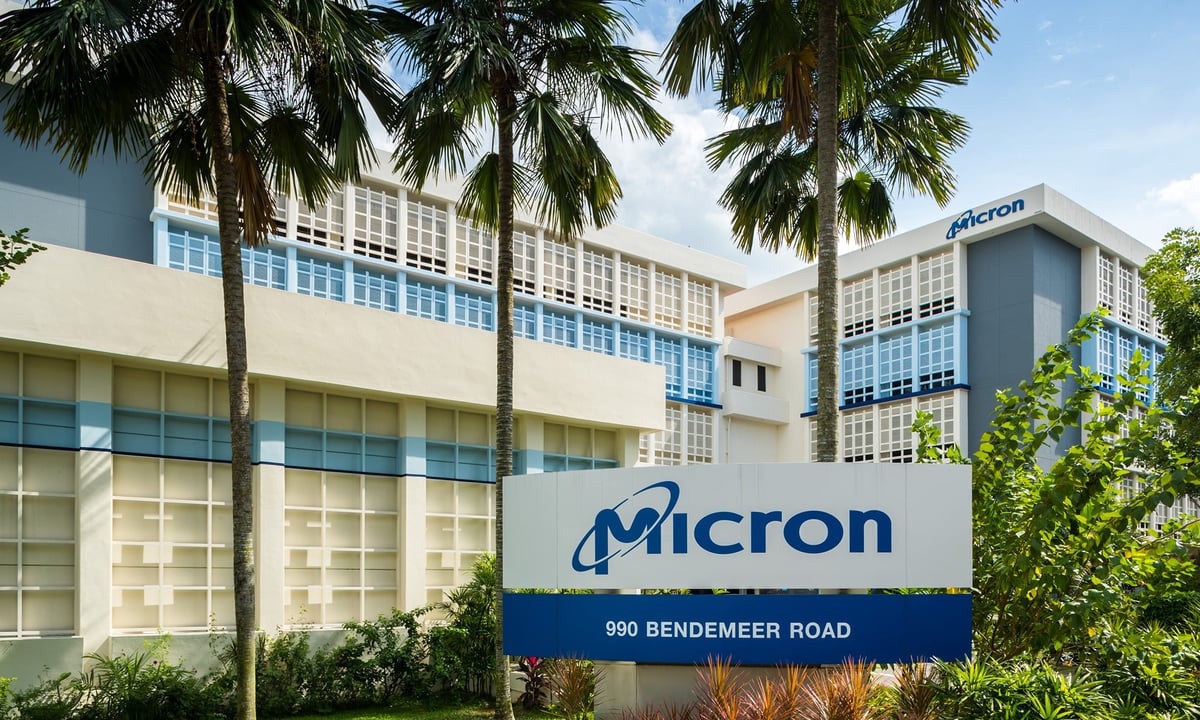
Micron Technology Set to Report Q3 Earnings
- Earnings Outlook: Micron Technology is set to report its fiscal Q3 earnings on June 24, with market excitement fueled by nearly a 100% stock surge and a market cap exceeding $1 trillion, reflecting strong investor interest in the AI sector.
- Price Movement Trends: Historical data indicates that between early 2023 and mid-2025, Micron's stock typically experiences limited volatility post-earnings, suggesting that buying before earnings may not be the optimal strategy, prompting investors to focus on long-term gains.
- Valuation Reasonableness: Despite the recent price rally, Micron's forward P/E ratio suggests a reasonable valuation, and given its leadership in high-bandwidth memory and DRAM chips, the company's revenue and earnings trajectory is expected to accelerate amid surging AI infrastructure demand.
- Investment Strategy Advice: Analysts recommend a dollar-cost averaging approach rather than attempting to time pre-earnings fluctuations, as historical trends indicate that long-term holding of growth stocks like Micron tends to yield more sustainable returns.
See More

SpaceX IPO: Record Debut with High Volatility Risks


- Historical Performance Analysis: Data from Truist Wealth indicates that 30 major IPOs over the past 15 years have seen a median drop of 9% within 12 months post-debut, highlighting the downward pressure typically faced by newly public companies, necessitating caution from investors.
- Volatility Expectations: These companies have experienced an average stock price decline of 54% in the first 12 months, suggesting that SpaceX, as a soon-to-be megacap, may encounter similar severe volatility, particularly with high retail investor participation.
- Funding Scale and Valuation: SpaceX is expected to raise $75 billion at a $1.75 trillion valuation, positioning it among the top ten largest public companies, surpassing well-known firms like Meta and Tesla, which underscores its market potential and attractiveness.
- Retail Investor Participation: SpaceX plans to allocate up to 30% of its shares to individual investors, a stark contrast to the historical 90/10 institutional-to-retail split, which could further amplify market volatility and increase risks for investors.
See More
Micron Stock Surges Nearly 100% Amid AI Demand
- Stock Surge: Micron's stock has surged nearly 100% over the past month, crossing the $1 trillion market cap threshold, indicating strong market demand for its AI memory chips and solidifying its leadership position in the semiconductor industry.
- Analyst Upgrades: Several Wall Street analysts have raised their price targets on Micron ahead of earnings, reflecting optimistic expectations for its future performance, which may attract more investor interest in the stock.
- Upcoming Earnings Report: Micron is scheduled to report its fiscal third-quarter earnings on June 24, with increasing investor anticipation for its results, especially against the backdrop of surging AI infrastructure demand, potentially driving further stock price increases.
- Long-Term Investment Strategy: Despite the recent stock rally, analysts believe Micron's valuation remains reasonable, recommending a dollar-cost averaging strategy for investors to navigate short-term volatility while capitalizing on long-term growth opportunities.
See More
Micron Technology: A Key Bottleneck in the AI Era
- Market Valuation Analysis: Micron Technology has reached a $1 trillion market cap, and while investors are cautious about future returns, the key question is whether it has become a critical bottleneck in the memory chip sector, impacting future profitability.
- AI Demand Surge: Micron's revenue grew 196% year-over-year to $23.9 billion, indicating strong demand for its DRAM, NAND, and HBM products, particularly as HBM plays a crucial role in modern AI systems, potentially driving sustained growth for the company.
- Investor Skepticism: Despite Micron's recent strong performance, investors remain skeptical about its future due to the cyclical nature of the memory market, which has historically experienced supply-demand imbalances leading to profit declines.
- Future Outlook: Micron's future hinges on whether memory has transformed into a strategic bottleneck; if so, it could play a significant role in the AI era, with growth potential far exceeding current levels.
See More
Micron Technology's Future Relies on AI Demand
- Surge in Market Demand: Micron Technology's latest results indicate a 196% year-over-year revenue increase to $23.9 billion, highlighting a rapid rise in AI hardware demand for memory, which could provide strong growth momentum for the company.
- Memory as a Bottleneck: As AI models grow more complex, the demand for memory, particularly high-bandwidth memory (HBM), is increasing, potentially positioning Micron as a critical player in the technology supply chain.
- Investor Caution: Despite Micron's recent strong performance, investors remain cautious due to the cyclical nature of the memory industry, fearing that the current demand growth may be temporary rather than indicative of structural change.
- Uncertain Future Outlook: If memory does not transform into a strategic bottleneck, Micron's future may mirror past memory cycles, experiencing high profitability followed by downturns, necessitating careful evaluation of its long-term investment value.
See More
Broadcom's Earnings Outlook Positive, Stock Rises
- Strong Earnings Expectations: Broadcom is projected to report second-quarter earnings per share of $2.40 and revenue of $22.13 billion, with analysts believing these estimates are beatable, potentially driving growth across the chip sector.
- Outstanding Stock Performance: Broadcom's stock has surged 40% in 2026, significantly outperforming Nvidia's 15% increase, indicating strong market confidence in its future performance, with an expected 8% volatility post-earnings release.
- AI Revenue Potential: According to a sales note from Morgan Stanley, Broadcom's AI revenues are expected to range between $150 billion and $200 billion in 2027, with approximately $105 billion from ASICs, reflecting robust demand in the AI sector.
- Strategic Partnerships: Broadcom's collaborations with Alphabet and Anthropic are set to enhance the development of its custom AI chips, with analysts noting that revenues from these deals will be closely correlated, showcasing deep mutual investment in the AI landscape.
See More
Micron Technology Set to Report Q3 Earnings
- Earnings Outlook: Micron Technology is set to report its fiscal Q3 earnings on June 24, with market excitement fueled by nearly a 100% stock surge and a market cap exceeding $1 trillion, reflecting strong investor interest in the AI sector.
- Price Movement Trends: Historical data indicates that between early 2023 and mid-2025, Micron's stock typically experiences limited volatility post-earnings, suggesting that buying before earnings may not be the optimal strategy, prompting investors to focus on long-term gains.
- Valuation Reasonableness: Despite the recent price rally, Micron's forward P/E ratio suggests a reasonable valuation, and given its leadership in high-bandwidth memory and DRAM chips, the company's revenue and earnings trajectory is expected to accelerate amid surging AI infrastructure demand.
- Investment Strategy Advice: Analysts recommend a dollar-cost averaging approach rather than attempting to time pre-earnings fluctuations, as historical trends indicate that long-term holding of growth stocks like Micron tends to yield more sustainable returns.
See More
SpaceX IPO: Record Debut with High Volatility Risks
- Historical Performance Analysis: Data from Truist Wealth indicates that 30 major IPOs over the past 15 years have seen a median drop of 9% within 12 months post-debut, highlighting the downward pressure typically faced by newly public companies, necessitating caution from investors.
- Volatility Expectations: These companies have experienced an average stock price decline of 54% in the first 12 months, suggesting that SpaceX, as a soon-to-be megacap, may encounter similar severe volatility, particularly with high retail investor participation.
- Funding Scale and Valuation: SpaceX is expected to raise $75 billion at a $1.75 trillion valuation, positioning it among the top ten largest public companies, surpassing well-known firms like Meta and Tesla, which underscores its market potential and attractiveness.
- Retail Investor Participation: SpaceX plans to allocate up to 30% of its shares to individual investors, a stark contrast to the historical 90/10 institutional-to-retail split, which could further amplify market volatility and increase risks for investors.
See More