Macy's Delays Q3 Earnings Report Amid Investigation Over $154M Accounting Scandal; Stock Dips
Written by Emily J. Thompson, Senior Investment Analyst
Updated: Nov 25 2024
0mins


Source: Benzinga
Earnings Release Delay: Macy's Inc. shares fell premarket after the company postponed its third-quarter earnings release to complete an independent investigation into an employee who concealed $132-$154 million in delivery expenses from 2021 to 2024.
Preliminary Q3 Results: The company reported a 2.4% decline in net sales for Q3, totaling $4.742 billion, with mixed performance across its brands; however, it anticipates a strong holiday season and plans to report full results by December 11, 2024.
Trade with 70% Backtested Accuracy
Stop guessing "Should I Buy M?" and start using high-conviction signals backed by rigorous historical data.
Sign up today to access powerful investing tools and make smarter, data-driven decisions.
Analyst Views on M
Wall Street analysts forecast M stock price to fall
12 Analyst Rating
2 Buy
9 Hold
1 Sell
Hold
Current: 23.680

Low
8.00
Averages
21.33
High
27.00
Current: 23.680
Low
8.00
Averages
21.33
High
27.00
About M
Macy's, Inc. is an omnichannel retail company. The Company operates stores, websites and mobile applications under three brands, Macy's, Bloomingdale's and Bluemercury, which sell a range of merchandise, including apparel and accessories (men's, women's and kids'), cosmetics, home furnishings and other consumer goods. The Company has stores in 43 states, the District of Columbia, Puerto Rico and Guam. Its operations are conducted through Macy's, Macy's Backstage, Macy's small format, Bloomingdale's, Bloomingdale's The Outlet, Bloomie's, and Bluemercury. In addition, Bloomingdale's in Dubai, United Arab Emirates and Al Zahra, Kuwait are operated under a license agreement with Al Tayer Insignia. The principal private label brands offered by the Company include Alfani, And Now This, Aqua, Bar III, Cerulean 6, Charter Club, Club Room, Epic Threads, first impressions, Giani Bernini, Holiday Lane, Home Design, Hotel Collection, Hudson Park, Ideology, I-N-C, jenni, JM Collection, and others.
About the author

Emily J. Thompson
Emily J. Thompson, a Chartered Financial Analyst (CFA) with 12 years in investment research, graduated with honors from the Wharton School. Specializing in industrial and technology stocks, she provides in-depth analysis for Intellectia’s earnings and market brief reports.

Warren Buffett Retires as CEO, Greg Abel Takes Over at Berkshire Hathaway

- Leadership Transition: Warren Buffett's retirement sees Greg Abel stepping in as CEO while Buffett remains chairman, with Abel showing a greater willingness to deploy the company's cash reserves, potentially shifting investment strategies.
- New Investment Strategy: Abel's purchase of over 3 million shares of Macy's in Q1 marks Berkshire Hathaway's first investment in the retailer, indicating confidence in Macy's growth potential moving forward.
- Sales Growth Momentum: Macy's stock has surged 85.7% over the past year, with Q1 same-store sales up 3.1%, and notable growth of 10.2% and 6.4% for Bloomingdale's and Bluemercury respectively, suggesting the effectiveness of its 'Bold New Chapter' strategy.
- Upgraded Outlook: Macy's has raised its annual same-store sales guidance from a range of -0.5% to 0.5% to 0.5% to 1.2%, reflecting management's confidence in future performance and potentially attracting more investor interest in the stock's value opportunity.
See More

US Stocks Close Higher, Led by Tech Gains


- Strong Market Performance: The S&P 500 rose by 0.72%, reaching a 2.5-week high, while the Dow Jones Industrial Average increased by 0.29%, setting a new all-time high, reflecting robust confidence in tech stocks and chipmakers.
- Supportive Economic Data: The US June ISM services index stood at 54.0, meeting expectations, with the employment sub-index rising to 51.2, surpassing the anticipated 48.2, indicating ongoing economic expansion that may alleviate Fed rate hike pressures.
- Optimistic Earnings Outlook: Bloomberg Intelligence forecasts a 23% increase in Q2 earnings, close to Q1's 30% surge, primarily driven by strong performance in AI infrastructure stocks, expected to contribute nearly 60% of earnings growth, further boosting market sentiment.
- International Market Fluctuations: While US stocks rose, European markets generally declined, with Eurozone May retail sales increasing by only 0.2%, below the expected 0.3%, highlighting uneven global economic recovery that could impact investor confidence.
See More
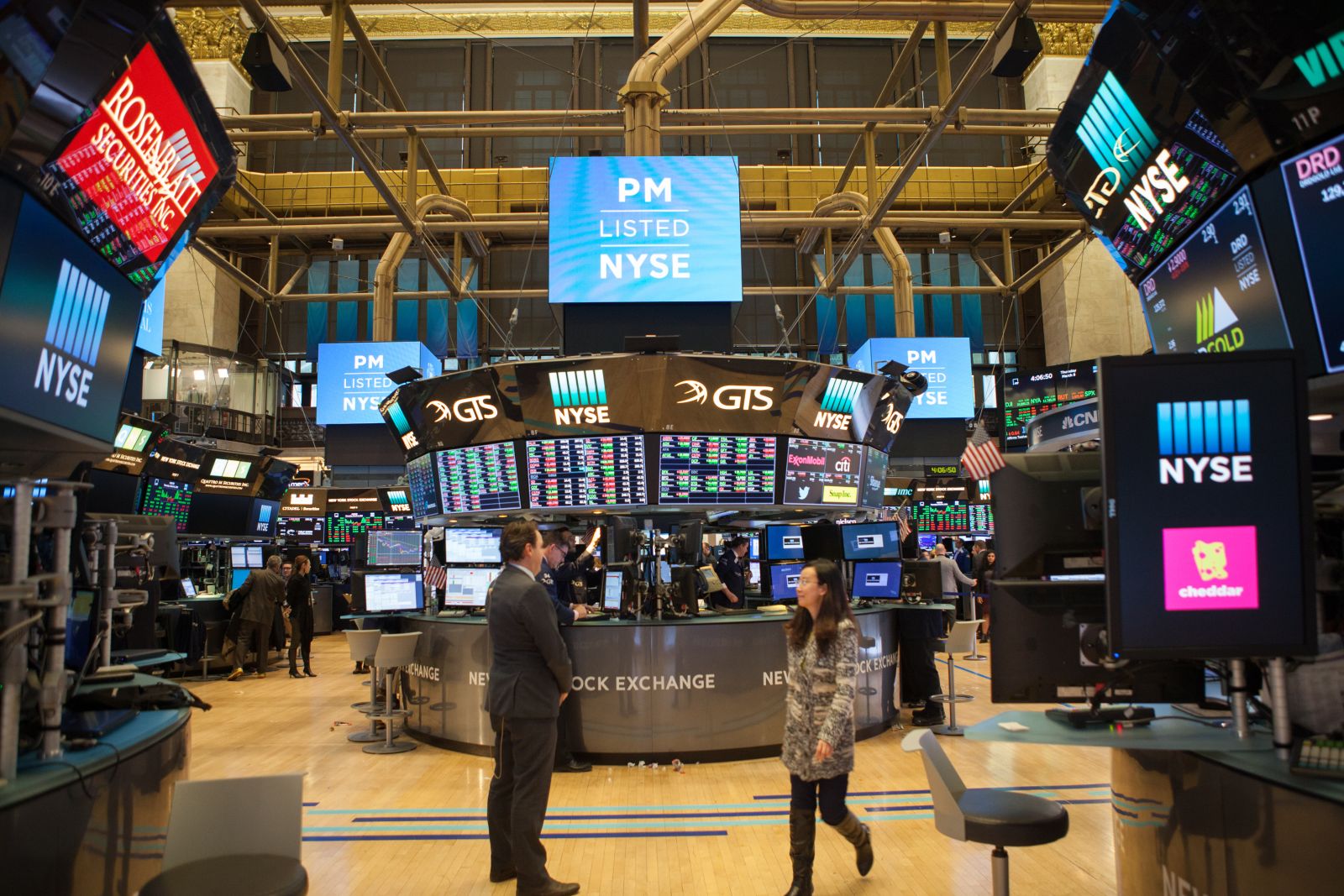
Mixed Performance in US Stocks, Led by Chipmakers


- Chipmaker Rally: Chipmakers and AI infrastructure stocks are leading the market today, with the iShares Semiconductor ETF (SOXX) up over 3%, and Advanced Micro Devices (AMD) and Western Digital (WDC) rising more than 9%, indicating a resurgence of confidence in tech stocks that could drive overall market gains.
- Service Sector Expansion: The US June ISM services index fell to 54.0, meeting expectations, and although the pace of growth has slowed, the employment sub-index rose to 51.2, surpassing the expected 48.2, suggesting that companies are still hiring amid easing cost pressures, potentially supporting economic growth.
- Strong Q2 Earnings Outlook: Bloomberg Intelligence forecasts a 23% increase in Q2 earnings, close to Q1's 30% growth, primarily driven by AI spending, which is expected to account for nearly 60% of S&P 500 earnings-per-share growth, providing an optimistic outlook for investors.
- International Market Volatility: While US markets show positive performance, overseas markets are generally declining, with the Euro Stoxx 50 down 0.43%, reflecting global economic uncertainties that may impact investor sentiment.
See More

Myriad Uranium Corp. Initiates Phase II Drilling at Copper Mountain Uranium Project

- Phase II Drilling Commencement: Myriad Uranium Corp. has initiated Phase II drilling at the Copper Mountain Uranium Project in Wyoming, with the first four holes aimed at testing mineralization at the Lucky Cliff area, previously drilled by Union Pacific in the 1970s, and any confirmed mineralization will be outside the 1982 DOE assessment area.
- Historical Resource Estimates: The Phase II drilling will target areas associated with historical resource estimates totaling 26.63 million pounds of uranium at an average grade of 171 ppm, indicating the potential richness of the Copper Mountain project, although these resources are not currently classified as mineral resources or reserves.
- Testing New Targets: The drilling will also test new targets identified through recent geophysics, verified by ground truthing with a handheld gamma spectrometer, showcasing the project's potential for resource discovery and possibly supporting future resource estimates.
- Merger and Market Expansion: Myriad's merger with Rush is nearing completion, which will consolidate 100% ownership of the Copper Mountain project, expected to enhance market capitalization, attract institutional investor interest, simplify operational decision-making, and broaden access to financing.
See More

Saks Department Store Successfully Emerges from Bankruptcy Restructuring

- Successful Bankruptcy Exit: Saks department store has successfully emerged from Chapter 11 bankruptcy with significantly reduced debt levels and a smaller store base, now comprising 15 Saks Fifth Avenue and 33 Neiman Marcus locations, indicating a strong commitment to restructuring in the luxury retail market.
- Strategic Transformation: The new strategy emphasizes high-touch service and personalized shopping experiences rather than aggressive discount expansion, aiming to enhance customer loyalty by better utilizing customer data to refine product assortments and improve in-store service quality.
- Store Adjustments: During the bankruptcy process, Saks closed numerous locations, particularly off-price outlets, resulting in a substantial reduction in the number of Saks Off 5th stores, reflecting the company's focus on profitability over sheer store count.
- Leadership Changes: Exemplar Luxury Group is led by Geoffroy van Raemdonck, who previously guided Neiman Marcus through bankruptcy, and the future strategy will prioritize full-price luxury retail while reducing reliance on real estate plays and discount formats.
See More

Analyzing the Investment Value of Meme Coins
- Current Meme Coin Market: Meme coins represent 1.25% of the total crypto market value, with some, like Dogecoin (DOGE), achieving a market cap of $12.5 billion, ranking among the top ten cryptocurrencies despite their origins as internet jokes.
- Diversification Challenges: While meme coins could offer diversification, the lack of effective investment vehicles, such as ETFs that cover a range of meme coins, makes single investments too risky and fails to provide true diversification.
- Risks of Meme Coins: Meme coins often launch at near-zero prices, skyrocket to absurd valuations, and then dramatically drop, leading many investors to suffer significant losses, especially those who entered the market post-2021.
- Caution for Long-Term Investment: Given the mixed and often alarming long-term return data for meme coins, it is advisable for investors to exclude them from long-term portfolios to avoid potential financial losses.
See More
Warren Buffett Retires as CEO, Greg Abel Takes Over at Berkshire Hathaway
- Leadership Transition: Warren Buffett's retirement sees Greg Abel stepping in as CEO while Buffett remains chairman, with Abel showing a greater willingness to deploy the company's cash reserves, potentially shifting investment strategies.
- New Investment Strategy: Abel's purchase of over 3 million shares of Macy's in Q1 marks Berkshire Hathaway's first investment in the retailer, indicating confidence in Macy's growth potential moving forward.
- Sales Growth Momentum: Macy's stock has surged 85.7% over the past year, with Q1 same-store sales up 3.1%, and notable growth of 10.2% and 6.4% for Bloomingdale's and Bluemercury respectively, suggesting the effectiveness of its 'Bold New Chapter' strategy.
- Upgraded Outlook: Macy's has raised its annual same-store sales guidance from a range of -0.5% to 0.5% to 0.5% to 1.2%, reflecting management's confidence in future performance and potentially attracting more investor interest in the stock's value opportunity.
See More
US Stocks Close Higher, Led by Tech Gains
- Strong Market Performance: The S&P 500 rose by 0.72%, reaching a 2.5-week high, while the Dow Jones Industrial Average increased by 0.29%, setting a new all-time high, reflecting robust confidence in tech stocks and chipmakers.
- Supportive Economic Data: The US June ISM services index stood at 54.0, meeting expectations, with the employment sub-index rising to 51.2, surpassing the anticipated 48.2, indicating ongoing economic expansion that may alleviate Fed rate hike pressures.
- Optimistic Earnings Outlook: Bloomberg Intelligence forecasts a 23% increase in Q2 earnings, close to Q1's 30% surge, primarily driven by strong performance in AI infrastructure stocks, expected to contribute nearly 60% of earnings growth, further boosting market sentiment.
- International Market Fluctuations: While US stocks rose, European markets generally declined, with Eurozone May retail sales increasing by only 0.2%, below the expected 0.3%, highlighting uneven global economic recovery that could impact investor confidence.
See More
Mixed Performance in US Stocks, Led by Chipmakers
- Chipmaker Rally: Chipmakers and AI infrastructure stocks are leading the market today, with the iShares Semiconductor ETF (SOXX) up over 3%, and Advanced Micro Devices (AMD) and Western Digital (WDC) rising more than 9%, indicating a resurgence of confidence in tech stocks that could drive overall market gains.
- Service Sector Expansion: The US June ISM services index fell to 54.0, meeting expectations, and although the pace of growth has slowed, the employment sub-index rose to 51.2, surpassing the expected 48.2, suggesting that companies are still hiring amid easing cost pressures, potentially supporting economic growth.
- Strong Q2 Earnings Outlook: Bloomberg Intelligence forecasts a 23% increase in Q2 earnings, close to Q1's 30% growth, primarily driven by AI spending, which is expected to account for nearly 60% of S&P 500 earnings-per-share growth, providing an optimistic outlook for investors.
- International Market Volatility: While US markets show positive performance, overseas markets are generally declining, with the Euro Stoxx 50 down 0.43%, reflecting global economic uncertainties that may impact investor sentiment.
See More
Myriad Uranium Corp. Initiates Phase II Drilling at Copper Mountain Uranium Project
- Phase II Drilling Commencement: Myriad Uranium Corp. has initiated Phase II drilling at the Copper Mountain Uranium Project in Wyoming, with the first four holes aimed at testing mineralization at the Lucky Cliff area, previously drilled by Union Pacific in the 1970s, and any confirmed mineralization will be outside the 1982 DOE assessment area.
- Historical Resource Estimates: The Phase II drilling will target areas associated with historical resource estimates totaling 26.63 million pounds of uranium at an average grade of 171 ppm, indicating the potential richness of the Copper Mountain project, although these resources are not currently classified as mineral resources or reserves.
- Testing New Targets: The drilling will also test new targets identified through recent geophysics, verified by ground truthing with a handheld gamma spectrometer, showcasing the project's potential for resource discovery and possibly supporting future resource estimates.
- Merger and Market Expansion: Myriad's merger with Rush is nearing completion, which will consolidate 100% ownership of the Copper Mountain project, expected to enhance market capitalization, attract institutional investor interest, simplify operational decision-making, and broaden access to financing.
See More
Saks Department Store Successfully Emerges from Bankruptcy Restructuring
- Successful Bankruptcy Exit: Saks department store has successfully emerged from Chapter 11 bankruptcy with significantly reduced debt levels and a smaller store base, now comprising 15 Saks Fifth Avenue and 33 Neiman Marcus locations, indicating a strong commitment to restructuring in the luxury retail market.
- Strategic Transformation: The new strategy emphasizes high-touch service and personalized shopping experiences rather than aggressive discount expansion, aiming to enhance customer loyalty by better utilizing customer data to refine product assortments and improve in-store service quality.
- Store Adjustments: During the bankruptcy process, Saks closed numerous locations, particularly off-price outlets, resulting in a substantial reduction in the number of Saks Off 5th stores, reflecting the company's focus on profitability over sheer store count.
- Leadership Changes: Exemplar Luxury Group is led by Geoffroy van Raemdonck, who previously guided Neiman Marcus through bankruptcy, and the future strategy will prioritize full-price luxury retail while reducing reliance on real estate plays and discount formats.
See More
Analyzing the Investment Value of Meme Coins
- Current Meme Coin Market: Meme coins represent 1.25% of the total crypto market value, with some, like Dogecoin (DOGE), achieving a market cap of $12.5 billion, ranking among the top ten cryptocurrencies despite their origins as internet jokes.
- Diversification Challenges: While meme coins could offer diversification, the lack of effective investment vehicles, such as ETFs that cover a range of meme coins, makes single investments too risky and fails to provide true diversification.
- Risks of Meme Coins: Meme coins often launch at near-zero prices, skyrocket to absurd valuations, and then dramatically drop, leading many investors to suffer significant losses, especially those who entered the market post-2021.
- Caution for Long-Term Investment: Given the mixed and often alarming long-term return data for meme coins, it is advisable for investors to exclude them from long-term portfolios to avoid potential financial losses.
See More