Joby Aviation: The Future of Flying Taxis
Written by Emily J. Thompson, Senior Investment Analyst
Updated: Mar 23 2026
0mins
Source: Fool
- Massive Market Potential: Morgan Stanley estimated that the urban air mobility market could reach $9 trillion by 2050, positioning Joby as a leading eVTOL startup that could yield substantial returns for investors if successful.
- Significant Certification Progress: Joby recently flew its first FAA-conforming aircraft, marking a crucial step toward obtaining type certification, which is essential for attracting paying passengers in the future.
- Increased Production Capacity: The addition of a 700,000-square-foot facility in Ohio is expected to enable Joby to produce four aircraft per month by 2027, laying the groundwork for future profitability.
- Strategic Partnership: Joby's collaboration with Uber to launch Uber Air allows users to book Joby flights via the Uber app, which is expected to help attract more paying passengers and drive business growth.
Trade with 70% Backtested Accuracy
Stop guessing "Should I Buy JOBY?" and start using high-conviction signals backed by rigorous historical data.
Sign up today to access powerful investing tools and make smarter, data-driven decisions.
Analyst Views on JOBY
Wall Street analysts forecast JOBY stock price to rise
6 Analyst Rating
1 Buy
3 Hold
2 Sell
Hold
Current: 10.070

Low
8.00
Averages
15.67
High
22.00
Current: 10.070
Low
8.00
Averages
15.67
High
22.00
About JOBY
Joby Aviation, Inc. is a transportation company developing an all-electric, vertical take-off and landing air taxi. The Company is engaged in designing and testing a piloted all-electric, vertical take-off and landing (eVTOL) aircraft. The Joby eVTOL is designed to transport a pilot and up to four passengers or an expected payload of up to 1,000 pounds at speeds of up to 200 miles per hour (mph). The aircraft is optimized for urban routes, with a target range of up to 100 miles on a single charge. The Company plans to manufacture, own and operate its aircraft itself, building a vertically integrated transportation company that delivers transportation services to customers, including government agencies such as the United States Air Force (USAF) through sales or contracted operations, and to individual end-users through a convenient app-based aerial ridesharing service. It also offers a network of terminals and loyal flyers in markets like New York and in Southern Europe.
About the author

Emily J. Thompson
Emily J. Thompson, a Chartered Financial Analyst (CFA) with 12 years in investment research, graduated with honors from the Wharton School. Specializing in industrial and technology stocks, she provides in-depth analysis for Intellectia’s earnings and market brief reports.

Joby Aviation Joins White House eVTOL Initiative

- Significant Market Potential: Joby Aviation aims to operate eVTOLs in U.S. cities by late 2026, with the urban mobility market projected to reach $9 trillion by 2050, potentially capturing a substantial market share if successful.
- Flight Testing Progress: Joby began flight testing its FAA-conforming aircraft in March 2026 and expects to start 'for credit' testing later that year, both crucial steps toward obtaining the commercial license needed for passenger operations.
- Experience from Acquisition: By acquiring Blade Air Mobility, Joby currently operates helicopter services, gaining valuable experience on routes like Manhattan to JFK, which will support its future eVTOL operations with essential data.
- Valuation Risks: Despite Joby's current share price ranging from $9 to $10, its $9 billion market cap appears excessively high for a startup with minimal revenue, prompting investors to carefully consider its commercialization prospects.
See More

Joby Aviation: The Future of Flying Taxis
- Market Potential: Joby Aviation's acquisition of Blade Air Mobility provides a foothold in the potential eVTOL market, with the $125 million deal contributing significantly to its first-quarter sales of $24 million, despite Blade's minimal profits.
- Production Control: Unlike Blade, Joby aims to control the entire production process, from manufacturing eVTOL parts to managing its booking platform, which positions it advantageously in the competitive landscape, especially regarding regulatory approvals for electric vertical takeoff and landing aircraft.
- Consumer Habit Formation: Joby must cultivate a consumer habit of flying to the airport, particularly when time is of the essence, which is crucial for its success; future ride costs are expected to be comparable to ground transportation, enhancing attractiveness.
- Partnership Opportunities: Joby's collaboration with Uber presents a significant opportunity to become the preferred eVTOL service; despite facing regulatory hurdles and infrastructure challenges, successful execution could secure a strong position in the $9 trillion eVTOL market projected by Morgan Stanley in 2021.
See More

Joby Aviation Acquires Blade to Propel eVTOL Market
- Strategic Acquisition of Blade: Joby Aviation's $125 million acquisition of Blade Air Mobility, while not immediately profitable, provides a crucial revenue stream that supports Joby's positioning in the future eVTOL market.
- Market Positioning and User Habits: By controlling the production and booking processes of its eVTOLs, Joby aims to normalize the flying experience to the airport, enhancing market acceptance, especially when time is of the essence.
- Data Collection and Analysis: The operation of Blade allows Joby to gather user preference data, analyzing when and where people prefer flying over public transit, which will inform future market strategies.
- Market Potential and Investment Opportunity: With Morgan Stanley valuing the eVTOL market at $9 trillion, Joby is seen as one of the best opportunities for tripling investments at its current price of around $10, despite facing regulatory and infrastructure development risks.
See More
Joby Aviation: Potential of Future Aerial Mobility
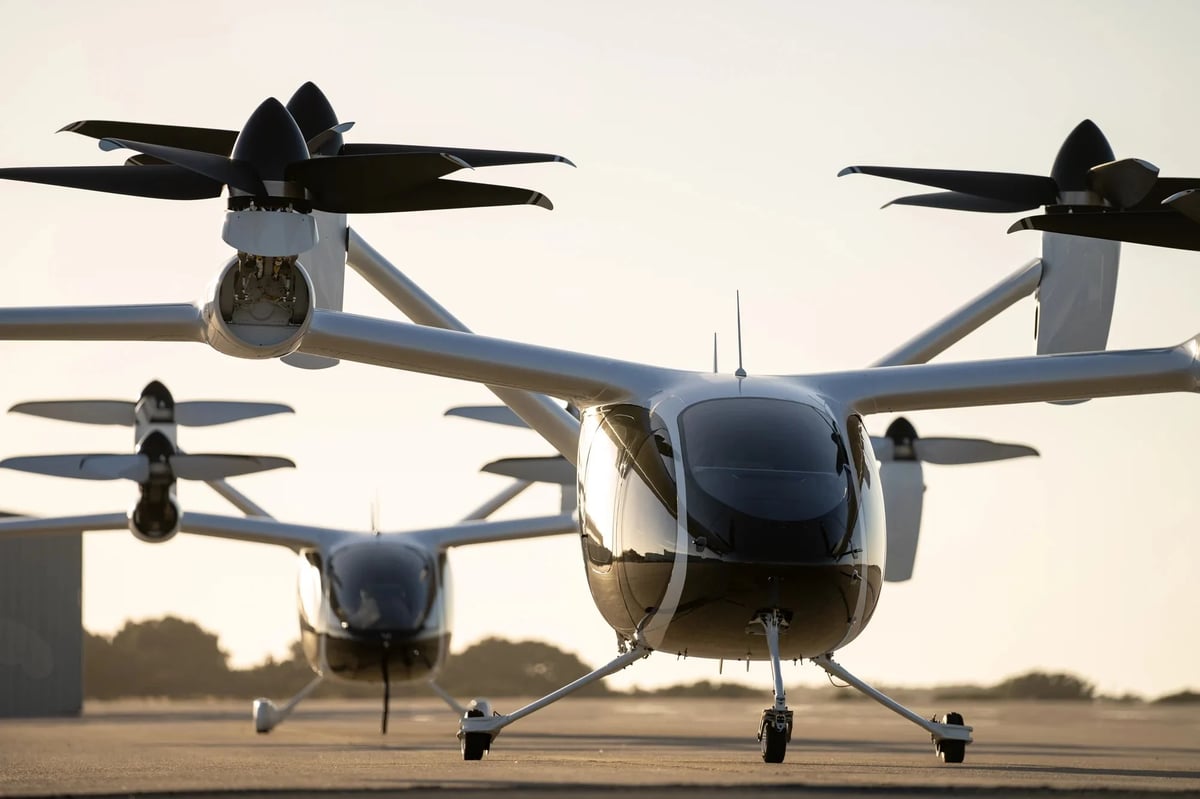
- Massive Market Potential: Joby Aviation aims to tackle traffic congestion with its electric vertical takeoff and landing (eVTOL) flying taxis, targeting a share of the urban mobility market projected to reach $9 trillion by 2050, which could significantly enhance its market position if successful.
- Slow Progress: Although Joby began FAA-compliant aircraft flight testing in 2026 and plans to conduct 'for credit' testing, it still faces delays in obtaining a commercial license, which could hinder its early operational capabilities.
- White House Program Support: Joby's involvement in a White House initiative designed to accelerate commercial operations for eVTOL manufacturers is expected to facilitate the launch of early operations in U.S. cities by 2026, thereby enhancing its competitive edge in the market.
- Valuation Risks: With a current market cap of approximately $9 billion and stock prices ranging from $9 to $10, Joby lacks sufficient revenue to justify its valuation, prompting investors to exercise caution and wait for regulatory approval before considering investment.
See More

Joby Aviation Redefines Urban Transportation
- eVTOL Aircraft Innovation: Joby Aviation's eVTOL aircraft can take off like a helicopter and fly like an airplane, utilizing electric batteries for quiet urban transportation, enabling users to bypass ground congestion and significantly enhance travel efficiency, which is expected to transform urban mobility.
- Government Support Program: The U.S. government's eVTOL Integration Pilot Program (eIPP) allows Joby to operate in 11 states, including key markets like New York, Texas, and Florida, facilitating real-world testing and accelerating the commercialization of flying taxis by reducing traditional approval timelines.
- First Flight Demonstration: Joby successfully completed its first eVTOL flights in New York City, connecting JFK International Airport to multiple Manhattan heliports, reducing a 60-minute journey to just seven minutes, showcasing the aircraft's operational readiness and potential for significant time savings for commuters.
- Market Potential: Morgan Stanley projects the Urban Air Mobility market could reach $9 trillion globally by 2050, and if Joby captures a substantial market share, it could have immense long-term wealth-creating potential; however, the company is still in the early market phase, with success dependent on scaling manufacturing and customer adoption.
See More
Intense Competition in eVTOL Market Heats Up

- Massive Market Potential: The eVTOL market is projected to reach $1 trillion over the next 20 years, positioning Archer Aviation and Joby Aviation as key players in a rapidly evolving industry that attracts significant investor interest.
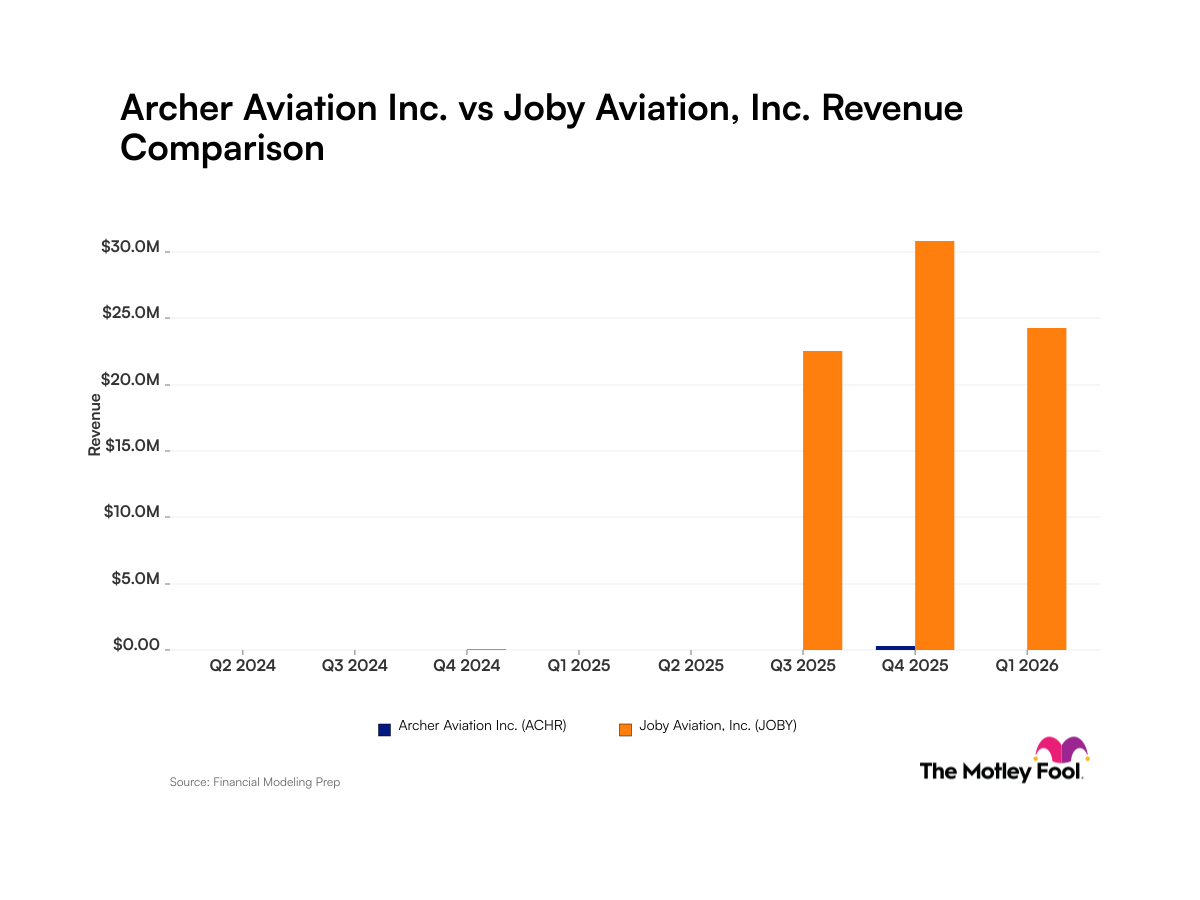
- Revenue Comparison: Joby Aviation leads Archer in revenue generation, although both companies are still in the early stages of federal certification; Joby's revenue is bolstered by its acquisition of Blade, with full-year expectations of $105 million to $115 million.
- Financial Health: Archer reported a negative free cash flow of $181 million in Q1, indicating financial strain during its transition and certification process, while Joby's negative free cash flow stood at $222 million, highlighting challenges in its expansion efforts.
- Future Outlook: As Archer expands operations at Hawthorne Airport in Los Angeles and gradually increases revenue, investors will closely monitor the progress of both companies in manufacturing and certification, leading to an increasingly competitive landscape.
See More
Joby Aviation Joins White House eVTOL Initiative
- Significant Market Potential: Joby Aviation aims to operate eVTOLs in U.S. cities by late 2026, with the urban mobility market projected to reach $9 trillion by 2050, potentially capturing a substantial market share if successful.
- Flight Testing Progress: Joby began flight testing its FAA-conforming aircraft in March 2026 and expects to start 'for credit' testing later that year, both crucial steps toward obtaining the commercial license needed for passenger operations.
- Experience from Acquisition: By acquiring Blade Air Mobility, Joby currently operates helicopter services, gaining valuable experience on routes like Manhattan to JFK, which will support its future eVTOL operations with essential data.
- Valuation Risks: Despite Joby's current share price ranging from $9 to $10, its $9 billion market cap appears excessively high for a startup with minimal revenue, prompting investors to carefully consider its commercialization prospects.
See More
Joby Aviation: The Future of Flying Taxis
- Market Potential: Joby Aviation's acquisition of Blade Air Mobility provides a foothold in the potential eVTOL market, with the $125 million deal contributing significantly to its first-quarter sales of $24 million, despite Blade's minimal profits.
- Production Control: Unlike Blade, Joby aims to control the entire production process, from manufacturing eVTOL parts to managing its booking platform, which positions it advantageously in the competitive landscape, especially regarding regulatory approvals for electric vertical takeoff and landing aircraft.
- Consumer Habit Formation: Joby must cultivate a consumer habit of flying to the airport, particularly when time is of the essence, which is crucial for its success; future ride costs are expected to be comparable to ground transportation, enhancing attractiveness.
- Partnership Opportunities: Joby's collaboration with Uber presents a significant opportunity to become the preferred eVTOL service; despite facing regulatory hurdles and infrastructure challenges, successful execution could secure a strong position in the $9 trillion eVTOL market projected by Morgan Stanley in 2021.
See More
Joby Aviation Acquires Blade to Propel eVTOL Market
- Strategic Acquisition of Blade: Joby Aviation's $125 million acquisition of Blade Air Mobility, while not immediately profitable, provides a crucial revenue stream that supports Joby's positioning in the future eVTOL market.
- Market Positioning and User Habits: By controlling the production and booking processes of its eVTOLs, Joby aims to normalize the flying experience to the airport, enhancing market acceptance, especially when time is of the essence.
- Data Collection and Analysis: The operation of Blade allows Joby to gather user preference data, analyzing when and where people prefer flying over public transit, which will inform future market strategies.
- Market Potential and Investment Opportunity: With Morgan Stanley valuing the eVTOL market at $9 trillion, Joby is seen as one of the best opportunities for tripling investments at its current price of around $10, despite facing regulatory and infrastructure development risks.
See More
Joby Aviation: Potential of Future Aerial Mobility
- Massive Market Potential: Joby Aviation aims to tackle traffic congestion with its electric vertical takeoff and landing (eVTOL) flying taxis, targeting a share of the urban mobility market projected to reach $9 trillion by 2050, which could significantly enhance its market position if successful.
- Slow Progress: Although Joby began FAA-compliant aircraft flight testing in 2026 and plans to conduct 'for credit' testing, it still faces delays in obtaining a commercial license, which could hinder its early operational capabilities.
- White House Program Support: Joby's involvement in a White House initiative designed to accelerate commercial operations for eVTOL manufacturers is expected to facilitate the launch of early operations in U.S. cities by 2026, thereby enhancing its competitive edge in the market.
- Valuation Risks: With a current market cap of approximately $9 billion and stock prices ranging from $9 to $10, Joby lacks sufficient revenue to justify its valuation, prompting investors to exercise caution and wait for regulatory approval before considering investment.
See More
Joby Aviation Redefines Urban Transportation
- eVTOL Aircraft Innovation: Joby Aviation's eVTOL aircraft can take off like a helicopter and fly like an airplane, utilizing electric batteries for quiet urban transportation, enabling users to bypass ground congestion and significantly enhance travel efficiency, which is expected to transform urban mobility.
- Government Support Program: The U.S. government's eVTOL Integration Pilot Program (eIPP) allows Joby to operate in 11 states, including key markets like New York, Texas, and Florida, facilitating real-world testing and accelerating the commercialization of flying taxis by reducing traditional approval timelines.
- First Flight Demonstration: Joby successfully completed its first eVTOL flights in New York City, connecting JFK International Airport to multiple Manhattan heliports, reducing a 60-minute journey to just seven minutes, showcasing the aircraft's operational readiness and potential for significant time savings for commuters.
- Market Potential: Morgan Stanley projects the Urban Air Mobility market could reach $9 trillion globally by 2050, and if Joby captures a substantial market share, it could have immense long-term wealth-creating potential; however, the company is still in the early market phase, with success dependent on scaling manufacturing and customer adoption.
See More
Intense Competition in eVTOL Market Heats Up
- Massive Market Potential: The eVTOL market is projected to reach $1 trillion over the next 20 years, positioning Archer Aviation and Joby Aviation as key players in a rapidly evolving industry that attracts significant investor interest.
- Revenue Comparison: Joby Aviation leads Archer in revenue generation, although both companies are still in the early stages of federal certification; Joby's revenue is bolstered by its acquisition of Blade, with full-year expectations of $105 million to $115 million.
- Financial Health: Archer reported a negative free cash flow of $181 million in Q1, indicating financial strain during its transition and certification process, while Joby's negative free cash flow stood at $222 million, highlighting challenges in its expansion efforts.
- Future Outlook: As Archer expands operations at Hawthorne Airport in Los Angeles and gradually increases revenue, investors will closely monitor the progress of both companies in manufacturing and certification, leading to an increasingly competitive landscape.
See More