Jensen Huang: AI Revolution is Just Beginning
Written by Emily J. Thompson, Senior Investment Analyst
Updated: 1 hour ago
0mins
Source: seekingalpha
- Beginning of AI Revolution: Nvidia CEO Jensen Huang stated in Seoul that the recent selloff in U.S. semiconductor stocks should be viewed as the start of a larger trend, emphasizing that “we are at the outset of the AI revolution,” indicating the company's optimistic outlook on future markets.
- Buying Opportunity: Huang pointed out that despite market fluctuations, investors should be excited as they can now buy stocks at a discount, reflecting his confidence that the buildout of AI infrastructure is still in its early stages.
- Global Market Pressure: Following stronger-than-expected U.S. jobs data, concerns about the Federal Reserve maintaining elevated interest rates have put pressure on global tech stocks, with South Korea's KOSPI Index sharply declining, indicating a cautious sentiment towards AI-related stocks.
- Importance of AI Infrastructure: Huang emphasized that AI will serve as a global infrastructure, akin to the role of the internet, highlighting Nvidia's strategic significance in advancing AI technology and signaling future growth potential.
Trade with 70% Backtested Accuracy
Stop guessing "Should I Buy NVDA?" and start using high-conviction signals backed by rigorous historical data.
Sign up today to access powerful investing tools and make smarter, data-driven decisions.
Analyst Views on NVDA
Wall Street analysts forecast NVDA stock price to rise
41 Analyst Rating
39 Buy
1 Hold
1 Sell
Strong Buy
Current: 218.660

Low
200.00
Averages
264.97
High
352.00
Current: 218.660
Low
200.00
Averages
264.97
High
352.00
About NVDA
NVIDIA Corporation is an artificial intelligence (AI) infrastructure company. The Company is engaged in accelerated computing to help solve the challenging computational problems. Its segments include Compute & Networking and Graphics. The Compute & Networking segment includes its Data Center accelerated computing and networking platforms and AI solutions and software, and automotive platforms and autonomous and electric vehicle solutions, including software. The Graphics segment includes GeForce GPUs for gaming and personal computers (PCs), and Quadro/NVIDIA RTX GPUs for enterprise workstation graphics. Its technology stack includes the foundational NVIDIA CUDA development platform that runs on all NVIDIA GPUs, as well as hundreds of domain-specific software libraries, frameworks, algorithms, software development kits (SDKs), and application programming interfaces (APIs). Its platforms address four markets, which include Data Center, Gaming, Professional Visualization, and Automotive.
About the author

Emily J. Thompson
Emily J. Thompson, a Chartered Financial Analyst (CFA) with 12 years in investment research, graduated with honors from the Wharton School. Specializing in industrial and technology stocks, she provides in-depth analysis for Intellectia’s earnings and market brief reports.

Nvidia's Stock Continues to Climb, Market Cap Reaches $5.3 Trillion

- Significant Stock Growth: As of June 4, Nvidia's stock has risen 17% in 2026, reaching a market cap of $5.3 trillion, indicating strong market performance and investor confidence.
- Remarkable Investment Returns: An investment of $10,000 in Nvidia a decade ago would now be worth nearly $1.9 million, yielding a staggering 18,720% return, far surpassing Bitcoin's 11,040% increase, highlighting its leadership in the AI sector.
- Strong Revenue Growth: Nvidia's revenue surged by 1,033% over the past three years, reflecting robust demand for its AI data center hardware and software, solidifying its market dominance.
- Excellent Profit Margins: In Q1 2027, Nvidia reported an operating margin of 65.6%, demonstrating its strong profitability in the rapidly growing AI market.
See More
Three Stocks for Long-Term Income Investing
- Coca-Cola's Stability: The Coca-Cola Company (NYSE: KO), founded in 1892, boasts 32 brands generating over $1 billion in annual revenue, achieving a 7% organic growth rate over the past decade, indicating strong growth potential in emerging markets, while maintaining a 64-year streak of dividend increases, making it a favorite among income investors.
- NextEra Energy's Growth Potential: As the largest utility company by market cap, NextEra Energy (NYSE: NEE) serves approximately 12 million users through Florida Power & Light and anticipates a 6% dividend growth over the next two years, with plans to acquire Dominion Energy to solidify its market leadership, reflecting robust growth expectations amid rising AI demand.
- Realty Income's Consistent Returns: Realty Income (NYSE: O), the sixth-largest global REIT, owns 15,571 properties and has generated positive operational returns for 31 consecutive years, offering a dividend yield of 5.4% and paying monthly dividends, showcasing its growth potential in the European market.
- Investor Confidence in Longevity: These companies not only excel in their respective fields but also maintain stable dividend payments amid economic uncertainties, attracting numerous income investors, indicating that selecting these firms can effectively safeguard investment returns against inflation and recession risks.
See More
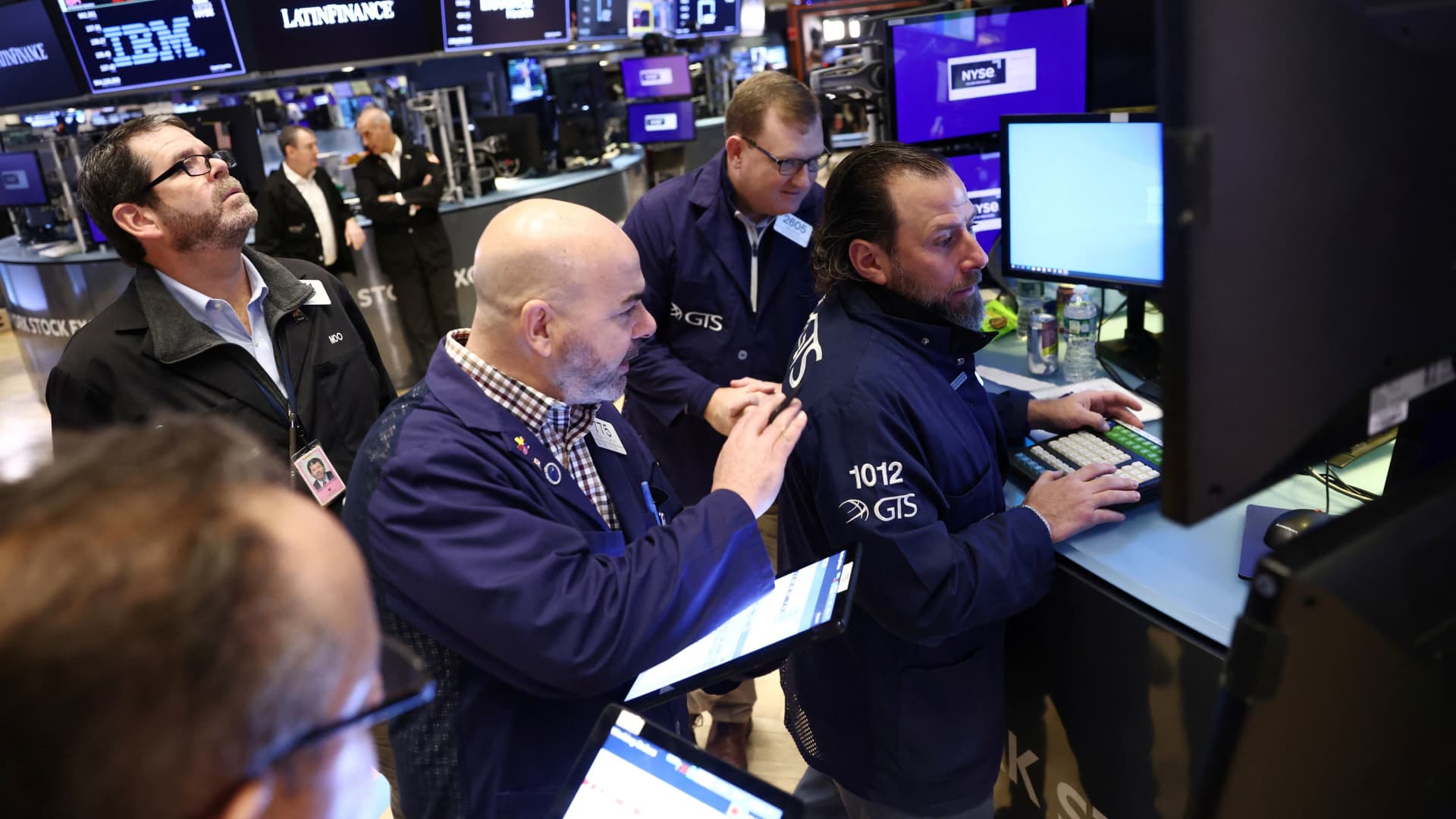
South Korea's Stock Market Plunges Nearly 9%, Triggers Circuit Breakers
- Market Plunge: South Korea's KOSPI index fell nearly 9% on Monday, triggering circuit breakers as the market reacted sharply to robust U.S. jobs data that heightened Federal Reserve rate hike expectations, leading to a significant selloff in tech stocks, particularly with Samsung Electronics and SK Hynix dropping over 10% each.
- Chip Sector Impact: As key drivers of the KOSPI index, Samsung and SK Hynix saw their market capitalizations surge by over 150% and 200% respectively this year, but the recent selloff has led to substantial price corrections, highlighting the market's over-reliance on tech stocks for growth.
- Forex Market Volatility: The won appreciated by 0.7% to 1,548.9 against the dollar, rebounding from Friday's low of 1,615.0, reflecting authorities' firm stance against speculative trading, although officials warned that continued foreign selling of local stocks could exert further pressure on the won.
- Presidential Market Confidence: In a press conference marking his first year in office, President Lee Jae Myung stated that the market is still undervalued and described the current exchange rate as temporary and abnormal, emphasizing that foreign selling is a primary factor affecting the won, indicating government confidence in the market and future policy support.
See More
Jensen Huang: AI Revolution is Just Beginning
- Beginning of AI Revolution: Nvidia CEO Jensen Huang stated in Seoul that the recent selloff in U.S. semiconductor stocks should be viewed as the start of a larger trend, emphasizing that “we are at the outset of the AI revolution,” indicating the company's optimistic outlook on future markets.
- Buying Opportunity: Huang pointed out that despite market fluctuations, investors should be excited as they can now buy stocks at a discount, reflecting his confidence that the buildout of AI infrastructure is still in its early stages.
- Global Market Pressure: Following stronger-than-expected U.S. jobs data, concerns about the Federal Reserve maintaining elevated interest rates have put pressure on global tech stocks, with South Korea's KOSPI Index sharply declining, indicating a cautious sentiment towards AI-related stocks.
- Importance of AI Infrastructure: Huang emphasized that AI will serve as a global infrastructure, akin to the role of the internet, highlighting Nvidia's strategic significance in advancing AI technology and signaling future growth potential.
See More
SK Telecom and NVIDIA Collaborate on AI Cloud Development

- AI Cloud Initiative: SK Telecom plans to launch its first AI factory in 2027, utilizing the NVIDIA DSX platform to build a gigawatt-scale AI Cloud aimed at providing robust AI infrastructure for various industries in Korea, enhancing overall business efficiency.
- Integrated Technology Architecture: The AI Cloud will be built on NVIDIA DSX's full-stack reference architecture, encompassing software, hardware, and operations, ensuring efficient handling of training, inference, and agentic workloads, thereby driving digital transformation for enterprises.
- Joint R&D Prospects: SK Telecom and NVIDIA will collaborate on developing next-generation AI factory architecture, focusing on silicon-to-grid innovations in accelerated computing, memory technologies, and data center operations, further deepening their strategic partnership.
- Enhanced Industry Impact: By establishing the AI Cloud, SK Telecom aims to not only strengthen its competitive edge in the AI sector but also inject new vitality into Korea's tech ecosystem, fostering innovation and development across related industries.
See More
Warren Buffett's Investment Strategy Unveiled

- Investment Philosophy: Warren Buffett's investment strategy focuses on identifying undervalued assets and holding them long-term, a simple yet effective approach that has led to his net worth reaching $149 billion, highlighting his extraordinary success.
- Index Fund Recommendation: Buffett advises average investors to opt for low-cost S&P 500 index funds for long-term investment, viewing it as a solid bet on the long-term growth of the U.S. economy, particularly recommending the Vanguard S&P 500 ETF (VOO) with an expense ratio of just 0.03%.
- Importance of Consistent Investing: Buffett emphasizes the need to continue investing during market fluctuations, believing that American businesses will perform well over time; this strategy not only diversifies risk but also enhances returns through compounding effects.
- Buy-and-Hold Strategy: By adopting a buy-and-hold approach, investors can reduce transaction fees and tax implications while maintaining portfolio stability during market volatility, ensuring that overall investments continue to grow even when individual stocks underperform.
See More
Nvidia's Stock Continues to Climb, Market Cap Reaches $5.3 Trillion
- Significant Stock Growth: As of June 4, Nvidia's stock has risen 17% in 2026, reaching a market cap of $5.3 trillion, indicating strong market performance and investor confidence.
- Remarkable Investment Returns: An investment of $10,000 in Nvidia a decade ago would now be worth nearly $1.9 million, yielding a staggering 18,720% return, far surpassing Bitcoin's 11,040% increase, highlighting its leadership in the AI sector.
- Strong Revenue Growth: Nvidia's revenue surged by 1,033% over the past three years, reflecting robust demand for its AI data center hardware and software, solidifying its market dominance.
- Excellent Profit Margins: In Q1 2027, Nvidia reported an operating margin of 65.6%, demonstrating its strong profitability in the rapidly growing AI market.
See More
Three Stocks for Long-Term Income Investing
- Coca-Cola's Stability: The Coca-Cola Company (NYSE: KO), founded in 1892, boasts 32 brands generating over $1 billion in annual revenue, achieving a 7% organic growth rate over the past decade, indicating strong growth potential in emerging markets, while maintaining a 64-year streak of dividend increases, making it a favorite among income investors.
- NextEra Energy's Growth Potential: As the largest utility company by market cap, NextEra Energy (NYSE: NEE) serves approximately 12 million users through Florida Power & Light and anticipates a 6% dividend growth over the next two years, with plans to acquire Dominion Energy to solidify its market leadership, reflecting robust growth expectations amid rising AI demand.
- Realty Income's Consistent Returns: Realty Income (NYSE: O), the sixth-largest global REIT, owns 15,571 properties and has generated positive operational returns for 31 consecutive years, offering a dividend yield of 5.4% and paying monthly dividends, showcasing its growth potential in the European market.
- Investor Confidence in Longevity: These companies not only excel in their respective fields but also maintain stable dividend payments amid economic uncertainties, attracting numerous income investors, indicating that selecting these firms can effectively safeguard investment returns against inflation and recession risks.
See More
South Korea's Stock Market Plunges Nearly 9%, Triggers Circuit Breakers
- Market Plunge: South Korea's KOSPI index fell nearly 9% on Monday, triggering circuit breakers as the market reacted sharply to robust U.S. jobs data that heightened Federal Reserve rate hike expectations, leading to a significant selloff in tech stocks, particularly with Samsung Electronics and SK Hynix dropping over 10% each.
- Chip Sector Impact: As key drivers of the KOSPI index, Samsung and SK Hynix saw their market capitalizations surge by over 150% and 200% respectively this year, but the recent selloff has led to substantial price corrections, highlighting the market's over-reliance on tech stocks for growth.
- Forex Market Volatility: The won appreciated by 0.7% to 1,548.9 against the dollar, rebounding from Friday's low of 1,615.0, reflecting authorities' firm stance against speculative trading, although officials warned that continued foreign selling of local stocks could exert further pressure on the won.
- Presidential Market Confidence: In a press conference marking his first year in office, President Lee Jae Myung stated that the market is still undervalued and described the current exchange rate as temporary and abnormal, emphasizing that foreign selling is a primary factor affecting the won, indicating government confidence in the market and future policy support.
See More
Jensen Huang: AI Revolution is Just Beginning
- Beginning of AI Revolution: Nvidia CEO Jensen Huang stated in Seoul that the recent selloff in U.S. semiconductor stocks should be viewed as the start of a larger trend, emphasizing that “we are at the outset of the AI revolution,” indicating the company's optimistic outlook on future markets.
- Buying Opportunity: Huang pointed out that despite market fluctuations, investors should be excited as they can now buy stocks at a discount, reflecting his confidence that the buildout of AI infrastructure is still in its early stages.
- Global Market Pressure: Following stronger-than-expected U.S. jobs data, concerns about the Federal Reserve maintaining elevated interest rates have put pressure on global tech stocks, with South Korea's KOSPI Index sharply declining, indicating a cautious sentiment towards AI-related stocks.
- Importance of AI Infrastructure: Huang emphasized that AI will serve as a global infrastructure, akin to the role of the internet, highlighting Nvidia's strategic significance in advancing AI technology and signaling future growth potential.
See More
SK Telecom and NVIDIA Collaborate on AI Cloud Development
- AI Cloud Initiative: SK Telecom plans to launch its first AI factory in 2027, utilizing the NVIDIA DSX platform to build a gigawatt-scale AI Cloud aimed at providing robust AI infrastructure for various industries in Korea, enhancing overall business efficiency.
- Integrated Technology Architecture: The AI Cloud will be built on NVIDIA DSX's full-stack reference architecture, encompassing software, hardware, and operations, ensuring efficient handling of training, inference, and agentic workloads, thereby driving digital transformation for enterprises.
- Joint R&D Prospects: SK Telecom and NVIDIA will collaborate on developing next-generation AI factory architecture, focusing on silicon-to-grid innovations in accelerated computing, memory technologies, and data center operations, further deepening their strategic partnership.
- Enhanced Industry Impact: By establishing the AI Cloud, SK Telecom aims to not only strengthen its competitive edge in the AI sector but also inject new vitality into Korea's tech ecosystem, fostering innovation and development across related industries.
See More
Warren Buffett's Investment Strategy Unveiled
- Investment Philosophy: Warren Buffett's investment strategy focuses on identifying undervalued assets and holding them long-term, a simple yet effective approach that has led to his net worth reaching $149 billion, highlighting his extraordinary success.
- Index Fund Recommendation: Buffett advises average investors to opt for low-cost S&P 500 index funds for long-term investment, viewing it as a solid bet on the long-term growth of the U.S. economy, particularly recommending the Vanguard S&P 500 ETF (VOO) with an expense ratio of just 0.03%.
- Importance of Consistent Investing: Buffett emphasizes the need to continue investing during market fluctuations, believing that American businesses will perform well over time; this strategy not only diversifies risk but also enhances returns through compounding effects.
- Buy-and-Hold Strategy: By adopting a buy-and-hold approach, investors can reduce transaction fees and tax implications while maintaining portfolio stability during market volatility, ensuring that overall investments continue to grow even when individual stocks underperform.
See More