Impact of Strait of Hormuz Closure on Oil Prices
Written by Emily J. Thompson, Senior Investment Analyst
Updated: Mar 25 2026
0mins


Source: Fool
- Crude Supply Tightness: The IEA reports that 25% of global seaborne oil flows through the Strait of Hormuz, and the prospect of its closure has driven oil prices up, prompting investors to consider U.S. companies like Devon Energy and Diamondback Energy to mitigate supply risks and secure capital returns.
- LNG Trade Disruption: Approximately 20% of global LNG trade passes through the Strait, and its closure will lead to rising prices worldwide, particularly impacting Europe; investors might look to Norway's Equinor and Australia's Woodside Energy to fill the supply gap in Asia.
- Refining Profit Surge: Refining stocks such as PBF Energy and Valero Energy have seen significant gains in 2026, with the 3-2-1 crack spread soaring from $20 at the start of the year to over $58, indicating that Asian refiners are facing higher crude procurement costs due to product shortages from the Gulf.
- Fertilizer Price Surge: The blockade of the Strait has stranded many fertilizer-laden ships, causing prices to soar and severely impacting Asian and African countries reliant on Gulf fertilizers; investors are turning to U.S. producers like CF Industries to navigate the tightening global fertilizer supply situation.
Trade with 70% Backtested Accuracy
Stop guessing "Should I Buy DVN?" and start using high-conviction signals backed by rigorous historical data.
Sign up today to access powerful investing tools and make smarter, data-driven decisions.
Analyst Views on DVN
Wall Street analysts forecast DVN stock price to rise
20 Analyst Rating
18 Buy
2 Hold
0 Sell
Strong Buy
Current: 44.110

Low
41.00
Averages
45.53
High
55.00
Current: 44.110
Low
41.00
Averages
45.53
High
55.00
About DVN
Devon Energy Corporation is an oil and gas producer in the United States with a diversified multi-basin portfolio headlined by an acreage position in the Delaware Basin. The Company is primarily engaged in the exploration, development and production of oil, natural gas and natural gas liquids (NGLs). It owns a portfolio of assets located in the Delaware Basin, Rockies, Eagle Ford and Anadarko Basin. The Delaware Basin operates in southeast New Mexico and across the state line into west Texas. It offers exploration and development opportunities from many geologic reservoirs and play types, including the oil-rich Wolfcamp, Bone Spring, Avalon and Delaware formations. Its Rockies development consists of its Williston Basin and Powder River Basin assets. The Eagle Ford operations are located in Texas' DeWitt and Karnes counties. The Anadarko Basin development is located in western Oklahoma. It has a joint venture with Dow to develop a portion of its Anadarko Basin acreage.
About the author

Emily J. Thompson
Emily J. Thompson, a Chartered Financial Analyst (CFA) with 12 years in investment research, graduated with honors from the Wharton School. Specializing in industrial and technology stocks, she provides in-depth analysis for Intellectia’s earnings and market brief reports.

S&P 500 Future Outlook and Performance Insights


- Historical Performance Review: Over the past 20 years, the S&P 500 has achieved an annual return of 9.3% excluding dividends, while the total return including dividends reached 768%, demonstrating its strong position as a benchmark for the U.S. stock market.
- Future Growth Expectations: Wall Street analysts project a 25% increase in earnings for S&P 500 companies in 2026, up from 14% in 2025, primarily driven by robust spending on artificial intelligence infrastructure and corporate tax breaks.
- Market Risk Factors: While strong earnings growth is expected to drive the S&P 500 higher, economic uncertainties stemming from the Iran conflict and potential interest rate hikes could negatively impact the stock market, necessitating cautious investor strategies.
- Investment Recommendations: When considering investments in the S&P 500 index, investors should also explore other potential stocks, as the Motley Fool analyst team has identified 10 stocks that could yield significant returns in the coming years, highlighting diverse investment opportunities in the market.
See More

S&P 500 Index Outlook for the Future
- Historical Performance: Over the past 20 years, the S&P 500 has delivered an annual return of 9.3% excluding dividends, underscoring its reliability as a benchmark for the U.S. stock market.
- Component Changes: In April 2026, Veeva Systems replaced Coterra Energy in the S&P 500 following its acquisition by Devon Energy, illustrating the impact of market dynamics and M&A activity on index composition.
- Future Earnings Expectations: Wall Street analysts project a 25% increase in S&P 500 company earnings for 2026, driven by robust spending on artificial intelligence infrastructure and corporate tax breaks, indicating strong growth potential.
- Economic Uncertainty: While analysts are optimistic about the S&P 500's future performance, the economic uncertainty stemming from the Iran conflict and potential interest rate hikes could negatively impact the stock market, prompting investors to proceed with caution.
See More
Devon Energy Receives $8 Billion Acquisition Offer

- Acquisition Proposal Overview: Stone Ridge Asset Management has made an approximately $8 billion offer for Devon Energy's Marcellus shale assets, aiming to initiate negotiations, although Devon has yet to decide on the future strategy for its natural gas assets.
- Securitization Innovation: The proposal from Stone Ridge includes utilizing the largest asset-backed securitization (ABS) in the U.S. oil and gas industry, pledging future oil and gas production revenues as collateral to lower borrowing costs, appealing to financial investors seeking steady returns.
- Devon's Strategic Adjustment: Following its merger with Coterra, Devon's management has indicated a focus on optimizing its business by reviewing all assets to enhance shareholder value, with plans to unveil new financial guidance in mid-June, reflecting its emphasis on asset allocation.
- Market Outlook and Challenges: The Marcellus assets are expected to account for about 20% of Devon's projected production of 1.6 million barrels of oil equivalent per day by 2026, with the Delaware region at 53%, indicating Devon's challenge in balancing growth with investor expectations.
See More

Devon Energy Receives $8B Acquisition Proposal
- Acquisition Proposal: Devon Energy (DVN) has received an approximately $8 billion acquisition offer from Stone Ridge Asset Management for its Marcellus shale assets in Pennsylvania, previously owned by Coterra, indicating strong market interest in mature oil and gas assets.
- Financing Innovation: The proposal includes the use of the largest asset-backed securitization (ABS) in U.S. oil and gas history, although the exact financing size is unknown; this financing method has gained favor in recent years as a means to fund acquisitions of mature oil and gas assets.
- Production Outlook: The Marcellus assets are expected to account for about 20% of Devon's (DVN) projected production of 1.6 million barrels of oil equivalent (boe) per day in 2026, highlighting the significance of these assets in the company's overall production strategy.
- Management Strategy: Devon Energy's management, including CEO Clay Gaspar, has indicated that the company is looking to optimize its business following the recent Coterra merger, although no decisions have been made regarding the Stone Ridge offer, reflecting a cautious strategic approach.
See More
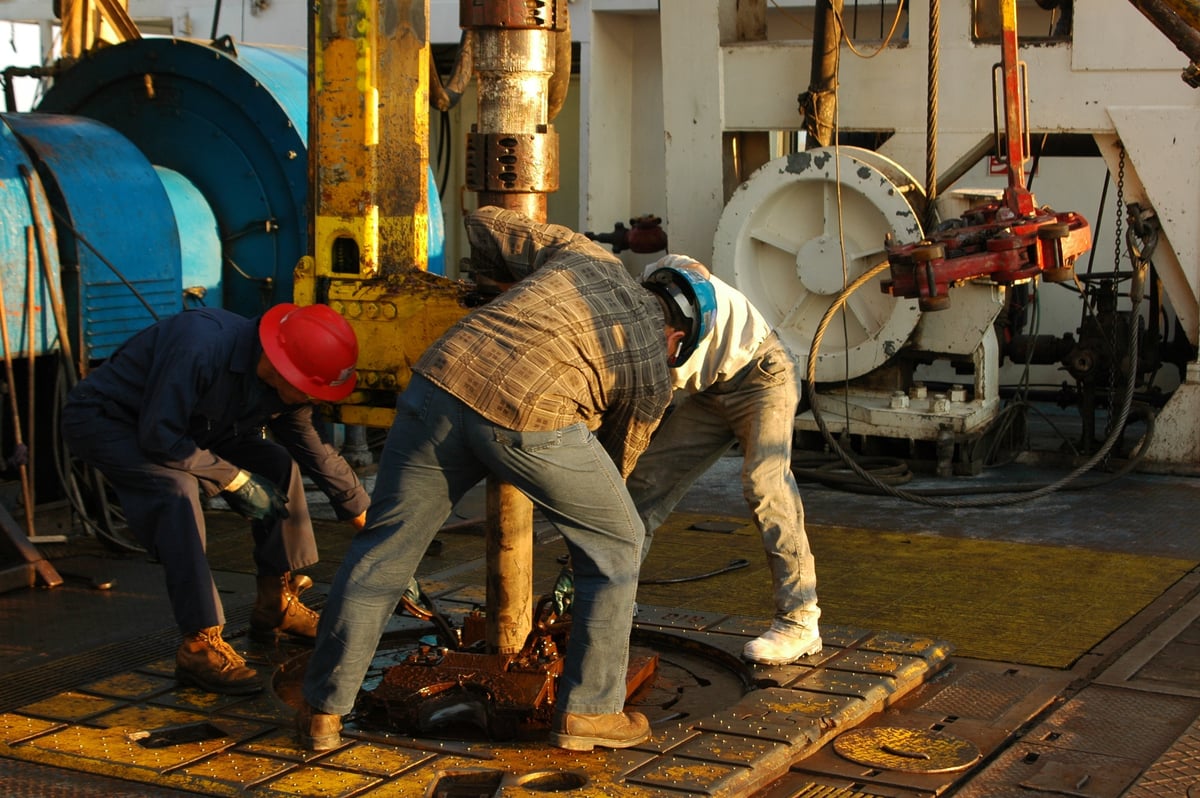
Middle East Conflict Impacts Shell and BP Outlook
- Middle East Conflict Impact: Shell and BP derive 20% and 22% of their production from the Middle East, respectively, with Shell's assets suffering damage due to the conflict; while rising oil prices are beneficial, operational disruptions may affect future earnings.
- Financial Health Comparison: Shell's debt-to-equity ratio stands at 0.4, significantly lower than BP's 1.3, indicating that Shell possesses greater financial resilience against geopolitical risks, making it a more attractive long-term investment.
- Stock Market Performance Discrepancy: Despite BP's stock rising 22% in 2026 compared to Shell's 15%, BP's high leverage and frequent management changes suggest that the market may not fully recognize Shell's financial advantages.
- Investment Recommendation: For investors looking to avoid Middle Eastern risks, Devon Energy and Enterprise Products Partners present safer alternatives, as they are unaffected by regional conflicts and Enterprise's revenue model is not driven by oil price fluctuations.
See More

Middle East Conflict Disrupts Energy Market
- Market Volatility Impact: The geopolitical conflict in the Middle East has disrupted the global energy market, affecting operations for Shell and BP, with approximately 22% of BP's production and 20% of Shell's production exposed to the region, increasing risks despite rising oil prices.
- Financial Health Comparison: BP's debt-to-equity ratio stands at a concerning 1.3x, significantly higher than its peers, while Shell maintains a more robust ratio of 0.4x, indicating Shell's stronger financial position and better resilience amid the conflict.
- Stock Performance Discrepancy: Although BP's stock has risen by 22% in 2026, compared to Shell's 15%, Shell's financial strength suggests it could close the performance gap in the future, especially as market volatility increases.
- Investment Recommendations: For investors looking to avoid Middle Eastern risks, Devon Energy and Enterprise Products Partners present safer alternatives, as they are unaffected by the regional conflict and Enterprise's business model is not driven by energy price fluctuations.
See More
S&P 500 Future Outlook and Performance Insights
- Historical Performance Review: Over the past 20 years, the S&P 500 has achieved an annual return of 9.3% excluding dividends, while the total return including dividends reached 768%, demonstrating its strong position as a benchmark for the U.S. stock market.
- Future Growth Expectations: Wall Street analysts project a 25% increase in earnings for S&P 500 companies in 2026, up from 14% in 2025, primarily driven by robust spending on artificial intelligence infrastructure and corporate tax breaks.
- Market Risk Factors: While strong earnings growth is expected to drive the S&P 500 higher, economic uncertainties stemming from the Iran conflict and potential interest rate hikes could negatively impact the stock market, necessitating cautious investor strategies.
- Investment Recommendations: When considering investments in the S&P 500 index, investors should also explore other potential stocks, as the Motley Fool analyst team has identified 10 stocks that could yield significant returns in the coming years, highlighting diverse investment opportunities in the market.
See More
S&P 500 Index Outlook for the Future
- Historical Performance: Over the past 20 years, the S&P 500 has delivered an annual return of 9.3% excluding dividends, underscoring its reliability as a benchmark for the U.S. stock market.
- Component Changes: In April 2026, Veeva Systems replaced Coterra Energy in the S&P 500 following its acquisition by Devon Energy, illustrating the impact of market dynamics and M&A activity on index composition.
- Future Earnings Expectations: Wall Street analysts project a 25% increase in S&P 500 company earnings for 2026, driven by robust spending on artificial intelligence infrastructure and corporate tax breaks, indicating strong growth potential.
- Economic Uncertainty: While analysts are optimistic about the S&P 500's future performance, the economic uncertainty stemming from the Iran conflict and potential interest rate hikes could negatively impact the stock market, prompting investors to proceed with caution.
See More
Devon Energy Receives $8 Billion Acquisition Offer
- Acquisition Proposal Overview: Stone Ridge Asset Management has made an approximately $8 billion offer for Devon Energy's Marcellus shale assets, aiming to initiate negotiations, although Devon has yet to decide on the future strategy for its natural gas assets.
- Securitization Innovation: The proposal from Stone Ridge includes utilizing the largest asset-backed securitization (ABS) in the U.S. oil and gas industry, pledging future oil and gas production revenues as collateral to lower borrowing costs, appealing to financial investors seeking steady returns.
- Devon's Strategic Adjustment: Following its merger with Coterra, Devon's management has indicated a focus on optimizing its business by reviewing all assets to enhance shareholder value, with plans to unveil new financial guidance in mid-June, reflecting its emphasis on asset allocation.
- Market Outlook and Challenges: The Marcellus assets are expected to account for about 20% of Devon's projected production of 1.6 million barrels of oil equivalent per day by 2026, with the Delaware region at 53%, indicating Devon's challenge in balancing growth with investor expectations.
See More
Devon Energy Receives $8B Acquisition Proposal
- Acquisition Proposal: Devon Energy (DVN) has received an approximately $8 billion acquisition offer from Stone Ridge Asset Management for its Marcellus shale assets in Pennsylvania, previously owned by Coterra, indicating strong market interest in mature oil and gas assets.
- Financing Innovation: The proposal includes the use of the largest asset-backed securitization (ABS) in U.S. oil and gas history, although the exact financing size is unknown; this financing method has gained favor in recent years as a means to fund acquisitions of mature oil and gas assets.
- Production Outlook: The Marcellus assets are expected to account for about 20% of Devon's (DVN) projected production of 1.6 million barrels of oil equivalent (boe) per day in 2026, highlighting the significance of these assets in the company's overall production strategy.
- Management Strategy: Devon Energy's management, including CEO Clay Gaspar, has indicated that the company is looking to optimize its business following the recent Coterra merger, although no decisions have been made regarding the Stone Ridge offer, reflecting a cautious strategic approach.
See More
Middle East Conflict Impacts Shell and BP Outlook
- Middle East Conflict Impact: Shell and BP derive 20% and 22% of their production from the Middle East, respectively, with Shell's assets suffering damage due to the conflict; while rising oil prices are beneficial, operational disruptions may affect future earnings.
- Financial Health Comparison: Shell's debt-to-equity ratio stands at 0.4, significantly lower than BP's 1.3, indicating that Shell possesses greater financial resilience against geopolitical risks, making it a more attractive long-term investment.
- Stock Market Performance Discrepancy: Despite BP's stock rising 22% in 2026 compared to Shell's 15%, BP's high leverage and frequent management changes suggest that the market may not fully recognize Shell's financial advantages.
- Investment Recommendation: For investors looking to avoid Middle Eastern risks, Devon Energy and Enterprise Products Partners present safer alternatives, as they are unaffected by regional conflicts and Enterprise's revenue model is not driven by oil price fluctuations.
See More
Middle East Conflict Disrupts Energy Market
- Market Volatility Impact: The geopolitical conflict in the Middle East has disrupted the global energy market, affecting operations for Shell and BP, with approximately 22% of BP's production and 20% of Shell's production exposed to the region, increasing risks despite rising oil prices.
- Financial Health Comparison: BP's debt-to-equity ratio stands at a concerning 1.3x, significantly higher than its peers, while Shell maintains a more robust ratio of 0.4x, indicating Shell's stronger financial position and better resilience amid the conflict.
- Stock Performance Discrepancy: Although BP's stock has risen by 22% in 2026, compared to Shell's 15%, Shell's financial strength suggests it could close the performance gap in the future, especially as market volatility increases.
- Investment Recommendations: For investors looking to avoid Middle Eastern risks, Devon Energy and Enterprise Products Partners present safer alternatives, as they are unaffected by the regional conflict and Enterprise's business model is not driven by energy price fluctuations.
See More