IBM Shares Plunge 13% Amid AI Concerns Over Mainframe Business
Written by Emily J. Thompson, Senior Investment Analyst
Updated: 1 hour ago
0mins
Should l Buy IBM?
Source: NASDAQ.COM
- Stock Price Drop: IBM shares plummeted 13% on February 23, marking the worst single-day decline in over 25 years, primarily due to fears that Anthropic's Claude Code AI could accelerate COBOL modernization and threaten IBM's mainframe business.
- Protection by Technical Complexity: While AI can expedite code translation, the complexities of testing, validation, and regulatory approval remain, leading institutional investors to exercise caution regarding IBM's mainframe business, ensuring it won't face significant impacts in the short term.
- Market Reaction Analysis: Although advancements in AI tools may make COBOL modernization faster and cheaper, financial and government institutions are unlikely to overhaul core infrastructures easily, preferring to rely on existing systems in a risk-averse manner.
- Investment Opportunity: Despite the drop in IBM's stock price, analysts suggest this could represent a buying opportunity, as IBM remains a solid investment choice, especially with a positive outlook on the long-term prospects of its mainframe business.
Trade with 70% Backtested Accuracy
Stop guessing "Should I Buy IBM?" and start using high-conviction signals backed by rigorous historical data.
Sign up today to access powerful investing tools and make smarter, data-driven decisions.
Analyst Views on IBM
Wall Street analysts forecast IBM stock price to rise
16 Analyst Rating
11 Buy
4 Hold
1 Sell
Moderate Buy
Current: 241.390

Low
210.00
Averages
315.80
High
375.00
Current: 241.390
Low
210.00
Averages
315.80
High
375.00
About IBM
International Business Machines Corporation is a provider of global hybrid cloud and artificial intelligence (AI) and consulting expertise. The Company’s segments include Software, Consulting, Infrastructure and Financing. The Software segment includes hybrid cloud and AI platforms, which allow clients to realize their digital and AI transformations across the applications, data, and environments in which they operate. The Consulting segment focuses on integrating skills on strategy, experience, technology and operations by domain and industry. The Infrastructure segment is focused on the hybrid cloud infrastructure market, providing on-premises and cloud-based server and storage solutions. In addition, it offers a portfolio of life-cycle services for hybrid cloud infrastructure deployment. The Financing segment provides client and commercial financing, facilitating its clients’ acquisition of hardware, software and services. It helps clients in more than 175 countries.
About the author

Emily J. Thompson
Emily J. Thompson, a Chartered Financial Analyst (CFA) with 12 years in investment research, graduated with honors from the Wharton School. Specializing in industrial and technology stocks, she provides in-depth analysis for Intellectia’s earnings and market brief reports.

IBM Shares Plunge 13% Amid AI Concerns Over Mainframe Business

- Stock Price Drop: IBM shares plummeted 13% on February 23, marking the worst single-day decline in over 25 years, primarily due to fears that Anthropic's Claude Code AI could accelerate COBOL modernization and threaten IBM's mainframe business.
- Protection by Technical Complexity: While AI can expedite code translation, the complexities of testing, validation, and regulatory approval remain, leading institutional investors to exercise caution regarding IBM's mainframe business, ensuring it won't face significant impacts in the short term.
- Market Reaction Analysis: Although advancements in AI tools may make COBOL modernization faster and cheaper, financial and government institutions are unlikely to overhaul core infrastructures easily, preferring to rely on existing systems in a risk-averse manner.
- Investment Opportunity: Despite the drop in IBM's stock price, analysts suggest this could represent a buying opportunity, as IBM remains a solid investment choice, especially with a positive outlook on the long-term prospects of its mainframe business.
See More
IBM Shares Plunge 13% Amid AI Concerns
- Stock Price Plunge: IBM shares dropped 13% on February 23, marking the worst single-day decline in over 25 years, primarily due to fears that Anthropic's Claude Code AI could modernize COBOL so quickly and cheaply that it threatens IBM's mainframe cash cow.
- Market Reaction: While AI can accelerate the exploration and analysis phase of COBOL modernization, IBM's core business still relies on hundreds of billions of lines of COBOL code that support critical systems in financial management and health records, indicating that market confidence in its future is not entirely shaken.
- Risk Management Challenges: Although AI can enhance code translation speed, it cannot eliminate risks, especially when dealing with systems that process $3 trillion in daily transactions; institutional caution makes large-scale infrastructure overhauls exceedingly slow, particularly due to complexities in regulation and validation.
- Long-Term Outlook: Despite the short-term stock drop, IBM's mainframe business is not going away anytime soon, and the market views this sell-off more as a buying opportunity than a doomsday prophecy, reflecting ongoing investor confidence in its long-term value.
See More
Landmark Verdict Signals Warning for Tech Giants

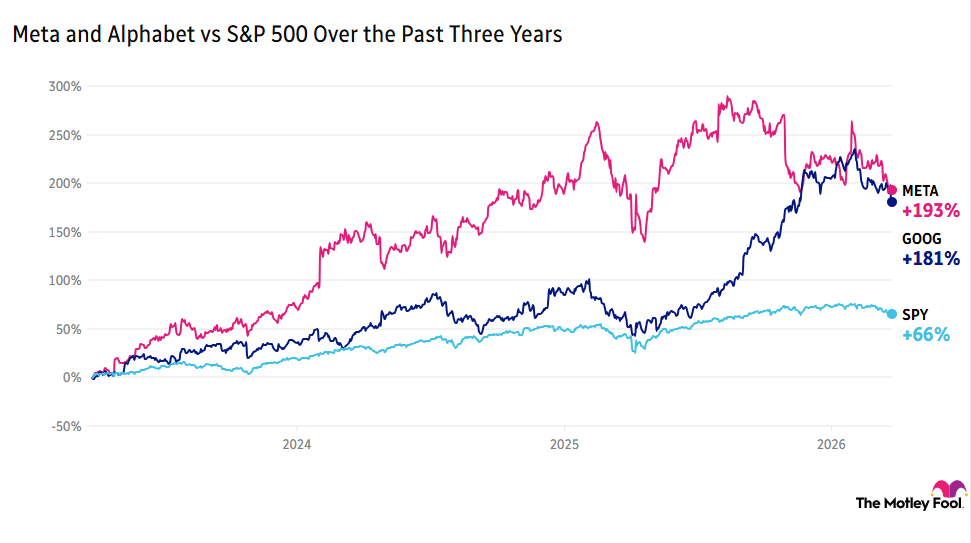
- Social Media Liability Ruling: Meta and Alphabet were found liable in a landmark case regarding social media addiction among children, with a jury awarding $6.4 million in damages, potentially opening the floodgates for thousands of related claims and posing significant legal risks for tech giants.
- Free Speech Concerns: An Alphabet spokesperson announced plans to appeal the verdict, while Meta warned that the ruling could have implications for free speech, highlighting the increasing regulatory scrutiny on tech companies, particularly as the U.K. and France consider similar youth social media bans.
- Cybersecurity Partnership Expansion: CrowdStrike announced an expanded partnership with IBM, integrating its AI platform into IBM's cybersecurity services to combat a 44% increase in attacks on public-facing applications, indicating a strong push towards monetizing AI applications in the security sector.
- Memory Technology Innovation: Alphabet's TurboQuant technology significantly reduces the memory required to run large language models by at least a factor of six, causing related memory and storage stocks like Sandisk and Micron to drop over 3% yesterday, although this efficiency may ultimately drive increased demand in the long run.
See More
IBM Quantum Computer Simulates Magnetic Materials, Advancing Scientific Research
- Quantum Computing Breakthrough: IBM's quantum computer successfully simulates real magnetic material KCuF3, with results matching neutron scattering experiments, marking a significant step toward the application of quantum systems in scientific research.
- Research Collaboration: This study was conducted in collaboration with the U.S. Department of Energy-funded Quantum Science Center and several universities and laboratories, highlighting the importance of cross-institutional partnerships in advancing quantum computing applications.
- High-Precision Simulation: IBM stated that quantum-centric supercomputing workflows and reductions in hardware error rates enabled high-precision simulations, providing a new scientific tool for materials discovery, particularly with long-term implications for superconductors and drug development.
- Future Prospects: IBM researchers anticipate that further improvements in error rates and extensions to higher dimensions will allow quantum computing to predict material properties that are challenging for classical methods, thereby advancing scientific research.
See More

IBM Quantum Computer Achieves Breakthrough in Material Simulation
- Quantum Computing Advancement: The team from the U.S. Department of Energy-funded Quantum Science Center demonstrated that quantum computers can perform material simulations, achieving results that closely match neutron scattering experiments, marking a significant enhancement in the reliability of quantum computers as tools for scientific discovery.
- Integration of Hardware and Algorithms: By utilizing quantum-centric supercomputing workflows and reducing hardware error rates, current quantum hardware can simulate material properties, laying the groundwork for long-term implications in fields such as superconductors, medical imaging, and drug development.
- Successful Experimental Validation: The research team focused on the magnetic crystal KCuF₃, directly comparing neutron scattering measurements with quantum computer simulations, demonstrating that quantum processors can capture key dynamic properties of real materials, thus raising expectations for scientific research.
- Prospects for Scientific Applications: This experiment is part of a broader shift in applying quantum computing to scientific problems, showcasing the potential of quantum computing to address significant scientific issues across chemistry, materials science, and molecular biology.
See More

IBM's Latest Breakthrough in Quantum Computing Set to Revolutionize Materials Science.

Quantum Computing Progress: IBM and researchers have demonstrated that current quantum computing systems are functional and usable, despite the anticipation for more advanced models.
Broader Scientific Implications: This achievement indicates that the scientific community can begin to explore practical applications of quantum computing technology today.
See More
IBM Shares Plunge 13% Amid AI Concerns Over Mainframe Business
- Stock Price Drop: IBM shares plummeted 13% on February 23, marking the worst single-day decline in over 25 years, primarily due to fears that Anthropic's Claude Code AI could accelerate COBOL modernization and threaten IBM's mainframe business.
- Protection by Technical Complexity: While AI can expedite code translation, the complexities of testing, validation, and regulatory approval remain, leading institutional investors to exercise caution regarding IBM's mainframe business, ensuring it won't face significant impacts in the short term.
- Market Reaction Analysis: Although advancements in AI tools may make COBOL modernization faster and cheaper, financial and government institutions are unlikely to overhaul core infrastructures easily, preferring to rely on existing systems in a risk-averse manner.
- Investment Opportunity: Despite the drop in IBM's stock price, analysts suggest this could represent a buying opportunity, as IBM remains a solid investment choice, especially with a positive outlook on the long-term prospects of its mainframe business.
See More
IBM Shares Plunge 13% Amid AI Concerns
- Stock Price Plunge: IBM shares dropped 13% on February 23, marking the worst single-day decline in over 25 years, primarily due to fears that Anthropic's Claude Code AI could modernize COBOL so quickly and cheaply that it threatens IBM's mainframe cash cow.
- Market Reaction: While AI can accelerate the exploration and analysis phase of COBOL modernization, IBM's core business still relies on hundreds of billions of lines of COBOL code that support critical systems in financial management and health records, indicating that market confidence in its future is not entirely shaken.
- Risk Management Challenges: Although AI can enhance code translation speed, it cannot eliminate risks, especially when dealing with systems that process $3 trillion in daily transactions; institutional caution makes large-scale infrastructure overhauls exceedingly slow, particularly due to complexities in regulation and validation.
- Long-Term Outlook: Despite the short-term stock drop, IBM's mainframe business is not going away anytime soon, and the market views this sell-off more as a buying opportunity than a doomsday prophecy, reflecting ongoing investor confidence in its long-term value.
See More
Landmark Verdict Signals Warning for Tech Giants
- Social Media Liability Ruling: Meta and Alphabet were found liable in a landmark case regarding social media addiction among children, with a jury awarding $6.4 million in damages, potentially opening the floodgates for thousands of related claims and posing significant legal risks for tech giants.
- Free Speech Concerns: An Alphabet spokesperson announced plans to appeal the verdict, while Meta warned that the ruling could have implications for free speech, highlighting the increasing regulatory scrutiny on tech companies, particularly as the U.K. and France consider similar youth social media bans.
- Cybersecurity Partnership Expansion: CrowdStrike announced an expanded partnership with IBM, integrating its AI platform into IBM's cybersecurity services to combat a 44% increase in attacks on public-facing applications, indicating a strong push towards monetizing AI applications in the security sector.
- Memory Technology Innovation: Alphabet's TurboQuant technology significantly reduces the memory required to run large language models by at least a factor of six, causing related memory and storage stocks like Sandisk and Micron to drop over 3% yesterday, although this efficiency may ultimately drive increased demand in the long run.
See More
IBM Quantum Computer Simulates Magnetic Materials, Advancing Scientific Research
- Quantum Computing Breakthrough: IBM's quantum computer successfully simulates real magnetic material KCuF3, with results matching neutron scattering experiments, marking a significant step toward the application of quantum systems in scientific research.
- Research Collaboration: This study was conducted in collaboration with the U.S. Department of Energy-funded Quantum Science Center and several universities and laboratories, highlighting the importance of cross-institutional partnerships in advancing quantum computing applications.
- High-Precision Simulation: IBM stated that quantum-centric supercomputing workflows and reductions in hardware error rates enabled high-precision simulations, providing a new scientific tool for materials discovery, particularly with long-term implications for superconductors and drug development.
- Future Prospects: IBM researchers anticipate that further improvements in error rates and extensions to higher dimensions will allow quantum computing to predict material properties that are challenging for classical methods, thereby advancing scientific research.
See More
IBM Quantum Computer Achieves Breakthrough in Material Simulation
- Quantum Computing Advancement: The team from the U.S. Department of Energy-funded Quantum Science Center demonstrated that quantum computers can perform material simulations, achieving results that closely match neutron scattering experiments, marking a significant enhancement in the reliability of quantum computers as tools for scientific discovery.
- Integration of Hardware and Algorithms: By utilizing quantum-centric supercomputing workflows and reducing hardware error rates, current quantum hardware can simulate material properties, laying the groundwork for long-term implications in fields such as superconductors, medical imaging, and drug development.
- Successful Experimental Validation: The research team focused on the magnetic crystal KCuF₃, directly comparing neutron scattering measurements with quantum computer simulations, demonstrating that quantum processors can capture key dynamic properties of real materials, thus raising expectations for scientific research.
- Prospects for Scientific Applications: This experiment is part of a broader shift in applying quantum computing to scientific problems, showcasing the potential of quantum computing to address significant scientific issues across chemistry, materials science, and molecular biology.
See More
IBM's Latest Breakthrough in Quantum Computing Set to Revolutionize Materials Science.
Quantum Computing Progress: IBM and researchers have demonstrated that current quantum computing systems are functional and usable, despite the anticipation for more advanced models.
Broader Scientific Implications: This achievement indicates that the scientific community can begin to explore practical applications of quantum computing technology today.
See More