

GE Aerospace Reports Strong Q1 Growth Amid Industry Challenges
Written by Emily J. Thompson, Senior Investment Analyst
Updated: 42 minutes ago
0mins
Source: Fool
- Significant Revenue Growth: In Q1 2026, GE Aerospace achieved a 29% year-over-year revenue growth, driving adjusted earnings-per-share up by 25% and cash flow by 14%, demonstrating strong performance amid industry pressures.
- Surge in Orders: Despite high jet fuel costs due to geopolitical conflicts in the Middle East, GE Aerospace's orders grew by 87% year-over-year, indicating strong market demand, with a total backlog of $210 billion.
- Stable Service Revenue: Of the $210 billion backlog, $170 billion is related to services, providing a stable annuity-like income stream that enhances the company's financial security for the future.
- Optimistic Management Outlook: Management expects to hit the high end of its full-year guidance for 2026, and given the importance of service revenues, this optimism seems reasonable, further driving the steady rise of GE Aerospace's stock.
Trade with 70% Backtested Accuracy
Stop guessing "Should I Buy GE?" and start using high-conviction signals backed by rigorous historical data.
Sign up today to access powerful investing tools and make smarter, data-driven decisions.
Analyst Views on GE
Wall Street analysts forecast GE stock price to rise
9 Analyst Rating
8 Buy
0 Hold
1 Sell
Strong Buy
Current: 317.720

Low
275.00
Averages
345.67
High
386.00
Current: 317.720
Low
275.00
Averages
345.67
High
386.00
About GE
General Electric Company, doing business as GE Aerospace, is a global aerospace propulsion, services, and systems company. It has an installed base of over 50,000 commercial and 30,000 military aircraft engines. Its segment includes Commercial Engines & Services and Defense & Propulsion Technologies. Commercial Engines & Services segment designs, develops, manufactures and services jet engines for commercial airframes, as well as business aviation and aeroderivative applications. Its services include maintenance, repair and overhaul of engines and the sale of spare parts and offers services under a variety of arrangements such as long-term service agreements, spare parts agreements or time and material contracts. Defense & Propulsion Technologies segment provides defense engines and critical aircraft systems and consists of Defense & Systems and Propulsion & Additive Technologies businesses. Its portfolio of brands includes Avio Aero, Unison, Dowty Propellers and Colibrium Additive.
About the author

Emily J. Thompson
Emily J. Thompson, a Chartered Financial Analyst (CFA) with 12 years in investment research, graduated with honors from the Wharton School. Specializing in industrial and technology stocks, she provides in-depth analysis for Intellectia’s earnings and market brief reports.

GE Aerospace's Power Systems Qualified for U.S. Military Vehicles

- Power System Qualification: GE Aerospace announced that its High-Voltage Power Controller and Unidirectional Converter have passed qualification testing for U.S. military vehicles, marking a production milestone with low-rate initial production expected in 2026 and deliveries anticipated in 2027, supporting the Army's modernization of combat vehicle electrical systems.
- Electrical Architecture Upgrade: The new systems transition from traditional 28-volt to a 600-volt architecture, enabling more efficient power transmission with reduced energy loss, thereby enhancing battery charging and power conversion efficiency to meet future autonomous capabilities demands.
- Collaborative Development: Developed in partnership with the U.S. Army Combat Capabilities Development Command Ground Vehicle Systems Center, the systems utilize silicon carbide semiconductor technology, which operates at higher temperatures and voltages, improving energy efficiency and applicability across various military and civilian vehicle platforms.
- Broad Market Potential: As military vehicles increasingly require greater onboard power generation and distribution, electrification and power management technologies are becoming focal points in the defense sector, with GE Aerospace's innovations poised to reduce system complexity and overall vehicle weight, enhancing competitive positioning.
See More

Honeywell Aerospace Forecasts Earnings Growth Post-Separation


- Operational Independence: Honeywell Aerospace CEO Jim Currier emphasizes that post-separation, the company will focus on a single strategy, targeting annual revenues of at least $6.5 billion and free cash flow of at least $4 billion by 2030, indicating strong growth potential.
- Profitability Goals: As a standalone entity, Honeywell Aerospace anticipates adjusted EBIT of $4.65 billion to $4.75 billion in 2026, with second-half free cash flow projected between $1 billion and $1.5 billion, reflecting robust performance in the aviation and defense sectors.
- Strong Market Demand: Currier highlights significant growth opportunities in commercial transport and defense, asserting that Honeywell Aerospace's technological and product advantages will help it stand out in a competitive market, particularly with record backlogs from Airbus and Boeing.
- Supply Chain Challenges Addressed: Despite facing supplier issues in Q1, Currier assures that these challenges have been resolved, and management will work to communicate supply chain stability to investors, aiming to bolster market confidence.
See More

GE Aerospace Reports Strong Q1 Growth Amid Industry Challenges

- Significant Revenue Growth: In Q1 2026, GE Aerospace achieved a 29% year-over-year revenue growth, driving adjusted earnings-per-share up by 25% and cash flow by 14%, demonstrating strong performance amid industry pressures.
- Surge in Orders: Despite high jet fuel costs due to geopolitical conflicts in the Middle East, GE Aerospace's orders grew by 87% year-over-year, indicating strong market demand, with a total backlog of $210 billion.
- Stable Service Revenue: Of the $210 billion backlog, $170 billion is related to services, providing a stable annuity-like income stream that enhances the company's financial security for the future.
- Optimistic Management Outlook: Management expects to hit the high end of its full-year guidance for 2026, and given the importance of service revenues, this optimism seems reasonable, further driving the steady rise of GE Aerospace's stock.
See More

GE Aerospace Reports Strong Q1 Growth Amid Industry Challenges
- Significant Revenue Growth: In Q1 2026, GE Aerospace reported a 29% year-over-year increase in adjusted revenue, driving a 25% rise in adjusted earnings per share, showcasing the company's robust performance amid challenging industry conditions.
- Surge in Orders: Despite high jet fuel costs due to geopolitical tensions in the Middle East, GE Aerospace experienced an 87% year-over-year increase in orders, indicating strong market demand for its products and further solidifying its market position.
- Stable Service Revenue: The company's backlog reached $210 billion, with $170 billion related to services, creating an annuity-like income stream that ensures financial stability for the company in the future.
- Strong Executive Confidence: Management expects to hit the high end of its full-year guidance for 2026, reflecting a positive outlook for future growth, which has contributed to the steady rise in the stock price.
See More
Honeywell Aerospace Set for Spin-Off to Unlock Growth Potential
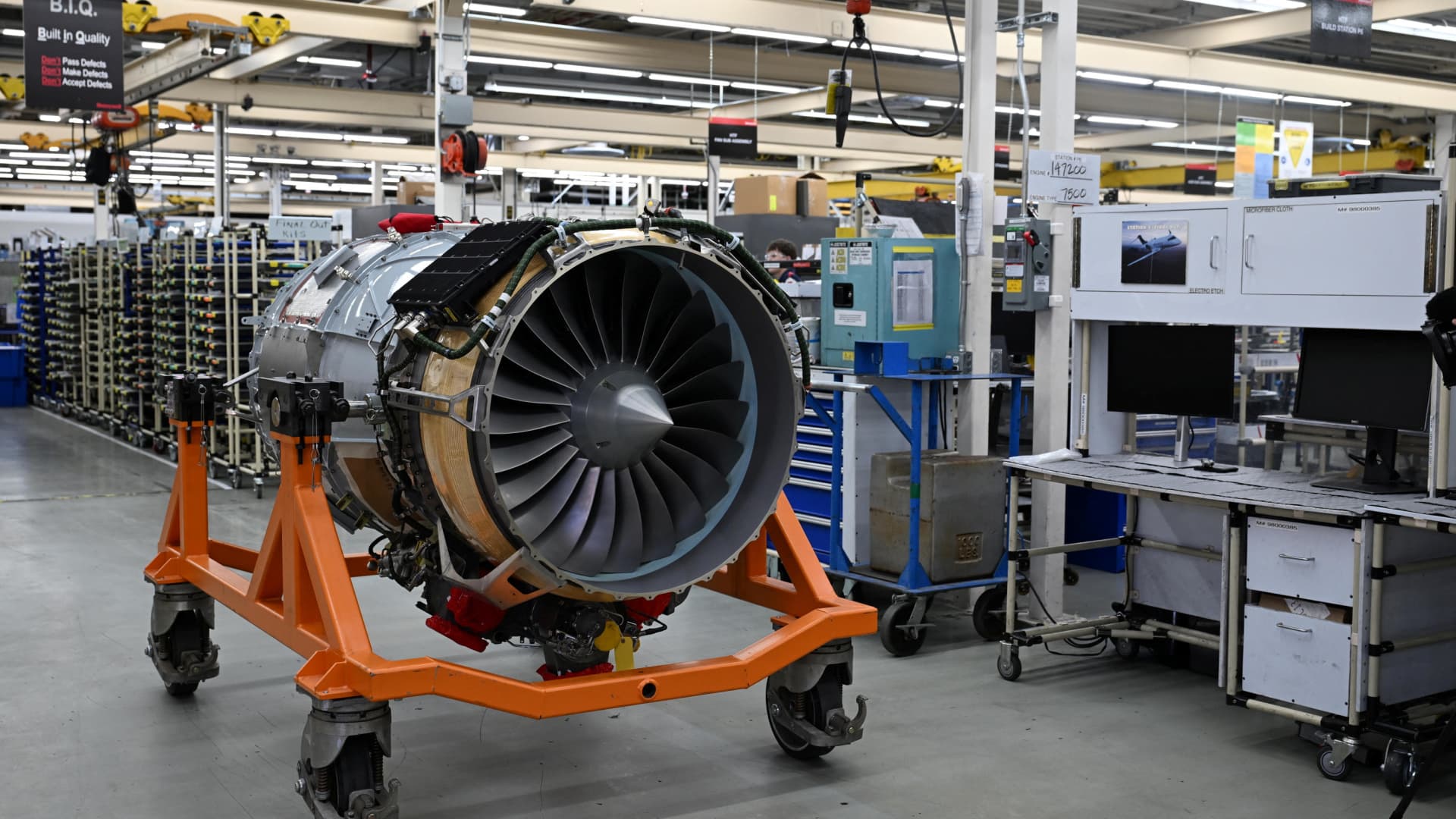
- Clear Independence Strategy: Honeywell Aerospace is set to spin off this month, with CEO Jim Currier emphasizing that focusing on a single strategy will enhance the company's competitiveness in the commercial aviation and defense markets, expecting adjusted EBIT of $4.65 to $4.75 billion in 2026.
- Financial Goals Established: As a standalone entity, Honeywell Aerospace aims for annual earnings of at least $6.5 billion by 2030, with projected free cash flow of $1 to $1.5 billion in the second half of the year, indicating strong financial growth potential.
- Significant Market Opportunities: Currier highlighted that the commercial transport and defense sectors are the company's largest growth areas, with record backlog orders from Airbus and Boeing, reflecting robust market demand.
- Supply Chain Challenges Addressed: Despite facing supplier issues in Q1, Honeywell Aerospace has resolved these challenges, and management is focused on converting skepticism in the aerospace sector into confidence, showcasing its potential in future markets.
See More
GE Aerospace Completes Testing of Hybrid-Electric Propulsion System
- Technical Milestone: GE Aerospace has completed ground testing of a megawatt-class hybrid-electric propulsion system under a NASA-funded program, validating a fully integrated system that combines electric propulsion components with a conventional gas turbine engine, marking a significant step towards future flight demonstrations.
- Flight Simulation Testing: The tests simulated multiple phases of flight, including taxi, takeoff, climb, and cruise, with the hybrid-electric system powering the propeller and generating electricity for onboard batteries, showcasing its potential application in future commercial aircraft.
- Market Outlook: While hybrid-electric propulsion is unlikely to generate significant revenue in the near term, successful testing could strengthen GE Aerospace's competitive position in next-generation aircraft propulsion, addressing airlines' and regulators' demands for improved fuel efficiency and reduced emissions.
- Strategic Partnership: GE Aerospace is expanding its investment in hybrid-electric aviation through a strategic partnership with BETA Technologies to jointly develop a hybrid-electric turbogenerator, and although commercial deployment is years away, the successful completion of integrated system testing represents a crucial step towards demonstrating the feasibility of electrified aircraft propulsion at scale.
See More
GE Aerospace's Power Systems Qualified for U.S. Military Vehicles
- Power System Qualification: GE Aerospace announced that its High-Voltage Power Controller and Unidirectional Converter have passed qualification testing for U.S. military vehicles, marking a production milestone with low-rate initial production expected in 2026 and deliveries anticipated in 2027, supporting the Army's modernization of combat vehicle electrical systems.
- Electrical Architecture Upgrade: The new systems transition from traditional 28-volt to a 600-volt architecture, enabling more efficient power transmission with reduced energy loss, thereby enhancing battery charging and power conversion efficiency to meet future autonomous capabilities demands.
- Collaborative Development: Developed in partnership with the U.S. Army Combat Capabilities Development Command Ground Vehicle Systems Center, the systems utilize silicon carbide semiconductor technology, which operates at higher temperatures and voltages, improving energy efficiency and applicability across various military and civilian vehicle platforms.
- Broad Market Potential: As military vehicles increasingly require greater onboard power generation and distribution, electrification and power management technologies are becoming focal points in the defense sector, with GE Aerospace's innovations poised to reduce system complexity and overall vehicle weight, enhancing competitive positioning.
See More
Honeywell Aerospace Forecasts Earnings Growth Post-Separation
- Operational Independence: Honeywell Aerospace CEO Jim Currier emphasizes that post-separation, the company will focus on a single strategy, targeting annual revenues of at least $6.5 billion and free cash flow of at least $4 billion by 2030, indicating strong growth potential.
- Profitability Goals: As a standalone entity, Honeywell Aerospace anticipates adjusted EBIT of $4.65 billion to $4.75 billion in 2026, with second-half free cash flow projected between $1 billion and $1.5 billion, reflecting robust performance in the aviation and defense sectors.
- Strong Market Demand: Currier highlights significant growth opportunities in commercial transport and defense, asserting that Honeywell Aerospace's technological and product advantages will help it stand out in a competitive market, particularly with record backlogs from Airbus and Boeing.
- Supply Chain Challenges Addressed: Despite facing supplier issues in Q1, Currier assures that these challenges have been resolved, and management will work to communicate supply chain stability to investors, aiming to bolster market confidence.
See More
GE Aerospace Reports Strong Q1 Growth Amid Industry Challenges
- Significant Revenue Growth: In Q1 2026, GE Aerospace achieved a 29% year-over-year revenue growth, driving adjusted earnings-per-share up by 25% and cash flow by 14%, demonstrating strong performance amid industry pressures.
- Surge in Orders: Despite high jet fuel costs due to geopolitical conflicts in the Middle East, GE Aerospace's orders grew by 87% year-over-year, indicating strong market demand, with a total backlog of $210 billion.
- Stable Service Revenue: Of the $210 billion backlog, $170 billion is related to services, providing a stable annuity-like income stream that enhances the company's financial security for the future.
- Optimistic Management Outlook: Management expects to hit the high end of its full-year guidance for 2026, and given the importance of service revenues, this optimism seems reasonable, further driving the steady rise of GE Aerospace's stock.
See More
GE Aerospace Reports Strong Q1 Growth Amid Industry Challenges
- Significant Revenue Growth: In Q1 2026, GE Aerospace reported a 29% year-over-year increase in adjusted revenue, driving a 25% rise in adjusted earnings per share, showcasing the company's robust performance amid challenging industry conditions.
- Surge in Orders: Despite high jet fuel costs due to geopolitical tensions in the Middle East, GE Aerospace experienced an 87% year-over-year increase in orders, indicating strong market demand for its products and further solidifying its market position.
- Stable Service Revenue: The company's backlog reached $210 billion, with $170 billion related to services, creating an annuity-like income stream that ensures financial stability for the company in the future.
- Strong Executive Confidence: Management expects to hit the high end of its full-year guidance for 2026, reflecting a positive outlook for future growth, which has contributed to the steady rise in the stock price.
See More
Honeywell Aerospace Set for Spin-Off to Unlock Growth Potential
- Clear Independence Strategy: Honeywell Aerospace is set to spin off this month, with CEO Jim Currier emphasizing that focusing on a single strategy will enhance the company's competitiveness in the commercial aviation and defense markets, expecting adjusted EBIT of $4.65 to $4.75 billion in 2026.
- Financial Goals Established: As a standalone entity, Honeywell Aerospace aims for annual earnings of at least $6.5 billion by 2030, with projected free cash flow of $1 to $1.5 billion in the second half of the year, indicating strong financial growth potential.
- Significant Market Opportunities: Currier highlighted that the commercial transport and defense sectors are the company's largest growth areas, with record backlog orders from Airbus and Boeing, reflecting robust market demand.
- Supply Chain Challenges Addressed: Despite facing supplier issues in Q1, Honeywell Aerospace has resolved these challenges, and management is focused on converting skepticism in the aerospace sector into confidence, showcasing its potential in future markets.
See More
GE Aerospace Completes Testing of Hybrid-Electric Propulsion System
- Technical Milestone: GE Aerospace has completed ground testing of a megawatt-class hybrid-electric propulsion system under a NASA-funded program, validating a fully integrated system that combines electric propulsion components with a conventional gas turbine engine, marking a significant step towards future flight demonstrations.
- Flight Simulation Testing: The tests simulated multiple phases of flight, including taxi, takeoff, climb, and cruise, with the hybrid-electric system powering the propeller and generating electricity for onboard batteries, showcasing its potential application in future commercial aircraft.
- Market Outlook: While hybrid-electric propulsion is unlikely to generate significant revenue in the near term, successful testing could strengthen GE Aerospace's competitive position in next-generation aircraft propulsion, addressing airlines' and regulators' demands for improved fuel efficiency and reduced emissions.
- Strategic Partnership: GE Aerospace is expanding its investment in hybrid-electric aviation through a strategic partnership with BETA Technologies to jointly develop a hybrid-electric turbogenerator, and although commercial deployment is years away, the successful completion of integrated system testing represents a crucial step towards demonstrating the feasibility of electrified aircraft propulsion at scale.
See More




