GE Aerospace Maintains Strong Aftermarket Business Amidst Market Challenges
Written by Emily J. Thompson, Senior Investment Analyst
Updated: 32 minutes ago
0mins
Source: Newsfilter
- Stable Market Demand: Despite rising fuel prices and a slowdown in flight departures, GE Aerospace CEO Larry Culp stated that airlines have not pulled back on engine maintenance or parts orders, indicating continued strength in the company's high-margin aftermarket business.
- Flight Departure Trends: Culp noted that flight departures have softened over the past eight weeks, with growth now being 'relatively flat,' suggesting that the aviation market is facing certain challenges, yet the operational impact on GE Aerospace remains limited.
- Unchanged Customer Behavior: Despite changes in the market environment, GE Aerospace has not observed any changes in commercial behavior from airline customers, indicating a strong trust and reliance on its services, which further solidifies the company's market position.
- Investor Confidence Boost: Culp's remarks at the Bernstein investor conference conveyed confidence in the company's future growth, which is expected to continue driving GE Aerospace's expansion in the high-margin market.
Trade with 70% Backtested Accuracy
Stop guessing "Should I Buy GE?" and start using high-conviction signals backed by rigorous historical data.
Sign up today to access powerful investing tools and make smarter, data-driven decisions.
Analyst Views on GE
Wall Street analysts forecast GE stock price to rise
9 Analyst Rating
8 Buy
0 Hold
1 Sell
Strong Buy
Current: 314.490

Low
275.00
Averages
345.67
High
386.00
Current: 314.490
Low
275.00
Averages
345.67
High
386.00
About GE
General Electric Company, doing business as GE Aerospace, is a global aerospace propulsion, services, and systems company. It has an installed base of over 50,000 commercial and 30,000 military aircraft engines. Its segment includes Commercial Engines & Services and Defense & Propulsion Technologies. Commercial Engines & Services segment designs, develops, manufactures and services jet engines for commercial airframes, as well as business aviation and aeroderivative applications. Its services include maintenance, repair and overhaul of engines and the sale of spare parts and offers services under a variety of arrangements such as long-term service agreements, spare parts agreements or time and material contracts. Defense & Propulsion Technologies segment provides defense engines and critical aircraft systems and consists of Defense & Systems and Propulsion & Additive Technologies businesses. Its portfolio of brands includes Avio Aero, Unison, Dowty Propellers and Colibrium Additive.
About the author

Emily J. Thompson
Emily J. Thompson, a Chartered Financial Analyst (CFA) with 12 years in investment research, graduated with honors from the Wharton School. Specializing in industrial and technology stocks, she provides in-depth analysis for Intellectia’s earnings and market brief reports.
GE Aerospace Maintains Strong Aftermarket Business Amidst Market Challenges

- Stable Market Demand: Despite rising fuel prices and a slowdown in flight departures, GE Aerospace CEO Larry Culp stated that airlines have not pulled back on engine maintenance or parts orders, indicating continued strength in the company's high-margin aftermarket business.
- Flight Departure Trends: Culp noted that flight departures have softened over the past eight weeks, with growth now being 'relatively flat,' suggesting that the aviation market is facing certain challenges, yet the operational impact on GE Aerospace remains limited.
- Unchanged Customer Behavior: Despite changes in the market environment, GE Aerospace has not observed any changes in commercial behavior from airline customers, indicating a strong trust and reliance on its services, which further solidifies the company's market position.
- Investor Confidence Boost: Culp's remarks at the Bernstein investor conference conveyed confidence in the company's future growth, which is expected to continue driving GE Aerospace's expansion in the high-margin market.
See More

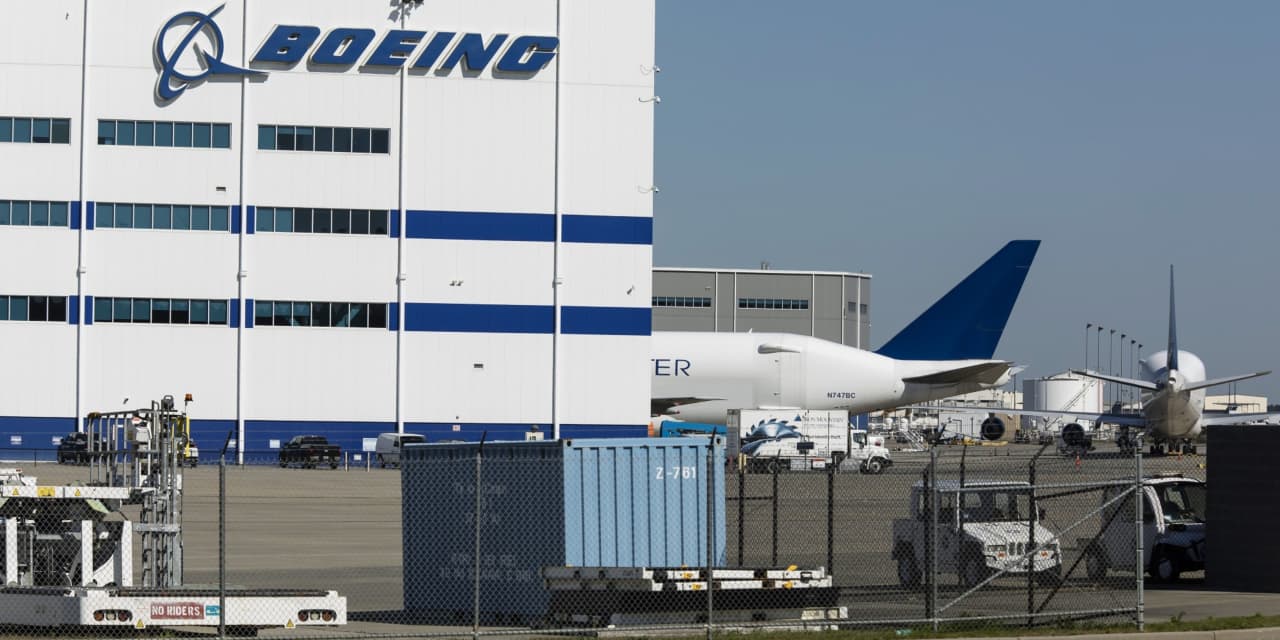
Boeing CEO Optimistic on Production Recovery and Market Outlook

- Production Recovery Signal: Boeing (BA) CEO Kelly Ortberg indicated at the Bernstein Strategic Decisions Conference that the production of the 737 will increase to 47 aircraft per month, marking a significant recovery after years of manufacturing disruptions, which is expected to boost investor confidence and drive stock price appreciation.
- Order Backlog Situation: Ortberg noted that Boeing's order book is substantial, with new customers ordering 737 or 787 aircraft likely facing delivery timelines extending into the 2030s, reflecting strong market demand for Boeing's products and further solidifying the company's market position.
- Significant Certification Progress: Boeing (BA) has completed over 80% of certification flight testing for the 737 Max-7 and Max-10 programs and has received FAA authorization for the remaining tests, which is expected to accelerate the delivery process and enhance the company's competitive edge in the fiercely competitive aviation market.
- Defense Business Recovery: Boeing's defense sector shows signs of recovery, with Ortberg emphasizing a more cautious approach to accepting fixed-price development contracts, and anticipating stronger military growth prospects, particularly amid rising global demand for weapon systems.
See More

Wall Street's Latest Rating Changes Overview


- Openlane Upgrade: JPMorgan upgraded Openlane from neutral to overweight and raised its December 2026 price target to $38, indicating that the online used car marketplace is experiencing robust growth and has potential for sustainable expansion over the coming years.
- Dollar General Downgrade: Deutsche Bank downgraded Dollar General from buy to hold, citing challenges in its customer base and the widening gap in the K-shaped economy, which may limit same-store sales upside, reflecting a cautious outlook on the company.
- Ecolab Upgrade: UBS upgraded Ecolab from neutral to buy and raised its price target to $325, demonstrating strong demand and positive performance expectations for the chemicals company amid a favorable market environment.
- FedEx Upgrade: JPMorgan upgraded FedEx from neutral to overweight, expressing optimism ahead of its upcoming earnings report, particularly regarding the separation of its freight business, which is seen as an attractive risk-reward opportunity.
See More

General Electric Unlocks Value Post-Split with Aerospace and Vernova

- Successful Split: General Electric initiated its split in 2021, successfully spinning off its healthcare business in 2023 and GE Vernova in 2024, significantly enhancing shareholder value, with both GE Vernova and GE Aerospace seeing stock price increases of over 100% in the past two years.
- Surging Energy Demand: GE Vernova's leadership in the power sector is increasingly evident, with customers generating a quarter of the world's electricity; as global energy demands soar, its electrification business backlog has quadrupled since 2022, reflecting urgent infrastructure investment needs.
- Strong Aerospace Business: GE Aerospace's commercial aviation and defense sectors continue to thrive, with total orders reaching $23 billion in Q1 2026, an 87% year-over-year increase, and a $170 billion commercial services backlog providing robust revenue support for the coming years.
- Long-Term Growth Outlook: Analysts project GE Vernova's long-term annualized earnings growth rate at 31%, while GE Aerospace exceeds 14%, positioning both stocks as attractive investment opportunities over the next decade.
See More

Optimistic Outlook for Energy Stocks Investment

- GE Vernova's Strong Performance: Since its market debut in April 2024, GE Vernova's stock has surged over 720%, and its core businesses are expected to expand further, enhancing the company's competitiveness amid rising electricity demand.
- Vistra's Expansion Plans: As the largest power generation and retail electricity provider in the U.S., Vistra has acquired nuclear and natural gas plants, achieving a combined capacity of 44 GW, with projected revenue and adjusted EBITDA CAGRs of 15% and 16% from 2025 to 2028.
- Nextpower's Market Leadership: Nextpower, the world's largest producer of solar trackers, anticipates a 17% increase in its backlog to $5.25 billion by the end of fiscal 2026, with revenue and adjusted EBITDA expected to grow at a 13% CAGR over the next three years.
- Rising Energy Demand: With increasing global investments in renewable energy, energy demand is expected to keep rising, prompting investors to focus on companies with scale and diversification to navigate the sector's short-term volatility.
See More

SPHQ ETF 52-Week Price Analysis
- Price Range Analysis: The SPHQ ETF's 52-week low is $68.89 and high is $85.605, with the latest trade at $85.58, indicating the ETF is trading near its high, which may influence investor buying decisions.
- Technical Analysis Tool: Comparing the latest share price to the 200-day moving average can provide valuable insights for investors, helping to assess market trends and potential buying opportunities.
- ETF Unit Trading Mechanism: ETFs trade like stocks, where investors buy and sell 'units' that can be created or destroyed based on investor demand, impacting the ETF's liquidity and market performance.
- Inflows and Outflows Monitoring: Weekly monitoring of changes in ETF units focuses on notable inflows (new units created) or outflows (old units destroyed), which directly affects the underlying assets held by the ETF and influences overall market dynamics.
See More
GE Aerospace Maintains Strong Aftermarket Business Amidst Market Challenges
- Stable Market Demand: Despite rising fuel prices and a slowdown in flight departures, GE Aerospace CEO Larry Culp stated that airlines have not pulled back on engine maintenance or parts orders, indicating continued strength in the company's high-margin aftermarket business.
- Flight Departure Trends: Culp noted that flight departures have softened over the past eight weeks, with growth now being 'relatively flat,' suggesting that the aviation market is facing certain challenges, yet the operational impact on GE Aerospace remains limited.
- Unchanged Customer Behavior: Despite changes in the market environment, GE Aerospace has not observed any changes in commercial behavior from airline customers, indicating a strong trust and reliance on its services, which further solidifies the company's market position.
- Investor Confidence Boost: Culp's remarks at the Bernstein investor conference conveyed confidence in the company's future growth, which is expected to continue driving GE Aerospace's expansion in the high-margin market.
See More
Boeing CEO Optimistic on Production Recovery and Market Outlook
- Production Recovery Signal: Boeing (BA) CEO Kelly Ortberg indicated at the Bernstein Strategic Decisions Conference that the production of the 737 will increase to 47 aircraft per month, marking a significant recovery after years of manufacturing disruptions, which is expected to boost investor confidence and drive stock price appreciation.
- Order Backlog Situation: Ortberg noted that Boeing's order book is substantial, with new customers ordering 737 or 787 aircraft likely facing delivery timelines extending into the 2030s, reflecting strong market demand for Boeing's products and further solidifying the company's market position.
- Significant Certification Progress: Boeing (BA) has completed over 80% of certification flight testing for the 737 Max-7 and Max-10 programs and has received FAA authorization for the remaining tests, which is expected to accelerate the delivery process and enhance the company's competitive edge in the fiercely competitive aviation market.
- Defense Business Recovery: Boeing's defense sector shows signs of recovery, with Ortberg emphasizing a more cautious approach to accepting fixed-price development contracts, and anticipating stronger military growth prospects, particularly amid rising global demand for weapon systems.
See More
Wall Street's Latest Rating Changes Overview
- Openlane Upgrade: JPMorgan upgraded Openlane from neutral to overweight and raised its December 2026 price target to $38, indicating that the online used car marketplace is experiencing robust growth and has potential for sustainable expansion over the coming years.
- Dollar General Downgrade: Deutsche Bank downgraded Dollar General from buy to hold, citing challenges in its customer base and the widening gap in the K-shaped economy, which may limit same-store sales upside, reflecting a cautious outlook on the company.
- Ecolab Upgrade: UBS upgraded Ecolab from neutral to buy and raised its price target to $325, demonstrating strong demand and positive performance expectations for the chemicals company amid a favorable market environment.
- FedEx Upgrade: JPMorgan upgraded FedEx from neutral to overweight, expressing optimism ahead of its upcoming earnings report, particularly regarding the separation of its freight business, which is seen as an attractive risk-reward opportunity.
See More
General Electric Unlocks Value Post-Split with Aerospace and Vernova
- Successful Split: General Electric initiated its split in 2021, successfully spinning off its healthcare business in 2023 and GE Vernova in 2024, significantly enhancing shareholder value, with both GE Vernova and GE Aerospace seeing stock price increases of over 100% in the past two years.
- Surging Energy Demand: GE Vernova's leadership in the power sector is increasingly evident, with customers generating a quarter of the world's electricity; as global energy demands soar, its electrification business backlog has quadrupled since 2022, reflecting urgent infrastructure investment needs.
- Strong Aerospace Business: GE Aerospace's commercial aviation and defense sectors continue to thrive, with total orders reaching $23 billion in Q1 2026, an 87% year-over-year increase, and a $170 billion commercial services backlog providing robust revenue support for the coming years.
- Long-Term Growth Outlook: Analysts project GE Vernova's long-term annualized earnings growth rate at 31%, while GE Aerospace exceeds 14%, positioning both stocks as attractive investment opportunities over the next decade.
See More
Optimistic Outlook for Energy Stocks Investment
- GE Vernova's Strong Performance: Since its market debut in April 2024, GE Vernova's stock has surged over 720%, and its core businesses are expected to expand further, enhancing the company's competitiveness amid rising electricity demand.
- Vistra's Expansion Plans: As the largest power generation and retail electricity provider in the U.S., Vistra has acquired nuclear and natural gas plants, achieving a combined capacity of 44 GW, with projected revenue and adjusted EBITDA CAGRs of 15% and 16% from 2025 to 2028.
- Nextpower's Market Leadership: Nextpower, the world's largest producer of solar trackers, anticipates a 17% increase in its backlog to $5.25 billion by the end of fiscal 2026, with revenue and adjusted EBITDA expected to grow at a 13% CAGR over the next three years.
- Rising Energy Demand: With increasing global investments in renewable energy, energy demand is expected to keep rising, prompting investors to focus on companies with scale and diversification to navigate the sector's short-term volatility.
See More
SPHQ ETF 52-Week Price Analysis
- Price Range Analysis: The SPHQ ETF's 52-week low is $68.89 and high is $85.605, with the latest trade at $85.58, indicating the ETF is trading near its high, which may influence investor buying decisions.
- Technical Analysis Tool: Comparing the latest share price to the 200-day moving average can provide valuable insights for investors, helping to assess market trends and potential buying opportunities.
- ETF Unit Trading Mechanism: ETFs trade like stocks, where investors buy and sell 'units' that can be created or destroyed based on investor demand, impacting the ETF's liquidity and market performance.
- Inflows and Outflows Monitoring: Weekly monitoring of changes in ETF units focuses on notable inflows (new units created) or outflows (old units destroyed), which directly affects the underlying assets held by the ETF and influences overall market dynamics.
See More