

GameStop Corp (GME) CEO Ryan Cohen Buys 500,000 Shares, Stock Rises 2.6%
Written by Emily J. Thompson, Senior Investment Analyst
Updated: Jan 21 2026
0mins


Source: Benzinga
- CEO Stock Purchase: GameStop CEO Ryan Cohen disclosed the purchase of 500,000 shares at an average price of approximately $21.12 per share in an SEC filing, which not only boosts market confidence but may also enhance investor expectations regarding the company's future growth.
- Stock Price Surge: Following this announcement, GameStop's stock rose 2.6% to $21.65 in pre-market trading, indicating a positive market reaction to the company's strategic direction, potentially attracting more investor interest.
- Market Movements: Pineapple Financial saw a dramatic increase of 175.2% to $2.67 in pre-market trading, reflecting market recognition of its first-quarter gross billings of $4.1 million and revenue of $0.7 million, showcasing its future growth potential.
- Other Stock Performances: Anteris Technologies announced plans for a $200 million public offering, resulting in a 26.4% increase in its stock price to $7.27, indicating a positive market response to its capital expansion plans, which may provide funding support for future growth.
Trade with 70% Backtested Accuracy
Stop guessing "Should I Buy GME?" and start using high-conviction signals backed by rigorous historical data.
Sign up today to access powerful investing tools and make smarter, data-driven decisions.
Analyst Views on GME
About GME
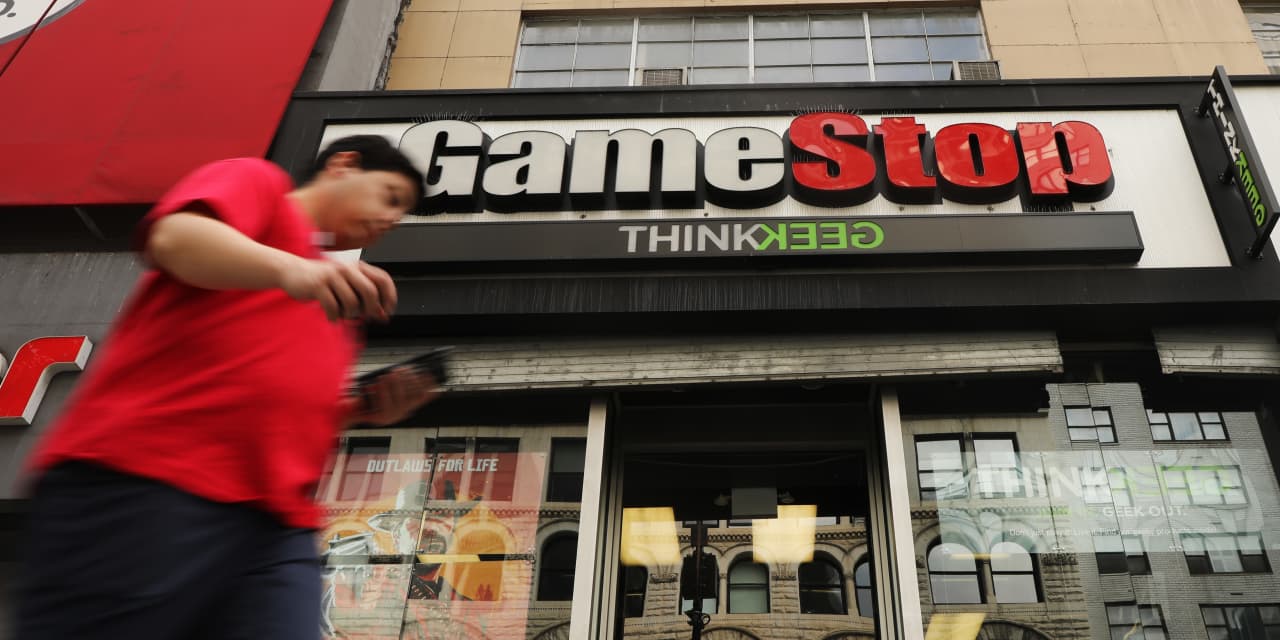
GameStop Corp. offers games, collectibles, and entertainment products through its stores and e-commerce platforms. The Company operates in three geographic segments: United States, Australia and Europe. Each segment consists primarily of retail operations, with the significant majority focused on games, entertainment products and technology. The Company has a total of approximately 2,206 stores across all of its segments: 1,598 in the United States, 308 in Europe, and 300 in Australia. Its stores and e-commerce sites operate primarily under the names GameStop, EB Games and Micromania. Its Australia and Europe segments also include 23 pop culture-themed stores selling collectibles, apparel, gadgets, electronics, toys and other retail products for technology enthusiasts and general consumers in international markets operating under the Zing Pop Culture brand. Its retail stores are generally located in strip centers, shopping malls and pedestrian areas.
About the author

Emily J. Thompson
Emily J. Thompson, a Chartered Financial Analyst (CFA) with 12 years in investment research, graduated with honors from the Wharton School. Specializing in industrial and technology stocks, she provides in-depth analysis for Intellectia’s earnings and market brief reports.
GameStop Faces Challenges Amid Digital Shift


- Revenue Decline: GameStop's annual revenue has plummeted 61% compared to its peak 14 years ago, with sales contracting for four consecutive fiscal years, indicating severe challenges in a competitive market that necessitates a reevaluation of its business model.
- Digital Transition Pressure: Sony's announcement to cease physical game disc production starting in 2028 accelerates the industry's shift to digital distribution, posing a risk of declining foot traffic for GameStop, which heavily relies on sales of used discs for profitability.
- Improved Profitability: Despite declining sales, GameStop's profitability is on the rise, with a surprising 14% increase in net sales driven entirely by heightened interest in trading cards, apparel, and pop culture merchandise; however, excluding collectibles, net sales actually fell by 7%, raising concerns about the sustainability of its business model.
- Strong Cash Position: GameStop maintains a cash-rich balance sheet, which, while insufficient for acquiring eBay, provides potential for future acquisitions, although any forthcoming deals may need to target smaller companies given the decline in its stock price over the past year.
See More
Sony to Cease Physical Game Disc Production by 2028
- Decline of Physical Games: Sony's announcement to stop producing physical game discs for new PlayStation releases by 2028 accelerates the industry's shift to digital, likely leading to further declines in GameStop's store traffic and undermining its previously profitable used game market.
- Revenue Contraction: GameStop's annual revenue has plummeted 61% from its peak 14 years ago, and while sales in collectibles have surged, overall net sales still fell by 7% due to the decline in its used game business, indicating challenges to its business model sustainability.
- Strong Cash Position: Despite a 4% drop in stock price over the past year and a staggering 56% decline over five years, GameStop's cash-rich balance sheet provides potential for future acquisitions, although it may need to pursue smaller deals to adapt to the current market landscape.
- Increased Market Competition: With Sony's move, other console makers may follow suit, intensifying competitive pressures on GameStop; although profitability has improved amidst declining sales, the future market outlook remains uncertain.
See More

eBay Revives Growth Narrative Amid GameStop Bid

- Significant Revenue Growth: In Q1 2026, eBay reported a 19% year-over-year revenue increase and an 18% growth in Gross Merchandise Volume (GMV), indicating a resurgence in market share and sales, showcasing the potential for core business recovery.
- Strong Advertising Revenue: First-party advertising revenue surged by 33%, adding a high-margin lever to eBay's marketplace model, which enhances the company's profitability and competitive positioning in the market.
- Acquisition of Depop Expands Youth Market: The acquisition of Depop adds approximately 7 million active buyers, with nearly 90% under 35, providing eBay with a fresh growth angle in the resale market, particularly in fashion.
- Stock Support and Upside Potential: eBay's stock has built a solid base above the $105 support level, and a sustained move above the $112-$115 range could lead to a retest of recent highs and open the door to new 52-week highs.
See More
TPG RE Finance Trust Sees Surge in Options Trading Volume

- Surge in Options Volume: TPG RE Finance Trust (TRTX) recorded an options trading volume of 8,003 contracts today, equivalent to approximately 800,300 shares, which is about 108% of its average daily trading volume of 741,050 shares over the past month, indicating strong market interest in the stock.
- Strike Price Focus: Notably, the $9 strike call option expiring on October 16, 2026, saw a trading volume of 8,003 contracts today, suggesting investor optimism regarding TRTX's future performance, which could influence its stock price trajectory.
- NVIDIA Options Activity: Concurrently, NVIDIA (NVDA) experienced an options trading volume of 1.7 million contracts today, representing approximately 173.9 million shares, which is 106.8% of its average daily trading volume of 162.9 million shares over the past month, reflecting ongoing market interest in the stock.
- Strike Price Insights: Within NVIDIA, the $200 strike call option expiring on July 1, 2026, recorded a trading volume of 229,539 contracts today, equivalent to about 23 million shares, indicating strong investor confidence in its future growth prospects.
See More
U.S. Stock Futures Rise as Investor Confidence Rebounds

- Military Tensions Ease: Investor confidence rebounds as reported pauses in direct military actions between the U.S. and Iran push U.S. stock futures into the green, setting a positive tone for a holiday-shortened week filled with pivotal economic data releases and central bank commentary.
- Viridian Therapeutics Launch: Shares of Viridian Therapeutics (VRDN) surged 12% following the FDA approval of its first commercial product, Lumvoa (veligrotug), for thyroid eye disease treatment, supported by two pivotal Phase 3 trials that met both primary and secondary endpoints, demonstrating significant symptom improvements.
- GameStop Acquisition Plans: GameStop (GME) shares rose 2% as the company projected adjusted EBITDA exceeding $600 million for FY2027, a sharp increase from $345.4 million in FY2025, while reinforcing its strategic expansion plans to acquire eBay, indicating aggressive growth intentions.
- British American Tobacco Layoffs: British American Tobacco (BTI) shares fell 2% after announcing plans to cut 5,500 jobs and shift 3,500 roles to strategic partners, affecting about 20% of its global workforce, as part of an AI-driven transformation aimed at achieving £600 million in annualized cost savings by 2028.
See More
GameStop CEO Ambitions: Can He Compare to Berkshire Hathaway?
- Significant Cash Reserves: GameStop reported nearly $7.4 billion in cash and under $1 billion in marketable securities as of May 2026, with cash and investments making up nearly 90% of its $9.4 billion market cap, providing a strong foundation for future investments.
- Successful Business Transformation: Under Ryan Cohen's leadership, GameStop has successfully transformed its business, with collectibles now representing the largest segment, twice the size of its software business, demonstrating adaptability and growth potential amid market shifts.
- Clear Acquisition Intent: Cohen's attempt to acquire eBay, despite being rejected, indicates his ambition to leverage GameStop's cash for strategic investments, although this approach differs from Buffett's insurance float strategy.
- Investor Caution Advised: While Cohen's strategies are intriguing, his activist investment style contrasts sharply with Buffett's long-term investment philosophy, suggesting that investors may want to consider companies like Markel or Brookfield Corporation that align more closely with Buffett's model.
See More
GameStop Faces Challenges Amid Digital Shift
- Revenue Decline: GameStop's annual revenue has plummeted 61% compared to its peak 14 years ago, with sales contracting for four consecutive fiscal years, indicating severe challenges in a competitive market that necessitates a reevaluation of its business model.
- Digital Transition Pressure: Sony's announcement to cease physical game disc production starting in 2028 accelerates the industry's shift to digital distribution, posing a risk of declining foot traffic for GameStop, which heavily relies on sales of used discs for profitability.
- Improved Profitability: Despite declining sales, GameStop's profitability is on the rise, with a surprising 14% increase in net sales driven entirely by heightened interest in trading cards, apparel, and pop culture merchandise; however, excluding collectibles, net sales actually fell by 7%, raising concerns about the sustainability of its business model.
- Strong Cash Position: GameStop maintains a cash-rich balance sheet, which, while insufficient for acquiring eBay, provides potential for future acquisitions, although any forthcoming deals may need to target smaller companies given the decline in its stock price over the past year.
See More
Sony to Cease Physical Game Disc Production by 2028
- Decline of Physical Games: Sony's announcement to stop producing physical game discs for new PlayStation releases by 2028 accelerates the industry's shift to digital, likely leading to further declines in GameStop's store traffic and undermining its previously profitable used game market.
- Revenue Contraction: GameStop's annual revenue has plummeted 61% from its peak 14 years ago, and while sales in collectibles have surged, overall net sales still fell by 7% due to the decline in its used game business, indicating challenges to its business model sustainability.
- Strong Cash Position: Despite a 4% drop in stock price over the past year and a staggering 56% decline over five years, GameStop's cash-rich balance sheet provides potential for future acquisitions, although it may need to pursue smaller deals to adapt to the current market landscape.
- Increased Market Competition: With Sony's move, other console makers may follow suit, intensifying competitive pressures on GameStop; although profitability has improved amidst declining sales, the future market outlook remains uncertain.
See More
eBay Revives Growth Narrative Amid GameStop Bid
- Significant Revenue Growth: In Q1 2026, eBay reported a 19% year-over-year revenue increase and an 18% growth in Gross Merchandise Volume (GMV), indicating a resurgence in market share and sales, showcasing the potential for core business recovery.
- Strong Advertising Revenue: First-party advertising revenue surged by 33%, adding a high-margin lever to eBay's marketplace model, which enhances the company's profitability and competitive positioning in the market.
- Acquisition of Depop Expands Youth Market: The acquisition of Depop adds approximately 7 million active buyers, with nearly 90% under 35, providing eBay with a fresh growth angle in the resale market, particularly in fashion.
- Stock Support and Upside Potential: eBay's stock has built a solid base above the $105 support level, and a sustained move above the $112-$115 range could lead to a retest of recent highs and open the door to new 52-week highs.
See More
TPG RE Finance Trust Sees Surge in Options Trading Volume
- Surge in Options Volume: TPG RE Finance Trust (TRTX) recorded an options trading volume of 8,003 contracts today, equivalent to approximately 800,300 shares, which is about 108% of its average daily trading volume of 741,050 shares over the past month, indicating strong market interest in the stock.
- Strike Price Focus: Notably, the $9 strike call option expiring on October 16, 2026, saw a trading volume of 8,003 contracts today, suggesting investor optimism regarding TRTX's future performance, which could influence its stock price trajectory.
- NVIDIA Options Activity: Concurrently, NVIDIA (NVDA) experienced an options trading volume of 1.7 million contracts today, representing approximately 173.9 million shares, which is 106.8% of its average daily trading volume of 162.9 million shares over the past month, reflecting ongoing market interest in the stock.
- Strike Price Insights: Within NVIDIA, the $200 strike call option expiring on July 1, 2026, recorded a trading volume of 229,539 contracts today, equivalent to about 23 million shares, indicating strong investor confidence in its future growth prospects.
See More
U.S. Stock Futures Rise as Investor Confidence Rebounds
- Military Tensions Ease: Investor confidence rebounds as reported pauses in direct military actions between the U.S. and Iran push U.S. stock futures into the green, setting a positive tone for a holiday-shortened week filled with pivotal economic data releases and central bank commentary.
- Viridian Therapeutics Launch: Shares of Viridian Therapeutics (VRDN) surged 12% following the FDA approval of its first commercial product, Lumvoa (veligrotug), for thyroid eye disease treatment, supported by two pivotal Phase 3 trials that met both primary and secondary endpoints, demonstrating significant symptom improvements.
- GameStop Acquisition Plans: GameStop (GME) shares rose 2% as the company projected adjusted EBITDA exceeding $600 million for FY2027, a sharp increase from $345.4 million in FY2025, while reinforcing its strategic expansion plans to acquire eBay, indicating aggressive growth intentions.
- British American Tobacco Layoffs: British American Tobacco (BTI) shares fell 2% after announcing plans to cut 5,500 jobs and shift 3,500 roles to strategic partners, affecting about 20% of its global workforce, as part of an AI-driven transformation aimed at achieving £600 million in annualized cost savings by 2028.
See More
GameStop CEO Ambitions: Can He Compare to Berkshire Hathaway?
- Significant Cash Reserves: GameStop reported nearly $7.4 billion in cash and under $1 billion in marketable securities as of May 2026, with cash and investments making up nearly 90% of its $9.4 billion market cap, providing a strong foundation for future investments.
- Successful Business Transformation: Under Ryan Cohen's leadership, GameStop has successfully transformed its business, with collectibles now representing the largest segment, twice the size of its software business, demonstrating adaptability and growth potential amid market shifts.
- Clear Acquisition Intent: Cohen's attempt to acquire eBay, despite being rejected, indicates his ambition to leverage GameStop's cash for strategic investments, although this approach differs from Buffett's insurance float strategy.
- Investor Caution Advised: While Cohen's strategies are intriguing, his activist investment style contrasts sharply with Buffett's long-term investment philosophy, suggesting that investors may want to consider companies like Markel or Brookfield Corporation that align more closely with Buffett's model.
See More





