Dow Jones Futures: Palantir, Tesla, and Bitcoin Decline Amid Sell-Off; AMD Tops 5 AI Earnings Reports Tonight
Written by Emily J. Thompson, Senior Investment Analyst
Updated: Nov 05 2025
0mins

Source: Yahoo Finance
- Stock Market Performance: Palantir and Tesla were significant contributors to sharp stock market losses on Tuesday.
- Earnings Movers: Companies like AMD, Astera Labs, and Arista Networks were highlighted as key movers in the earnings reports released late.
Trade with 70% Backtested Accuracy
Stop guessing "Should I Buy AMD?" and start using high-conviction signals backed by rigorous historical data.
Sign up today to access powerful investing tools and make smarter, data-driven decisions.
Analyst Views on AMD
Wall Street analysts forecast AMD stock price to fall
33 Analyst Rating
25 Buy
8 Hold
0 Sell
Strong Buy
Current: 475.505

Low
210.00
Averages
289.13
High
377.00
Current: 475.505
Low
210.00
Averages
289.13
High
377.00
About AMD
Advanced Micro Devices, Inc. is a global semiconductor company. The Company is focused on high-performance computing and artificial intelligence (AI). Its segments include Data Center, Client and Gaming, and Embedded. Data Center segment includes AI accelerators, microprocessors (CPUs) for servers, graphics processing units (GPUs), accelerated processing units (APUs), data processing units (DPUs), Field Programmable Gate Arrays (FPGAs), and Adaptive system-on-Chip (SoC) products for data centers. Client and Gaming segment includes CPUs, APUs, chipsets for desktops and notebooks, discrete GPUs, and semi-custom SoC products and development services. Embedded segment includes embedded CPUs, APUs, FPGAs, system on modules (SOMs), and Adaptive SoC products. It markets and sells its products under the AMD trademark. Its products include AMD EPYC, AMD Ryzen, AMD Ryzen PRO, Virtex UltraScale+, among others.
About the author

Emily J. Thompson
Emily J. Thompson, a Chartered Financial Analyst (CFA) with 12 years in investment research, graduated with honors from the Wharton School. Specializing in industrial and technology stocks, she provides in-depth analysis for Intellectia’s earnings and market brief reports.
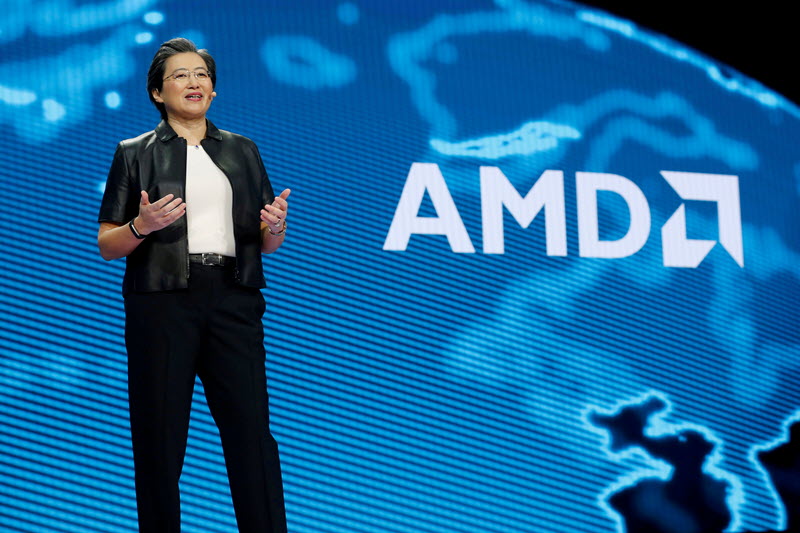
AMD Shares Surge Due to AI Data Center Demand

- Significant Revenue Growth: AMD's first-quarter revenue surged 38% year-over-year to $10.25 billion, primarily driven by a 57% increase in its data center segment to $5.8 billion, reflecting strong demand in the AI market and the company's competitive position in this sector.
- Margin Improvement: Although AMD's gross margin rose by 300 basis points to 53%, it remains significantly lower than Nvidia's 74.9%, indicating challenges in profitability within its product mix that could impact long-term competitiveness.
- Market Uncertainty: Despite AMD's crucial role in AI infrastructure, a slowdown in large language model (LLM) development could reduce demand for its data center hardware, potentially negatively affecting its stock price, prompting investors to exercise caution.
- High Valuation Risks: With a forward P/E ratio of 74 compared to the Nasdaq-100's 27, AMD's stock appears overvalued, suggesting that investors should carefully assess the sustainability of current data center spending before making investment decisions.
See More

Analysis of Investment Choices in Robotics and Automation


- Return Comparison: As of May 30, the ARK Autonomous Technology & Robotics ETF delivered a 79.99% return over the past year, significantly outperforming the Invesco QQQ ETF's 42.71%, indicating that investments focused on robotics and automation may yield higher short-term gains.
- Holding Structure Analysis: The ARK ETF holds 40 stocks, with the top five accounting for 37%, including Tesla at 10.34%, suggesting that the fund's concentrated investments in specific sectors may pose high risks but also potential high rewards.
- Long-Term Performance Evaluation: Despite the ARK fund's strong recent performance, the Invesco QQQ ETF has achieved an annualized return of 21.8% since its inception in 2014, demonstrating its stability and reliability for long-term investors.
- Fee and Diversification Considerations: The ARK fund charges a management fee of 0.75%, while the Invesco QQQ's fee is only 0.18%, making the latter more attractive in terms of cost efficiency, and its 102-stock diversification also reduces investment risk.
See More

Comparison of ARK ETF and Invesco QQQ Performance
- Long-Term Return Comparison: Since its inception in September 2014, the ARK Autonomous Technology & Robotics ETF has delivered an annualized return of 19.1%, while the Invesco QQQ ETF has outperformed it during the same period, highlighting its advantage in tech investments.
- Short-Term Performance Discrepancy: As of May 30, the ARK fund's one-year return was 79.99%, significantly higher than Invesco's 42.71%, yet in the long run, QQQ's stability makes it more suitable for risk-averse investors.
- Fee Structure Analysis: The ARK fund charges a management fee of 0.75%, while Invesco QQQ's fee is only 0.18%, making the latter more cost-effective for long-term investments and attracting more investor interest.
- Portfolio Concentration: The top five holdings of the ARK fund account for 37% of its assets, compared to 32% for Invesco QQQ; although both exhibit concentration risks, QQQ's higher diversification helps mitigate overall investment risk.
See More

Semiconductor Stocks Plunge, Raising Investor Concerns


- Market Value Loss: Last Friday, the AI chip sector faced a sell-off, erasing approximately $1.3 trillion in market value in a single day, leading to a 6% drop in Nvidia's stock and nearly an 11% decline in AMD's, while Broadcom lost about a fifth of its value in a week, indicating a significant loss of confidence in the semiconductor industry.
- Nvidia's Strong Earnings: Despite the stock pullback, Nvidia remains the most valuable company in the sector with a market capitalization of about $4.9 trillion, reporting an 85% year-over-year revenue increase to $81.6 billion in its fiscal first quarter, driven by a 92% growth in data center revenue, with management guiding for approximately $91 billion in second-quarter revenue, implying a year-over-year growth of about 95%, reflecting robust market demand.
- AMD's Growth Momentum: AMD's stock fell from a record $542.52 on June 3 to around $452, yet it has more than doubled in 2026, with first-quarter revenue rising 38% year-over-year to $10.3 billion, fueled by a 57% increase in the data center segment, and management expects second-quarter revenue of about $11.2 billion, representing a year-over-year growth of approximately 46%, showcasing strong growth potential.
- Broadcom's Profitability Concerns: Although Broadcom achieved a 48% year-over-year revenue growth to $22.2 billion in its fiscal second quarter, with AI chip revenue soaring 143% to $10.8 billion, market concerns about profitability have intensified, as the rapid growth of AI semiconductors is diluting gross margins, and the company only reiterated its $100 billion AI chip revenue target for fiscal 2027, disappointing investors.
See More

Semiconductor Sector Volatility and Growth Outlook
- Nvidia Revenue Surge: Nvidia reported an 85% year-over-year revenue increase in its fiscal Q1 2027, reaching $81.6 billion, primarily driven by a 92% growth in data center revenue, highlighting its strong demand and market leadership in AI.
- AMD's Optimistic Outlook: AMD anticipates second-quarter revenue of about $11.2 billion for fiscal 2027, representing a year-over-year growth of approximately 46%, reflecting robust growth in its data center segment, despite a 17% drop in stock price post-report, indicating long-term growth potential.
- Broadcom AI Chip Revenue Boom: Broadcom's AI chip revenue soared 143% year-over-year to $10.8 billion in fiscal Q2 2026, although its stock price fell sharply due to market concerns over profitability, the company remains optimistic about future revenue guidance.
- Market Volatility Impact: Despite the semiconductor sector experiencing a loss of about $1.3 trillion in market value, investors are believed to potentially find opportunities in the long term, especially as these companies continue to demonstrate accelerating growth potential.
See More

Semiconductor Investors Face Challenges Amid Sell-Off
- Market Value Loss: Last Friday, the AI chip sector experienced a sell-off that erased approximately $1.3 trillion in market value in a single day, causing Nvidia and AMD to drop about 6% and 11% respectively, indicating a significant loss of investor confidence in the industry.
- Nvidia's Strong Earnings: Despite the stock pullback, Nvidia remains the sector leader with a market capitalization of about $4.9 trillion, reporting an 85% year-over-year revenue increase to $81.6 billion in its fiscal first quarter, driven by a 92% surge in data center revenue, with management forecasting second-quarter revenue of around $91 billion, implying a 95% year-over-year growth, reflecting robust momentum in AI infrastructure development.
- AMD's Growth Momentum: AMD shares hit a record high of $542.52 on June 3 but have since fallen to about $452; however, the stock has more than doubled in 2026, with first-quarter revenue rising 38% year-over-year to $10.3 billion, fueled by a 57% increase in the data center segment, and management expects second-quarter revenue of about $11.2 billion, representing a 46% year-over-year growth.
- Broadcom Under Pressure: Although Broadcom reported a 48% year-over-year revenue growth to $22.2 billion in its fiscal second quarter, with AI chip revenue soaring 143% to $10.8 billion, concerns about profitability have intensified, as CEO Hock Tan noted that the sales mix is diluting gross margins, and the company only reiterated its $100 billion AI chip revenue target for fiscal 2027 without raising it, leading to a significant stock decline.
See More
AMD Shares Surge Due to AI Data Center Demand
- Significant Revenue Growth: AMD's first-quarter revenue surged 38% year-over-year to $10.25 billion, primarily driven by a 57% increase in its data center segment to $5.8 billion, reflecting strong demand in the AI market and the company's competitive position in this sector.
- Margin Improvement: Although AMD's gross margin rose by 300 basis points to 53%, it remains significantly lower than Nvidia's 74.9%, indicating challenges in profitability within its product mix that could impact long-term competitiveness.
- Market Uncertainty: Despite AMD's crucial role in AI infrastructure, a slowdown in large language model (LLM) development could reduce demand for its data center hardware, potentially negatively affecting its stock price, prompting investors to exercise caution.
- High Valuation Risks: With a forward P/E ratio of 74 compared to the Nasdaq-100's 27, AMD's stock appears overvalued, suggesting that investors should carefully assess the sustainability of current data center spending before making investment decisions.
See More
Analysis of Investment Choices in Robotics and Automation
- Return Comparison: As of May 30, the ARK Autonomous Technology & Robotics ETF delivered a 79.99% return over the past year, significantly outperforming the Invesco QQQ ETF's 42.71%, indicating that investments focused on robotics and automation may yield higher short-term gains.
- Holding Structure Analysis: The ARK ETF holds 40 stocks, with the top five accounting for 37%, including Tesla at 10.34%, suggesting that the fund's concentrated investments in specific sectors may pose high risks but also potential high rewards.
- Long-Term Performance Evaluation: Despite the ARK fund's strong recent performance, the Invesco QQQ ETF has achieved an annualized return of 21.8% since its inception in 2014, demonstrating its stability and reliability for long-term investors.
- Fee and Diversification Considerations: The ARK fund charges a management fee of 0.75%, while the Invesco QQQ's fee is only 0.18%, making the latter more attractive in terms of cost efficiency, and its 102-stock diversification also reduces investment risk.
See More
Comparison of ARK ETF and Invesco QQQ Performance
- Long-Term Return Comparison: Since its inception in September 2014, the ARK Autonomous Technology & Robotics ETF has delivered an annualized return of 19.1%, while the Invesco QQQ ETF has outperformed it during the same period, highlighting its advantage in tech investments.
- Short-Term Performance Discrepancy: As of May 30, the ARK fund's one-year return was 79.99%, significantly higher than Invesco's 42.71%, yet in the long run, QQQ's stability makes it more suitable for risk-averse investors.
- Fee Structure Analysis: The ARK fund charges a management fee of 0.75%, while Invesco QQQ's fee is only 0.18%, making the latter more cost-effective for long-term investments and attracting more investor interest.
- Portfolio Concentration: The top five holdings of the ARK fund account for 37% of its assets, compared to 32% for Invesco QQQ; although both exhibit concentration risks, QQQ's higher diversification helps mitigate overall investment risk.
See More
Semiconductor Stocks Plunge, Raising Investor Concerns
- Market Value Loss: Last Friday, the AI chip sector faced a sell-off, erasing approximately $1.3 trillion in market value in a single day, leading to a 6% drop in Nvidia's stock and nearly an 11% decline in AMD's, while Broadcom lost about a fifth of its value in a week, indicating a significant loss of confidence in the semiconductor industry.
- Nvidia's Strong Earnings: Despite the stock pullback, Nvidia remains the most valuable company in the sector with a market capitalization of about $4.9 trillion, reporting an 85% year-over-year revenue increase to $81.6 billion in its fiscal first quarter, driven by a 92% growth in data center revenue, with management guiding for approximately $91 billion in second-quarter revenue, implying a year-over-year growth of about 95%, reflecting robust market demand.
- AMD's Growth Momentum: AMD's stock fell from a record $542.52 on June 3 to around $452, yet it has more than doubled in 2026, with first-quarter revenue rising 38% year-over-year to $10.3 billion, fueled by a 57% increase in the data center segment, and management expects second-quarter revenue of about $11.2 billion, representing a year-over-year growth of approximately 46%, showcasing strong growth potential.
- Broadcom's Profitability Concerns: Although Broadcom achieved a 48% year-over-year revenue growth to $22.2 billion in its fiscal second quarter, with AI chip revenue soaring 143% to $10.8 billion, market concerns about profitability have intensified, as the rapid growth of AI semiconductors is diluting gross margins, and the company only reiterated its $100 billion AI chip revenue target for fiscal 2027, disappointing investors.
See More
Semiconductor Sector Volatility and Growth Outlook
- Nvidia Revenue Surge: Nvidia reported an 85% year-over-year revenue increase in its fiscal Q1 2027, reaching $81.6 billion, primarily driven by a 92% growth in data center revenue, highlighting its strong demand and market leadership in AI.
- AMD's Optimistic Outlook: AMD anticipates second-quarter revenue of about $11.2 billion for fiscal 2027, representing a year-over-year growth of approximately 46%, reflecting robust growth in its data center segment, despite a 17% drop in stock price post-report, indicating long-term growth potential.
- Broadcom AI Chip Revenue Boom: Broadcom's AI chip revenue soared 143% year-over-year to $10.8 billion in fiscal Q2 2026, although its stock price fell sharply due to market concerns over profitability, the company remains optimistic about future revenue guidance.
- Market Volatility Impact: Despite the semiconductor sector experiencing a loss of about $1.3 trillion in market value, investors are believed to potentially find opportunities in the long term, especially as these companies continue to demonstrate accelerating growth potential.
See More
Semiconductor Investors Face Challenges Amid Sell-Off
- Market Value Loss: Last Friday, the AI chip sector experienced a sell-off that erased approximately $1.3 trillion in market value in a single day, causing Nvidia and AMD to drop about 6% and 11% respectively, indicating a significant loss of investor confidence in the industry.
- Nvidia's Strong Earnings: Despite the stock pullback, Nvidia remains the sector leader with a market capitalization of about $4.9 trillion, reporting an 85% year-over-year revenue increase to $81.6 billion in its fiscal first quarter, driven by a 92% surge in data center revenue, with management forecasting second-quarter revenue of around $91 billion, implying a 95% year-over-year growth, reflecting robust momentum in AI infrastructure development.
- AMD's Growth Momentum: AMD shares hit a record high of $542.52 on June 3 but have since fallen to about $452; however, the stock has more than doubled in 2026, with first-quarter revenue rising 38% year-over-year to $10.3 billion, fueled by a 57% increase in the data center segment, and management expects second-quarter revenue of about $11.2 billion, representing a 46% year-over-year growth.
- Broadcom Under Pressure: Although Broadcom reported a 48% year-over-year revenue growth to $22.2 billion in its fiscal second quarter, with AI chip revenue soaring 143% to $10.8 billion, concerns about profitability have intensified, as CEO Hock Tan noted that the sales mix is diluting gross margins, and the company only reiterated its $100 billion AI chip revenue target for fiscal 2027 without raising it, leading to a significant stock decline.
See More