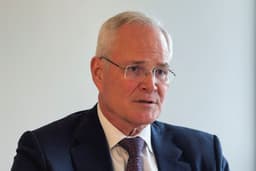
Disney Q1 Earnings Beat Expectations, Josh D'Amaro Elected CEO


"Now Streaming" is The Fly's weekly recap of the stories surrounding the biggest content streamers.PLAYING THIS WEEKEND:Among this weekend's new streaming content is romantic comedy film "Relationship Goals," which is available on Amazon Prime Video. Meanwhile, Peacocksubscribers on Sunday can catch the first episode of black comedy series "The 'Burbs," starring Keke Palmer. Addititonally, Netflixusers can stream the fourth season of legal drama series "The Lincoln Lawyer."DISNEY RESULTS:Earlier this week, Disneyreported better-than-expected Q1 earnings per share and revenue. Streaming and video on demand, or SVOD, revenue rose 11% year-over-year in the quarter, with SVOD operating income rising to $450M from $189M, resulting in SVOD operating margin of 8.4%. Looking ahead, the company sees Q2 SVOD operating income of roughly $500M, an increase of roughly $200M compared to 2Q25.A day later, Disney announced that, in a unanimous vote held on Monday, it elected Disney Experiences chairman Josh D'Amaro to become CEO, effective at the upcoming annual meeting on March 18, when he will succeed Disney CEO Robert Iger. The board also intends to appoint D'Amaro as a director immediately following that meeting. Concurrent with D'Amaro's appointment, Dana Walden, co-chairman of Disney Entertainment, has been named president and chief creative officer of Disney, also effective March 18. Bob Iger upon transition will continue to serve as senior advisor and a member of the Disney Board until his retirement from the company on December 31.TRUMP/WARNER BROS.:President Donald Trump said in a new interview on Wednesday did an about-face and said that he will not be involved in the fight between streaming giant Netflix and Paramount Skydanceto buy some or all of Warner Bros. Discovery, according to CNBC's Dan Mangan. "I haven't been involved," Trump told "NBC Nightly News." "I've been called by both sides," Trump said. "It's the two sides, but I've decided I shouldn't be involved. The Justice Department will handle it."NETFLIX/HOLLYWOOD:Netflix co-CEO Ted Sarandos told U.S. lawmakers on Tuesday that its proposed $83B acquisition of Warner Bros. Discovery would strengthen Hollywood by expanding domestic production, preserving jobs, and investing in assets Netflix lacks, David McCabe of The New York Times reported. Executives pushed back on antitrust concerns that the deal could lead to higher prices or harm talent, as senators pressed the company on market power and consumer impact. "We're buying a company that has assets that we do not, and we will keep investing in Warner Bros.," Sarandos said. "And we'll keep growing the American entertainment industry."'BALDUR'S GATE':Warner Bros. Discovery's HBO is developing a TV series based on video game franchise "Baldur's Gate," which is based in Hasbro's"Dungeons & Dragons" universe, with "The Last of Us" series co-creator Craig Mazin set to create, write, executive produce, and showrun the adaptation, Deadline's Nellie Andreeva reported Thursday. Also set to serve as executive producer on the project are Jacqueline Lesko, Cecil O'Connor and Hasbro Entertainment's Gabriel Marano. Unlike HBO's "The Last of Us" series, which retells the stories from the PlayStationvideo games, the "Baldur's Gate" TV show will be a continuation of the games, the author noted.ROKU UPGRADE:Oppenheimer analyst Jason Helfstein upgraded Rokuto Outperform from Perform with a $105 price target. The firm cites valuation for the upgrade following the stock's 25% pullback from the 52-week high. It sees "numerous catalysts" for Roku, including the Amazon partnership that just went live, elevated interest in the Winter Olympics, and the mid-term political ads.STOCK PLAYS:Other publicly traded companies in the space include FuboTV, Fox, Apple, and AMC Networks.
Trade with 70% Backtested Accuracy
Analyst Views on AMZN

About AMZN
About the author


AMAZON STOCK FALLS 10% IN FRANKFURT FOLLOWING ANNOUNCEMENT OF SIGNIFICANT CAPITAL EXPENDITURE IN EARNINGS REPORT

Amazon Shares Drop: Amazon's shares fell by 10% in Frankfurt following the announcement of significant capital expenditures.
Impact of Results: The decline in stock price is attributed to investor reactions to the company's financial results and spending plans.

AMAZON: Q4 OPERATING INCOME REFLECTS $730 MILLION IN ESTIMATED SEVERANCE EXPENSES AND $610 MILLION IN ASSET IMPAIRMENTS FROM PHYSICAL STORES - PRESENTATION
- Q4 Operating Income: Amazon's Q4 operating income includes an estimated $730 million in severance costs.
- Asset Impairments: The company reported $610 million in asset impairments related to physical stores.

Investor Confusion in AI Competition

- Investor Sentiment Shift: Following earnings calls from tech giants like Microsoft, Google, and Amazon, investor confusion about future directions led to Amazon losing over $300 billion in market cap, reflecting strong skepticism regarding its $200 billion AI investment plan.
- Capital Expenditure Comparison: Google announced an increase in capital expenditures to $175 billion to $185 billion, exceeding the expected $115 billion to $120 billion, indicating a proactive approach in AI despite challenges from slowing ad revenues.
- Changing Competitive Landscape: With Alphabet's ongoing investments and successes in AI, YouTube's user base has grown to 750 million, and Waymo's self-driving business is outpacing Tesla, suggesting a strengthening competitive advantage that may attract more investor interest.
- Mixed Market Reactions: Despite OpenAI and Anthropic's strong performance in AI, Microsoft's Copilot sales have been disappointing, highlighting investor concerns about its future growth and reflecting differing levels of confidence across companies.

SoundHound AI Faces Significant Challenges

- Market Demand Recognition: SoundHound AI's voice AI platform aims to address pain points in customer service, particularly in noisy environments, with its restaurant voice ordering system achieving 32% higher accuracy than human employees, 85% faster service, and annual cost savings of $58,000 per location, showcasing its potential in the food industry.
- Competitive Pressure: Despite some success in the restaurant sector, SoundHound's technology is not unique, facing fierce competition from established AI assistants like Apple's Siri, and the lack of a competitive moat raises concerns about its long-term prospects.
- Data Acquisition Challenges: SoundHound struggles to obtain sufficient customer interaction data to train its AI, as relying on restaurant order transcripts may not meet the demands of broader customer service applications, limiting its market expansion capabilities.
- Poor Financial Health: The company is currently unprofitable with negative cash flow, having doubled its share count over the past three years and relying on capital dilution for funding, which may hinder its future technology development and market competitiveness.

SoundHound AI Faces Data Challenges in Expanding Voice Chatbot
- Technological Advantages and Challenges: SoundHound AI's voice chatbot excels in restaurant order processing, claiming a 32% higher accuracy than human employees and 85% faster service, saving $58,000 per location annually; however, expanding into other industries presents significant hurdles.
- Market Demand and Potential: While its Amelia 7 AI customer service agent has found applications in insurance and finance, SoundHound needs to break free from the restaurant sector to tap into the growing demand and vast untapped market potential for AI customer service agents.
- Data Acquisition Dilemma: SoundHound faces a long-term challenge of lacking sufficient customer interaction data to train its AI, particularly for complex inquiries, as relying solely on restaurant order transcripts is inadequate for developing a cross-industry AI.
- Increased Competitive Pressure: SoundHound's technology is not unique in the AI voice assistant space, facing competition from giants like Amazon, which possesses extensive data and resources, potentially threatening SoundHound's long-term prospects by entering the chatbot market at any time.

US Job Market Remains Stagnant Amid Layoffs

- Surge in Layoff Plans: January 2026 saw the highest layoff plans since 2009, indicating a severe job market situation that could lead to further economic deterioration, impacting consumer confidence and spending.
- Weak Job Additions: The private sector added only 22,000 jobs, significantly lower than the 140,000 added during the same period last year, suggesting a sluggish economic recovery that may lead to decreased household income and consumer spending.
- Increase in Unemployment Claims: Initial claims for unemployment benefits unexpectedly rose to 231,000 in the last week of January, reflecting the impact of severe winter weather on the job market, potentially exacerbating economic uncertainty.
- Disconnection Between Growth and Employment: Despite GDP growth reaching an annual rate of 4.4% in Q3 last year, challenges remain for low-income households, highlighting a “K-shaped” recovery that may exacerbate social inequality.
AMAZON STOCK FALLS 10% IN FRANKFURT FOLLOWING ANNOUNCEMENT OF SIGNIFICANT CAPITAL EXPENDITURE IN EARNINGS REPORT
Amazon Shares Drop: Amazon's shares fell by 10% in Frankfurt following the announcement of significant capital expenditures.
Impact of Results: The decline in stock price is attributed to investor reactions to the company's financial results and spending plans.
AMAZON: Q4 OPERATING INCOME REFLECTS $730 MILLION IN ESTIMATED SEVERANCE EXPENSES AND $610 MILLION IN ASSET IMPAIRMENTS FROM PHYSICAL STORES - PRESENTATION
- Q4 Operating Income: Amazon's Q4 operating income includes an estimated $730 million in severance costs.
- Asset Impairments: The company reported $610 million in asset impairments related to physical stores.
Investor Confusion in AI Competition
- Investor Sentiment Shift: Following earnings calls from tech giants like Microsoft, Google, and Amazon, investor confusion about future directions led to Amazon losing over $300 billion in market cap, reflecting strong skepticism regarding its $200 billion AI investment plan.
- Capital Expenditure Comparison: Google announced an increase in capital expenditures to $175 billion to $185 billion, exceeding the expected $115 billion to $120 billion, indicating a proactive approach in AI despite challenges from slowing ad revenues.
- Changing Competitive Landscape: With Alphabet's ongoing investments and successes in AI, YouTube's user base has grown to 750 million, and Waymo's self-driving business is outpacing Tesla, suggesting a strengthening competitive advantage that may attract more investor interest.
- Mixed Market Reactions: Despite OpenAI and Anthropic's strong performance in AI, Microsoft's Copilot sales have been disappointing, highlighting investor concerns about its future growth and reflecting differing levels of confidence across companies.
SoundHound AI Faces Significant Challenges
- Market Demand Recognition: SoundHound AI's voice AI platform aims to address pain points in customer service, particularly in noisy environments, with its restaurant voice ordering system achieving 32% higher accuracy than human employees, 85% faster service, and annual cost savings of $58,000 per location, showcasing its potential in the food industry.
- Competitive Pressure: Despite some success in the restaurant sector, SoundHound's technology is not unique, facing fierce competition from established AI assistants like Apple's Siri, and the lack of a competitive moat raises concerns about its long-term prospects.
- Data Acquisition Challenges: SoundHound struggles to obtain sufficient customer interaction data to train its AI, as relying on restaurant order transcripts may not meet the demands of broader customer service applications, limiting its market expansion capabilities.
- Poor Financial Health: The company is currently unprofitable with negative cash flow, having doubled its share count over the past three years and relying on capital dilution for funding, which may hinder its future technology development and market competitiveness.
SoundHound AI Faces Data Challenges in Expanding Voice Chatbot
- Technological Advantages and Challenges: SoundHound AI's voice chatbot excels in restaurant order processing, claiming a 32% higher accuracy than human employees and 85% faster service, saving $58,000 per location annually; however, expanding into other industries presents significant hurdles.
- Market Demand and Potential: While its Amelia 7 AI customer service agent has found applications in insurance and finance, SoundHound needs to break free from the restaurant sector to tap into the growing demand and vast untapped market potential for AI customer service agents.
- Data Acquisition Dilemma: SoundHound faces a long-term challenge of lacking sufficient customer interaction data to train its AI, particularly for complex inquiries, as relying solely on restaurant order transcripts is inadequate for developing a cross-industry AI.
- Increased Competitive Pressure: SoundHound's technology is not unique in the AI voice assistant space, facing competition from giants like Amazon, which possesses extensive data and resources, potentially threatening SoundHound's long-term prospects by entering the chatbot market at any time.
US Job Market Remains Stagnant Amid Layoffs
- Surge in Layoff Plans: January 2026 saw the highest layoff plans since 2009, indicating a severe job market situation that could lead to further economic deterioration, impacting consumer confidence and spending.
- Weak Job Additions: The private sector added only 22,000 jobs, significantly lower than the 140,000 added during the same period last year, suggesting a sluggish economic recovery that may lead to decreased household income and consumer spending.
- Increase in Unemployment Claims: Initial claims for unemployment benefits unexpectedly rose to 231,000 in the last week of January, reflecting the impact of severe winter weather on the job market, potentially exacerbating economic uncertainty.
- Disconnection Between Growth and Employment: Despite GDP growth reaching an annual rate of 4.4% in Q3 last year, challenges remain for low-income households, highlighting a “K-shaped” recovery that may exacerbate social inequality.