Defense Contracts Enhance Visibility for NAPC Defense
Written by Emily J. Thompson, Senior Investment Analyst
Updated: Feb 24 2026
0mins


Source: Newsfilter
- Defense Contract Update: NAPC Defense announced $38,166,873.04 in new U.S. government task orders through strategic partner Obera LLC, extending performance visibility into 2032, significantly enhancing the company's profitability and market competitiveness for the next six years.
- Enterprise Intelligence Optimization: Clarivate reported fourth quarter revenue of $617 million for fiscal 2025, down from last year, but net income improved sharply to $3.1 million, indicating operational tightening and focus under its Value Creation Plan.
- AI Infrastructure Partnership: AMD and Meta Platforms signed a multi-year agreement to deploy up to 6 gigawatts of AMD Instinct GPUs, with shipments expected to begin in the second half of 2026, further solidifying AMD's competitive position in the AI compute sector.
- Infrastructure Growth Outlook: Ten-League International Holdings projected fiscal 2025 revenue between S$75 million and S$76 million, up approximately 28% to 30% year-over-year, driven by strong infrastructure demand related to the development of Singapore's Changi Airport Terminal 5.
Trade with 70% Backtested Accuracy
Stop guessing "Should I Buy AMD?" and start using high-conviction signals backed by rigorous historical data.
Sign up today to access powerful investing tools and make smarter, data-driven decisions.
Analyst Views on AMD
Wall Street analysts forecast AMD stock price to fall
33 Analyst Rating
25 Buy
8 Hold
0 Sell
Strong Buy
Current: 512.480

Low
210.00
Averages
289.13
High
377.00
Current: 512.480
Low
210.00
Averages
289.13
High
377.00
About AMD
Advanced Micro Devices, Inc. is a global semiconductor company. The Company is focused on high-performance computing and artificial intelligence (AI). Its segments include Data Center, Client and Gaming, and Embedded. Data Center segment includes AI accelerators, microprocessors (CPUs) for servers, graphics processing units (GPUs), accelerated processing units (APUs), data processing units (DPUs), Field Programmable Gate Arrays (FPGAs), and Adaptive system-on-Chip (SoC) products for data centers. Client and Gaming segment includes CPUs, APUs, chipsets for desktops and notebooks, discrete GPUs, and semi-custom SoC products and development services. Embedded segment includes embedded CPUs, APUs, FPGAs, system on modules (SOMs), and Adaptive SoC products. It markets and sells its products under the AMD trademark. Its products include AMD EPYC, AMD Ryzen, AMD Ryzen PRO, Virtex UltraScale+, among others.
About the author

Emily J. Thompson
Emily J. Thompson, a Chartered Financial Analyst (CFA) with 12 years in investment research, graduated with honors from the Wharton School. Specializing in industrial and technology stocks, she provides in-depth analysis for Intellectia’s earnings and market brief reports.
AMD Stock Soars with Promising AI Market Outlook

- Significant Revenue Growth: In Q1 2026, AMD reported $10.3 billion in revenue, a 38% year-over-year increase, with data center revenue reaching $5.8 billion, up 57%, highlighting strong demand and an enhanced market position in high-performance computing.
- Optimistic Future Outlook: Management guided for Q2 2026 revenue of approximately $11.2 billion, representing 46% year-over-year growth, with CEO Lisa Su noting that customer engagement around the new MI450 AI GPUs is strengthening, exceeding initial forecasts and indicating sustained market confidence in AMD's offerings.
- AI Market Share Expansion: The upcoming launch of MI450 AI chips has secured large-scale deployment commitments from major clients like OpenAI and Meta, further solidifying AMD's competitive position in the rapidly growing AI data center market, which is expected to drive future revenue growth.
- Valuation Reasonableness Analysis: Despite a 351% stock price increase over the past year, AMD's non-GAAP price-to-earnings-to-growth (PEG) ratio of 1.32 is below peers, suggesting the market remains cautious about its growth narrative, making recent pullbacks a potential buying opportunity for long-term investors.
See More
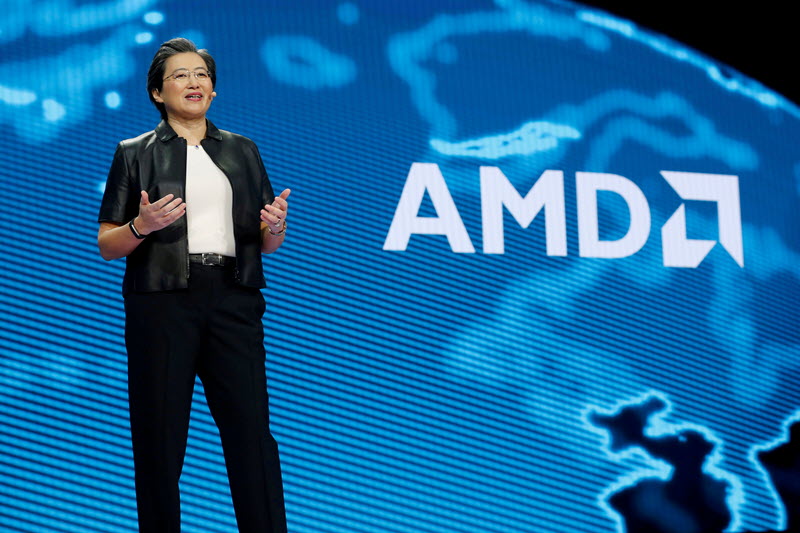
AMD Acquires MEXT to Enhance AI Infrastructure
- Acquisition Fuels Growth: AMD's announcement to acquire MEXT, which has developed AI-driven memory optimization technology that allows NAND flash to function as dynamic random access memory (DRAM), is set to further propel AMD's growth in the market.
- Significant Cost Benefits: MEXT's technology can expand a system's DRAM capacity by 2 to 4 times while halving costs, which is crucial given that DRAM is approximately 50 times more expensive than flash memory, thus saving customers substantial amounts.
- Optimized Market Positioning: By integrating MEXT's technology, AMD will enhance the attractiveness of its data center product line, solidifying its position in the inference market, particularly in memory-constrained environments.
- Accelerated Strategic Transformation: This acquisition signifies AMD's shift from being merely a chipmaker to a more comprehensive AI infrastructure provider, strengthening its competitiveness in the rapidly growing inference and agentic AI markets.
See More

Intel and AMD Intensify Competition Amid AI Demand

- Intel's Stock Surge: Intel's stock has surged approximately 520% over the past year, driven by its foundry turnaround and soaring demand for server processors, indicating a significant recovery potential in market competition.
- AMD's Data Center Revenue Growth: AMD's data center revenue jumped 57% year-over-year to $5.8 billion in the first quarter, fueled by strong performance from EPYC processors and Instinct AI chips, highlighting its strengthening market position in AI.
- Profitability Comparison: Despite Intel's rapid stock increase, its forward price-to-earnings ratio exceeds 120, while AMD's is around 73, indicating AMD's advantages in profitability and growth rate, potentially making it a more attractive investment choice.
- Market Outlook Analysis: As AI demand continues to grow, both Intel and AMD are vying for market share; while Intel shows strong turnaround momentum, AMD's higher profits and cash flow may position it more favorably in future competition.
See More
AMD vs Intel: Competitive Landscape Analysis
- Intel's Recovery Momentum: Under CEO Lip-Bu Tan, Intel has exceeded revenue expectations for six consecutive quarters, with Q1 revenue rising 7% year-over-year to $13.6 billion, and its data center and AI segment growing 22% to $5.1 billion, indicating a strengthening competitive position in the AI era.
- Foundry Business Challenges: Despite Intel's foundry business generating $5.4 billion in revenue this quarter, it still faced a $2.4 billion operating loss, with external customers contributing only $174 million, highlighting the need for improved customer acquisition to achieve profitability in a competitive market.
- AMD's Strong Growth Trajectory: AMD's data center segment achieved a record $5.8 billion in revenue in Q1, up 57% year-over-year, while total revenue increased 38% to $10.3 billion, with adjusted earnings per share rising 43% to $1.37, showcasing its robust performance in the AI accelerator market and solidifying its market position.
- Investment Value Comparison: Although Intel's stock has surged over 500% in the past year, its forward P/E ratio exceeds 120, while AMD's is around 73, suggesting that investors may prefer AMD for its faster growth and higher profits, despite both companies facing risks from market volatility.
See More

BitZero Holdings' Strategic Edge in AI Infrastructure

- Energy Sovereignty Advantage: BitZero Holdings boasts over 1 gigawatt of clean energy growth capacity across Norway, Finland, and North Dakota, with its hydro facility in Namsskogan delivering 40 MW of self-mining capacity at power costs below $0.05 per kWh, ensuring a competitive edge in AI and cryptocurrency mining.
- Fixed Cost Structure: By owning its land and power infrastructure, BitZero maintains a relatively fixed cost base, allowing for expansion without renegotiating leases or power purchase agreements, thereby protecting margins and enhancing operational flexibility.
- Rapid Market Response: The newly announced 110 MW Norway project is expected to be delivered by Q3 2026, generating approximately $176 million in annual revenue, significantly improving margin visibility and reducing exposure to power price volatility, addressing the urgent market demand for quickly deployable compute capacity.
- Investor Interest: Despite institutional investors showing strong interest in BitZero's asset base and power-first model, the company remains undervalued relative to peers, indicating a market underestimation of its potential in the data center and AI infrastructure sectors.
See More

BitZero Holdings' Strategic Advantage in AI Infrastructure

- Energy Sovereignty Advantage: BitZero Holdings has assembled over 1 gigawatt of clean energy growth capacity across four strategic sites in Norway, Finland, and North Dakota, with its hydro-powered facility in Namsskogan, Norway, providing 40 MW of self-mining capacity at under $0.05 per kWh, ensuring competitiveness in the AI and data center markets.
- Profitability Enhancement: Each million dollars of capital deployed into BitZero's grid and mining equipment generates approximately $700,000 in annual net profit, and this efficient vertical integration model provides significant advantages in power costs, protecting margins and supporting expansion.
- Rapid Market Response: BitZero's newly announced 110 MW Norway project is expected to launch in 2026, generating approximately $176 million in annual revenue, and due to secured power access and existing infrastructure, the project delivery speed far exceeds competitors, addressing urgent demands for rapidly deployable compute capacity.
- Market Valuation Potential: Despite growing institutional interest in BitZero's asset base and power-first model, the company remains undervalued relative to peers, indicating significant growth potential in the data center and crypto mining sectors, especially against the backdrop of increasing scarcity of power and computing capacity.
See More
AMD Stock Soars with Promising AI Market Outlook
- Significant Revenue Growth: In Q1 2026, AMD reported $10.3 billion in revenue, a 38% year-over-year increase, with data center revenue reaching $5.8 billion, up 57%, highlighting strong demand and an enhanced market position in high-performance computing.
- Optimistic Future Outlook: Management guided for Q2 2026 revenue of approximately $11.2 billion, representing 46% year-over-year growth, with CEO Lisa Su noting that customer engagement around the new MI450 AI GPUs is strengthening, exceeding initial forecasts and indicating sustained market confidence in AMD's offerings.
- AI Market Share Expansion: The upcoming launch of MI450 AI chips has secured large-scale deployment commitments from major clients like OpenAI and Meta, further solidifying AMD's competitive position in the rapidly growing AI data center market, which is expected to drive future revenue growth.
- Valuation Reasonableness Analysis: Despite a 351% stock price increase over the past year, AMD's non-GAAP price-to-earnings-to-growth (PEG) ratio of 1.32 is below peers, suggesting the market remains cautious about its growth narrative, making recent pullbacks a potential buying opportunity for long-term investors.
See More
AMD Acquires MEXT to Enhance AI Infrastructure
- Acquisition Fuels Growth: AMD's announcement to acquire MEXT, which has developed AI-driven memory optimization technology that allows NAND flash to function as dynamic random access memory (DRAM), is set to further propel AMD's growth in the market.
- Significant Cost Benefits: MEXT's technology can expand a system's DRAM capacity by 2 to 4 times while halving costs, which is crucial given that DRAM is approximately 50 times more expensive than flash memory, thus saving customers substantial amounts.
- Optimized Market Positioning: By integrating MEXT's technology, AMD will enhance the attractiveness of its data center product line, solidifying its position in the inference market, particularly in memory-constrained environments.
- Accelerated Strategic Transformation: This acquisition signifies AMD's shift from being merely a chipmaker to a more comprehensive AI infrastructure provider, strengthening its competitiveness in the rapidly growing inference and agentic AI markets.
See More
Intel and AMD Intensify Competition Amid AI Demand
- Intel's Stock Surge: Intel's stock has surged approximately 520% over the past year, driven by its foundry turnaround and soaring demand for server processors, indicating a significant recovery potential in market competition.
- AMD's Data Center Revenue Growth: AMD's data center revenue jumped 57% year-over-year to $5.8 billion in the first quarter, fueled by strong performance from EPYC processors and Instinct AI chips, highlighting its strengthening market position in AI.
- Profitability Comparison: Despite Intel's rapid stock increase, its forward price-to-earnings ratio exceeds 120, while AMD's is around 73, indicating AMD's advantages in profitability and growth rate, potentially making it a more attractive investment choice.
- Market Outlook Analysis: As AI demand continues to grow, both Intel and AMD are vying for market share; while Intel shows strong turnaround momentum, AMD's higher profits and cash flow may position it more favorably in future competition.
See More
AMD vs Intel: Competitive Landscape Analysis
- Intel's Recovery Momentum: Under CEO Lip-Bu Tan, Intel has exceeded revenue expectations for six consecutive quarters, with Q1 revenue rising 7% year-over-year to $13.6 billion, and its data center and AI segment growing 22% to $5.1 billion, indicating a strengthening competitive position in the AI era.
- Foundry Business Challenges: Despite Intel's foundry business generating $5.4 billion in revenue this quarter, it still faced a $2.4 billion operating loss, with external customers contributing only $174 million, highlighting the need for improved customer acquisition to achieve profitability in a competitive market.
- AMD's Strong Growth Trajectory: AMD's data center segment achieved a record $5.8 billion in revenue in Q1, up 57% year-over-year, while total revenue increased 38% to $10.3 billion, with adjusted earnings per share rising 43% to $1.37, showcasing its robust performance in the AI accelerator market and solidifying its market position.
- Investment Value Comparison: Although Intel's stock has surged over 500% in the past year, its forward P/E ratio exceeds 120, while AMD's is around 73, suggesting that investors may prefer AMD for its faster growth and higher profits, despite both companies facing risks from market volatility.
See More
BitZero Holdings' Strategic Edge in AI Infrastructure
- Energy Sovereignty Advantage: BitZero Holdings boasts over 1 gigawatt of clean energy growth capacity across Norway, Finland, and North Dakota, with its hydro facility in Namsskogan delivering 40 MW of self-mining capacity at power costs below $0.05 per kWh, ensuring a competitive edge in AI and cryptocurrency mining.
- Fixed Cost Structure: By owning its land and power infrastructure, BitZero maintains a relatively fixed cost base, allowing for expansion without renegotiating leases or power purchase agreements, thereby protecting margins and enhancing operational flexibility.
- Rapid Market Response: The newly announced 110 MW Norway project is expected to be delivered by Q3 2026, generating approximately $176 million in annual revenue, significantly improving margin visibility and reducing exposure to power price volatility, addressing the urgent market demand for quickly deployable compute capacity.
- Investor Interest: Despite institutional investors showing strong interest in BitZero's asset base and power-first model, the company remains undervalued relative to peers, indicating a market underestimation of its potential in the data center and AI infrastructure sectors.
See More
BitZero Holdings' Strategic Advantage in AI Infrastructure
- Energy Sovereignty Advantage: BitZero Holdings has assembled over 1 gigawatt of clean energy growth capacity across four strategic sites in Norway, Finland, and North Dakota, with its hydro-powered facility in Namsskogan, Norway, providing 40 MW of self-mining capacity at under $0.05 per kWh, ensuring competitiveness in the AI and data center markets.
- Profitability Enhancement: Each million dollars of capital deployed into BitZero's grid and mining equipment generates approximately $700,000 in annual net profit, and this efficient vertical integration model provides significant advantages in power costs, protecting margins and supporting expansion.
- Rapid Market Response: BitZero's newly announced 110 MW Norway project is expected to launch in 2026, generating approximately $176 million in annual revenue, and due to secured power access and existing infrastructure, the project delivery speed far exceeds competitors, addressing urgent demands for rapidly deployable compute capacity.
- Market Valuation Potential: Despite growing institutional interest in BitZero's asset base and power-first model, the company remains undervalued relative to peers, indicating significant growth potential in the data center and crypto mining sectors, especially against the backdrop of increasing scarcity of power and computing capacity.
See More