Chinese chip stocks soar as Beijing probes US subsidies and dumping practices By Investing.com
Written by Emily J. Thompson, Senior Investment Analyst
Updated: Jan 17 2025
0mins
Should l Buy INTC?
Source: Investing.com
Chinese Semiconductor Stocks Surge: Following an investigation announced by Beijing into U.S. subsidies and potential dumping of chips, Chinese semiconductor stocks saw significant gains, with major companies like Semiconductor Manufacturing International Corp and Hua Hong Semiconductor Ltd experiencing notable increases in their share prices.
Impact on U.S. Chipmakers: In contrast, U.S. chip stocks fell as industry groups criticized the Biden administration's new export controls, highlighting the growing technological rivalry between China and the United States amidst strong performance reports from companies like Taiwan Semiconductor Manufacturing.
Trade with 70% Backtested Accuracy
Stop guessing "Should I Buy INTC?" and start using high-conviction signals backed by rigorous historical data.
Sign up today to access powerful investing tools and make smarter, data-driven decisions.
Analyst Views on INTC
Wall Street analysts forecast INTC stock price to fall
29 Analyst Rating
5 Buy
19 Hold
5 Sell
Hold
Current: 48.290

Low
20.00
Averages
39.30
High
52.00
Current: 48.290
Low
20.00
Averages
39.30
High
52.00
About INTC
Intel Corporation is a global designer and manufacturer of semiconductor products. The Company operates through three segments: Intel Products, Intel Foundry, and All Other. Its Intel Products segment includes Client Computing Group (CCG), Data Center and AI (DCAI), Network and Edge (NEX). The CCG is bringing together the operating system, system architecture, hardware, and software application integration to enable PC experiences. DCAI delivers workload-optimized solutions to cloud service providers and enterprises, along with silicon devices for communications service providers, network and edge, and HPC customers. NEX helps networks and edge compute systems from fixed-function hardware to general-purpose compute, acceleration, and networking devices running cloud native software on programmable hardware. The Intel Foundry segment comprises technology development, manufacturing and foundry services. All Other segments include Altera, Mobileye, Other.
About the author

Emily J. Thompson
Emily J. Thompson, a Chartered Financial Analyst (CFA) with 12 years in investment research, graduated with honors from the Wharton School. Specializing in industrial and technology stocks, she provides in-depth analysis for Intellectia’s earnings and market brief reports.

Intel Stock Declines Amid CPU Supply Constraints

- Supply Chain Warning: On February 6, Intel warned Chinese customers that delivery lead times could extend up to six months, resulting in over a 10% price increase for its server products in China, which negatively impacts revenue.
- Poor Market Performance: Despite the Nasdaq and S&P 500 rising by 0.13% and 0.19% respectively, Intel's stock fell by 4.90%, indicating a divergence from broader market trends and reflecting investor uncertainty about the company's future.
- Technical Analysis: Intel is currently trading 2.0% below its 20-day simple moving average but 11.5% above its 50-day moving average, indicating mixed technical signals that suggest investors should proceed with caution.
- Earnings Outlook Downgrade: The upcoming earnings report on April 23, 2026, is expected to show a loss of 4 cents per share and revenue of $12.28 billion, down from last year, with analysts setting an average price target of $40.91, reflecting a cautious market sentiment regarding its future performance.
See More

Bitcoin Triggers Fresh Turmoil in Crypto Markets

- Market Collapse Impact: Bitcoin's 14% drop on February 5 led to Ethereum and Solana falling by 35% and 33% respectively, highlighting the high correlation of crypto assets under market stress as investor risk appetite rapidly deteriorated.
- Investor Sentiment Shift: Bitcoin's cumulative decline of 25% from January 30 to February 6 indicates that in times of intense market panic, investors tend to sell all holdings to meet margin calls, further exacerbating market instability.
- Ethereum's Challenges and Opportunities: Ethereum is working to lower transaction costs and enhance chain performance; however, this progress may weaken its fee model, reducing upward price pressure for holders, with future solutions still unclear.
- Solana's Risks and Potential: While Solana focuses on improving chain reliability and user diversity, its risk regarding demand quality remains, as over-reliance on speculative projects could lead to underperformance post-market drawdown, necessitating careful assessment of its growth sustainability.
See More

Fastly Shares Surge 72% After Strong Earnings Report

- Significant Revenue Growth: Fastly's Q4 revenue increased by 23% year-over-year to $172.6 million, driven by a 19% rise in network services sales to $130.8 million and a 32% surge in security revenue to $35.4 million, showcasing the company's robust performance in the cloud computing market.
- Improved Profitability: The company reported an adjusted net income of $20.1 million, compared to a loss of $2.4 million in the same quarter last year, with adjusted earnings per share reaching $0.12, significantly exceeding Wall Street expectations and indicating a marked improvement in profitability.
- Optimistic Future Outlook: Fastly anticipates revenue growth of approximately 14% to $710 million by 2026, with operating income projected at $55 million and adjusted earnings per share at $0.26, reflecting strong confidence in future growth, particularly driven by AI technology.
- Positive Market Reaction: Fastly's stock price soared 72% by the end of trading, indicating strong investor recognition of the company's performance and future prospects, further solidifying its position in the rapidly evolving cloud computing and AI markets.
See More

ASML Stock Expected to Surge Due to AI Market Expansion


- Surging Market Demand: ASML's stock has rallied about 90% over the past year, and as the AI market expands, it is expected to surge even higher, reflecting strong demand for its advanced lithography systems.
- Monopoly Advantage: As the world's only producer of extreme ultraviolet (EUV) lithography systems, ASML's technology is widely adopted by top semiconductor manufacturers like TSMC, Samsung, and Intel, ensuring its critical role in chip production.
- Revenue Growth Expectations: ASML anticipates its revenue will reach between €44 billion (approximately $52.3 billion) and €60 billion (approximately $71.3 billion) by 2030, indicating a 10% compound annual growth rate (CAGR) from 2025, showcasing its long-term growth potential.
- Strong Profitability: Although ASML's price-to-earnings ratio stands at 41, indicating a premium valuation, its dominance in crucial chipmaking technology and direct exposure to the booming AI market justify this premium, with expectations for continued stock price growth into 2026 and beyond.
See More
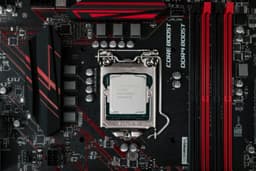
India Imposes Fine on Intel for Warranty Policy
- Regulatory Penalty: The Competition Commission of India imposed a fine of INR 27.38 crores (approximately $3.3 million) on Intel for implementing a discriminatory warranty policy, highlighting the regulator's strict oversight of market dominance.
- Policy Impact: Intel's warranty policy, effective April 25, 2016, only honored warranty requests for products purchased from authorized distributors, limiting consumer choice and adversely affecting Indian consumers, which raises concerns about fair competition.
- Fine Calculation: The penalty was calculated at 8% of Intel's average relevant turnover over eight years, with the final amount adjusted to INR 27.38 crores due to mitigating factors, indicating the regulator's flexibility in enforcement.
- Future Compliance Requirements: Intel is required to discontinue the policy by April 1, 2024, widely publicize its withdrawal, and submit a compliance report, underscoring the need for improved communication and compliance management with regulatory bodies.
See More

Droneshield CEO Discusses Counter-Drone Market Insights
- Market Demand Analysis: Droneshield's CEO Oleg Vornik highlighted that after the 2018 attacks on Saudi oil facilities by small drones, the company secured its first multimillion-dollar customer, indicating strong demand for counter-drone technology in both military and civilian markets, especially following the escalation of the Ukraine conflict.
- Technological Innovation: Droneshield's products utilize non-kinetic methods to detect and neutralize drones through a combination of radio frequencies, radars, and cameras, enhancing defense capabilities to meet the growing security needs, particularly in data centers and large event venues.
- Psychological Confidence Boost: Vornik noted that Droneshield's RfPatrol device is widely used among Ukrainian soldiers, providing them with psychological confidence to avoid enemy drone attacks, underscoring the technology's significance in enhancing soldier safety and morale.
- Significant Market Potential: Vornik emphasized that the civilian market for counter-drone solutions could surpass the military market, with current penetration rates near zero, suggesting that as security concerns rise, more businesses and institutions are likely to invest in such technologies.
See More
Intel Stock Declines Amid CPU Supply Constraints
- Supply Chain Warning: On February 6, Intel warned Chinese customers that delivery lead times could extend up to six months, resulting in over a 10% price increase for its server products in China, which negatively impacts revenue.
- Poor Market Performance: Despite the Nasdaq and S&P 500 rising by 0.13% and 0.19% respectively, Intel's stock fell by 4.90%, indicating a divergence from broader market trends and reflecting investor uncertainty about the company's future.
- Technical Analysis: Intel is currently trading 2.0% below its 20-day simple moving average but 11.5% above its 50-day moving average, indicating mixed technical signals that suggest investors should proceed with caution.
- Earnings Outlook Downgrade: The upcoming earnings report on April 23, 2026, is expected to show a loss of 4 cents per share and revenue of $12.28 billion, down from last year, with analysts setting an average price target of $40.91, reflecting a cautious market sentiment regarding its future performance.
See More
Bitcoin Triggers Fresh Turmoil in Crypto Markets
- Market Collapse Impact: Bitcoin's 14% drop on February 5 led to Ethereum and Solana falling by 35% and 33% respectively, highlighting the high correlation of crypto assets under market stress as investor risk appetite rapidly deteriorated.
- Investor Sentiment Shift: Bitcoin's cumulative decline of 25% from January 30 to February 6 indicates that in times of intense market panic, investors tend to sell all holdings to meet margin calls, further exacerbating market instability.
- Ethereum's Challenges and Opportunities: Ethereum is working to lower transaction costs and enhance chain performance; however, this progress may weaken its fee model, reducing upward price pressure for holders, with future solutions still unclear.
- Solana's Risks and Potential: While Solana focuses on improving chain reliability and user diversity, its risk regarding demand quality remains, as over-reliance on speculative projects could lead to underperformance post-market drawdown, necessitating careful assessment of its growth sustainability.
See More
Fastly Shares Surge 72% After Strong Earnings Report
- Significant Revenue Growth: Fastly's Q4 revenue increased by 23% year-over-year to $172.6 million, driven by a 19% rise in network services sales to $130.8 million and a 32% surge in security revenue to $35.4 million, showcasing the company's robust performance in the cloud computing market.
- Improved Profitability: The company reported an adjusted net income of $20.1 million, compared to a loss of $2.4 million in the same quarter last year, with adjusted earnings per share reaching $0.12, significantly exceeding Wall Street expectations and indicating a marked improvement in profitability.
- Optimistic Future Outlook: Fastly anticipates revenue growth of approximately 14% to $710 million by 2026, with operating income projected at $55 million and adjusted earnings per share at $0.26, reflecting strong confidence in future growth, particularly driven by AI technology.
- Positive Market Reaction: Fastly's stock price soared 72% by the end of trading, indicating strong investor recognition of the company's performance and future prospects, further solidifying its position in the rapidly evolving cloud computing and AI markets.
See More
ASML Stock Expected to Surge Due to AI Market Expansion
- Surging Market Demand: ASML's stock has rallied about 90% over the past year, and as the AI market expands, it is expected to surge even higher, reflecting strong demand for its advanced lithography systems.
- Monopoly Advantage: As the world's only producer of extreme ultraviolet (EUV) lithography systems, ASML's technology is widely adopted by top semiconductor manufacturers like TSMC, Samsung, and Intel, ensuring its critical role in chip production.
- Revenue Growth Expectations: ASML anticipates its revenue will reach between €44 billion (approximately $52.3 billion) and €60 billion (approximately $71.3 billion) by 2030, indicating a 10% compound annual growth rate (CAGR) from 2025, showcasing its long-term growth potential.
- Strong Profitability: Although ASML's price-to-earnings ratio stands at 41, indicating a premium valuation, its dominance in crucial chipmaking technology and direct exposure to the booming AI market justify this premium, with expectations for continued stock price growth into 2026 and beyond.
See More
India Imposes Fine on Intel for Warranty Policy
- Regulatory Penalty: The Competition Commission of India imposed a fine of INR 27.38 crores (approximately $3.3 million) on Intel for implementing a discriminatory warranty policy, highlighting the regulator's strict oversight of market dominance.
- Policy Impact: Intel's warranty policy, effective April 25, 2016, only honored warranty requests for products purchased from authorized distributors, limiting consumer choice and adversely affecting Indian consumers, which raises concerns about fair competition.
- Fine Calculation: The penalty was calculated at 8% of Intel's average relevant turnover over eight years, with the final amount adjusted to INR 27.38 crores due to mitigating factors, indicating the regulator's flexibility in enforcement.
- Future Compliance Requirements: Intel is required to discontinue the policy by April 1, 2024, widely publicize its withdrawal, and submit a compliance report, underscoring the need for improved communication and compliance management with regulatory bodies.
See More
Droneshield CEO Discusses Counter-Drone Market Insights
- Market Demand Analysis: Droneshield's CEO Oleg Vornik highlighted that after the 2018 attacks on Saudi oil facilities by small drones, the company secured its first multimillion-dollar customer, indicating strong demand for counter-drone technology in both military and civilian markets, especially following the escalation of the Ukraine conflict.
- Technological Innovation: Droneshield's products utilize non-kinetic methods to detect and neutralize drones through a combination of radio frequencies, radars, and cameras, enhancing defense capabilities to meet the growing security needs, particularly in data centers and large event venues.
- Psychological Confidence Boost: Vornik noted that Droneshield's RfPatrol device is widely used among Ukrainian soldiers, providing them with psychological confidence to avoid enemy drone attacks, underscoring the technology's significance in enhancing soldier safety and morale.
- Significant Market Potential: Vornik emphasized that the civilian market for counter-drone solutions could surpass the military market, with current penetration rates near zero, suggesting that as security concerns rise, more businesses and institutions are likely to invest in such technologies.
See More