China Confirms Aircraft Purchase Deal with U.S.
Written by Emily J. Thompson, Senior Investment Analyst
Updated: 1 day ago
0mins

Source: seekingalpha
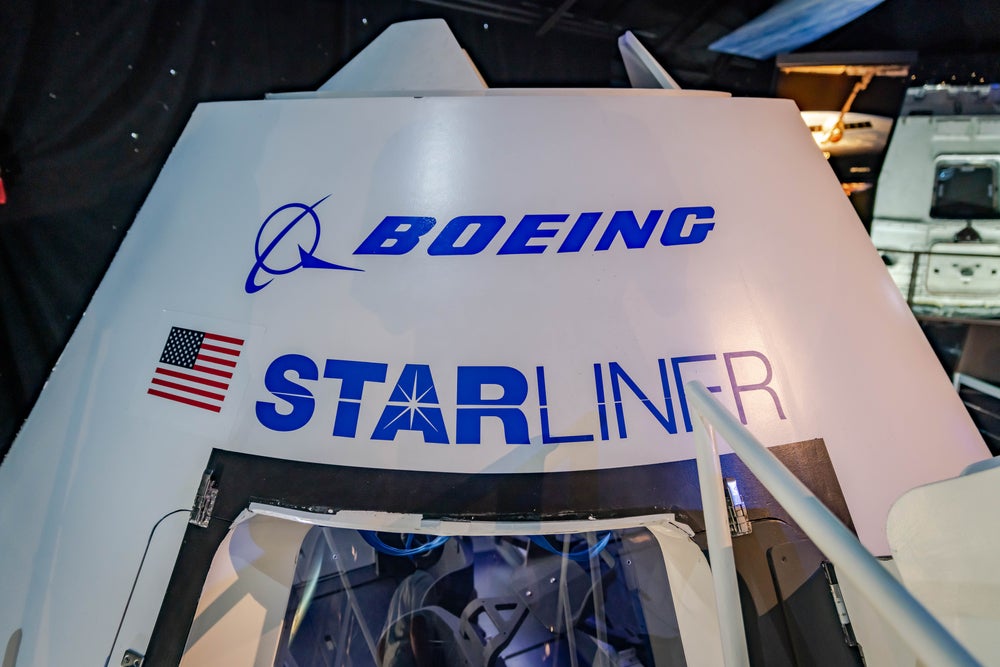
- Purchase Agreement Confirmed: China's Ministry of Commerce confirmed an agreement with the U.S. to purchase 200 Boeing aircraft and related equipment, which could benefit Boeing (BA) and General Electric (GE), although Boeing's stock fell over 7% during Trump's visit due to a lack of specifics.
- Tariff Reduction Measures: Both countries agreed to implement multiple measures, including mutual tariff reductions on certain products to boost bilateral trade in sectors like agriculture, indicating a positive willingness for economic cooperation between the two nations.
- High-Level Accompaniment: During Trump's visit to China, CEOs of Boeing and GE accompanied him, highlighting the significance of both companies in U.S.-China trade relations and their expectations for future orders.
- Details Still Under Discussion: While a preliminary agreement has been reached, the Ministry did not provide specifics on aircraft types or order timing, indicating ongoing discussions that may affect market expectations for Boeing's future performance.
Trade with 70% Backtested Accuracy
Stop guessing "Should I Buy BA?" and start using high-conviction signals backed by rigorous historical data.
Sign up today to access powerful investing tools and make smarter, data-driven decisions.
Analyst Views on BA
Wall Street analysts forecast BA stock price to rise
16 Analyst Rating
14 Buy
1 Hold
1 Sell
Strong Buy
Current: 229.210

Low
150.00
Averages
269.14
High
298.00
Current: 229.210
Low
150.00
Averages
269.14
High
298.00
About BA
The Boeing Company is an aerospace company. Its segments include Commercial Airplanes (BCA), Defense, Space & Security (BDS), and Global Services (BGS). Its BCA segment develops, produces and markets commercial jet aircraft principally for the commercial airline industry worldwide. Its family of commercial jet aircraft in production includes the 737 narrow-body model and the 767, 777 and 787 wide-body models. Its BDS segment is engaged in the research, development, production and modification of manned and unmanned military aircraft and weapons systems for strike, surveillance and mobility. Its BGS segment provides services to its commercial and defense customers worldwide. It sustains aerospace platforms and systems with a range of products and services, including supply chain and logistics management, engineering, maintenance and modifications, upgrades and conversions, spare parts, pilot and maintenance training systems and services, technical and maintenance documents, and others.
About the author

Emily J. Thompson
Emily J. Thompson, a Chartered Financial Analyst (CFA) with 12 years in investment research, graduated with honors from the Wharton School. Specializing in industrial and technology stocks, she provides in-depth analysis for Intellectia’s earnings and market brief reports.
Preliminary Outcomes of China-US Trade Talks

- Investment and Trade Boards: Both sides agreed to establish investment and trade boards to negotiate reciprocal, product-specific tariff reductions, aiming to deepen bilateral trade relations through structural reforms.
- Agricultural Market Access: The two parties will work together to resolve non-tariff barriers and market access issues, particularly concerning the U.S. automatic detention of Chinese dairy and aquatic products, indicating a willingness for cooperation in agriculture.
- Boeing Aircraft Purchases: Trump claimed that China agreed to purchase 200 Boeing aircraft, although analysts have questioned the lack of a specific timeline, suggesting that the implementation of the agreement still requires further clarification.
- Ongoing Discussions and Finalization: The Chinese commerce ministry confirmed arrangements regarding Chinese purchases of U.S. aircraft and U.S. assurances on supplying aircraft engines and parts to China, emphasizing that details are still under discussion and agreements are expected to be finalized soon.
See More

US-China Summit Eases Geopolitical Risks
- Limited Summit Outcomes: The meeting between Trump and Xi failed to achieve substantial progress on trade or the Iran war, although a consensus on strategic stability was reached, the muted market reaction indicates investor caution regarding future developments.
- Lackluster Market Response: Chinese stocks remained largely flat post-summit, with the yuan slipping to a near two-week low against the dollar, reflecting investor concerns over a global bond sell-off and rising tensions in the Middle East, showcasing a risk-off sentiment in the markets.
- Reduced Geopolitical Risks: Analysts suggest that despite the lack of concrete agreements, the summit helped solidify the trade truce, lowering the risk of escalation in the near term, which may alter investor perceptions of risk and attract U.S. capital back to Chinese investment opportunities.
- Unresolved Taiwan Issue: Trump's indecision on a $14 billion arms sale to Taiwan could impact his relationship with Xi, and analysts emphasize that the Taiwan issue remains a significant factor in U.S.-China relations, potentially leading to future tensions.
See More
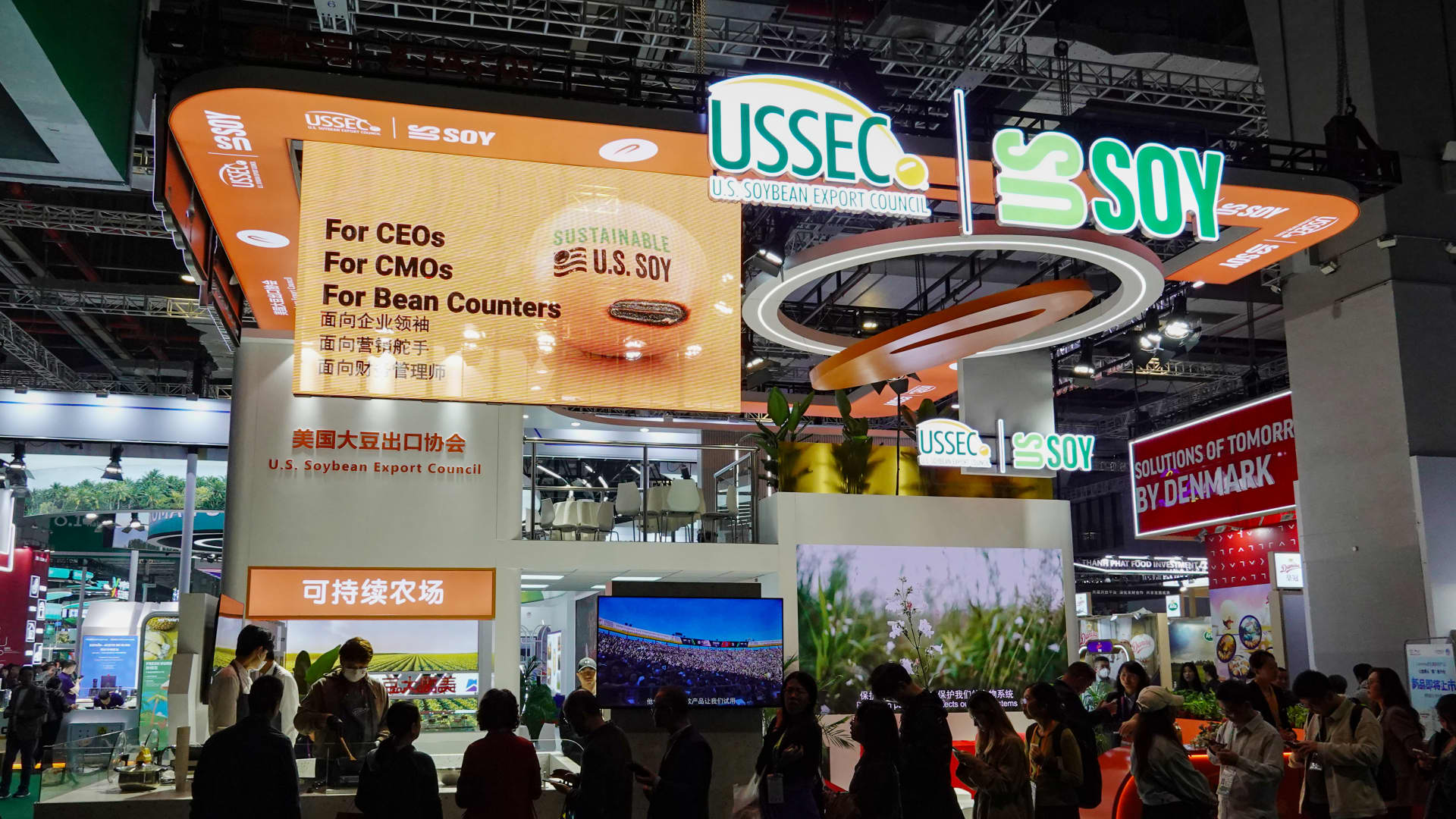
China Agrees to Purchase U.S. Soybeans
- Soybean Purchase Commitment: China has agreed to purchase at least $17 billion of U.S. agricultural goods annually through 2028, including soybeans, a commitment made following the high-profile summit between Trump and Xi, indicating a gradual improvement in U.S.-China trade relations.
- Promotion of Agricultural Trade: The summit reiterated intentions to promote agricultural trade, with China allowing U.S. beef and poultry sales again, although specific purchase amounts were not detailed, which is expected to further boost bilateral trade growth.
- Rare Earth Supply Issues: The U.S. stated that China would address rare earth shortages, particularly for critical minerals like indium and neodymium, which are essential for smartphones, cars, and weapons, highlighting the potential for cooperation in high-tech sectors between the two nations.
- Aircraft Purchase Agreement: The U.S. confirmed China's plans to buy 200 Boeing airplanes, ensuring the supply of engines and other parts, which not only aids the recovery of the U.S. aerospace industry but also reflects strategic cooperation in the aviation sector between the U.S. and China.
See More
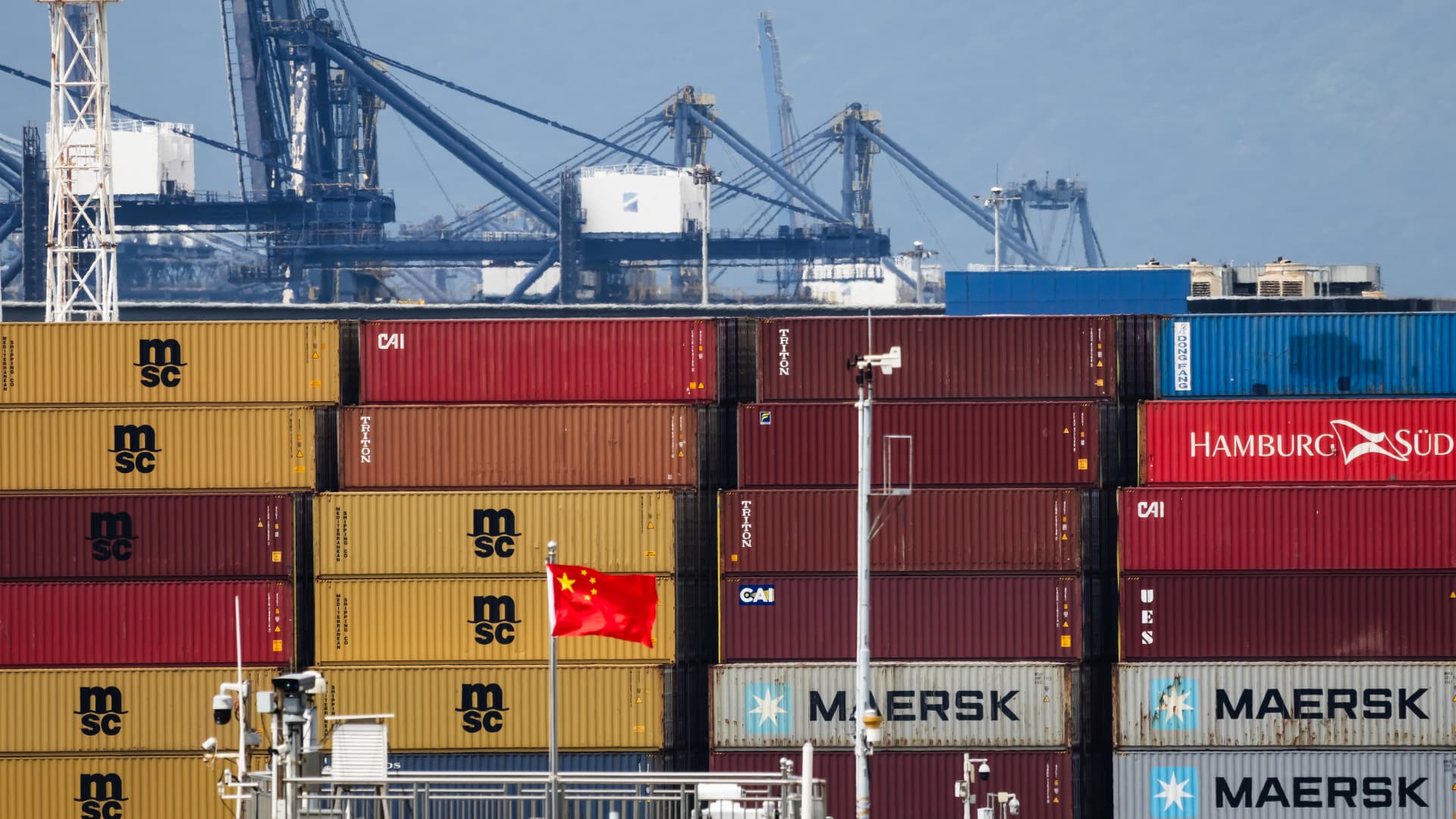
China's Economic Growth Weakens with Low Consumption and Investment
- Consumption Slowdown: Retail sales in China grew only 0.2% year-on-year in April, sharply missing economists' expectations of a 2% increase and slowing from 1.7% in March, indicating signs of weak consumer spending that could hinder overall economic recovery.
- Industrial Output Deceleration: Industrial output rose 4.1% year-on-year in April, falling short of the 5.9% forecast and down from 5.7% in March, suggesting challenges in the manufacturing sector that may impact future investment confidence.
- Investment Contraction: Urban fixed asset investment contracted by 1.6% in the first four months of the year, contrasting sharply with expectations for 1.6% growth, highlighting ongoing weakness in real estate and infrastructure investment that could pressure economic growth.
- Strong Export Growth: Despite weak domestic demand, exports surged by 14.1% in April, significantly exceeding the 7.9% forecast, reflecting robust international market demand that may provide some support for the economy.
See More

Trump Administration Signals New Strategy for Economic Relations with China
- Boeing Orders Milestone: U.S. Trade Representative Greer announced that China has agreed to purchase 200 Boeing aircraft, marking the first major order in nearly a decade, which is expected to significantly boost Boeing's sales and potentially improve U.S.-China trade relations.
- Establishment of Trade Boards: The newly created 'Boards of Trade' and 'Boards of Investment' aim to provide a more predictable framework for economic relations, focusing on non-sensitive goods such as agricultural exports, energy products, and medical devices, while advanced technologies remain a national security concern.
- Overcapacity Concerns: Greer emphasized that China's industrial overcapacity is a central issue for U.S. trade policy, which could lead to new tariffs or quotas, indicating ongoing scrutiny of China's trade practices.
- Agricultural Purchases Anticipated: Although specific figures are still being finalized, Greer indicated that China is expected to significantly increase its purchases of U.S. agricultural goods, which may help alleviate some trade tensions between the two nations.
See More

Trump's Golden Dome Missile Defense System Costs Surge to $1.2 Trillion

- Cost Surge: The projected cost of Trump's Golden Dome missile defense system has skyrocketed to $1.2 trillion over 20 years, significantly exceeding the initial budget of $151 billion, which could strain the defense budget and impact funding for other military projects.
- Complex System Components: According to the Congressional Budget Office, the Golden Dome will include 7,800 space-based interceptor missiles, with procurement costs alone reaching $743 billion and annual maintenance costs of $1 billion, indicating a substantial long-term financial burden on the defense budget.
- Massive Satellite Demand: To maintain the effectiveness of Golden Dome, approximately 1,600 low-orbit satellites will need to be replaced annually, leading to a total requirement of around 30,000 satellites over 20 years, which is three times the number of satellites launched by SpaceX since its inception, highlighting significant technical and logistical challenges.
- Limited Defense Capability: Although Golden Dome aims to intercept missiles from adversaries, its design limitations mean it can only defend against a maximum of 10 missile launches at any given time, raising doubts in Congress about the project's feasibility and potentially leading to its cancellation.
See More
Preliminary Outcomes of China-US Trade Talks
- Investment and Trade Boards: Both sides agreed to establish investment and trade boards to negotiate reciprocal, product-specific tariff reductions, aiming to deepen bilateral trade relations through structural reforms.
- Agricultural Market Access: The two parties will work together to resolve non-tariff barriers and market access issues, particularly concerning the U.S. automatic detention of Chinese dairy and aquatic products, indicating a willingness for cooperation in agriculture.
- Boeing Aircraft Purchases: Trump claimed that China agreed to purchase 200 Boeing aircraft, although analysts have questioned the lack of a specific timeline, suggesting that the implementation of the agreement still requires further clarification.
- Ongoing Discussions and Finalization: The Chinese commerce ministry confirmed arrangements regarding Chinese purchases of U.S. aircraft and U.S. assurances on supplying aircraft engines and parts to China, emphasizing that details are still under discussion and agreements are expected to be finalized soon.
See More
US-China Summit Eases Geopolitical Risks
- Limited Summit Outcomes: The meeting between Trump and Xi failed to achieve substantial progress on trade or the Iran war, although a consensus on strategic stability was reached, the muted market reaction indicates investor caution regarding future developments.
- Lackluster Market Response: Chinese stocks remained largely flat post-summit, with the yuan slipping to a near two-week low against the dollar, reflecting investor concerns over a global bond sell-off and rising tensions in the Middle East, showcasing a risk-off sentiment in the markets.
- Reduced Geopolitical Risks: Analysts suggest that despite the lack of concrete agreements, the summit helped solidify the trade truce, lowering the risk of escalation in the near term, which may alter investor perceptions of risk and attract U.S. capital back to Chinese investment opportunities.
- Unresolved Taiwan Issue: Trump's indecision on a $14 billion arms sale to Taiwan could impact his relationship with Xi, and analysts emphasize that the Taiwan issue remains a significant factor in U.S.-China relations, potentially leading to future tensions.
See More
China Agrees to Purchase U.S. Soybeans
- Soybean Purchase Commitment: China has agreed to purchase at least $17 billion of U.S. agricultural goods annually through 2028, including soybeans, a commitment made following the high-profile summit between Trump and Xi, indicating a gradual improvement in U.S.-China trade relations.
- Promotion of Agricultural Trade: The summit reiterated intentions to promote agricultural trade, with China allowing U.S. beef and poultry sales again, although specific purchase amounts were not detailed, which is expected to further boost bilateral trade growth.
- Rare Earth Supply Issues: The U.S. stated that China would address rare earth shortages, particularly for critical minerals like indium and neodymium, which are essential for smartphones, cars, and weapons, highlighting the potential for cooperation in high-tech sectors between the two nations.
- Aircraft Purchase Agreement: The U.S. confirmed China's plans to buy 200 Boeing airplanes, ensuring the supply of engines and other parts, which not only aids the recovery of the U.S. aerospace industry but also reflects strategic cooperation in the aviation sector between the U.S. and China.
See More
China's Economic Growth Weakens with Low Consumption and Investment
- Consumption Slowdown: Retail sales in China grew only 0.2% year-on-year in April, sharply missing economists' expectations of a 2% increase and slowing from 1.7% in March, indicating signs of weak consumer spending that could hinder overall economic recovery.
- Industrial Output Deceleration: Industrial output rose 4.1% year-on-year in April, falling short of the 5.9% forecast and down from 5.7% in March, suggesting challenges in the manufacturing sector that may impact future investment confidence.
- Investment Contraction: Urban fixed asset investment contracted by 1.6% in the first four months of the year, contrasting sharply with expectations for 1.6% growth, highlighting ongoing weakness in real estate and infrastructure investment that could pressure economic growth.
- Strong Export Growth: Despite weak domestic demand, exports surged by 14.1% in April, significantly exceeding the 7.9% forecast, reflecting robust international market demand that may provide some support for the economy.
See More
Trump Administration Signals New Strategy for Economic Relations with China
- Boeing Orders Milestone: U.S. Trade Representative Greer announced that China has agreed to purchase 200 Boeing aircraft, marking the first major order in nearly a decade, which is expected to significantly boost Boeing's sales and potentially improve U.S.-China trade relations.
- Establishment of Trade Boards: The newly created 'Boards of Trade' and 'Boards of Investment' aim to provide a more predictable framework for economic relations, focusing on non-sensitive goods such as agricultural exports, energy products, and medical devices, while advanced technologies remain a national security concern.
- Overcapacity Concerns: Greer emphasized that China's industrial overcapacity is a central issue for U.S. trade policy, which could lead to new tariffs or quotas, indicating ongoing scrutiny of China's trade practices.
- Agricultural Purchases Anticipated: Although specific figures are still being finalized, Greer indicated that China is expected to significantly increase its purchases of U.S. agricultural goods, which may help alleviate some trade tensions between the two nations.
See More
Trump's Golden Dome Missile Defense System Costs Surge to $1.2 Trillion
- Cost Surge: The projected cost of Trump's Golden Dome missile defense system has skyrocketed to $1.2 trillion over 20 years, significantly exceeding the initial budget of $151 billion, which could strain the defense budget and impact funding for other military projects.
- Complex System Components: According to the Congressional Budget Office, the Golden Dome will include 7,800 space-based interceptor missiles, with procurement costs alone reaching $743 billion and annual maintenance costs of $1 billion, indicating a substantial long-term financial burden on the defense budget.
- Massive Satellite Demand: To maintain the effectiveness of Golden Dome, approximately 1,600 low-orbit satellites will need to be replaced annually, leading to a total requirement of around 30,000 satellites over 20 years, which is three times the number of satellites launched by SpaceX since its inception, highlighting significant technical and logistical challenges.
- Limited Defense Capability: Although Golden Dome aims to intercept missiles from adversaries, its design limitations mean it can only defend against a maximum of 10 missile launches at any given time, raising doubts in Congress about the project's feasibility and potentially leading to its cancellation.
See More