Boeing's Key Challenges for the Next Decade
Written by Emily J. Thompson, Senior Investment Analyst
Updated: 40 minutes ago
0mins
Source: Fool
- Development Cost: Former CEO Dave Calhoun stated that developing the next-generation narrow-body aircraft will cost $50 billion, posing significant challenges for Boeing's funding capabilities, which may require issuing debt or raising equity, thereby impacting financial stability.
- Cash Flow Forecast: According to Wall Street consensus, Boeing is expected to generate over $10 billion in annual free cash flow by 2028; however, the underperformance of the 737 MAX has led to dual pressures on cash flow and debt, affecting future investment capacity.
- Engine Choice Impact: Boeing is believed to prefer a ducted engine, while competitor Airbus is testing open-fan engines, which could reduce fuel consumption by 20%, potentially putting Boeing at a competitive disadvantage in terms of efficiency.
- Long-Term Strategic Uncertainty: Boeing's future over the next decade will hinge on its financing approach for the new narrow-body aircraft and engine selection; while the company is almost certain to launch a new model within ten years, investors must carefully assess the associated risks to determine whether to maintain their stock holdings.
Trade with 70% Backtested Accuracy
Stop guessing "Should I Buy BA?" and start using high-conviction signals backed by rigorous historical data.
Sign up today to access powerful investing tools and make smarter, data-driven decisions.
Analyst Views on BA
Wall Street analysts forecast BA stock price to rise
16 Analyst Rating
14 Buy
1 Hold
1 Sell
Strong Buy
Current: 219.610

Low
150.00
Averages
269.14
High
298.00
Current: 219.610
Low
150.00
Averages
269.14
High
298.00
About BA
The Boeing Company is an aerospace company. Its segments include Commercial Airplanes (BCA), Defense, Space & Security (BDS), and Global Services (BGS). Its BCA segment develops, produces and markets commercial jet aircraft principally for the commercial airline industry worldwide. Its family of commercial jet aircraft in production includes the 737 narrow-body model and the 767, 777 and 787 wide-body models. Its BDS segment is engaged in the research, development, production and modification of manned and unmanned military aircraft and weapons systems for strike, surveillance and mobility. Its BGS segment provides services to its commercial and defense customers worldwide. It sustains aerospace platforms and systems with a range of products and services, including supply chain and logistics management, engineering, maintenance and modifications, upgrades and conversions, spare parts, pilot and maintenance training systems and services, technical and maintenance documents, and others.
About the author

Emily J. Thompson
Emily J. Thompson, a Chartered Financial Analyst (CFA) with 12 years in investment research, graduated with honors from the Wharton School. Specializing in industrial and technology stocks, she provides in-depth analysis for Intellectia’s earnings and market brief reports.

Boeing's Key Challenges for the Next Decade


- Development Cost: Former CEO Dave Calhoun stated that developing the next-generation narrow-body aircraft will cost $50 billion, posing significant challenges for Boeing's funding capabilities, which may require issuing debt or raising equity, thereby impacting financial stability.
- Cash Flow Forecast: According to Wall Street consensus, Boeing is expected to generate over $10 billion in annual free cash flow by 2028; however, the underperformance of the 737 MAX has led to dual pressures on cash flow and debt, affecting future investment capacity.
- Engine Choice Impact: Boeing is believed to prefer a ducted engine, while competitor Airbus is testing open-fan engines, which could reduce fuel consumption by 20%, potentially putting Boeing at a competitive disadvantage in terms of efficiency.
- Long-Term Strategic Uncertainty: Boeing's future over the next decade will hinge on its financing approach for the new narrow-body aircraft and engine selection; while the company is almost certain to launch a new model within ten years, investors must carefully assess the associated risks to determine whether to maintain their stock holdings.
See More

Boeing's Future Depends on Next-Gen Narrow-Body Aircraft
- Funding and Engine Choices: Boeing's future hinges on the development of its next-generation narrow-body aircraft, which is projected to cost $50 billion, and how it finances this endeavor will directly impact its financial health and competitive position in the market.
- 737 MAX Cash Flow Issues: Since its delivery in 2017, the 737 MAX has failed to generate the expected cash flow, with high-profile crashes, COVID-19 lockdowns, and quality control issues leading to a forecasted annual free cash flow exceeding $10 billion only by 2028, indicating significant financial pressure on the company.
- Engine Technology Competition: CFM International's open-fan engine could achieve a 20% reduction in fuel consumption, and if Boeing opts for a traditional ducted engine, it risks falling behind Airbus in efficiency, potentially affecting its market share.
- Investor Risk Assessment: The upcoming launch of Boeing's new narrow-body aircraft will be a significant event in the next decade, and investors must carefully evaluate the risks associated with financing and technology choices that will influence the company's long-term development.
See More

Three AI Stocks with Market Dominance


- Broadcom's Market Leadership: Broadcom holds approximately 70% of the custom AI accelerator market, with AI revenue soaring 106% to $8.4 billion in Q1 2026, while total net revenue increased by 29% to $19.3 billion, reflecting its strong performance amid rising AI infrastructure demand.
- Alphabet's Full-Stack Advantage: Alphabet boasts significant dominance across multiple markets, generating $60.4 billion in search revenue in Q1 2026, a 19% year-over-year increase, and its robust financial position with $64.4 billion in free cash flow provides a buffer against future market fluctuations.
- ASML's Unique Technology: ASML commands nearly 100% of the extreme ultraviolet (EUV) lithography market, reporting net sales of €8.8 billion in Q1 2026, and despite a decline from the previous quarter, it raised its full-year sales forecast to between €36 billion and €40 billion, underscoring its critical role in semiconductor production.
- Long-Term Investment Confidence: The competitive moats of Broadcom, Alphabet, and ASML instill investor confidence during market volatility, as historical performance indicates these companies can maintain strong results even in economic downturns.
See More

Long-Term Investment Opportunities in AI Stocks
- Market Leadership: Broadcom holds approximately 70% of the custom AI accelerator market, with AI revenue soaring 106% to $8.4 billion in Q1 2026, demonstrating its strong market position amid rising demand for AI infrastructure.
- Financial Resilience: Alphabet generated $60.4 billion in revenue in Q1 2026, a 19% year-over-year increase, and boasts $64.4 billion in free cash flow, showcasing its financial strength and capacity for sustained investment during market fluctuations.
- Technological Barriers: ASML commands nearly 100% of the extreme ultraviolet (EUV) lithography market, with its latest High NA machines costing over $400 million each, highlighting its irreplaceable role and high technical barriers in semiconductor manufacturing.
- Future Growth Outlook: ASML raised its full-year net sales projection to between €36 billion and €40 billion for 2026, with the midpoint reflecting a 16% increase from 2025, indicating ongoing demand and market potential in high-end chip production.
See More

Hedge Funds Shift Focus to Semiconductor Stocks


- Investment Trend Shift: According to Goldman Sachs, the weight of semiconductor stocks in hedge fund long portfolios has reached an all-time high, while the weight of software stocks has dropped to its lowest since 2019, indicating strong market confidence in the semiconductor sector.
- Popular Stock Additions: Hedge funds have increased their positions in semiconductor stocks such as Lam Research Corp, Applied Materials Inc, and ASML Holding, while mutual funds have added Intel Corp and SiTime Corp, reflecting a shift in capital towards technology hardware.
- Strong Shared Holdings Performance: Goldman noted that stocks like Boeing Co., Mastercard Inc., Marvell Technology Inc., and Visa Inc. have emerged as popular holdings in both hedge fund and mutual fund portfolios, outperforming the S&P 500 by 3 percentage points with a year-to-date return of 10%.
- Cash Allocation Adjustments: Despite mutual funds raising cash allocations amid rising geopolitical tensions from a record low of 1.1% at the start of 2026 to 1.4% at the beginning of April, cash balances as a share of assets remain extremely low relative to historical levels, reflecting market uncertainty.
See More
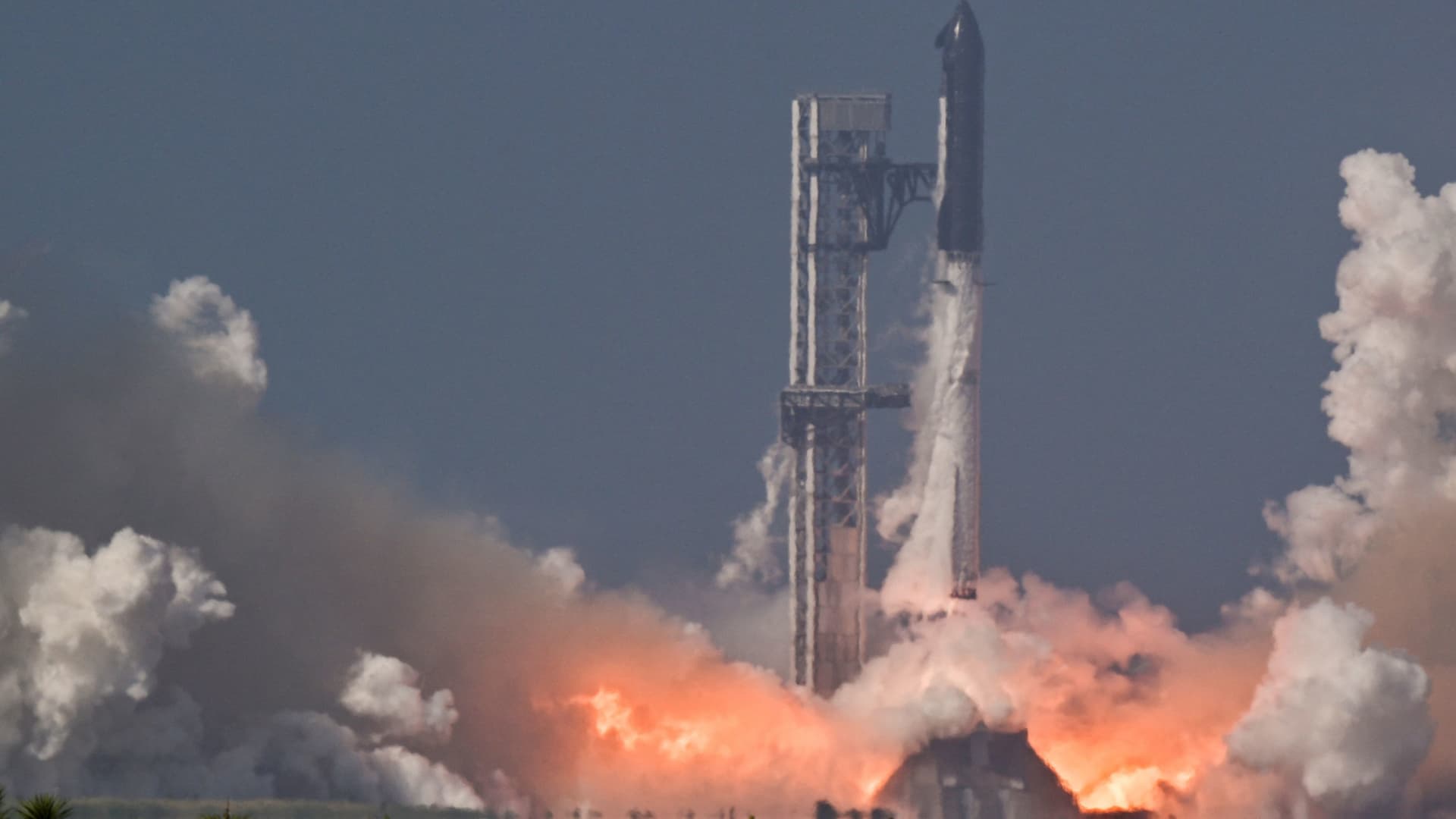
SpaceX Targets $1.75 Trillion Valuation for Upcoming IPO


- IPO Valuation Target: SpaceX is aiming for a staggering $1.75 trillion valuation upon its Nasdaq debut, positioning itself as one of the most valuable companies in the market and likely attracting significant investor interest.
- Diverse Revenue Streams: According to the latest S1 filing, SpaceX's 'Space' and 'Connectivity' segments generated over $4 billion in revenue in 2025, showcasing its strong market position in rocket launches and satellite internet services.
- Industry Classification Challenges: Given SpaceX's involvement in multiple sectors, MSCI and S&P face complexities in determining its final industry classification, which could place it in either the Communication Services or Industrials sector, impacting its appeal to investors.
- Future Growth Potential: Musk indicated that future AI computing will rely on solar-powered satellites in space, and SpaceX's innovative approach to data centers could enable it to achieve lower operational costs over time, thereby securing a more advantageous position in the market.
See More
Boeing's Key Challenges for the Next Decade
- Development Cost: Former CEO Dave Calhoun stated that developing the next-generation narrow-body aircraft will cost $50 billion, posing significant challenges for Boeing's funding capabilities, which may require issuing debt or raising equity, thereby impacting financial stability.
- Cash Flow Forecast: According to Wall Street consensus, Boeing is expected to generate over $10 billion in annual free cash flow by 2028; however, the underperformance of the 737 MAX has led to dual pressures on cash flow and debt, affecting future investment capacity.
- Engine Choice Impact: Boeing is believed to prefer a ducted engine, while competitor Airbus is testing open-fan engines, which could reduce fuel consumption by 20%, potentially putting Boeing at a competitive disadvantage in terms of efficiency.
- Long-Term Strategic Uncertainty: Boeing's future over the next decade will hinge on its financing approach for the new narrow-body aircraft and engine selection; while the company is almost certain to launch a new model within ten years, investors must carefully assess the associated risks to determine whether to maintain their stock holdings.
See More
Boeing's Future Depends on Next-Gen Narrow-Body Aircraft
- Funding and Engine Choices: Boeing's future hinges on the development of its next-generation narrow-body aircraft, which is projected to cost $50 billion, and how it finances this endeavor will directly impact its financial health and competitive position in the market.
- 737 MAX Cash Flow Issues: Since its delivery in 2017, the 737 MAX has failed to generate the expected cash flow, with high-profile crashes, COVID-19 lockdowns, and quality control issues leading to a forecasted annual free cash flow exceeding $10 billion only by 2028, indicating significant financial pressure on the company.
- Engine Technology Competition: CFM International's open-fan engine could achieve a 20% reduction in fuel consumption, and if Boeing opts for a traditional ducted engine, it risks falling behind Airbus in efficiency, potentially affecting its market share.
- Investor Risk Assessment: The upcoming launch of Boeing's new narrow-body aircraft will be a significant event in the next decade, and investors must carefully evaluate the risks associated with financing and technology choices that will influence the company's long-term development.
See More
Three AI Stocks with Market Dominance
- Broadcom's Market Leadership: Broadcom holds approximately 70% of the custom AI accelerator market, with AI revenue soaring 106% to $8.4 billion in Q1 2026, while total net revenue increased by 29% to $19.3 billion, reflecting its strong performance amid rising AI infrastructure demand.
- Alphabet's Full-Stack Advantage: Alphabet boasts significant dominance across multiple markets, generating $60.4 billion in search revenue in Q1 2026, a 19% year-over-year increase, and its robust financial position with $64.4 billion in free cash flow provides a buffer against future market fluctuations.
- ASML's Unique Technology: ASML commands nearly 100% of the extreme ultraviolet (EUV) lithography market, reporting net sales of €8.8 billion in Q1 2026, and despite a decline from the previous quarter, it raised its full-year sales forecast to between €36 billion and €40 billion, underscoring its critical role in semiconductor production.
- Long-Term Investment Confidence: The competitive moats of Broadcom, Alphabet, and ASML instill investor confidence during market volatility, as historical performance indicates these companies can maintain strong results even in economic downturns.
See More
Long-Term Investment Opportunities in AI Stocks
- Market Leadership: Broadcom holds approximately 70% of the custom AI accelerator market, with AI revenue soaring 106% to $8.4 billion in Q1 2026, demonstrating its strong market position amid rising demand for AI infrastructure.
- Financial Resilience: Alphabet generated $60.4 billion in revenue in Q1 2026, a 19% year-over-year increase, and boasts $64.4 billion in free cash flow, showcasing its financial strength and capacity for sustained investment during market fluctuations.
- Technological Barriers: ASML commands nearly 100% of the extreme ultraviolet (EUV) lithography market, with its latest High NA machines costing over $400 million each, highlighting its irreplaceable role and high technical barriers in semiconductor manufacturing.
- Future Growth Outlook: ASML raised its full-year net sales projection to between €36 billion and €40 billion for 2026, with the midpoint reflecting a 16% increase from 2025, indicating ongoing demand and market potential in high-end chip production.
See More
Hedge Funds Shift Focus to Semiconductor Stocks
- Investment Trend Shift: According to Goldman Sachs, the weight of semiconductor stocks in hedge fund long portfolios has reached an all-time high, while the weight of software stocks has dropped to its lowest since 2019, indicating strong market confidence in the semiconductor sector.
- Popular Stock Additions: Hedge funds have increased their positions in semiconductor stocks such as Lam Research Corp, Applied Materials Inc, and ASML Holding, while mutual funds have added Intel Corp and SiTime Corp, reflecting a shift in capital towards technology hardware.
- Strong Shared Holdings Performance: Goldman noted that stocks like Boeing Co., Mastercard Inc., Marvell Technology Inc., and Visa Inc. have emerged as popular holdings in both hedge fund and mutual fund portfolios, outperforming the S&P 500 by 3 percentage points with a year-to-date return of 10%.
- Cash Allocation Adjustments: Despite mutual funds raising cash allocations amid rising geopolitical tensions from a record low of 1.1% at the start of 2026 to 1.4% at the beginning of April, cash balances as a share of assets remain extremely low relative to historical levels, reflecting market uncertainty.
See More
SpaceX Targets $1.75 Trillion Valuation for Upcoming IPO
- IPO Valuation Target: SpaceX is aiming for a staggering $1.75 trillion valuation upon its Nasdaq debut, positioning itself as one of the most valuable companies in the market and likely attracting significant investor interest.
- Diverse Revenue Streams: According to the latest S1 filing, SpaceX's 'Space' and 'Connectivity' segments generated over $4 billion in revenue in 2025, showcasing its strong market position in rocket launches and satellite internet services.
- Industry Classification Challenges: Given SpaceX's involvement in multiple sectors, MSCI and S&P face complexities in determining its final industry classification, which could place it in either the Communication Services or Industrials sector, impacting its appeal to investors.
- Future Growth Potential: Musk indicated that future AI computing will rely on solar-powered satellites in space, and SpaceX's innovative approach to data centers could enable it to achieve lower operational costs over time, thereby securing a more advantageous position in the market.
See More