

Azul files for Chapter 11, strikes restructuring deal with key stakeholders, including United and American Airlines
Written by Emily J. Thompson, Senior Investment Analyst
Updated: May 28 2025
0mins

Source: SeekingAlpha
Restructuring Support: Azul (NYSE: AZUL) has secured restructuring support agreements with key financial stakeholders, including bondholders and major partners like United Airlines and AerCap, to facilitate a Chapter 11 process that aims to eliminate over $2 billion in debt and secure up to $950 million in equity financing.
Positive Outlook: AerCap's CEO expressed confidence in Azul's restructuring efforts, indicating that the airline is expected to emerge stronger from this process, reinforcing its commitment to the Brazilian aviation industry.
Trade with 70% Backtested Accuracy
Stop guessing "Should I Buy UAL?" and start using high-conviction signals backed by rigorous historical data.
Sign up today to access powerful investing tools and make smarter, data-driven decisions.
Analyst Views on UAL
Wall Street analysts forecast UAL stock price to rise
16 Analyst Rating
15 Buy
1 Hold
0 Sell
Strong Buy
Current: 132.500

Low
115.00
Averages
139.07
High
156.00
Current: 132.500
Low
115.00
Averages
139.07
High
156.00
About UAL
United Airlines Holdings, Inc. is a holding company. The Company transports people and cargo throughout North America and to destinations in Asia, Europe, Africa, the Pacific, the Middle East and Latin America. The Company, through United Airlines, Inc., and its regional carriers, operates across over six continents, with hubs at Chicago O'Hare International Airport (ORD), Denver International Airport (DEN), George Bush Intercontinental Airport (IAH), Los Angeles International Airport (LAX), Newark Liberty International Airport (EWR), San Francisco International Airport (SFO), Washington Dulles International Airport (IAD) and A.B. Won Pat International Airport (GUM). Its hub and spoke system allow it to transport passengers between a large number of destinations with frequent services. The Company has contractual relationships with various regional carriers to provide regional aircraft service branded as United Express. It provides freight and mail transportation services (Air Cargo).
About the author

Emily J. Thompson
Emily J. Thompson, a Chartered Financial Analyst (CFA) with 12 years in investment research, graduated with honors from the Wharton School. Specializing in industrial and technology stocks, she provides in-depth analysis for Intellectia’s earnings and market brief reports.

US Stocks Close Lower as Chipmakers Weigh on Market


- Market Decline: On Tuesday, the S&P 500 index fell by 0.45%, the Dow Jones Industrial Average dropped by 0.25%, and the Nasdaq 100 index decreased by 1.77%, indicating a broader market decline under pressure from a selloff in chipmakers, reflecting investor concerns over high valuations.
- Samsung's Earnings Disappointment: Despite Samsung Electronics reporting a 19-fold profit surge, its stock plummeted over 8% in South Korea, suggesting market skepticism regarding the future profitability of the semiconductor sector, which could impact investor confidence in related companies.
- Geopolitical Risks Heightened: Crude oil prices surged to a 1.5-week high due to attacks on shipping in the Strait of Hormuz, raising inflation expectations and pushing bond yields higher, with the 10-year T-note yield reaching a 3.5-week high of 4.54%, adding uncertainty to the market.
- Strength in Software Stocks: Despite the overall market pressure, strong performance in software stocks indicates a rotation of funds into other sectors, with companies like Workday seeing stock price increases of over 4%, providing some support for the market.
See More

US Stocks Decline as Chipmakers Struggle
- Market Decline: The S&P 500 index fell by 0.67%, the Dow Jones Industrial Average by 0.38%, and the Nasdaq 100 by 2.14%, indicating a bearish market sentiment, particularly driven by a selloff in chipmakers.
- Samsung's Earnings Disappointment: Despite a staggering 19-fold profit increase, Samsung Electronics' stock dropped over 8% in South Korea, reflecting investor concerns over high valuations in the semiconductor sector, which could undermine overall market confidence.
- Rising Oil Prices: Following attacks in the Strait of Hormuz, WTI crude oil prices surged over 2%, raising inflation expectations and pushing bond yields higher, with the 10-year T-note yield reaching a 3.5-week high of 4.52%.
- Widening Trade Deficit: The US trade deficit for May expanded to $77.6 billion, the largest in 14 months, which may negatively impact Q2 GDP, adding to market uncertainties.
See More

Analysis of RSP ETF's 52-Week Price Fluctuations

- Price Range Analysis: RSP ETF's 52-week low is $179.9448 per share and high is $215.61, with the latest trade at $214.33, indicating stability near the high point which may attract investor interest.
- Technical Analysis Tool: Comparing the latest share price to the 200-day moving average provides valuable insights for investors, aiding in market trend assessment and potential buying opportunities.
- ETF Unit Trading Mechanism: ETFs trade like stocks, where investors buy and sell 'units' that can be created or destroyed based on demand, impacting liquidity and market performance.
- Inflows and Outflows Monitoring: Weekly monitoring of changes in shares outstanding helps identify ETFs with notable inflows (new units created) or outflows (old units destroyed), assessing their impact on underlying assets.
See More
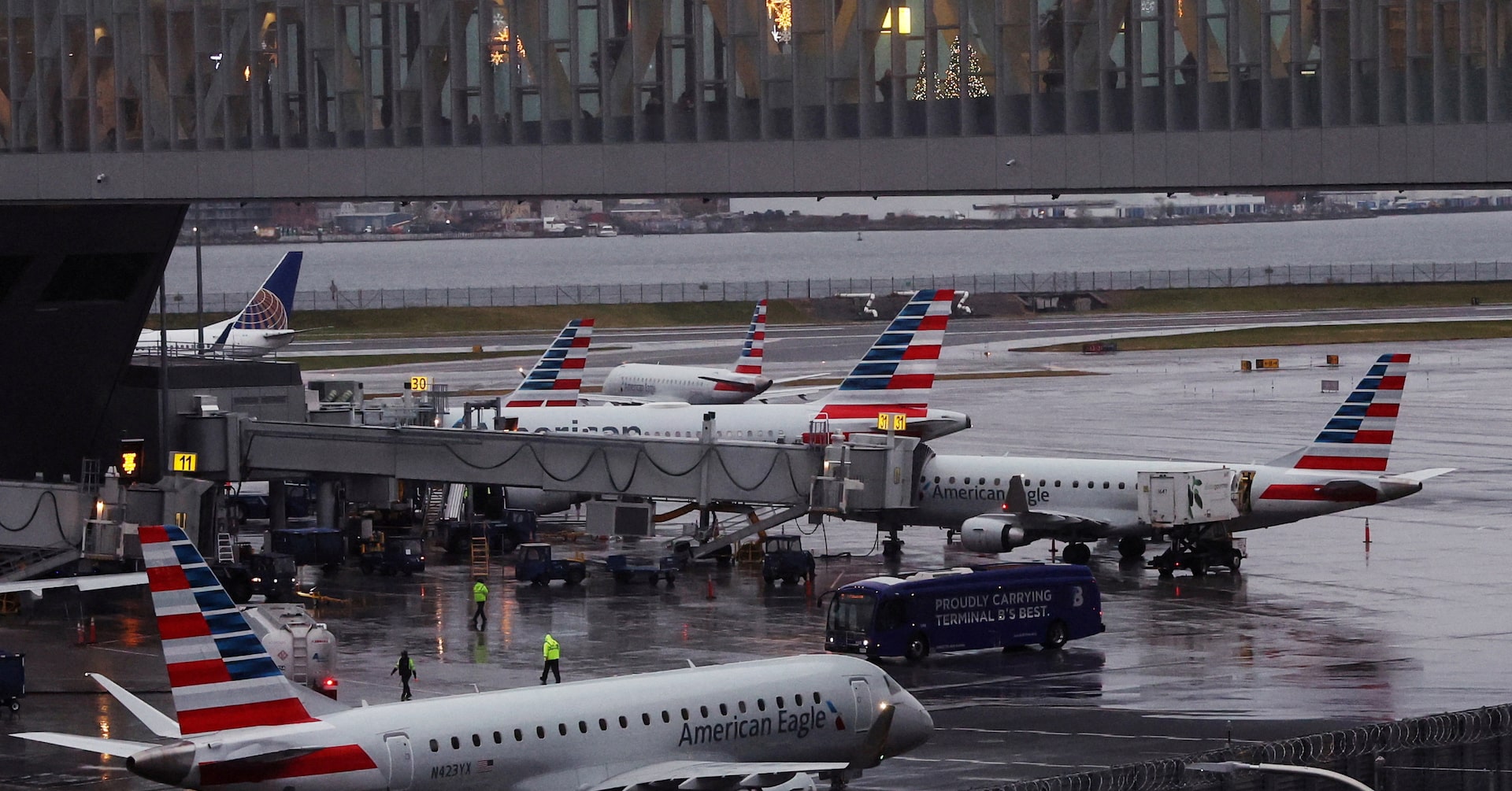
Airlines Adjust Seasonal Flights to Meet Demand
- Extended Flight Seasons: American Airlines has initiated flights from New York to Edinburgh starting in March, while United Airlines will extend its nonstop service to Palermo through December, reflecting airlines' proactive response to off-peak demand aimed at boosting overall revenue.
- High-End Market Appeal: International flights typically offer more premium seating, with some business-class fares reaching $10,000, and airlines plan to expand these options further to attract high-spending customers and enhance profit margins.
- Maintenance Schedule Adjustments: With the increase in shoulder season and off-peak travel, Delta Airlines is rethinking its maintenance and crew scheduling to ensure aircraft availability during the peak fall season, thereby optimizing operational efficiency.
- Shifting Market Demand: Flexible work policies among younger generations are leading more consumers to travel during non-traditional seasons, prompting airlines to adjust flight schedules to accommodate this trend and capture spending opportunities from high-net-worth travelers.
See More

Corporate Sponsorship Behind Trump's Freedom 250 Celebrations

- Corporate Sponsorship Phenomenon: A CNBC analysis reveals that 14 companies, including Boeing, Deloitte, and United Airlines, are backing both America250 and Freedom 250, indicating a complex intersection of corporate interests and politics that may influence their dealings with the government.
- Funding Transparency Issues: The sponsorship structure of Freedom 250 has been criticized for its opacity, allowing donors to gain access to Trump through contributions as high as $10 million, raising concerns about corporations seeking political influence.
- Celebration Participation Status: Despite Congress allocating $150 million for the 250th anniversary, America250 has only received $25 million, while Freedom 250 has secured nearly $80 million in funding, highlighting the financial advantage of Trump-aligned events.
- Event Organization Challenges: The Great American State Fair has faced poor participation, with at least eight states declining to join due to exhibit costs and partisan concerns, resulting in sparse crowds and equipment failures during the event.
See More
Corporate Sponsorship of Freedom 250 Raises Concerns


- Corporate Sponsorship: Major companies like Boeing, Lockheed Martin, and Oracle are sponsoring Freedom 250, and while no direct evidence links these sponsorships to government dealings, watchdogs warn this could create new avenues for corporate influence in Washington.
- Opaque Funding Structure: Freedom 250's fundraising materials indicate that donors contributing over $500,000 gain VIP access to Trump, raising ethical concerns about the transparency of funding and potential impacts on government decision-making.
- Celebration Participation: Despite Congress allocating $150 million for the 250th anniversary, Freedom 250 has secured nearly $80 million in related grants, while America250 has only received $25 million, indicating a preference among companies for Trump's version of the celebration.
- Event Issues: The Great American State Fair, a centerpiece of Freedom 250, has faced reduced state participation, sparse crowds, and technical failures, with some artists withdrawing due to concerns over the partisan nature of the event, highlighting organizational challenges.
See More
US Stocks Close Lower as Chipmakers Weigh on Market
- Market Decline: On Tuesday, the S&P 500 index fell by 0.45%, the Dow Jones Industrial Average dropped by 0.25%, and the Nasdaq 100 index decreased by 1.77%, indicating a broader market decline under pressure from a selloff in chipmakers, reflecting investor concerns over high valuations.
- Samsung's Earnings Disappointment: Despite Samsung Electronics reporting a 19-fold profit surge, its stock plummeted over 8% in South Korea, suggesting market skepticism regarding the future profitability of the semiconductor sector, which could impact investor confidence in related companies.
- Geopolitical Risks Heightened: Crude oil prices surged to a 1.5-week high due to attacks on shipping in the Strait of Hormuz, raising inflation expectations and pushing bond yields higher, with the 10-year T-note yield reaching a 3.5-week high of 4.54%, adding uncertainty to the market.
- Strength in Software Stocks: Despite the overall market pressure, strong performance in software stocks indicates a rotation of funds into other sectors, with companies like Workday seeing stock price increases of over 4%, providing some support for the market.
See More
US Stocks Decline as Chipmakers Struggle
- Market Decline: The S&P 500 index fell by 0.67%, the Dow Jones Industrial Average by 0.38%, and the Nasdaq 100 by 2.14%, indicating a bearish market sentiment, particularly driven by a selloff in chipmakers.
- Samsung's Earnings Disappointment: Despite a staggering 19-fold profit increase, Samsung Electronics' stock dropped over 8% in South Korea, reflecting investor concerns over high valuations in the semiconductor sector, which could undermine overall market confidence.
- Rising Oil Prices: Following attacks in the Strait of Hormuz, WTI crude oil prices surged over 2%, raising inflation expectations and pushing bond yields higher, with the 10-year T-note yield reaching a 3.5-week high of 4.52%.
- Widening Trade Deficit: The US trade deficit for May expanded to $77.6 billion, the largest in 14 months, which may negatively impact Q2 GDP, adding to market uncertainties.
See More
Analysis of RSP ETF's 52-Week Price Fluctuations
- Price Range Analysis: RSP ETF's 52-week low is $179.9448 per share and high is $215.61, with the latest trade at $214.33, indicating stability near the high point which may attract investor interest.
- Technical Analysis Tool: Comparing the latest share price to the 200-day moving average provides valuable insights for investors, aiding in market trend assessment and potential buying opportunities.
- ETF Unit Trading Mechanism: ETFs trade like stocks, where investors buy and sell 'units' that can be created or destroyed based on demand, impacting liquidity and market performance.
- Inflows and Outflows Monitoring: Weekly monitoring of changes in shares outstanding helps identify ETFs with notable inflows (new units created) or outflows (old units destroyed), assessing their impact on underlying assets.
See More
Airlines Adjust Seasonal Flights to Meet Demand
- Extended Flight Seasons: American Airlines has initiated flights from New York to Edinburgh starting in March, while United Airlines will extend its nonstop service to Palermo through December, reflecting airlines' proactive response to off-peak demand aimed at boosting overall revenue.
- High-End Market Appeal: International flights typically offer more premium seating, with some business-class fares reaching $10,000, and airlines plan to expand these options further to attract high-spending customers and enhance profit margins.
- Maintenance Schedule Adjustments: With the increase in shoulder season and off-peak travel, Delta Airlines is rethinking its maintenance and crew scheduling to ensure aircraft availability during the peak fall season, thereby optimizing operational efficiency.
- Shifting Market Demand: Flexible work policies among younger generations are leading more consumers to travel during non-traditional seasons, prompting airlines to adjust flight schedules to accommodate this trend and capture spending opportunities from high-net-worth travelers.
See More
Corporate Sponsorship Behind Trump's Freedom 250 Celebrations
- Corporate Sponsorship Phenomenon: A CNBC analysis reveals that 14 companies, including Boeing, Deloitte, and United Airlines, are backing both America250 and Freedom 250, indicating a complex intersection of corporate interests and politics that may influence their dealings with the government.
- Funding Transparency Issues: The sponsorship structure of Freedom 250 has been criticized for its opacity, allowing donors to gain access to Trump through contributions as high as $10 million, raising concerns about corporations seeking political influence.
- Celebration Participation Status: Despite Congress allocating $150 million for the 250th anniversary, America250 has only received $25 million, while Freedom 250 has secured nearly $80 million in funding, highlighting the financial advantage of Trump-aligned events.
- Event Organization Challenges: The Great American State Fair has faced poor participation, with at least eight states declining to join due to exhibit costs and partisan concerns, resulting in sparse crowds and equipment failures during the event.
See More
Corporate Sponsorship of Freedom 250 Raises Concerns
- Corporate Sponsorship: Major companies like Boeing, Lockheed Martin, and Oracle are sponsoring Freedom 250, and while no direct evidence links these sponsorships to government dealings, watchdogs warn this could create new avenues for corporate influence in Washington.
- Opaque Funding Structure: Freedom 250's fundraising materials indicate that donors contributing over $500,000 gain VIP access to Trump, raising ethical concerns about the transparency of funding and potential impacts on government decision-making.
- Celebration Participation: Despite Congress allocating $150 million for the 250th anniversary, Freedom 250 has secured nearly $80 million in related grants, while America250 has only received $25 million, indicating a preference among companies for Trump's version of the celebration.
- Event Issues: The Great American State Fair, a centerpiece of Freedom 250, has faced reduced state participation, sparse crowds, and technical failures, with some artists withdrawing due to concerns over the partisan nature of the event, highlighting organizational challenges.
See More





